“One can only see what one observes, one observes only things which are already in the mind.” – Alphonse Bertillon
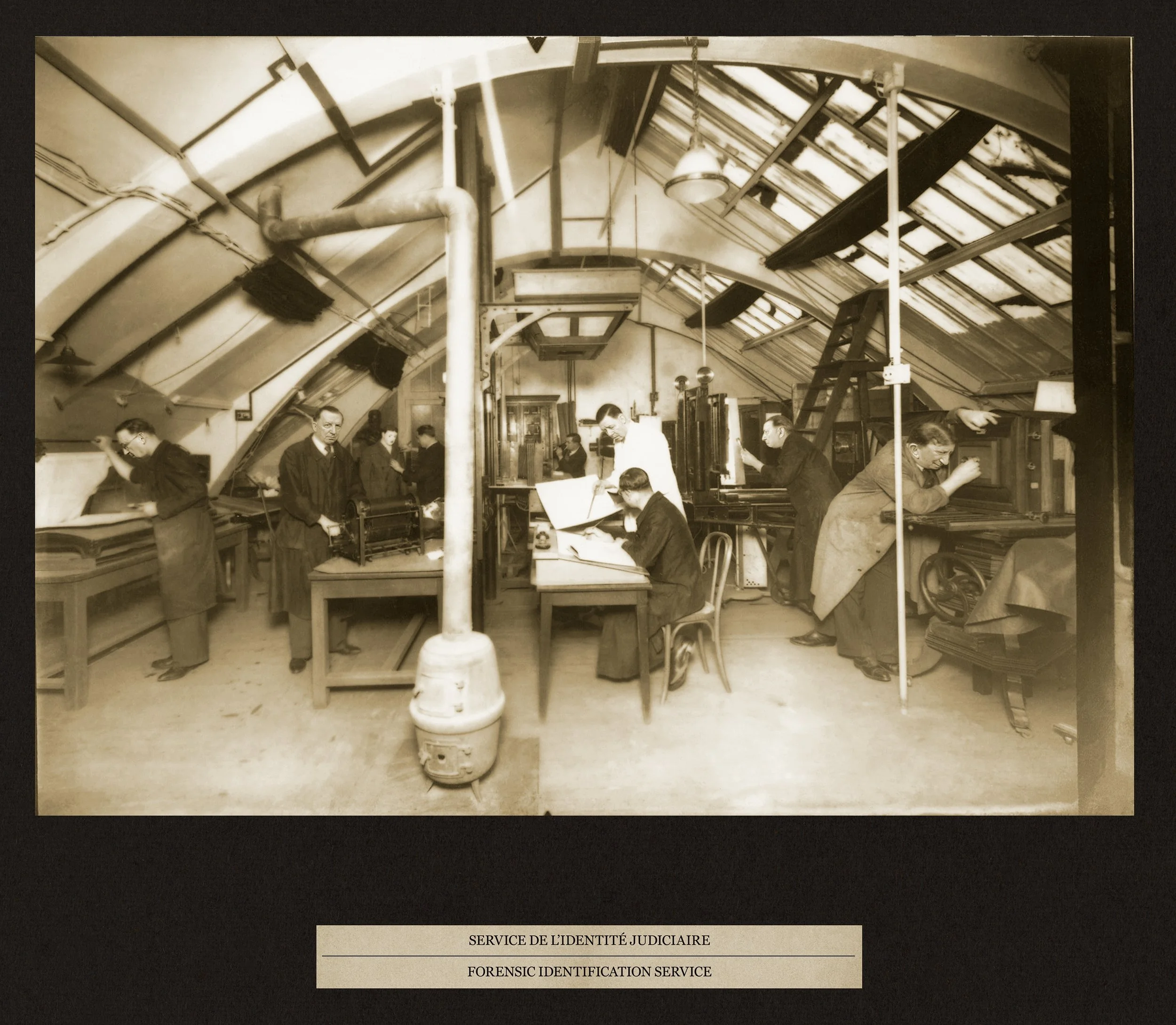
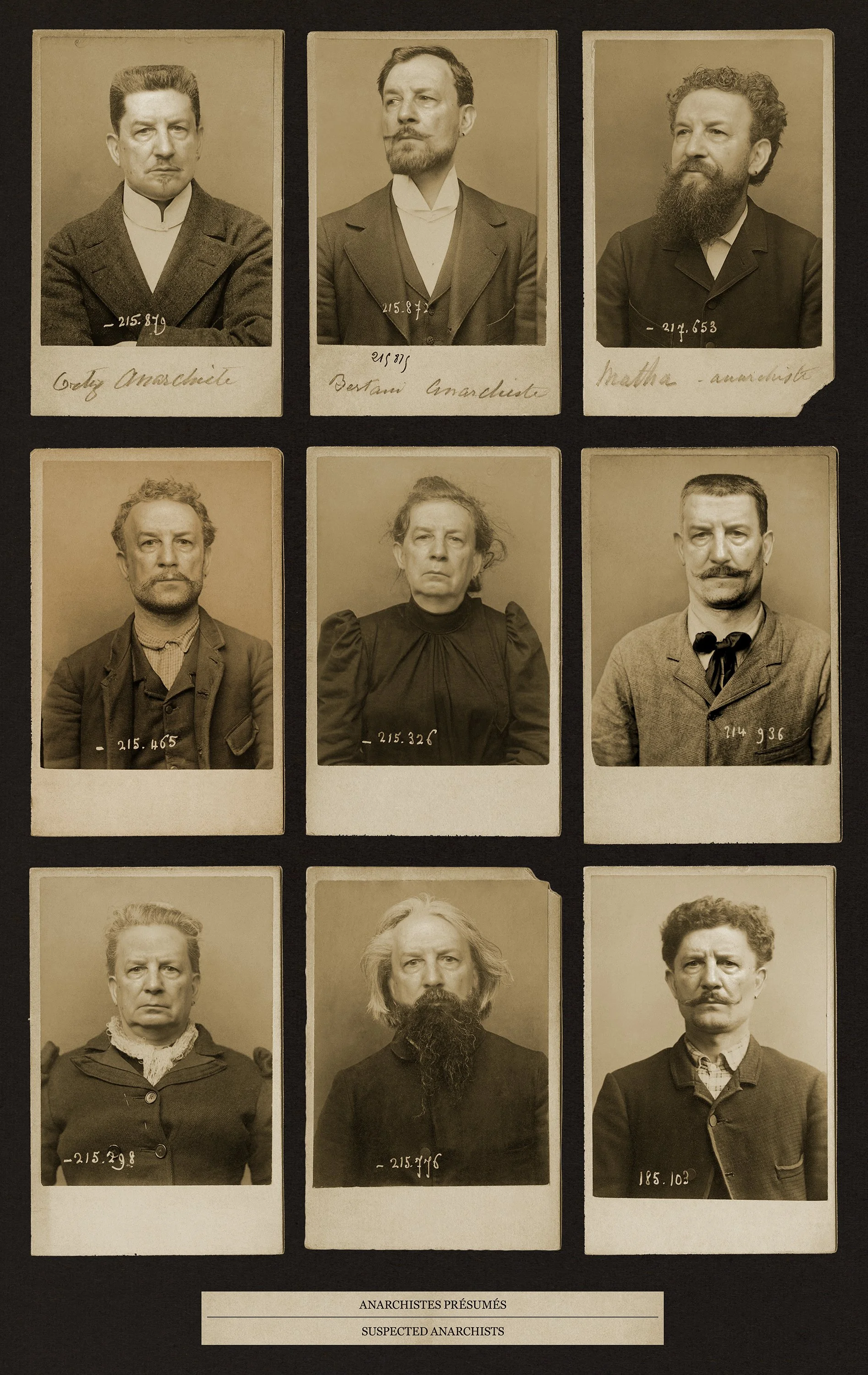
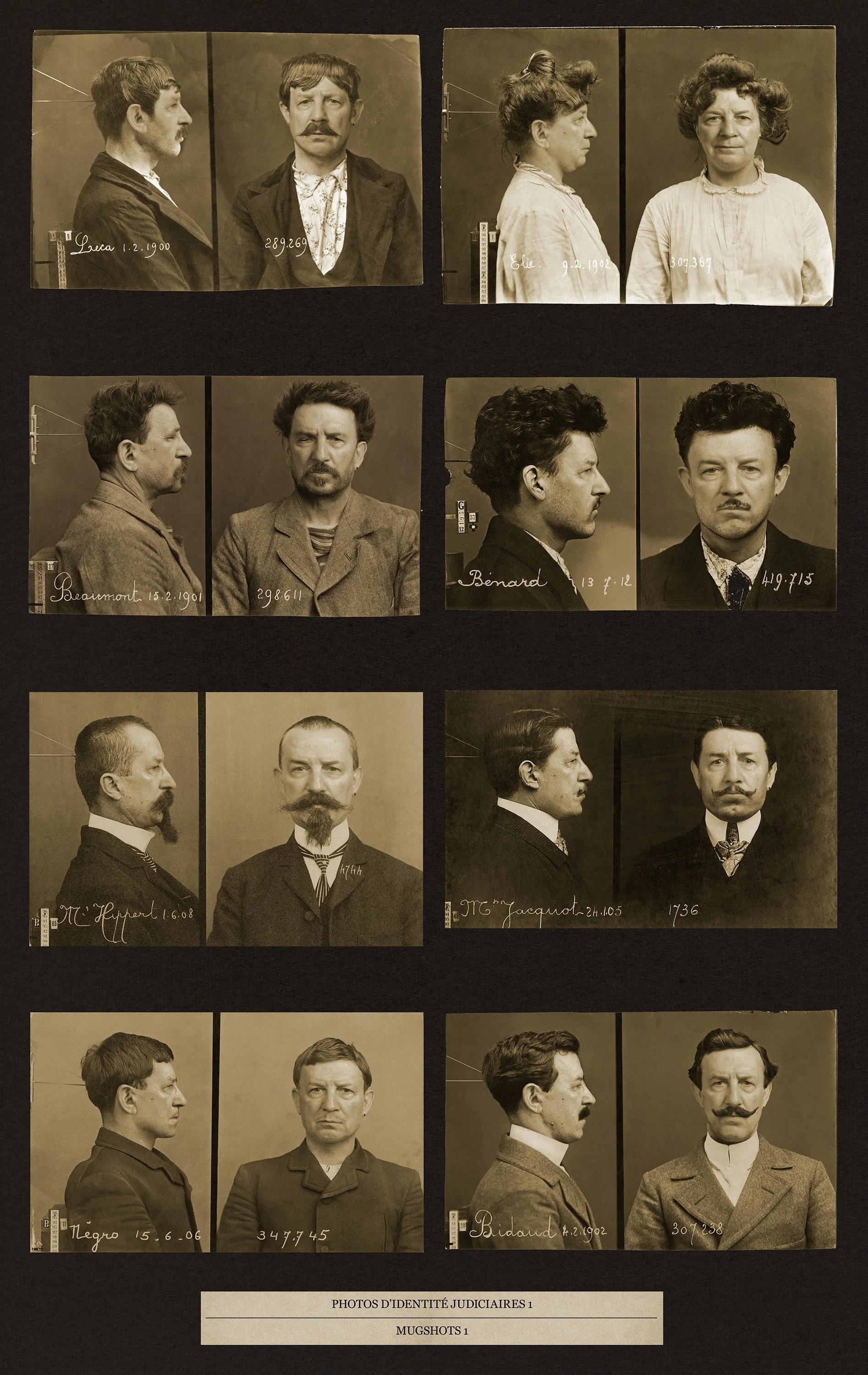
“Crime and Photography” reflects my preoccupations with the topic of photography in the service of the power of the state and a critical moment in the history of the medium in which photography is first presented as legal evidence – in other words: the truth.
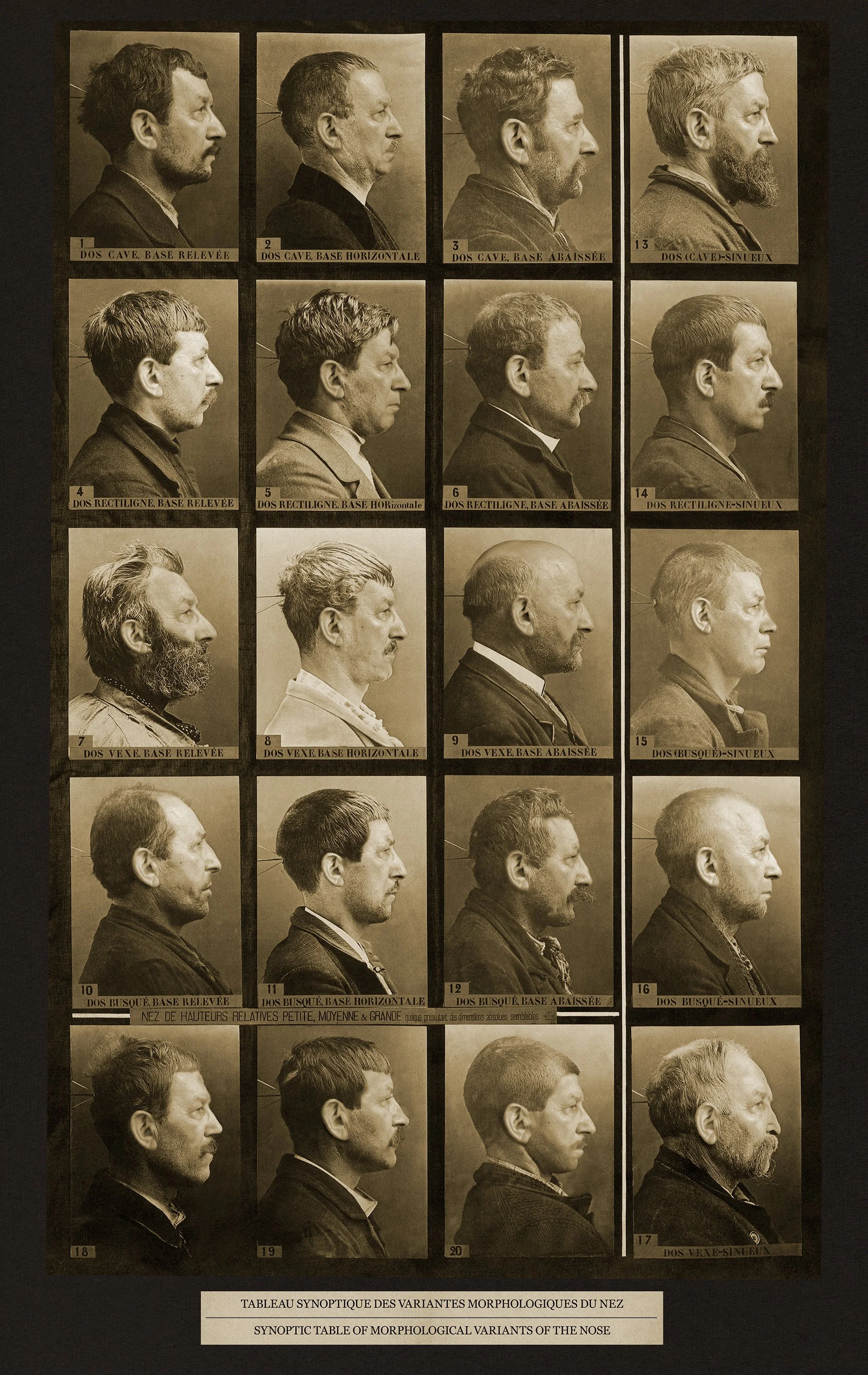
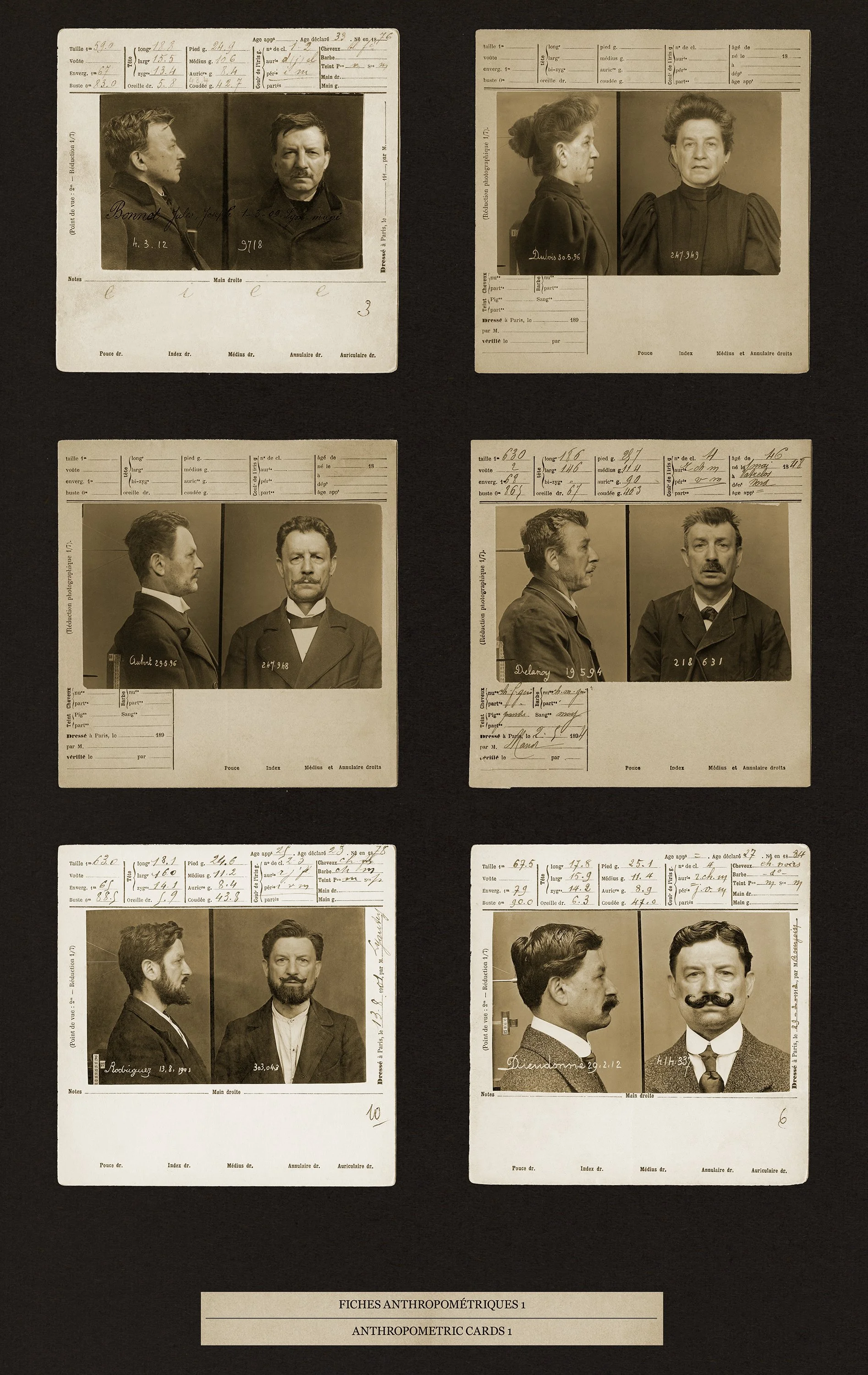
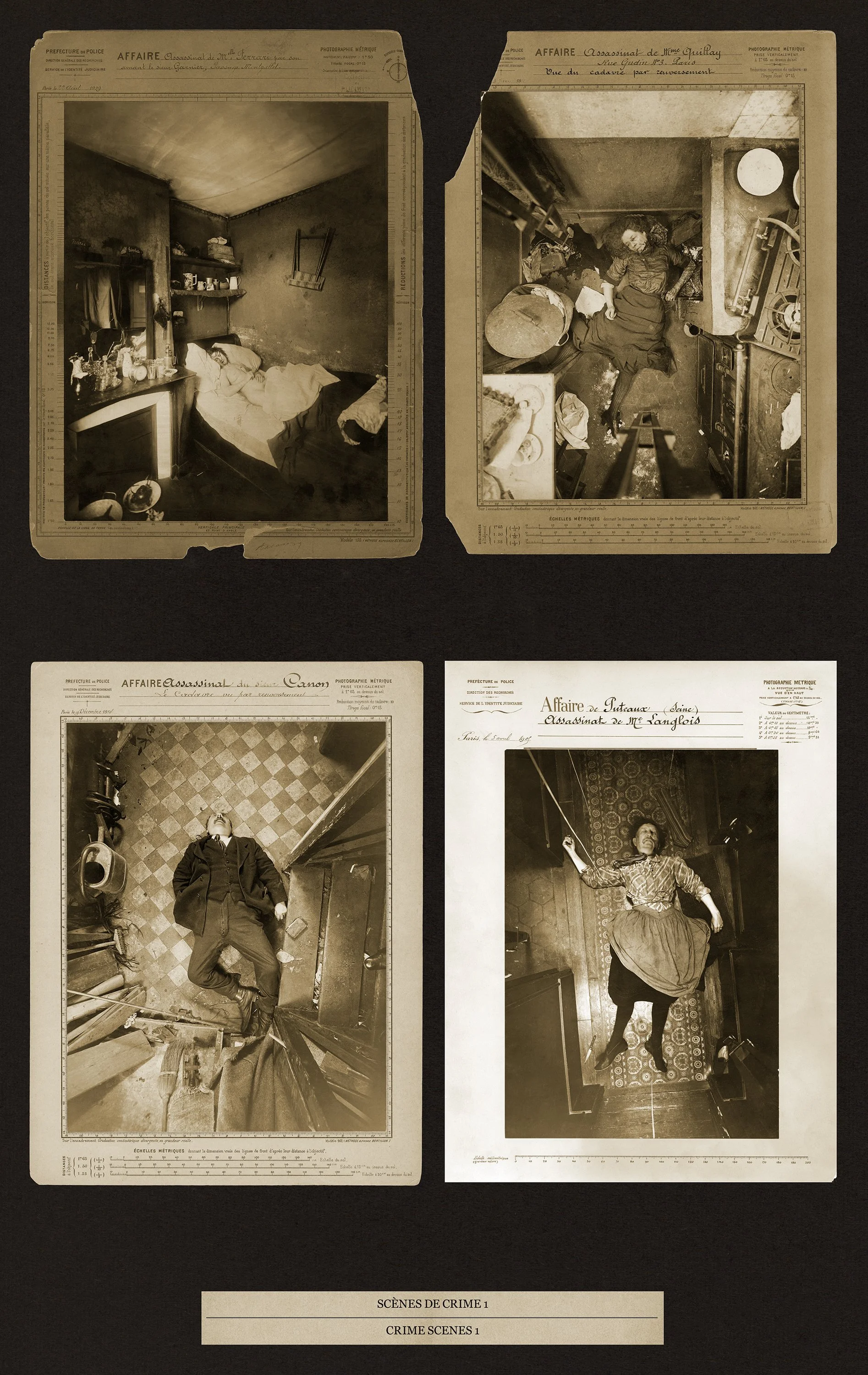
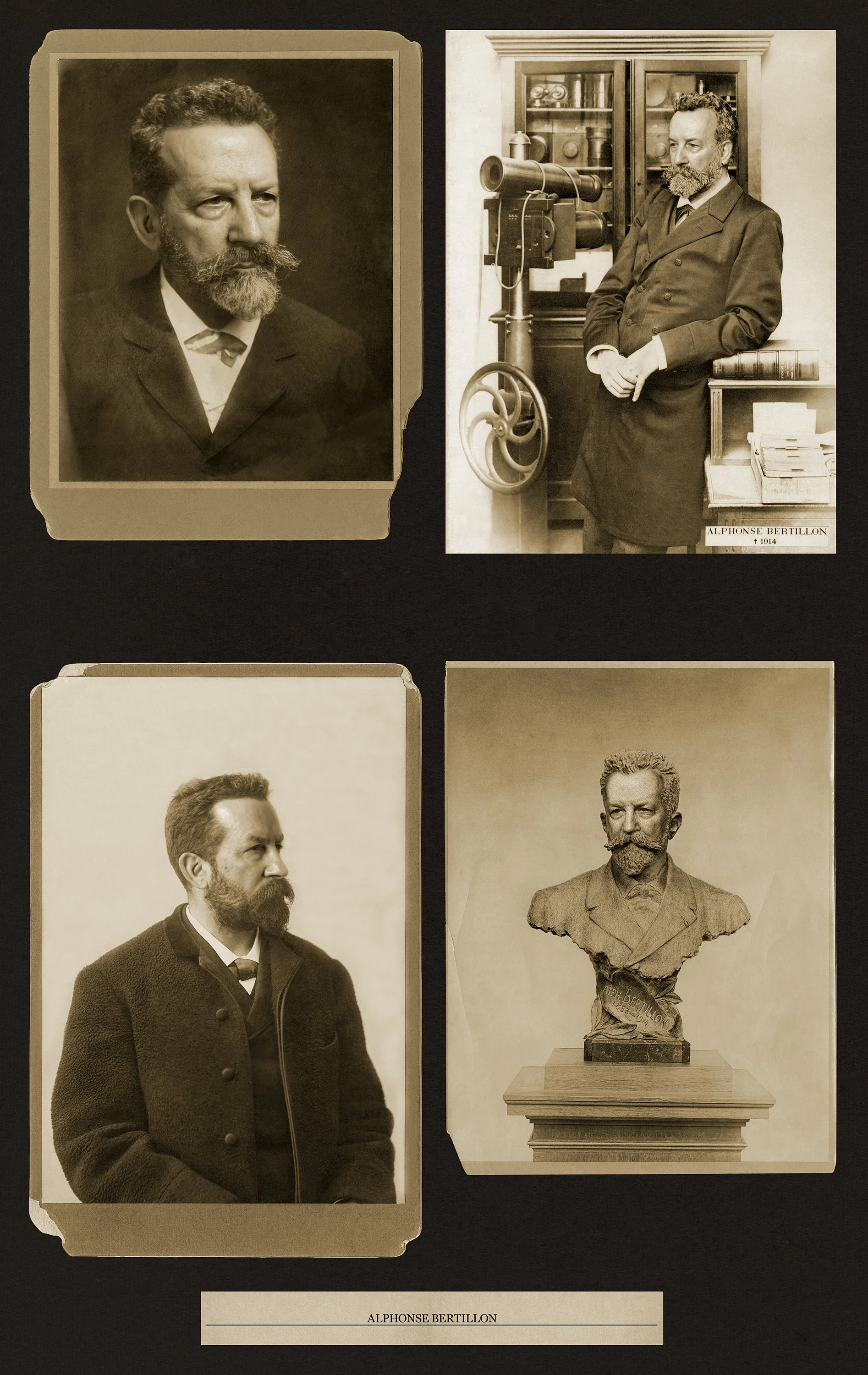
“Crime and Photography” addresses the work of Alphonse Bertillon, a police officer and biometric researcher in the Parisian police force in the late 1800s and early 1900s. Bertillon introduced his ‘anthropometric’ method (often referred to as the ‘Bertillon System’ or ‘bertillonage’ or ‘signaletics’) - a series of measurements of specific characteristics of the human body (made with the aid of specialized measuring equipment and protocols) and precise descriptions of physical characteristics (such as eye colour, scars, tattoos, etc.). These developments made Bertillon a pioneer in the use of photography in solving crimes and identifying and apprehending criminals.
Over the years, anthropometry has been employed in a vast array of undertakings including in the name of science for scientific description and epidemiological analysis as well as in the service of pseudo-scientists who have used it (and continue to use it) to support eugenics and other explicitly racist ideologies and social movements.
“Crime and Photography” is the latest chapter in my ongoing and obsessive examination of the medium. By intruding myself into Bertillon’s innovative (for their time) photographs of crimes, criminals, police, victims, etc., the project seeks to create a space in which viewers are invited to question the supposed neutrality of scientific images that, like most photographs, their meaning and usage can be shaped and altered by their context. The strategy of me ‘becoming’ the subjects of photos from a particular aspect/archive of photography has a leveling effect on the images in question and frees the viewers from assuming the alleged truth and/or reality of the photograph. Furthermore, this approach encourages viewers to reconsider, and to apply critical thinking to, this particular subject matter but also to reflect on photography more broadly.
N.B. No Artificial Intelligence was used in any of the research, creation, texts, or images in the project or in this proposal.