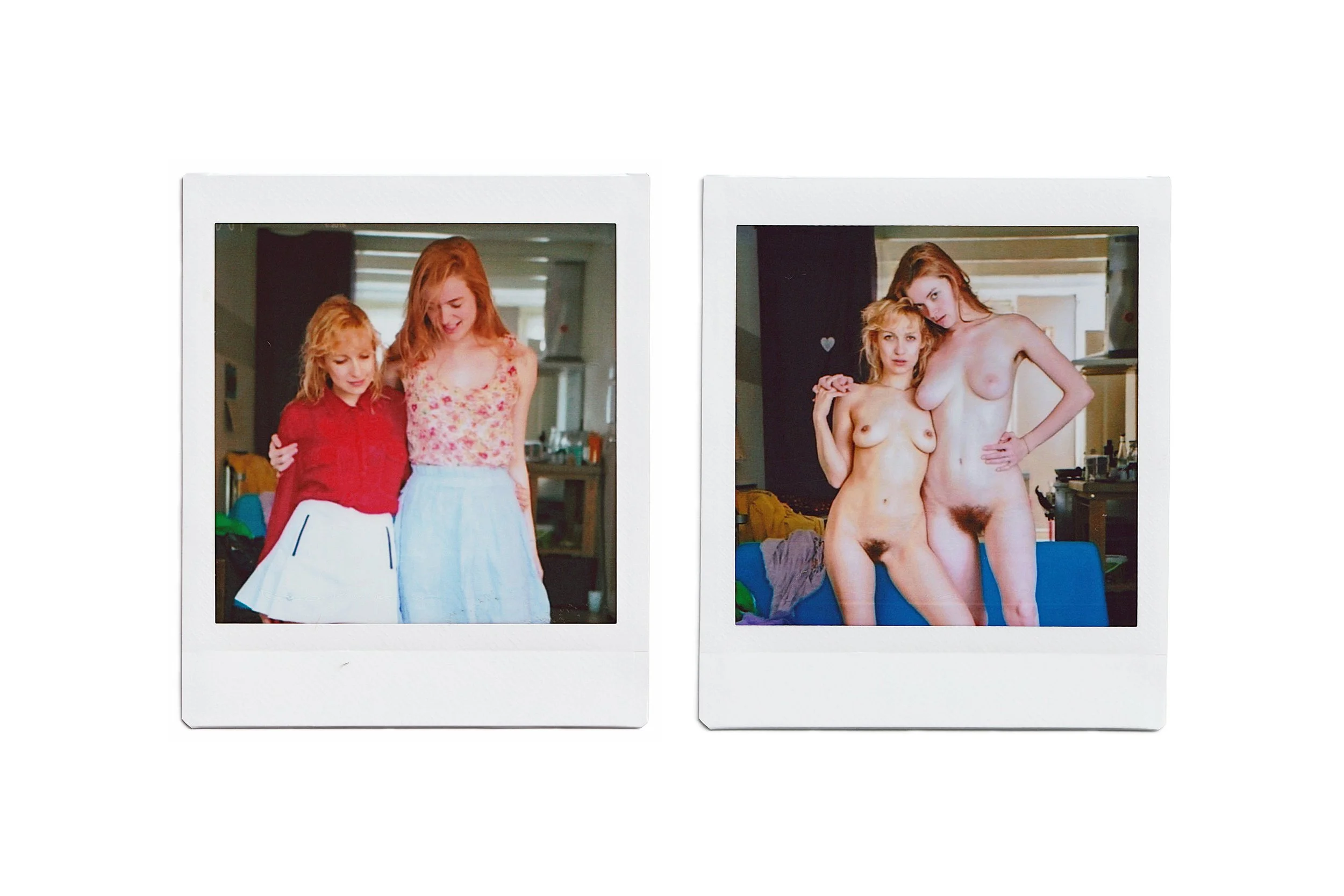
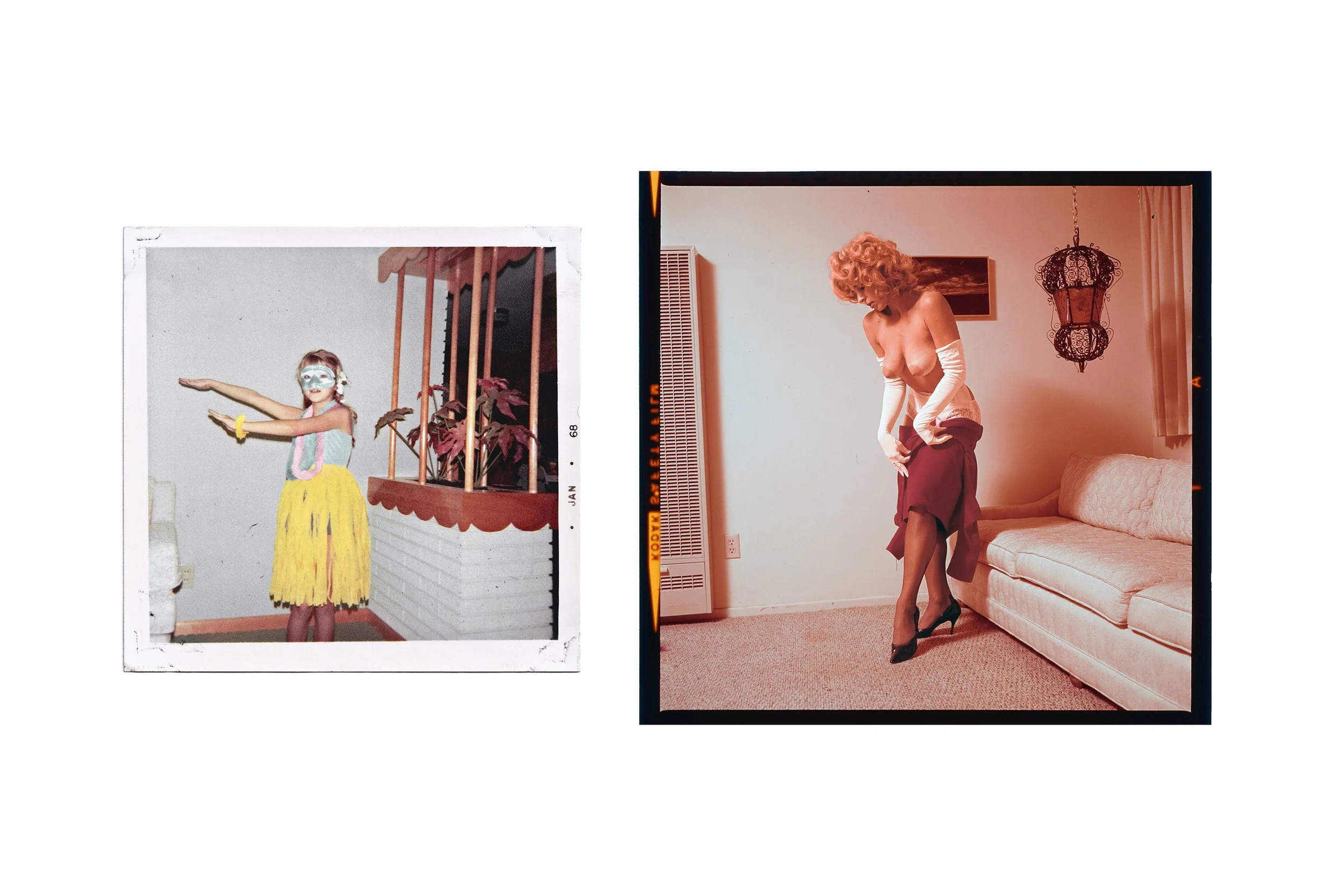
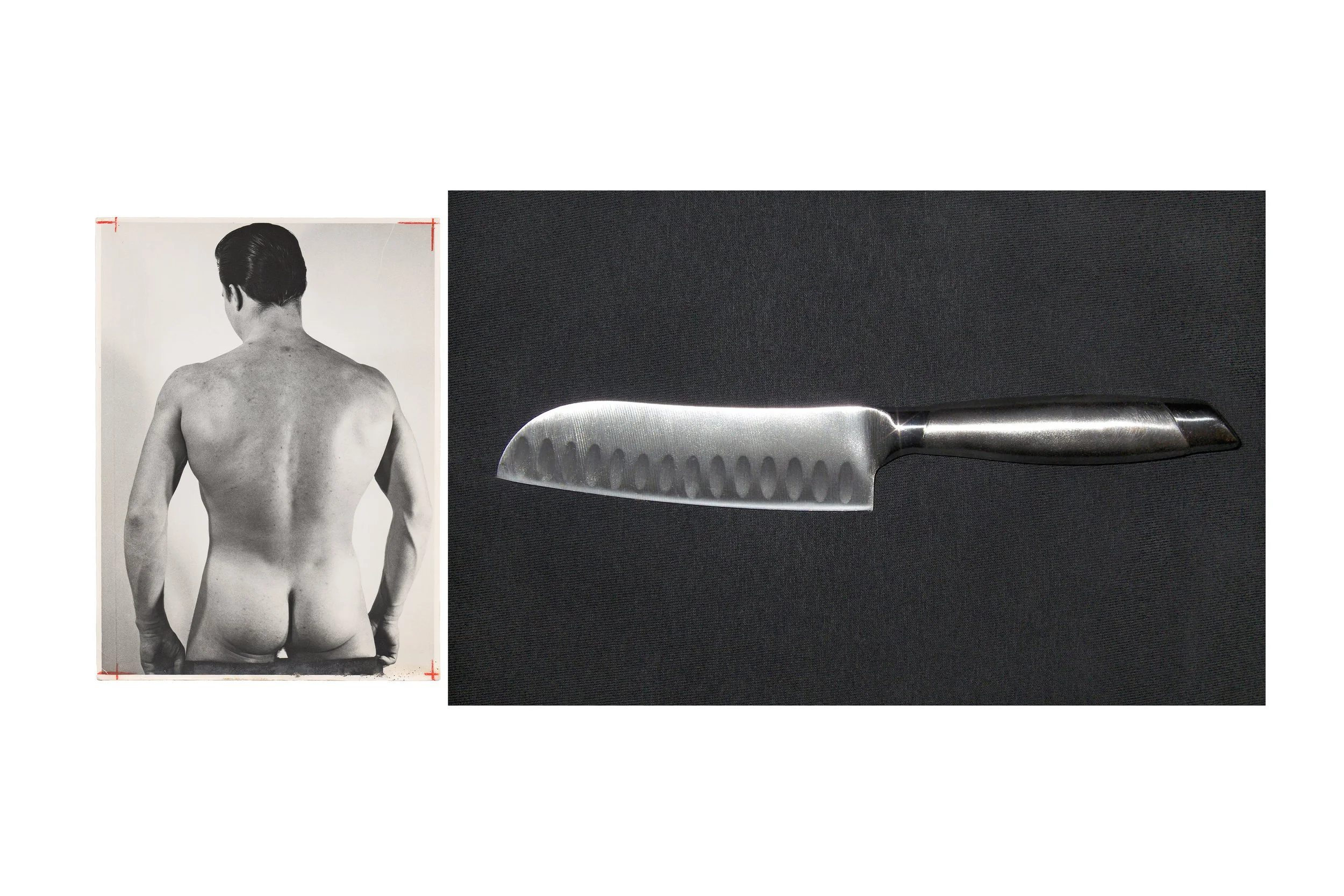
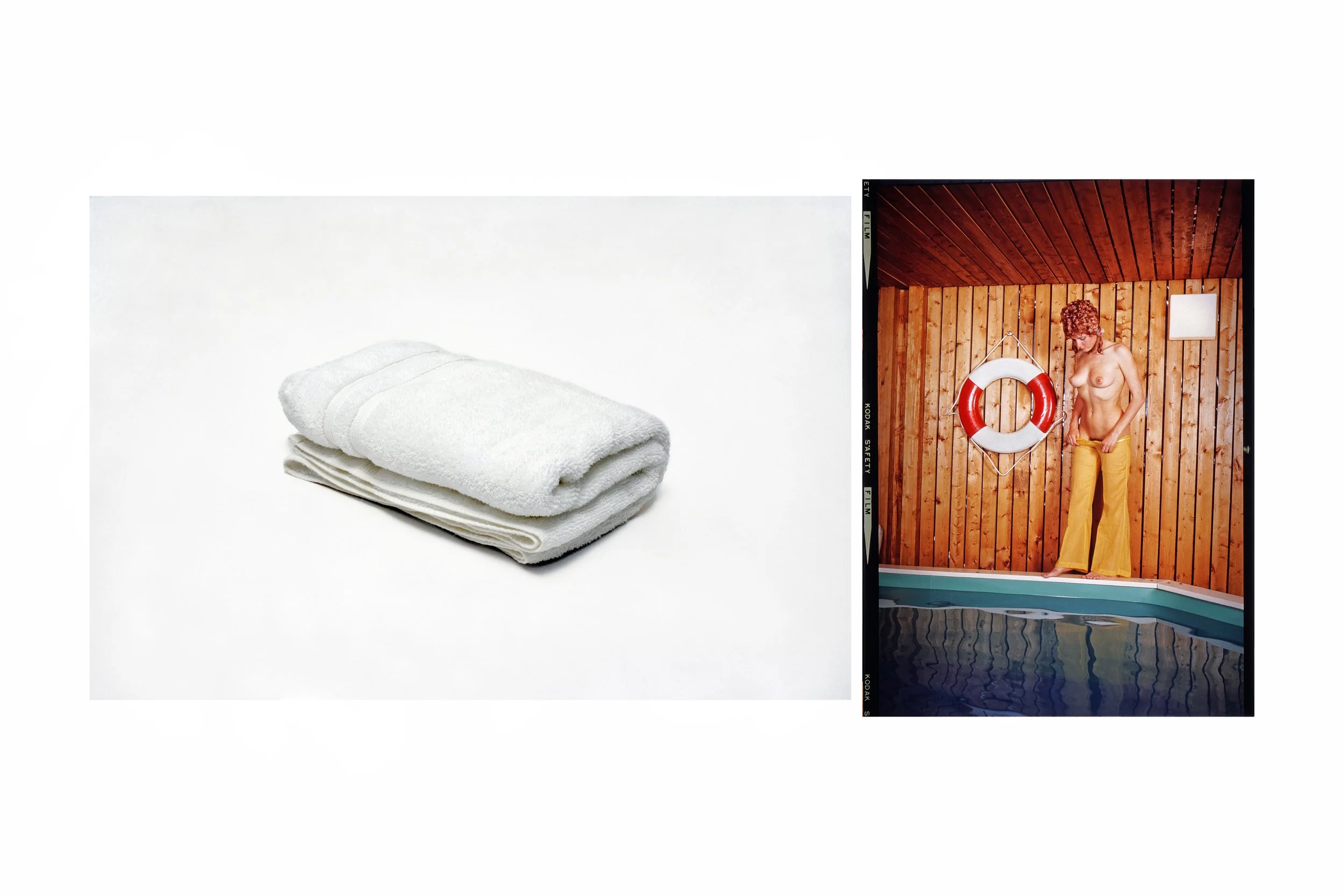
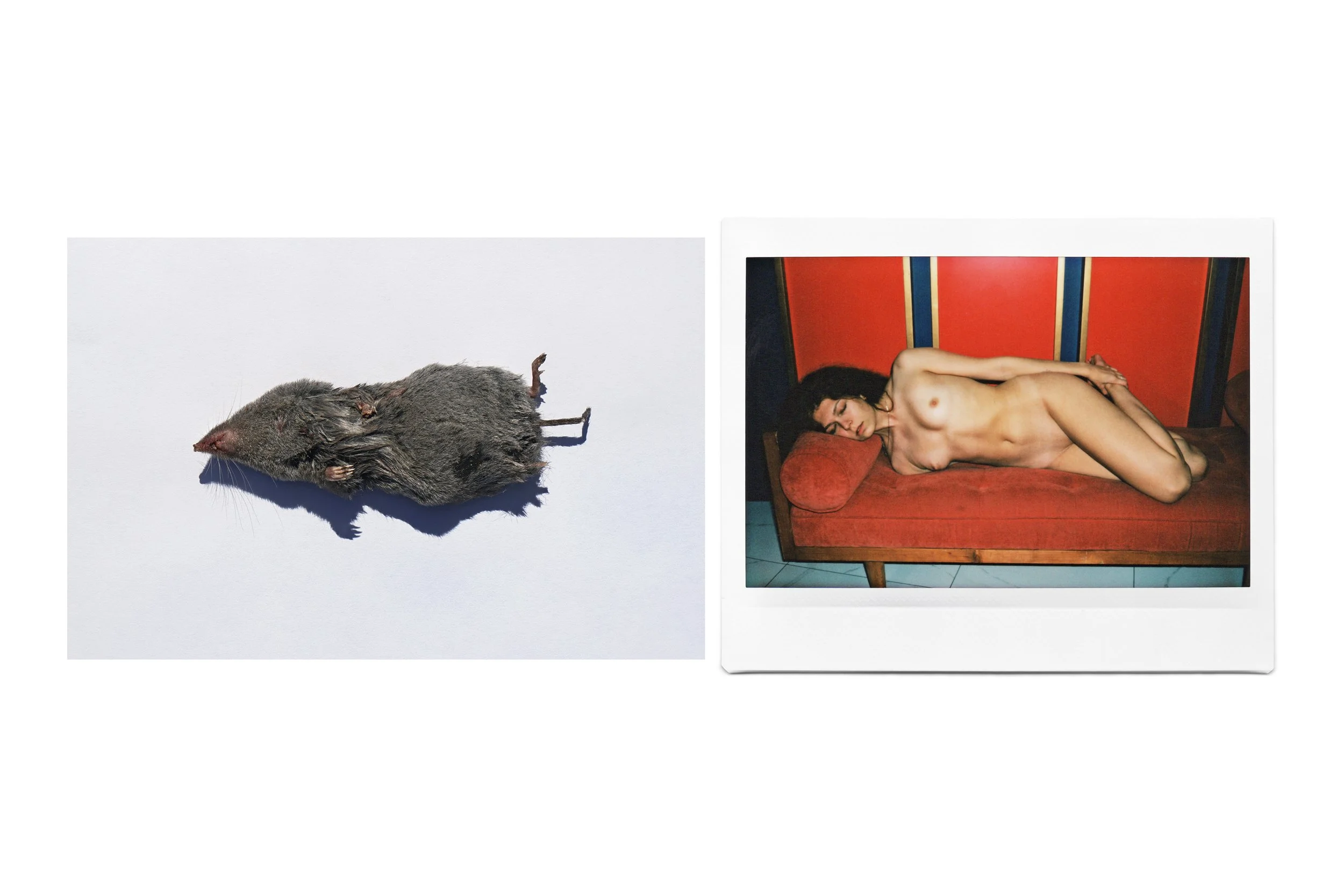
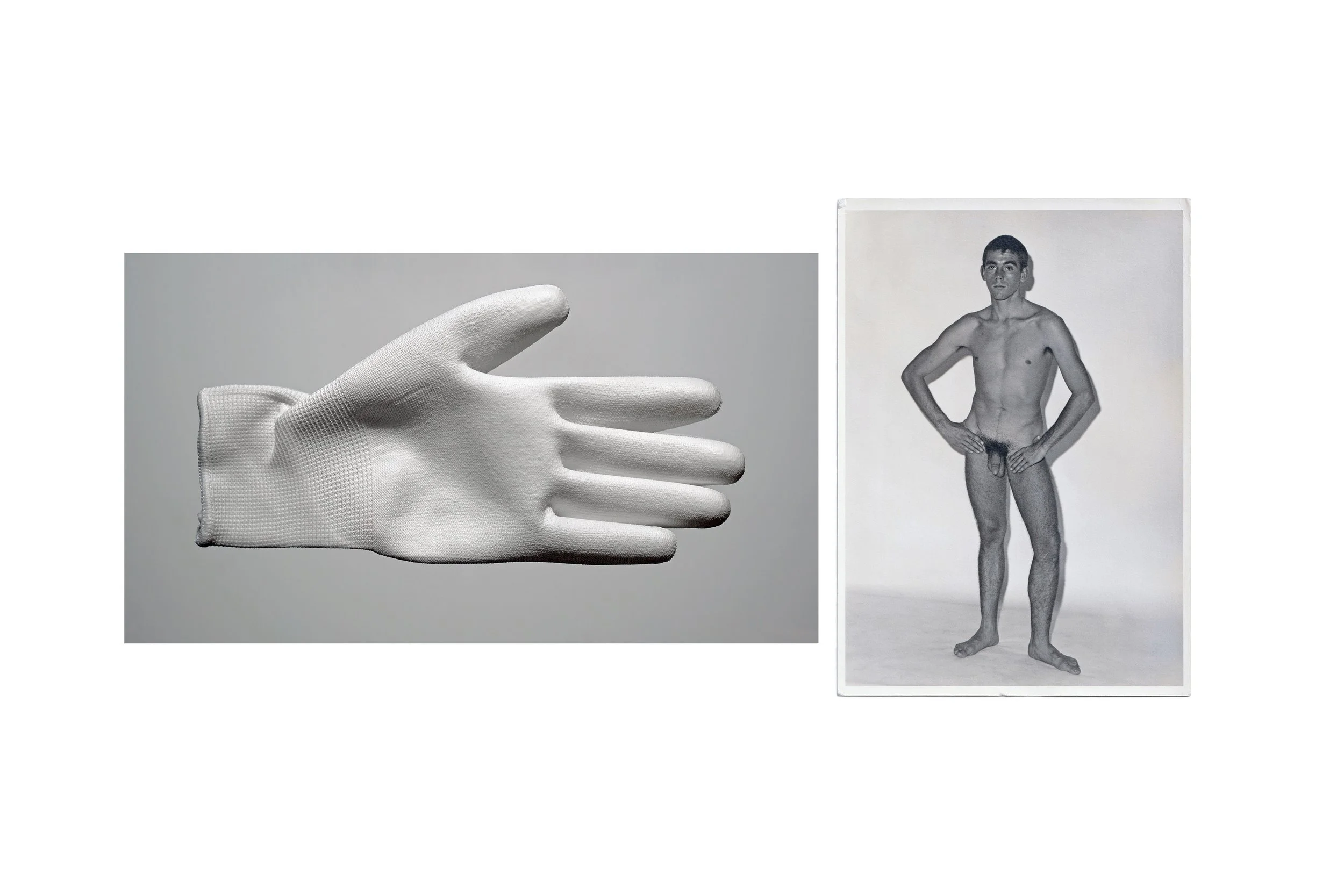
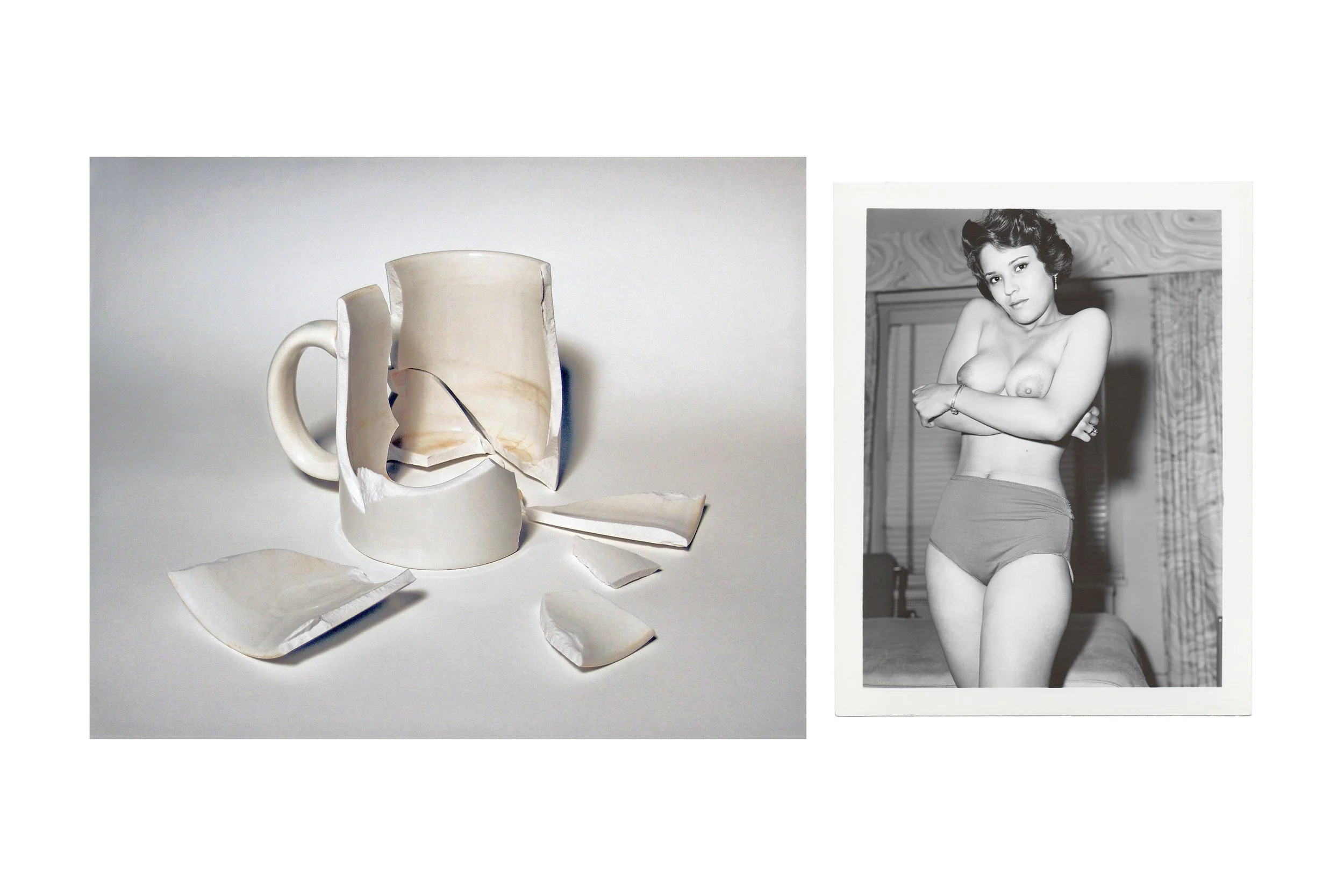
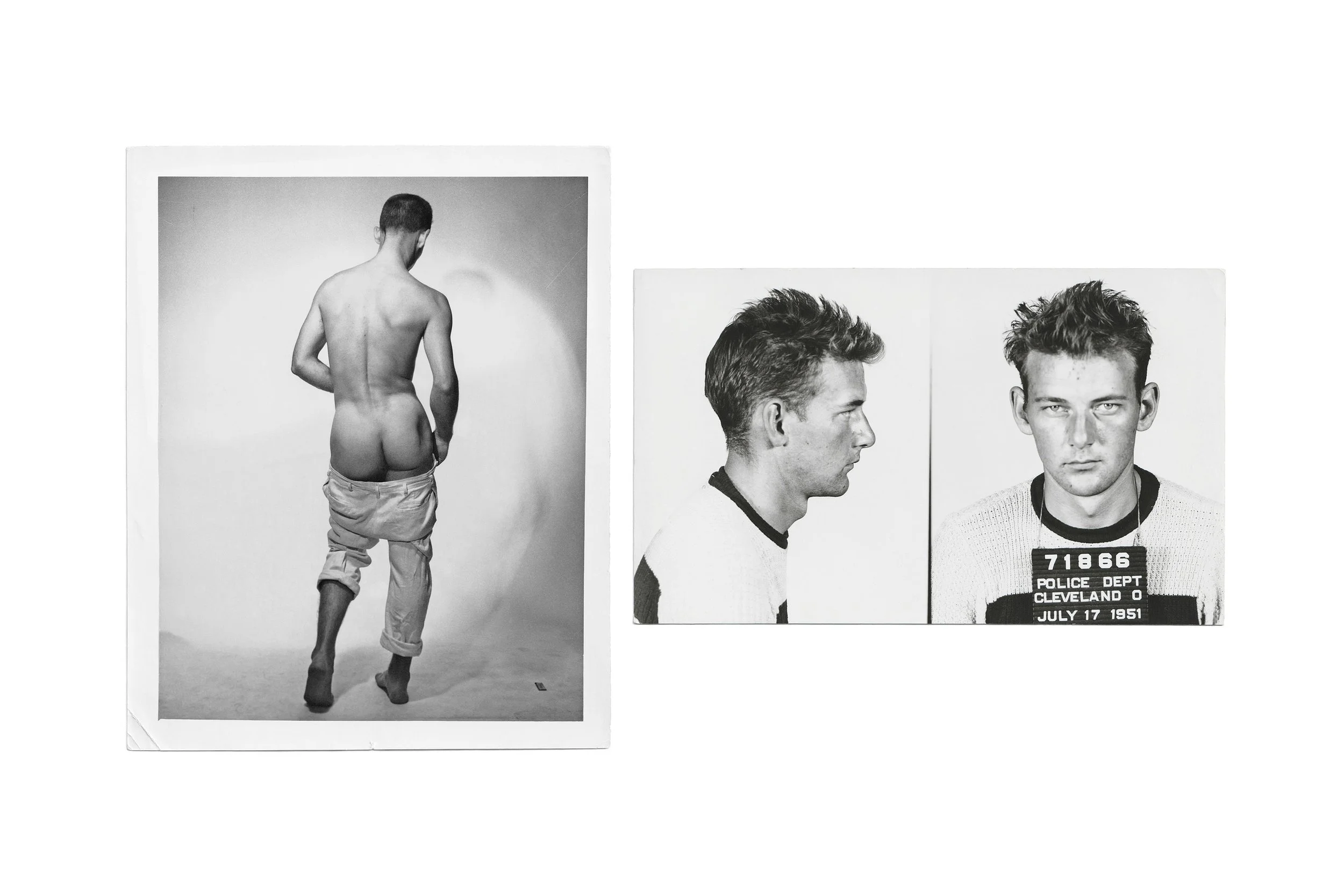
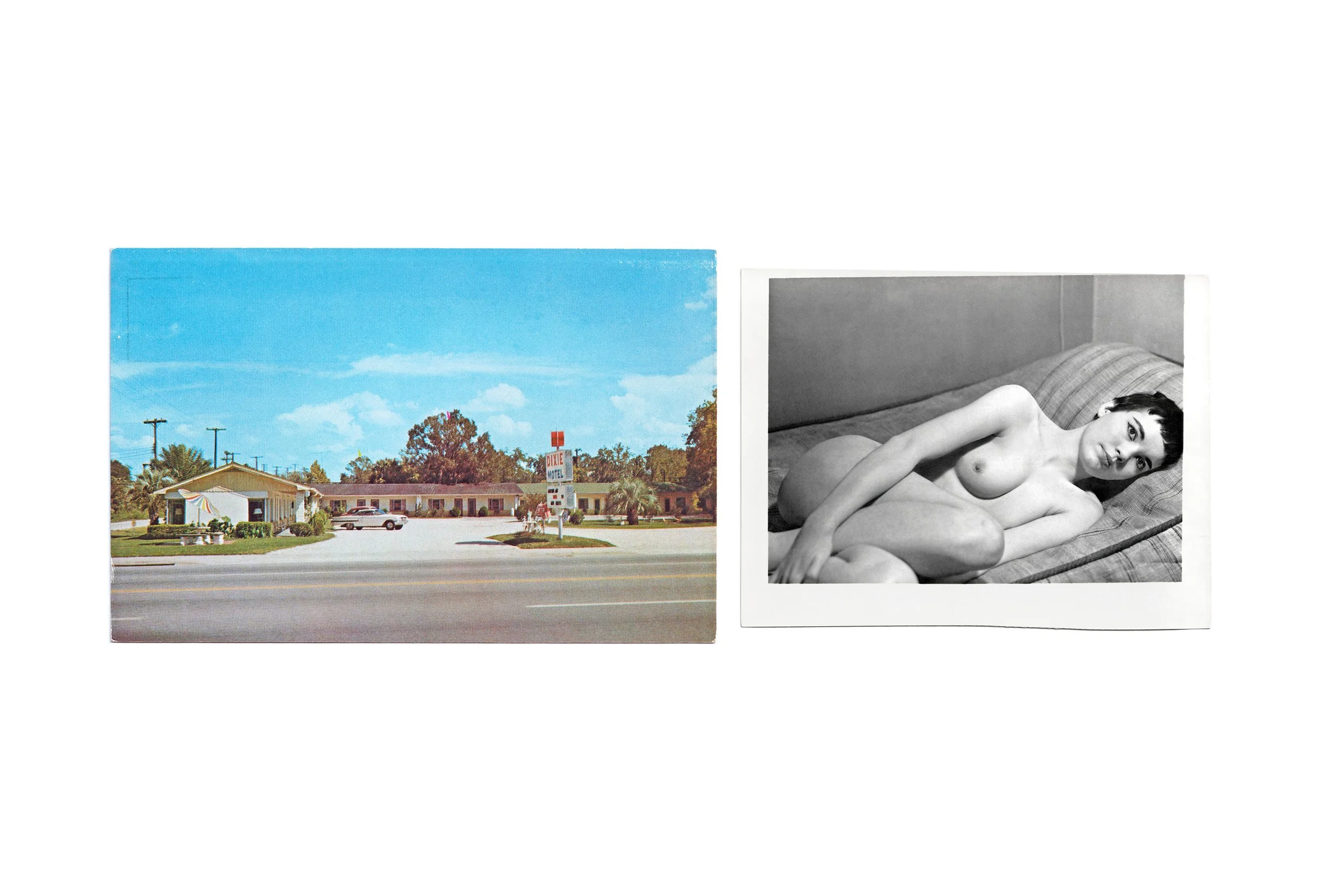
The “Constructed Realities” series presents found anonymous nude male and female photographic portraits purchased off of eBay. The pictures have re-appeared out of the sea of lost and unidentified photographs— untethered from their original purposes and motivations. I scan the images and digitally align them alongside other snapshots and still life photographs to form diptychs. This forced relationship creates an interpretive space suggesting narratives and histories between the previously unconnected pictures. They begin to function like inkblot tests through which viewers project their own biases, social perspectives, and emotions.
"The movie doesn't have the emotion- the movie unlocks the emotion in the audience." Francis Ford Coppola
In 1918, Soviet cinema pioneer Lev Kuleshov performed experiments in film editing. He proposed that any form of art consists of two things, the material itself and the way in which the material is organized. In Kuleshov's view, cinema consists of fragments and the assembly of fragments- elements which in reality are distinct. The raw materials of such an artwork need not be original, but are pre-fabricated elements which can be disassembled and re-assembled by the artist into new juxtapositions. He discovered that the dramatic effect of a film was not in the content of its shots, but in the edits that join them together. It is a mental phenomenon by which viewers derive more meaning from the interaction of two sequential shots than from a single shot in isolation. This discovery is now known as the Kuleshov Effect.
My series uses photography's inherent duality of detailed description and contextual ambiguity along with the Kuleshov Effect to highlight the idea that understanding reality and meaning through photographs is difficult. Answers may not come from the image itself, but from the gap between analysis, lens-formed representation, and real knowledge.