My project is an exploration of family life as it exists in the thresholds of domestication and wildness, memory and truth, care and intimacy, word and image. I create images and stories that engage and disrupt domestic interior and exterior spaces and approximate the feeling of memory, attempting to capture the way time actually seems to move, in fits and starts, where early versions of ourselves seem to linger. My work begins in this tension: the sensation of living among ghosts of ourselves, past versions, regrets, of holding onto a moment even as it slips.
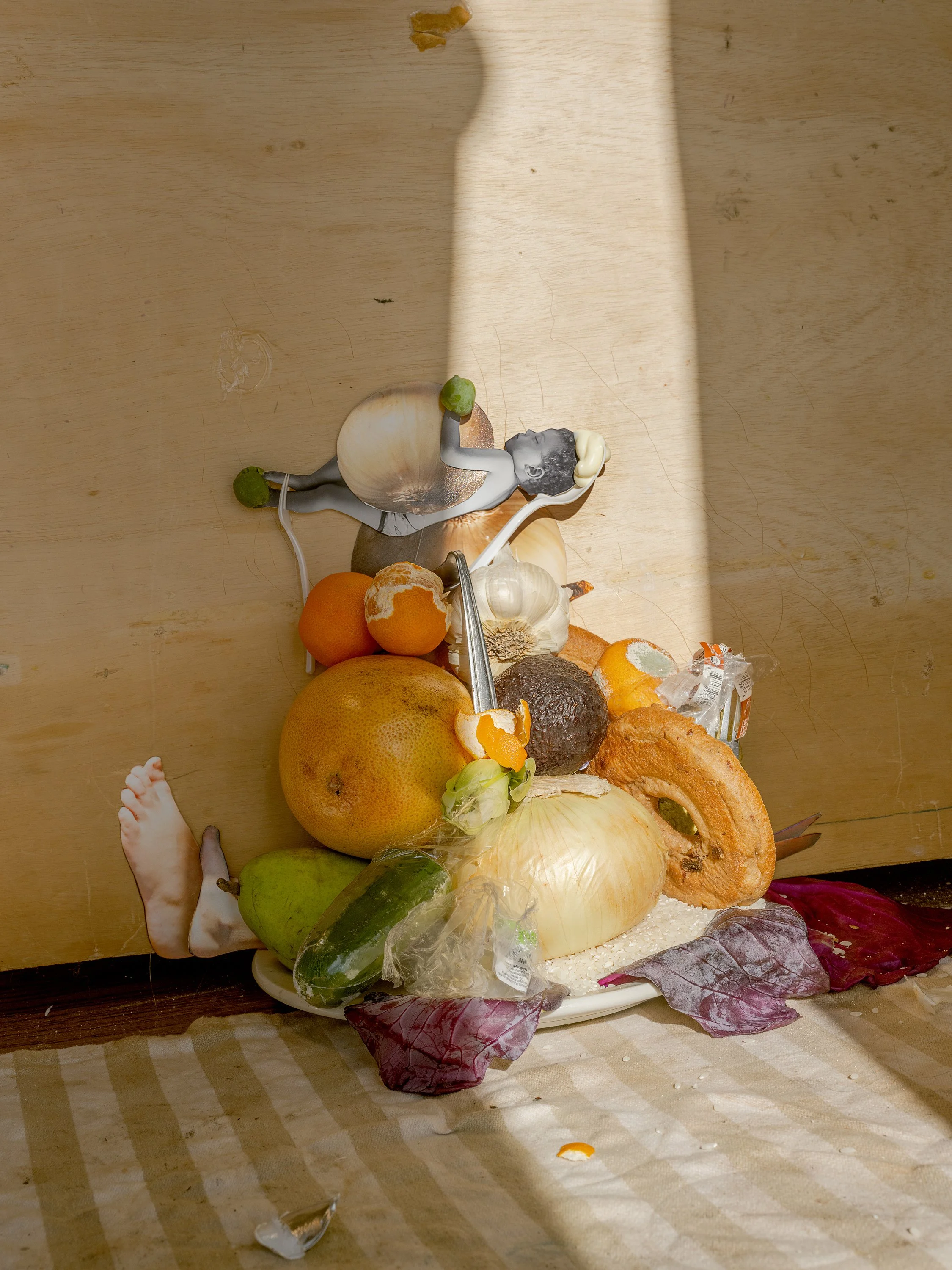
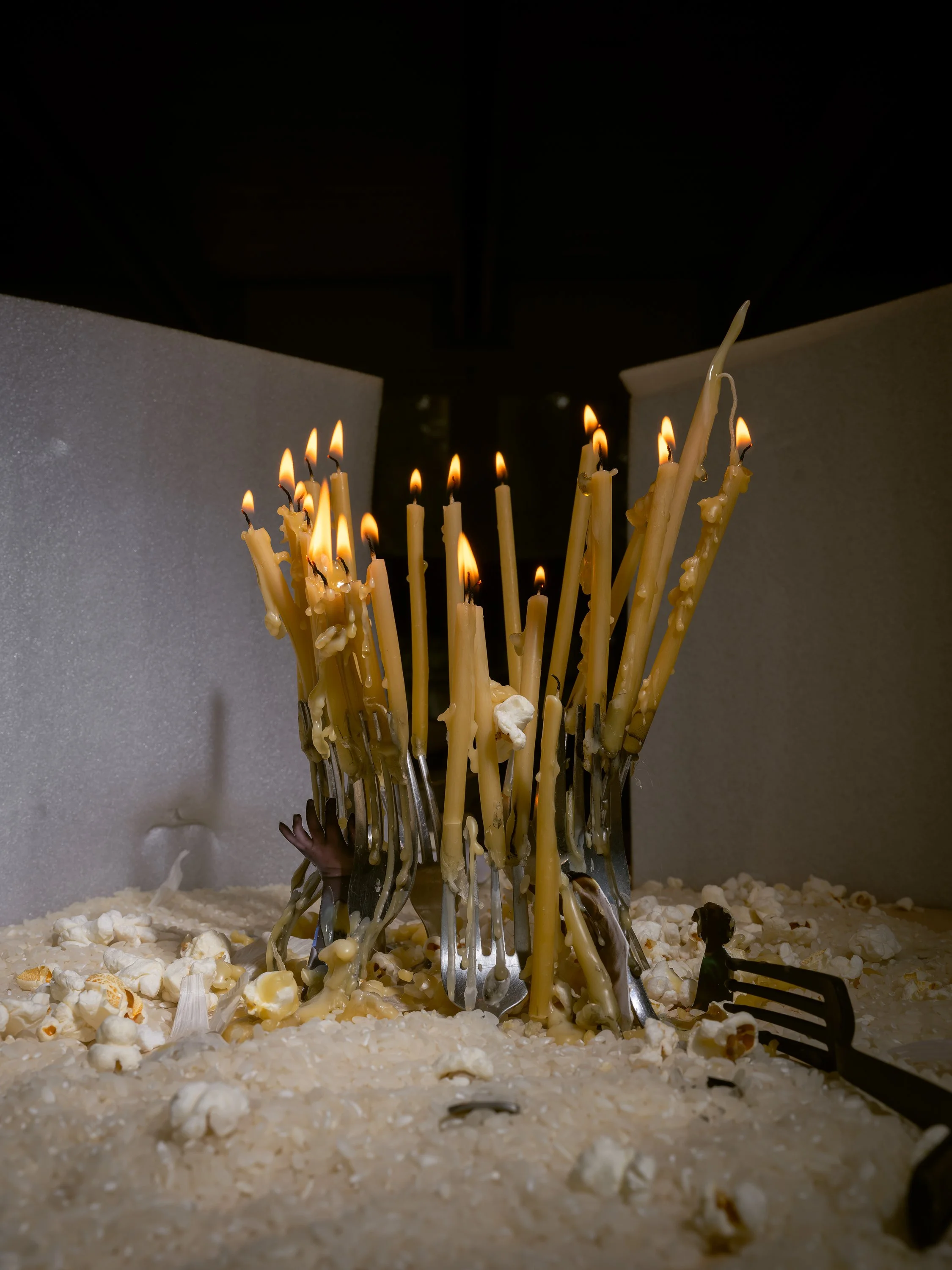
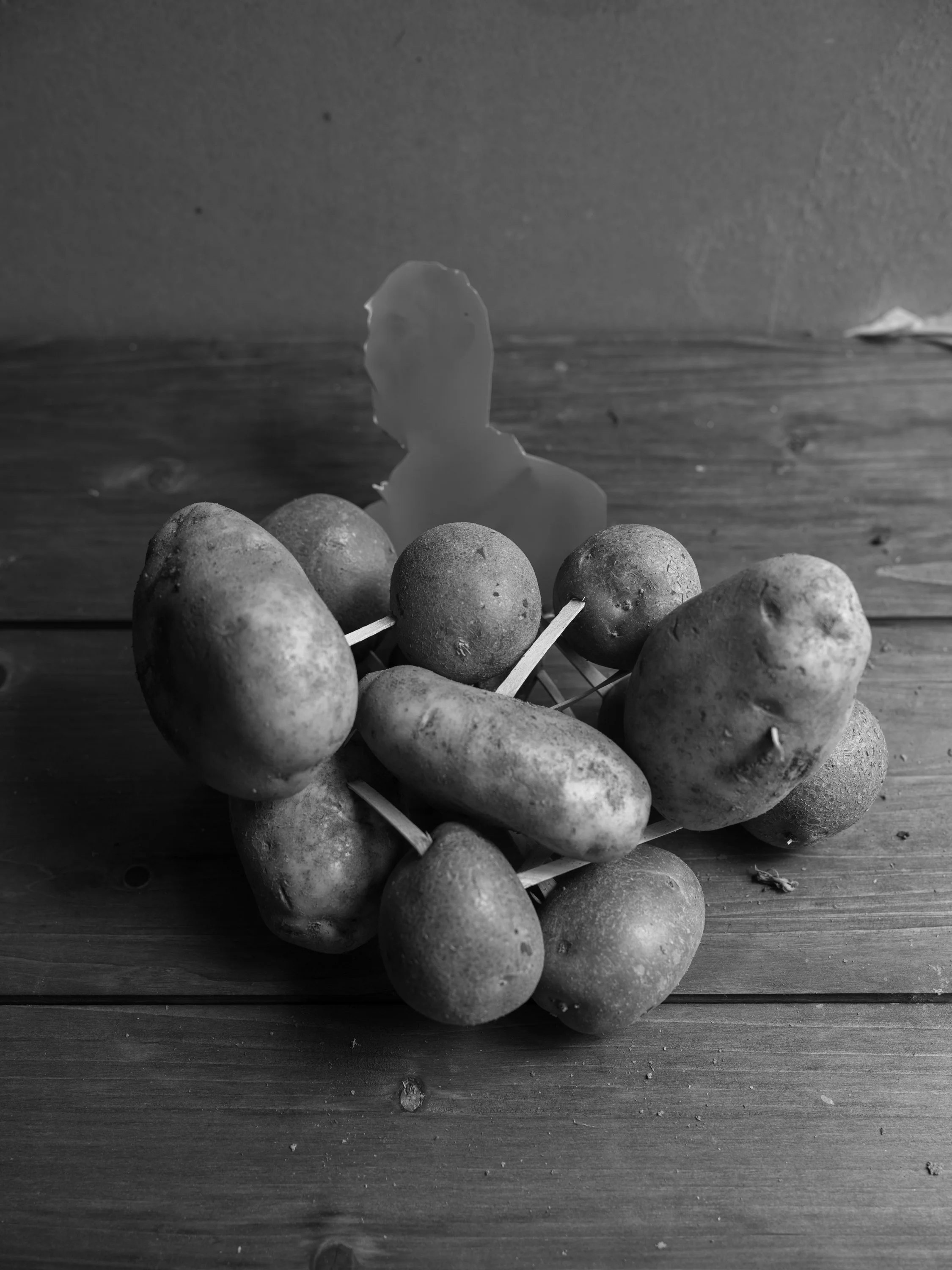
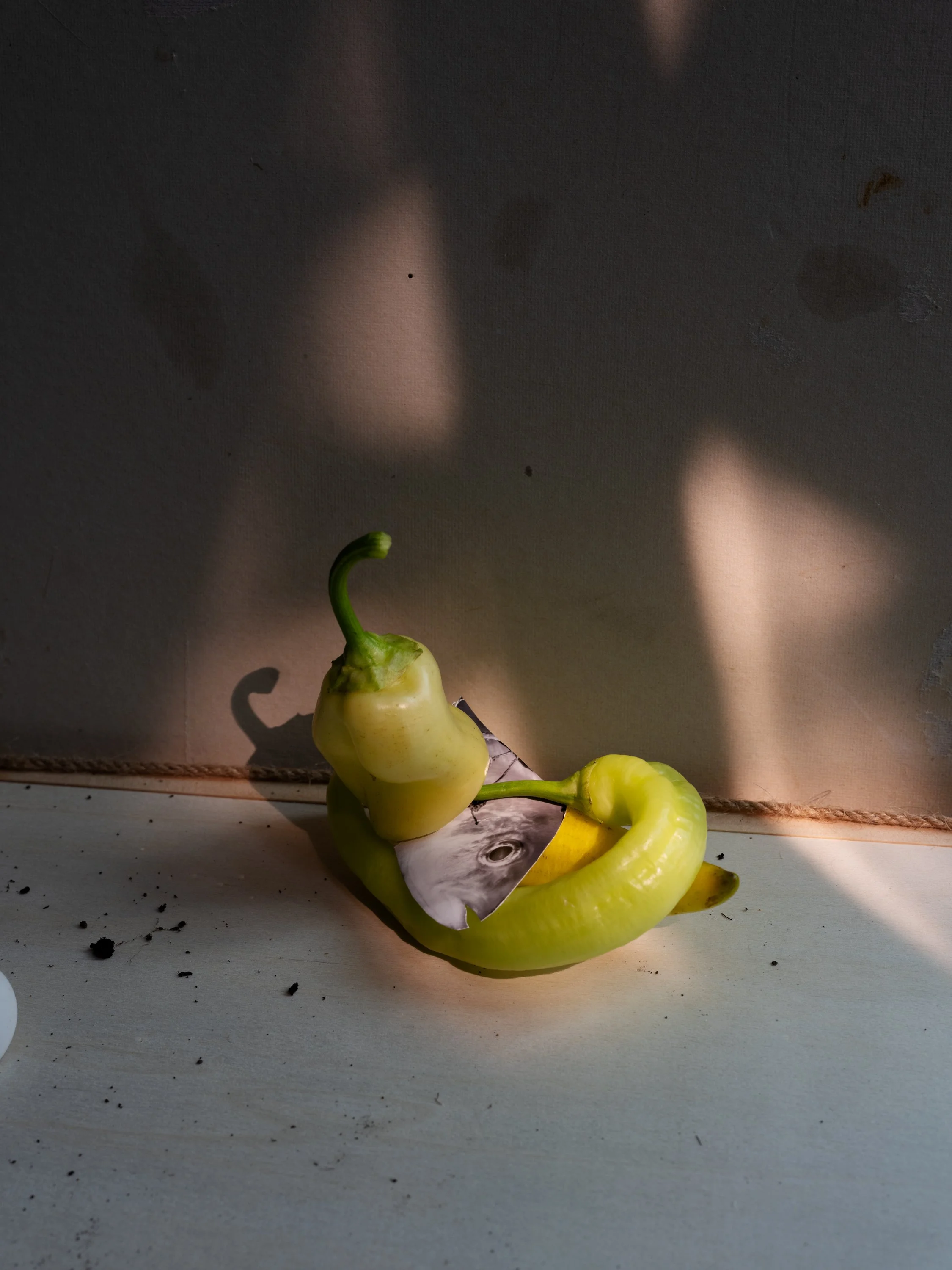
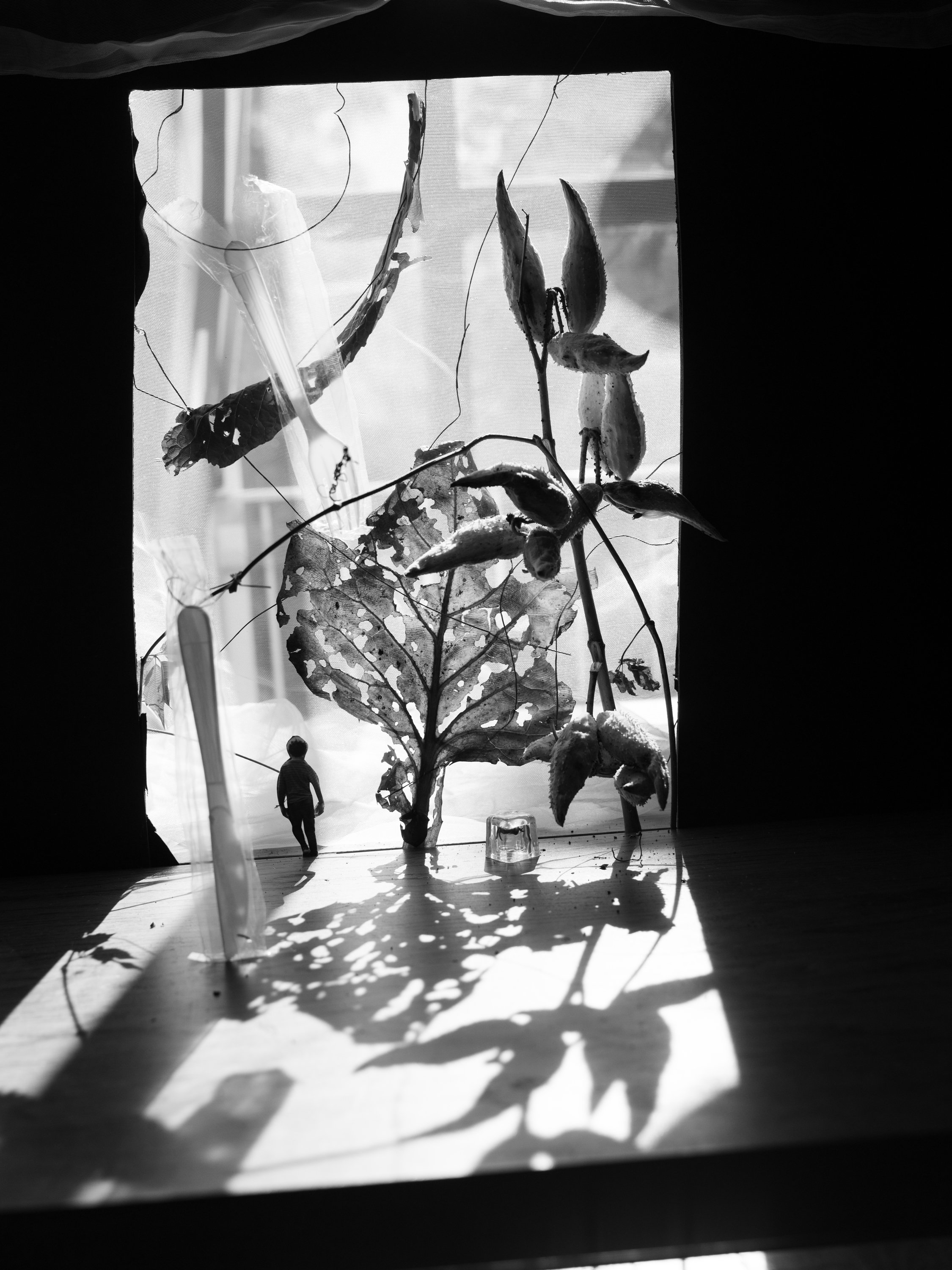
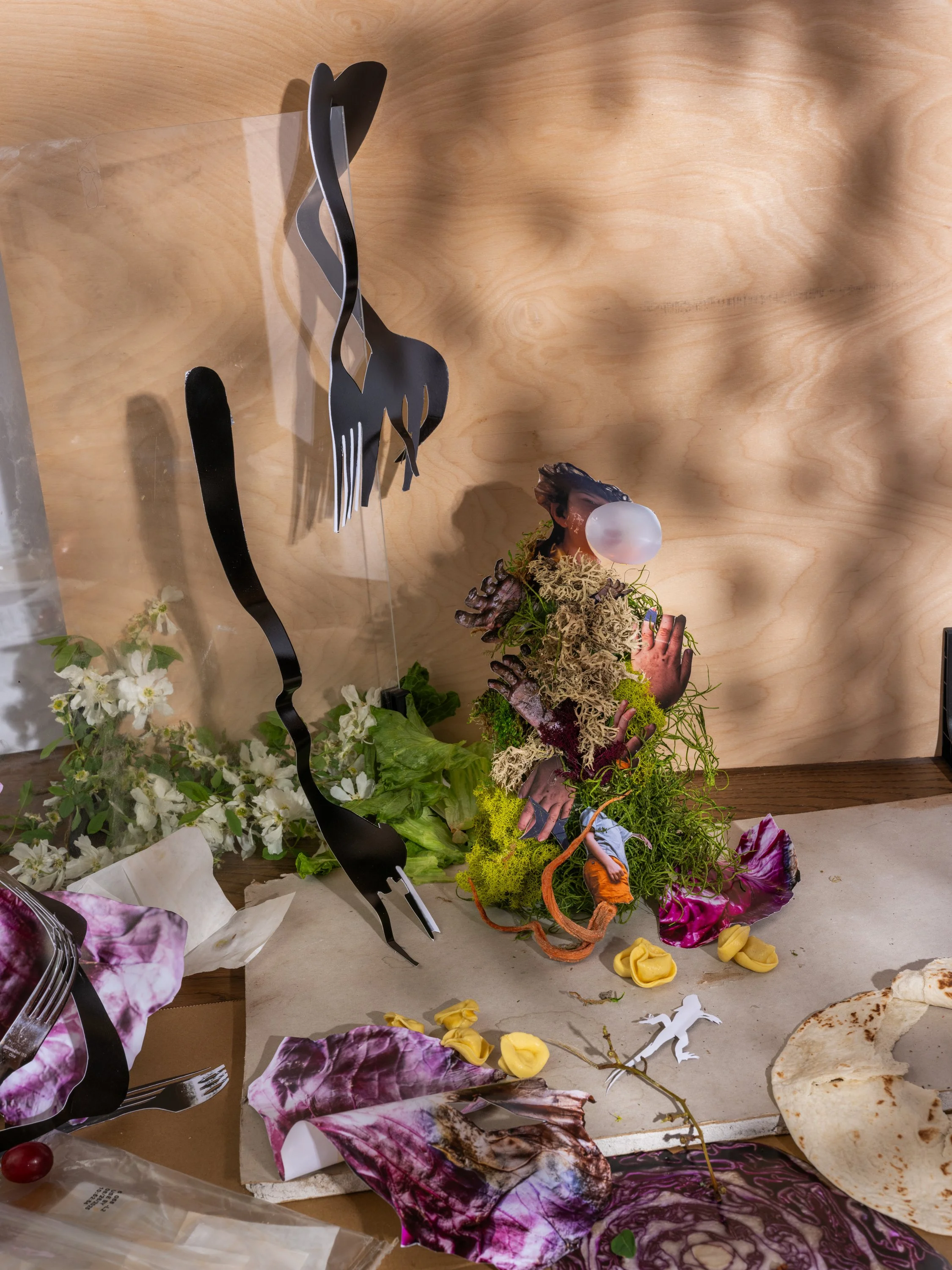
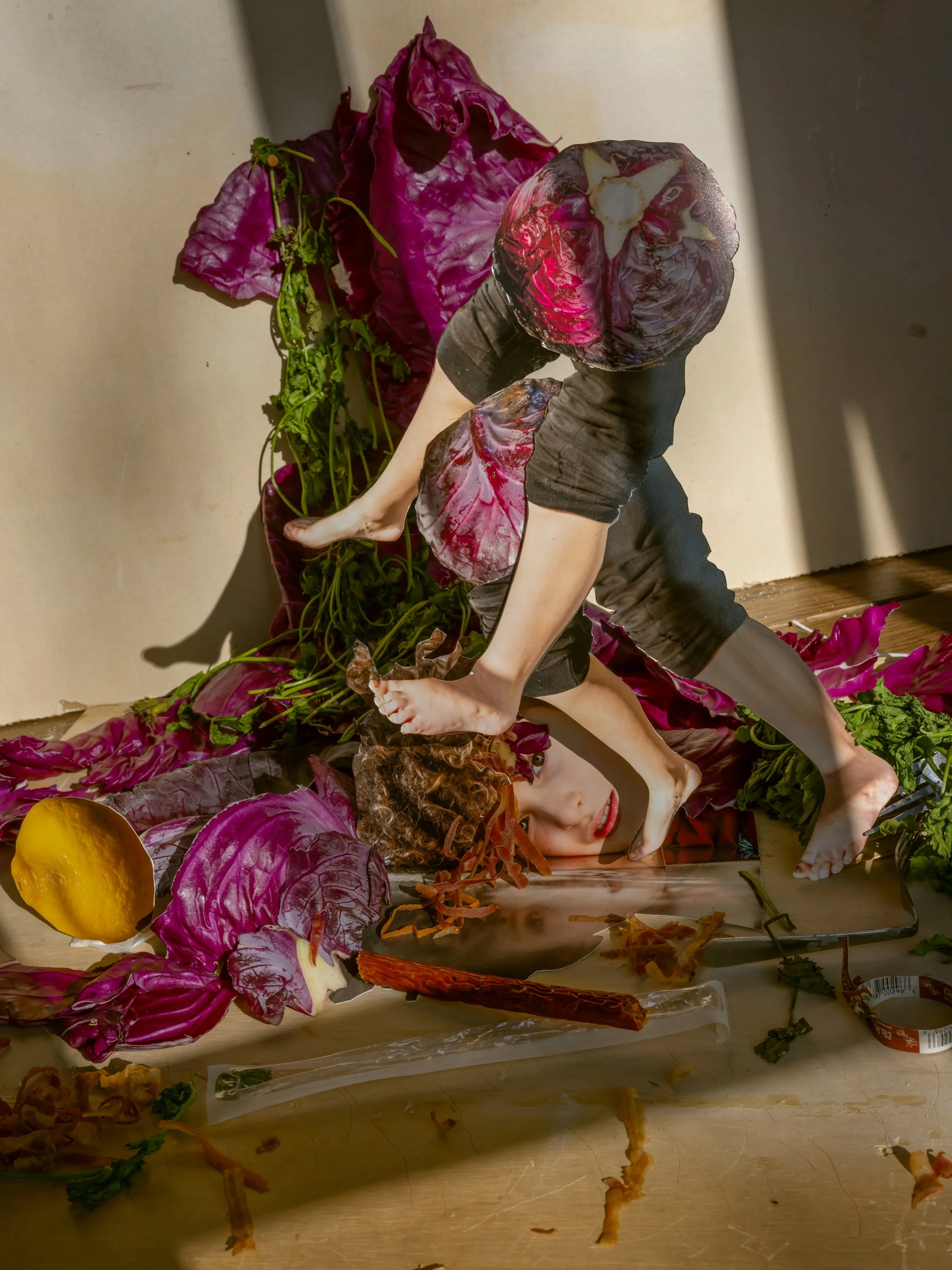
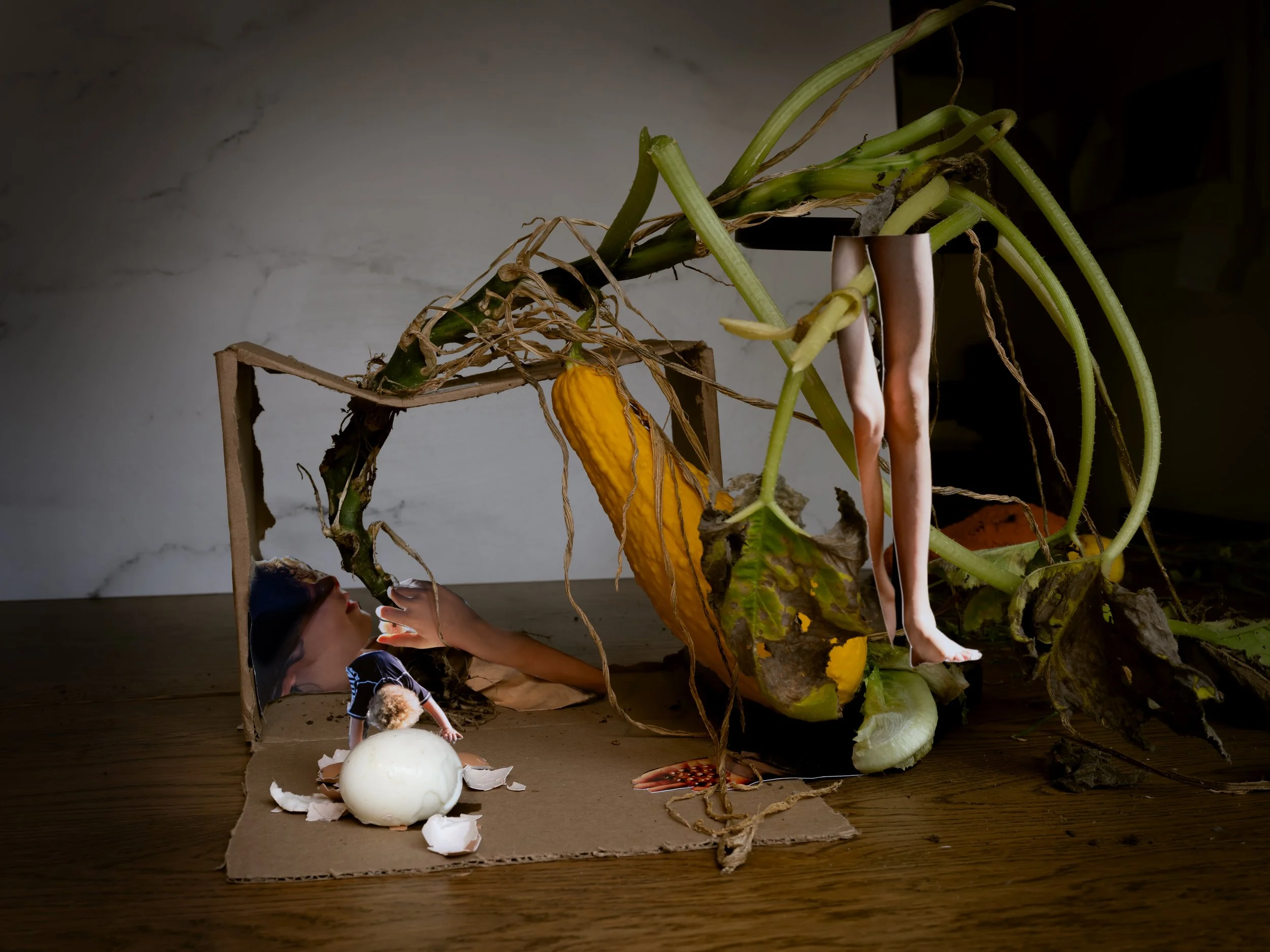
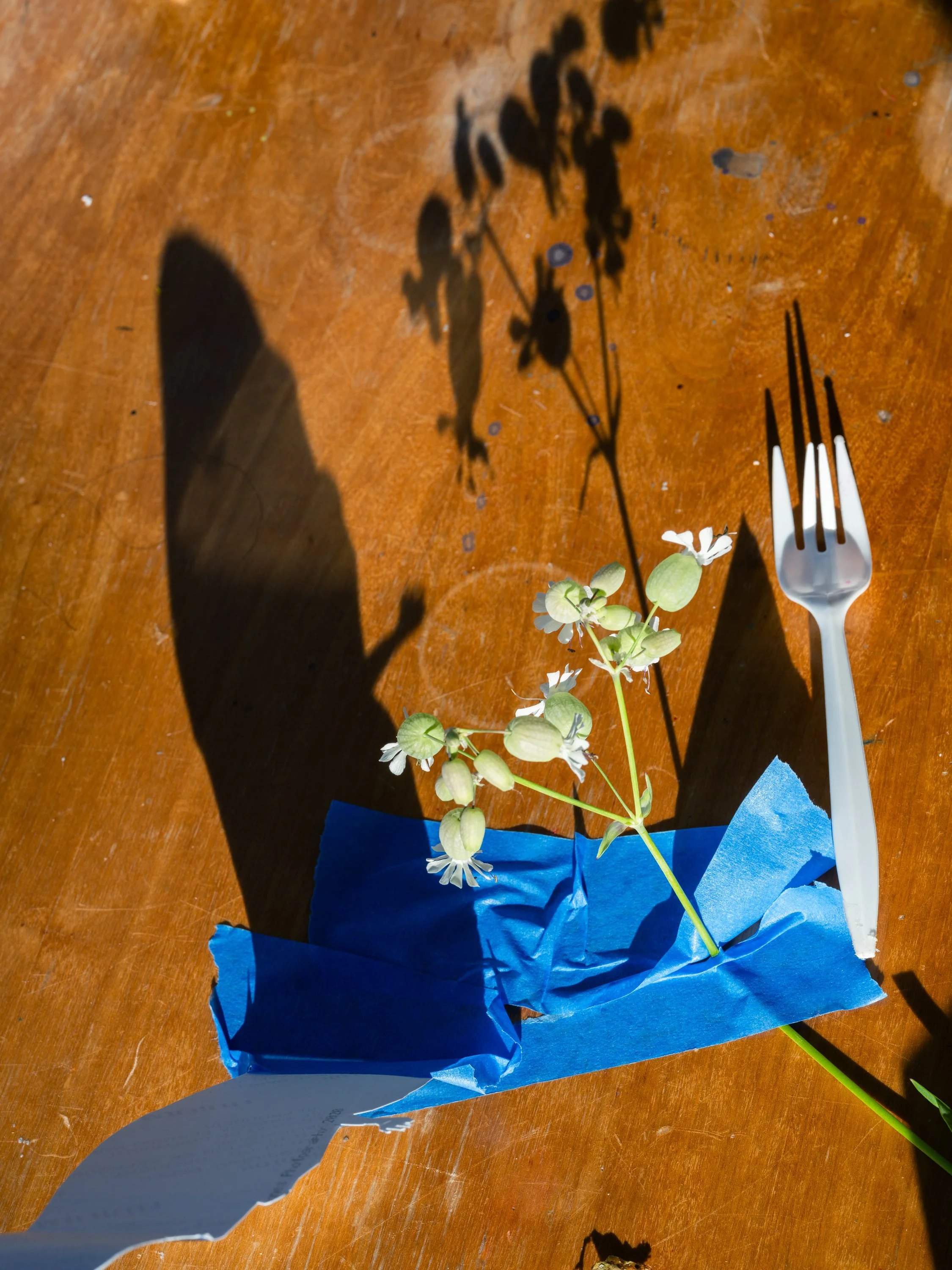
My images emerge through still life, collage, and staged photography. I use everyday materials—forks, processed foods, paper cutouts, trash, transforming them into participants in surreal tableaus, inviting familiar objects to take on new roles. A fork becomes claw-like in shadow, limp when suspended, or winged when set free. In this is a search for agency. If we can reimagine the use of a fork, we might also reimagine the structures that shape us.
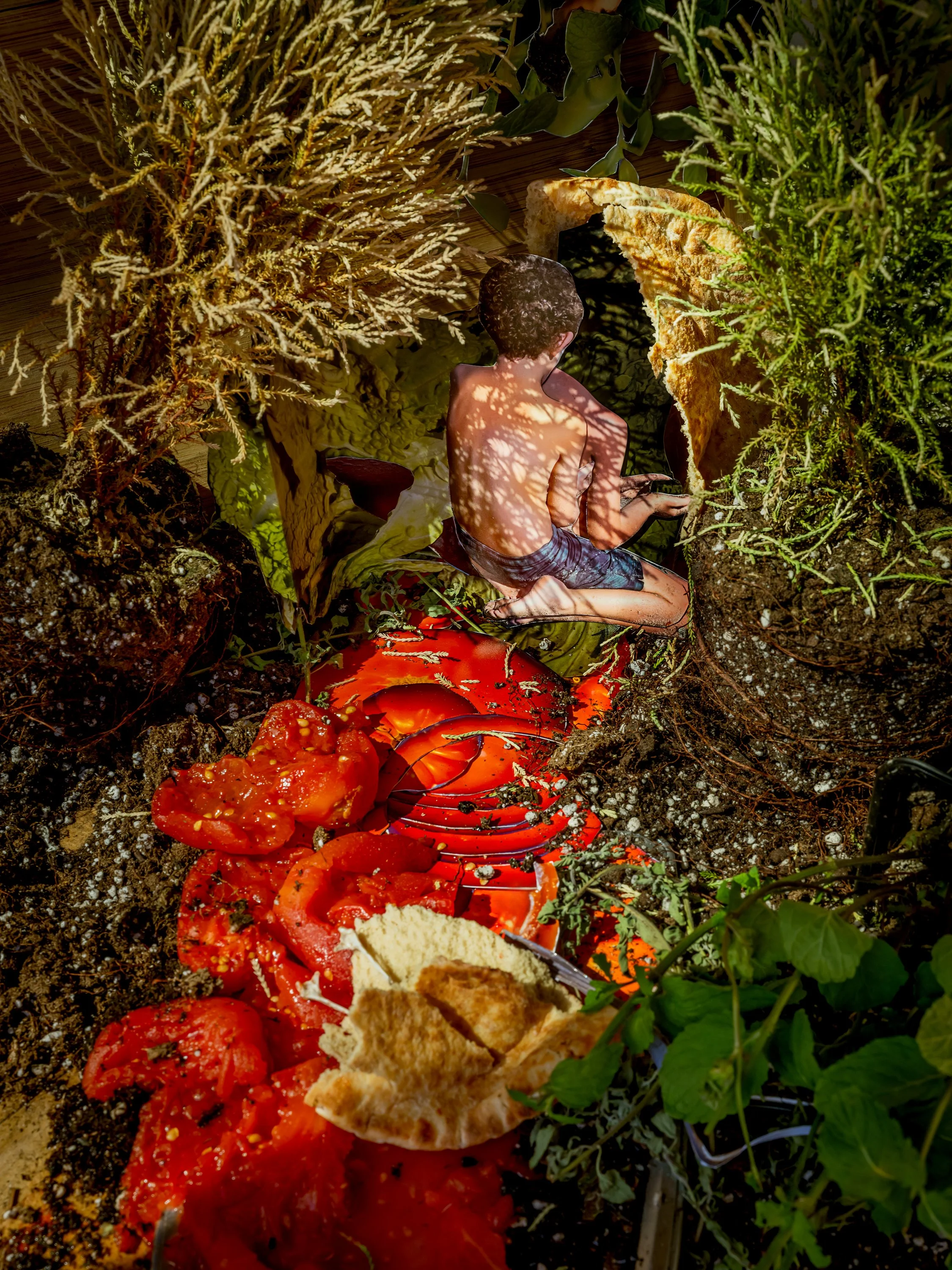
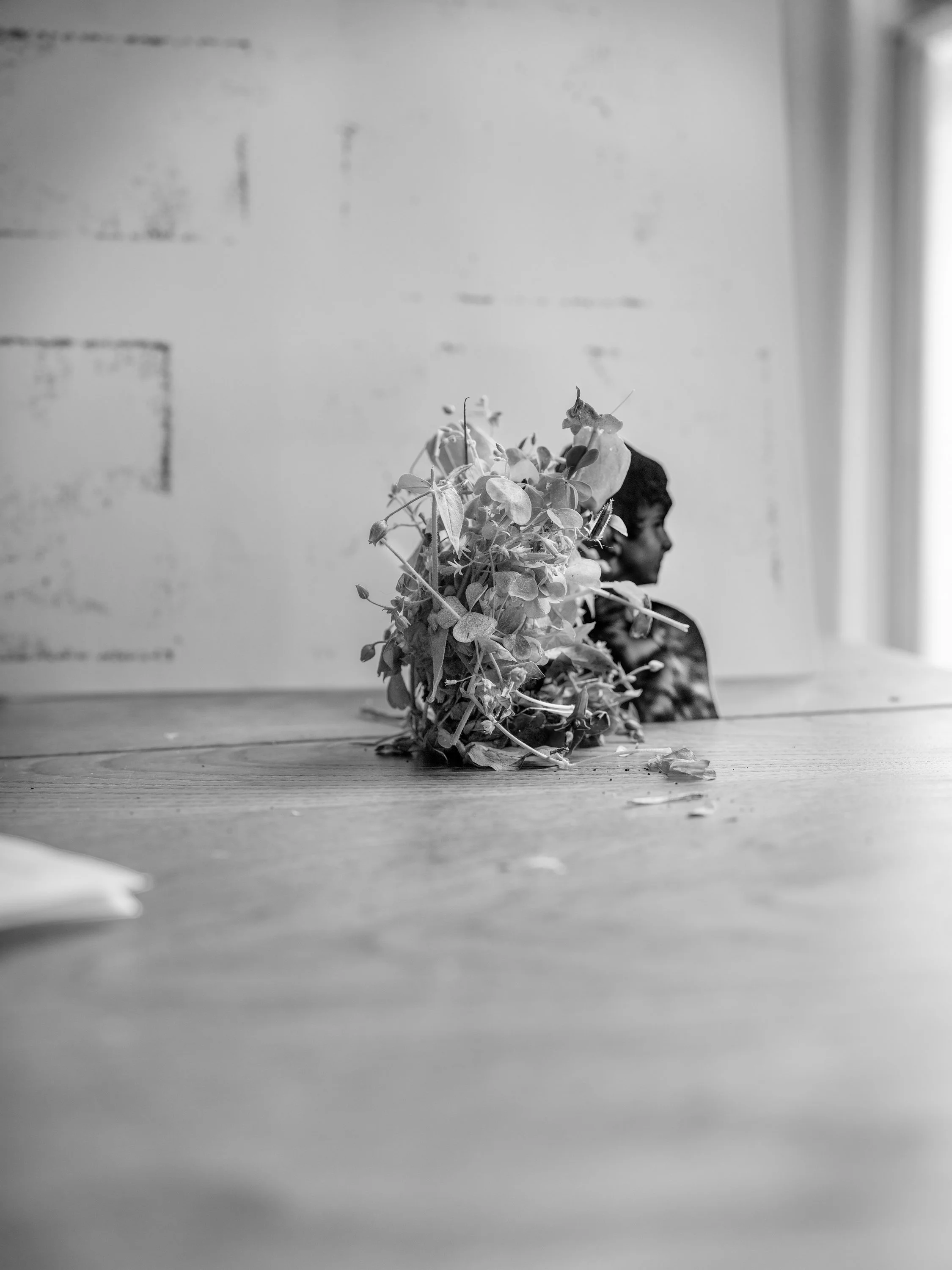
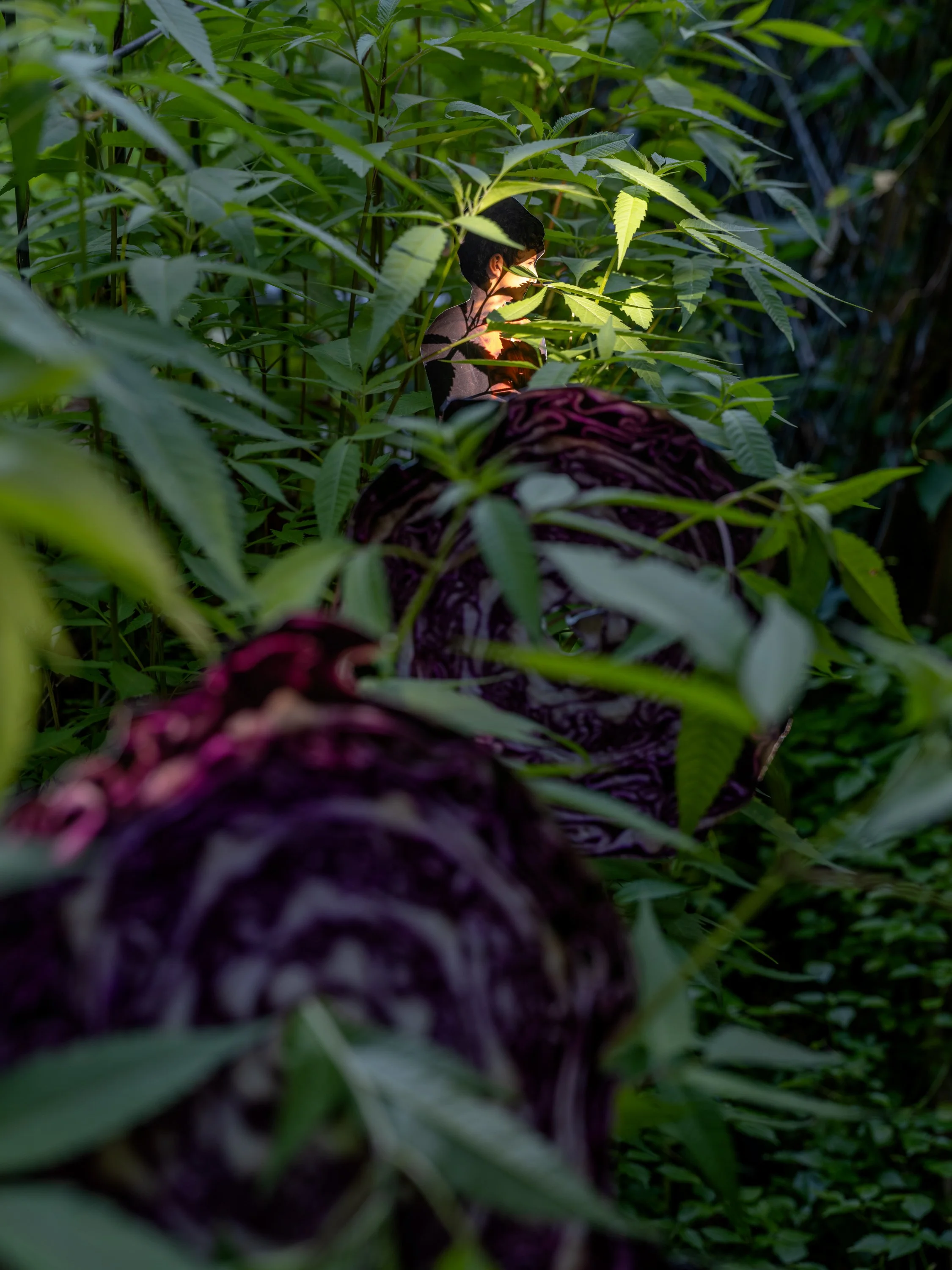
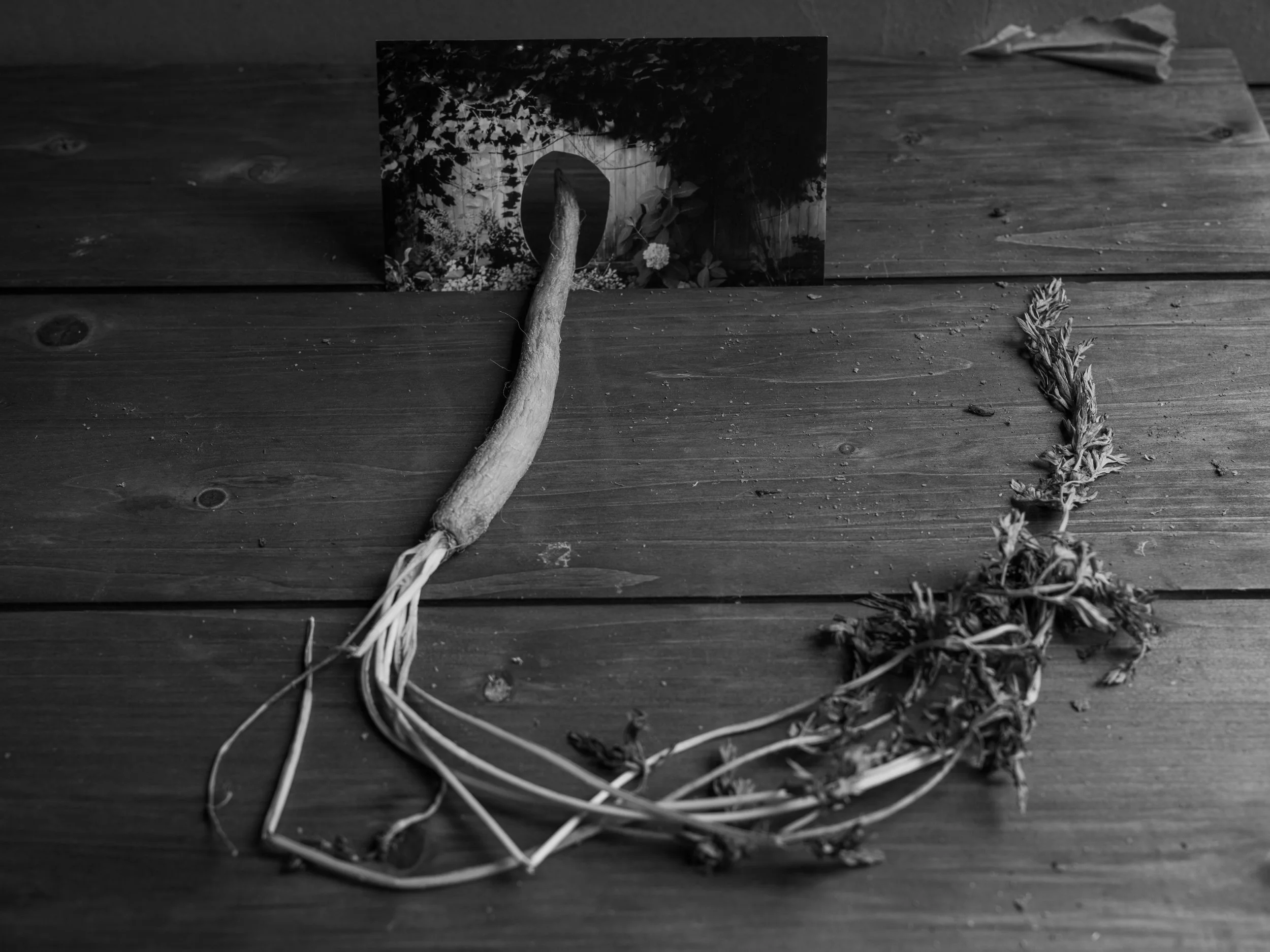
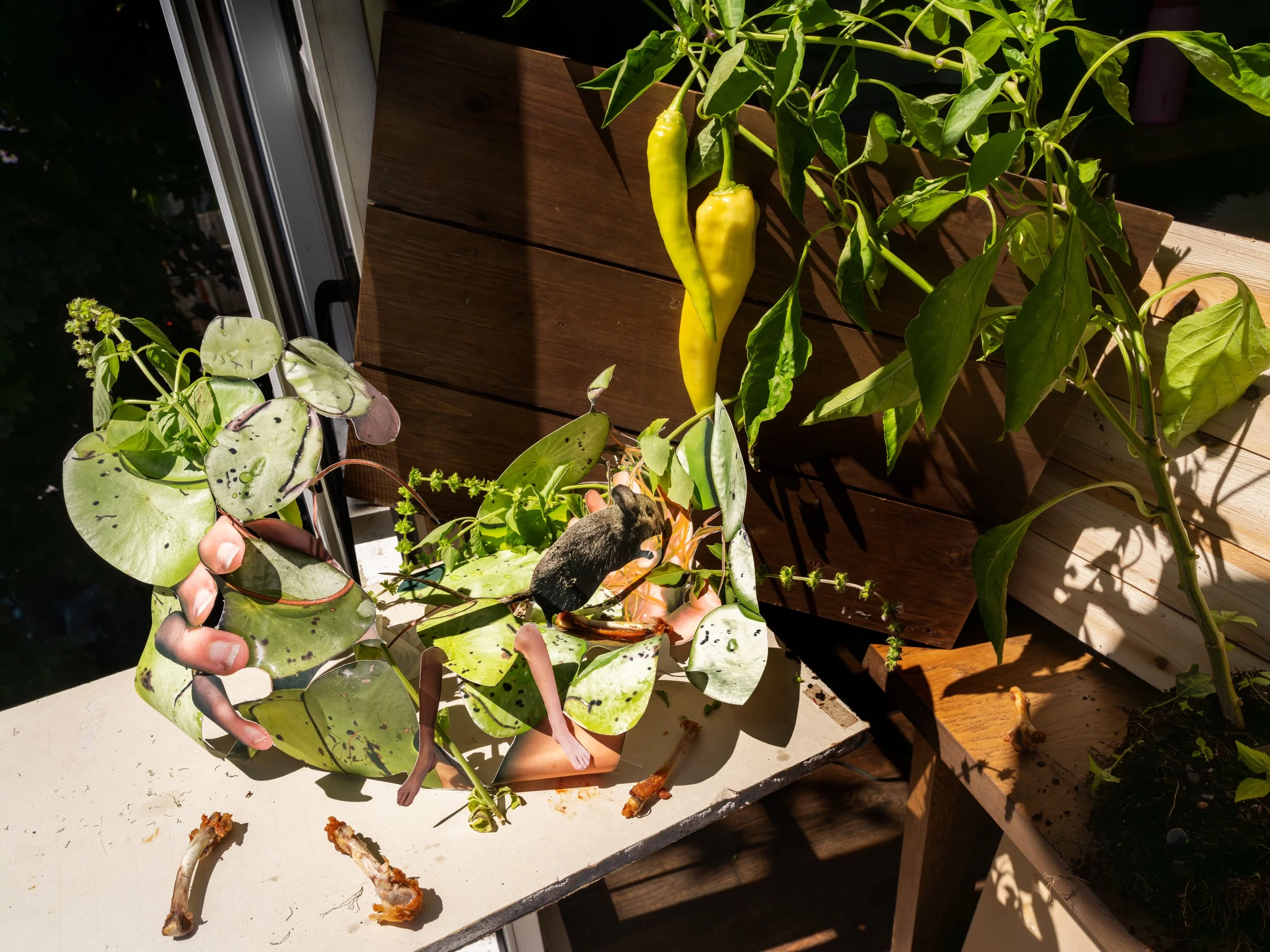
The boundaries between memory and history, inside and outside, domestic and wild are porous. The home holds traces of the past, while the natural world pushes in through backyards, kitchens, and objects. In my photographs the wild and domestic overlap, showing our entanglement with more-than-human worlds, Everyday labor—cooking, washing, chopping—runs through these spaces, haunted by handed-down ideologies and expectations. These gestures both nurture and constrain, offering care while demanding repetition. In this friction, I look for examples of labor and mothering that do not privilege the human experience. Animals, plants, objects, and shadows stand alongside my family as equal participants. They are not background, but collaborators in a fragile, shared ecosystem.
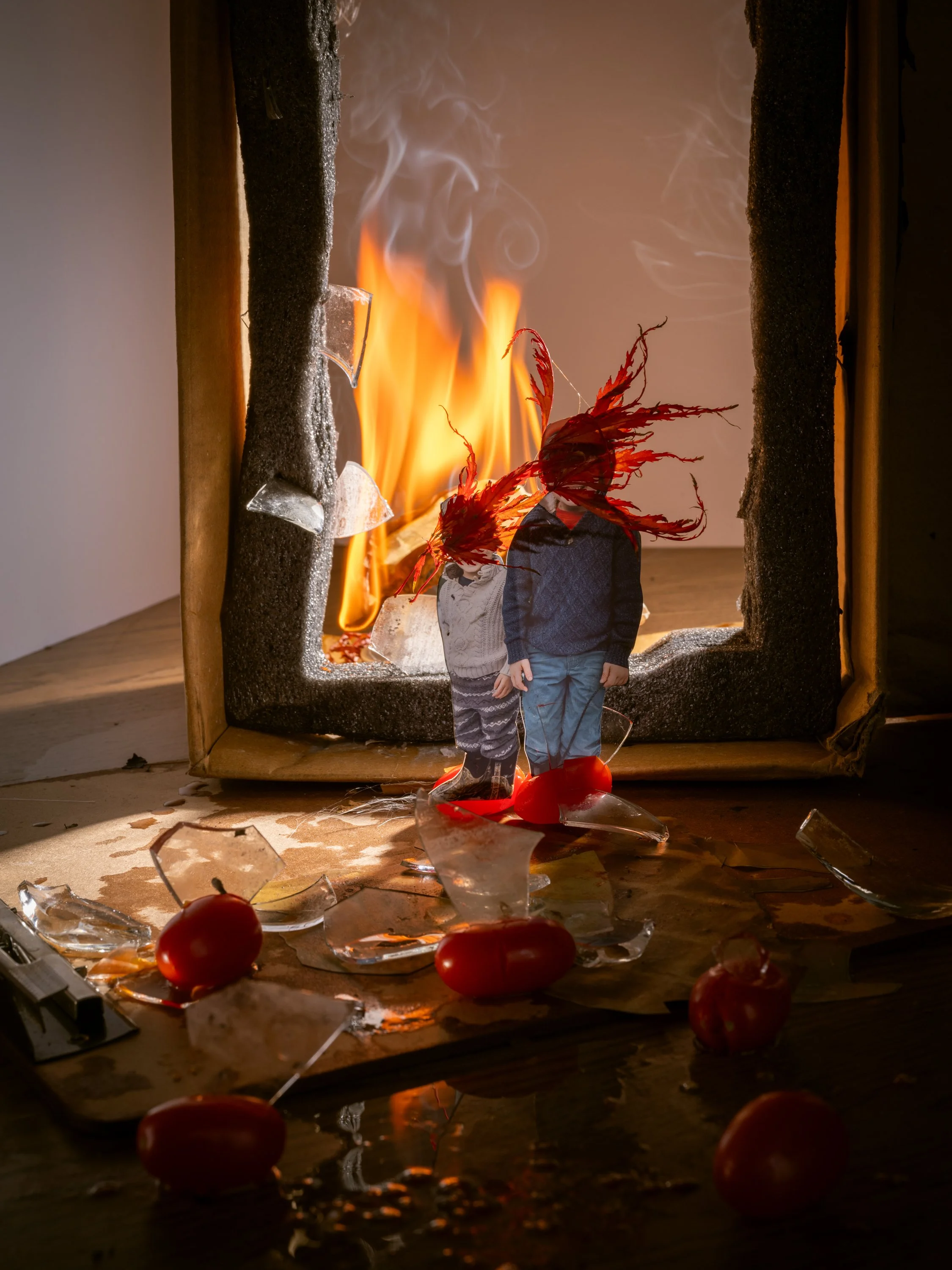
I use photographic cutouts from my archive of family photos, placing two-dimensional versions of my children, animals, domestic objects within a context that is out of scale, lifting an image from one context and embedding it in another. The act mirrors how memory works: carrying contradiction, rupture, and tenderness all at once.
I pair photographs with short works of fiction often written from hybrid animal/human points of view—animals, insects, and objects that speak back to the domestic world. The text does not explain the images. Instead, the two create a third narrative. one that emerges between word and photograph.