

By Rachael Woodson, November 10, 2026
‘Perspective betrays with its dichotomy:
train tracks always meet, not here, but only
in the impossible mind's eye;
horizons beat a retreat as we embark
on sophist seas to overtake that mark
where wave pretends to drench real sky.’ Sylvia Plath, Love Is A Parallax, (undated, before 1956)
The opening lines of an early Sylvia Plath poem come to mind in relation to Stan Douglas’s first film installation, “Overture” (1986), part of his exhibition “Parallax”, on view at the Jeu de Paume in Paris. Forty film, video, and photographic works dating from the late 1980s to today are brought together to investigate the ways images shape and reconfigure history. While Plath evokes the illusion of converging train tracks as a metaphor for the tricky vantage points of love, Douglas uses archival footage shot from the front of a locomotive to convey the limits of sight and the experience of voluntary and involuntary memory.
Overture is a16mm projection of a phantom ride through the Canadian Rockies, shot by the Edison Film Company around 1900. Flickering in a darkened room, Douglas’s edit of the images focuses on the train weaving in and out of tunnels. A voiceover reads from the opening pages of Marcel Proust’s “In Search of Lost Time”. The railway tunnel mirrors the space of Proust’s nocturnal bedroom, its transitions between bright mountain light and the deep darkness of the subterranean passages marking the threshold between waking and dreaming, as well as the technical reality of the camera’s mechanical eye. Douglas constructs this work at the intersection of literary, locomotive, and cinematic histories, probing industrial-age technologies and their effect on the inner eye of subconscious thought. It reflects a central concern of his practice: converging parallel histories to reexamine their narratives.
Born in Vancouver, Douglas studied at the Emily Carr College of Art and Design in the early 1980s. His work is often associated with the Vancouver School of photo-conceptualism, a loose affiliation of Canadian artists including Ian Wallace, Jeff Wall, and Rodney Graham. Although Douglas has resisted this categorization, his practice shares a preoccupation with highly constructed, large-scale scenes that borrow from the formal codes of cinema and advertising and then subvert them. Through meticulously staged and computer-generated compositions and reenactments, Douglas questions the allegorical nature of photographic representation, calling on the viewer to consider not only what is visible within the image, but more importantly, to shift their attention to what has been left out of the frame.
This tension between the recorded image and its margins is central to “Hors-champs” (1992), first shown at Documenta IX, for which Douglas turned to the political history of music, another leitmotif of his work. The video installation stages a concert inspired by “Spirits Rejoice”, the 1965 free jazz composition recorded by Albert Ayler in New York City. True to the experimental approach of avant-garde jazz at the time, the music played challenged traditional structures by blending national anthems with spirituals and military fanfare. While Ayler’s session took place at Judson Hall without an audience or a film crew, Douglas repositions the event in Europe, depicting a quartet of Black American musicians performing for a French television show.
The two channels of the work are projected on both sides of a suspended screen. One side displays the imagined program’s official broadcast, composed of close-ups of the musicians and key moments of their performance. The reverse side exposes the outtakes that would typically be left on the cutting room floor: accidental shots, camera equipment, “bad” angles, and breaks. The work’s bilateral function reveals the blind angles of representation, a reminder that certain images dominate historical discourse while others are systematically excluded.
Douglas’s interest lies in what he has referred to in 2023 as “minor histories,” which he describes as the “things which are to one side of the great events, […] because whatever is happening historically is manifest on a very local scale as well.” By turning to the interstices, the spaces that fall within the shadow of the winners of history, he highlights their potential to deflate the authority of overriding narratives. One of the philosophical threads reflected in this thinking can be traced to Walter Benjamin’s “Theses on the Philosophy of History”:
There is no document of civilization which is not at the same time a document of barbarism. And just as such a document is not free of barbarism, barbarism taints also the manner in which it was transmitted from one owner to another. A historical materialist therefore dissociates himself from it as far as possible. He regards it as his to brush history against the grain. (Illuminations, 1968, pp. 256 - 257)
In the recent work “Birth of a Nation” (2025) Stan Douglas addresses one such document of barbarism by reimagining the 1915 film of the same name by D.W. Griffith. Adapted from the 1905 novel “The Clansman” by Thomas Dixon, Jr., Griffith's film experienced immense success when it was released, propagating a blunt racist point of view at a time when segregation and disenfranchisement laws known as Jim Crow were being violently enforced in the United States.
Responding to cinema’s normalization of racist tropes, Douglas rewrites the film’s chase scene, in which a Black soldier named Gus is hunted down and ultimately lynched by the Ku Klux Klan for proposing to Flora, a young white woman and the sister of a Klan member. The five-channel installation includes the original footage as well as the different viewpoints of the scene’s characters, with the addition of two new Black characters—Confederate captains Sam and Tom. This alternative version challenges the singular narrative of history by exploring how events might have unfolded differently. At one point, Douglas breaks the sequence’s loop by switching from black and white to color, exposing the studio set to reveal an actor suspended by cables and a horse being led away by its trainer. The work destabilizes the Hollywood apparatus, activating the shift in perspective generated by an observer’s movement that gives the exhibition its title.
“Parallax” presents works in which layers of history are overlapped, looped, unraveled, and rerouted. While deeply critical of photography’s claim of truth, Stan Douglas’s practice also attests to the importance of fixing images, of creating a frame to work from. The exhibition opens with a panoramic photograph from the series “Crowds and Riots” (2008), which references a historic gathering that took place in the streets of Vancouver in 1971. The image takes a surveillance perspective, portraying the physical stakes of public assembly and associations between individual bodies and institutional force. This immediately brings to mind a number of recent mobilizations around the world, including the widespread student-led protests that have surged across France since September, driven by outrage over deteriorating education conditions. At times spilling onto the very doorstep of the Jeu de Paume, these events embody the spirit of the transitional moments of rupture through which the artist navigates.
Rachael Woodson is an American artist and researcher based in France. She has collaborated with the Jeu de Paume and the Palais de Tokyo, and her essays have appeared in Entre-Temps (Collège de France), Afterimage(Objektiv Press), and Zérodeux.
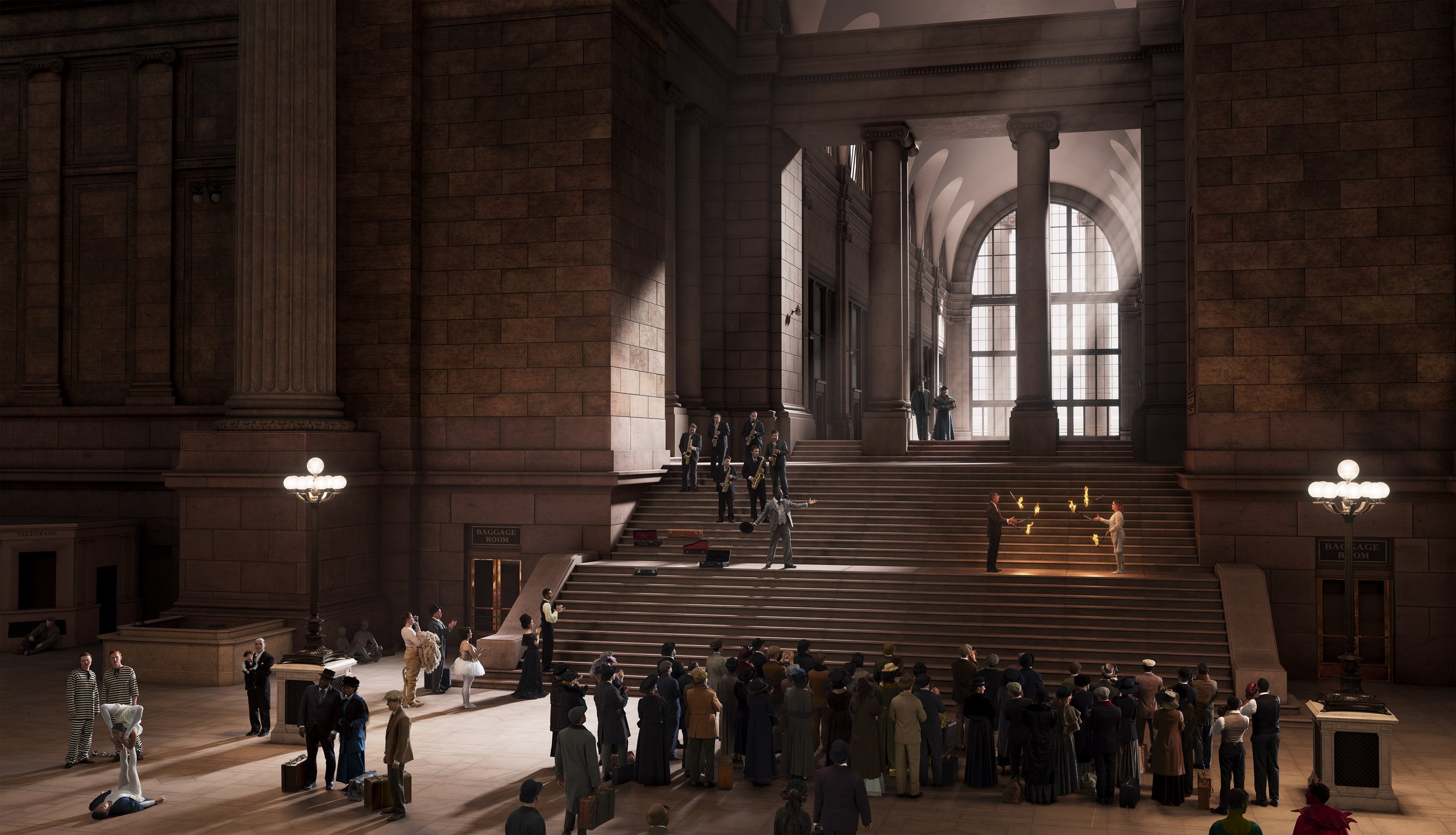
STAN DOUGLAS "2 March, 1914" 2021. © Stan Douglas Courtesy the artist, Victoria Miro, and David Zwirner
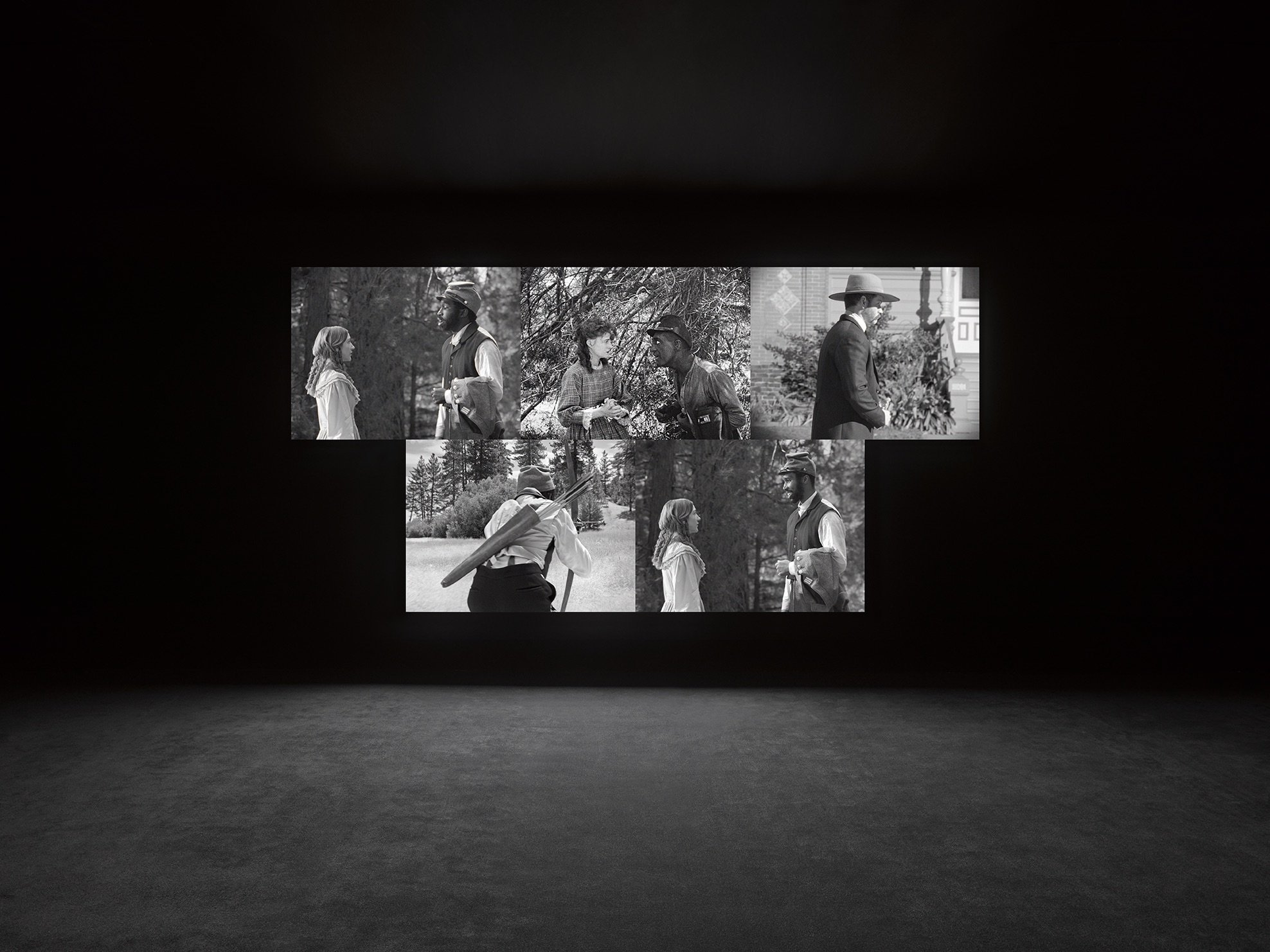
STAN DOUGLAS "Birth of a Nation" 2025. © Stan Douglas Courtesy the artist, Victoria Miro, and David Zwirner
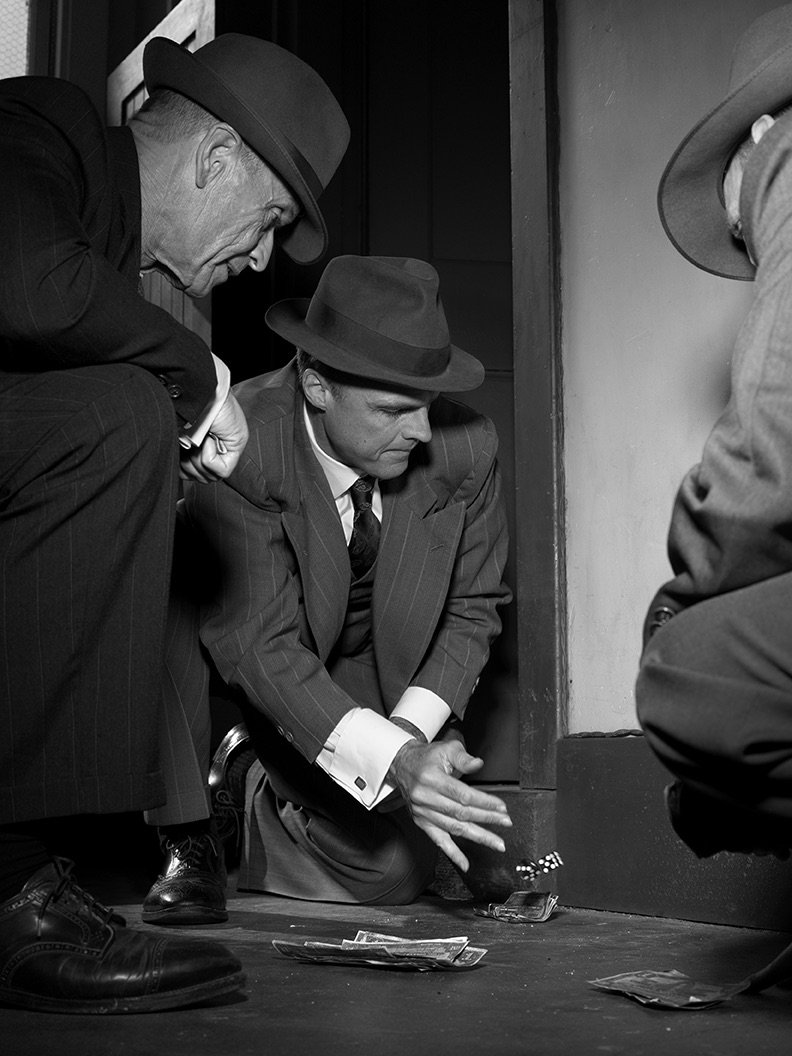
STAN DOUGLAS "Dice, 1950" 2010. © Stan Douglas Courtesy the artist, Victoria Miro, and David Zwirner
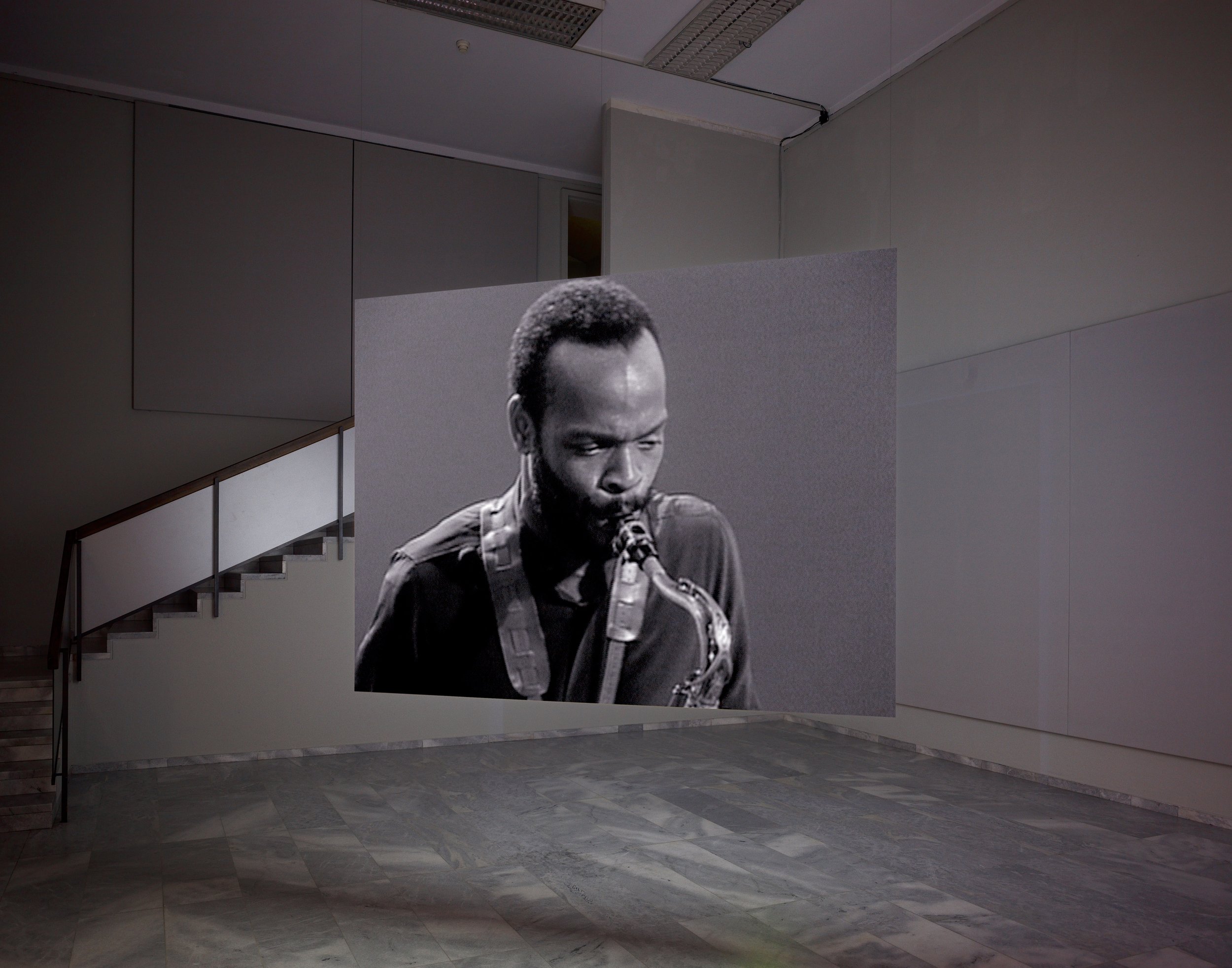
STAN DOUGLAS "Hors-Champs" 1992. © Stan Douglas Courtesy the artist, Victoria Miro, and David Zwirner

STAN DOUGLAS "ISDN" 2022. © Stan Douglas Courtesy the artist, Victoria Miro, and David Zwirner