
By Travis Diehl, March 10, 2026
This group of photos at Baxter Street through April 2 document a tight group of graffiti artists living in Queens. Dean Majd is one of them; his photos give an inside view of a subculture. Which maybe is why there’s only one photo, “wiza bombing”, that shows someone tagging. It’s blurry and hectic, in the moment. Other photos have tags in them, like “self-portrait (hard feelings)”, a redsoaked horizontal shot of a man in a bar bathroom, the walls staticky with tags behind him. It’s a simple composition, a selfie shot from a low angle, the man looking into the distance, the corner of the stall bisecting the frame. The right half of the composition a globular graffito echoing the man’s head. We’ve caught him in a moment of contemplation, maybe. Maybe he’s just on the toilet. The photographer, of all people, would know he’s being photographed. But he doesn’t seem to be posing.
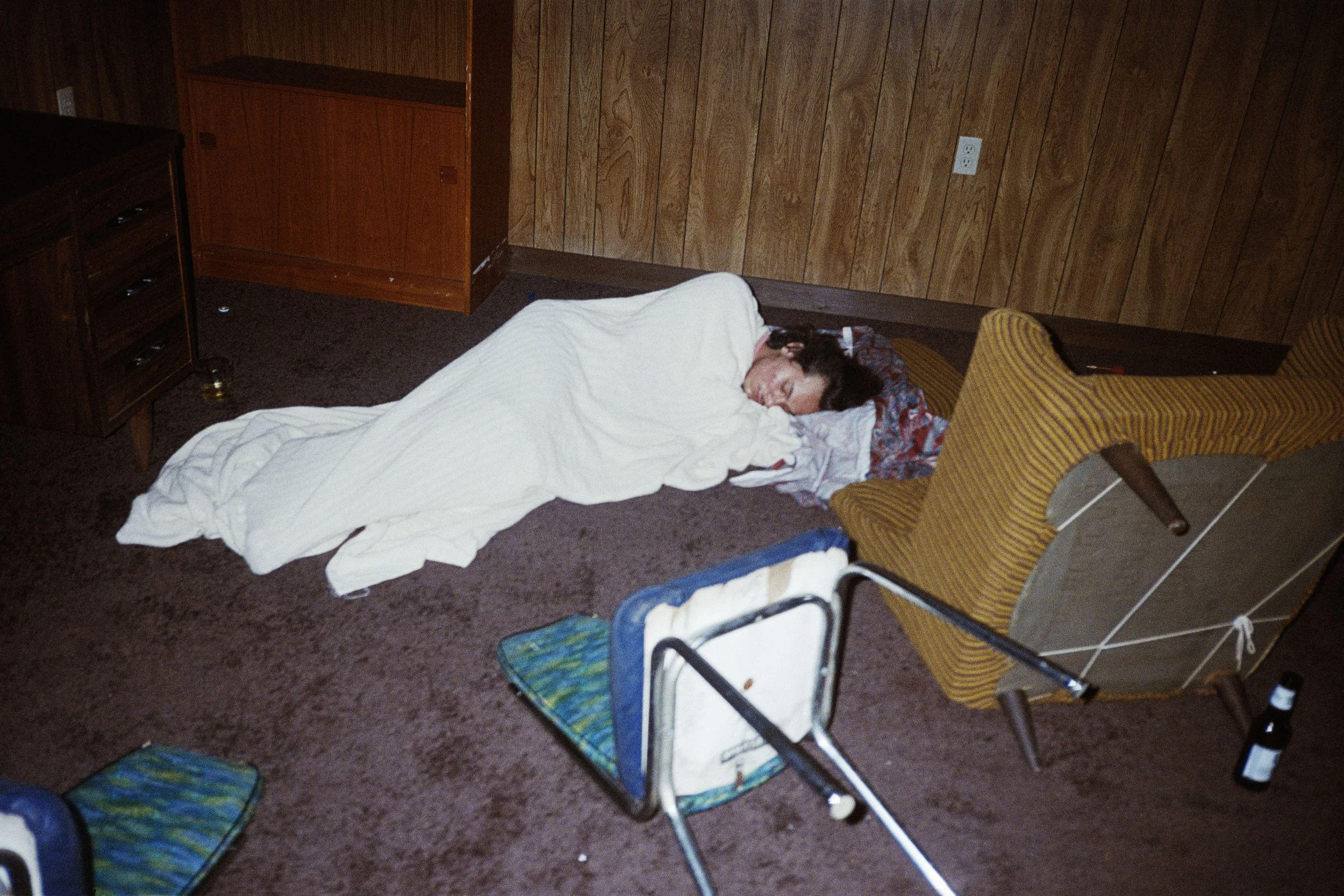
They’re raw photos—the word comes to mind—because of the way they’re shot, often with available light casting the subjects’ skin in orange or blue; soft focus, grainy, often with a slight blur. But also raw the way they seem to depict their subjects in vulnerable moments; “cj sleeping (woodstock)”, a white bundle on a grimy floor behind two flipped chairs; “ivan crying in my bedroom” closes in on a guy full sob. Hung to the left is “rissa (battered)”, a woman leaning her head onto her arm, her eye black and the bandage soaked through. Raw because they feel unfiltered.
The walls are marked, and so are the bodies. The young men pictured have tattoos and scars. The photo “self-mutilation (getting high)” shows the tick marks of cutting running down a man’s arm. These are marks of tragedy, but we get a superficial version. Even though Majd is letting us inside, and his friends are opening up their lives to his camera, the viewer still feels removed, the pain in these photos both acute and abstract. It’s tempting to file this work in a category with Larry Clark, Dash Snow, Nan Goldin, and other gifted chroniclers of more or less glamorous and debased young people doing drugs and loving freely and losing one another with youthful intensity lucky to have a friend who can shoot. The style here is masculine and hard. The camera is often low, the figures over us. They are cropped into heads, torsos, busts.
All photos are memento mori, but Majd’s photos feel particularly elegiac. The tenebrism beams down from above. One closely hung pair of photos (“torn”, “heaven’s gate”) shows light raking across someone’s badly scraped back, next to sunbeams blasting through a plaza or doorway around a cruciform shadow. To the right of these is the gladdest picture in the group, “suba (sunshower)” a grinning man barechested in the rain. Reading left to right around the walls, this is the last photograph in the show. This final grouping heavily implies a kind of sublimation from person to light. In fact, a grid of four smaller photos earlier in the row includes a grittier version of this passage: one titled “eni and amal embracing after suba’s wake”, and another, “suba’s bedroom after clean-up (the place of his overdose)”. The bedroom is busily furnished, with prayer flags strung overhead and a plain brown chair and a white secretary with the tag “suba” running down the side. In the gallery, under Suba’s portrait was a pile of dry bouquets in plastic and paper wrappers. In some other show you might wonder if the flowers were an installation, a memorial staged for effect. Here they seem like everything else, intimate and fearless, but on some level not for you.
Travis Diehl is a critic, writer and editor and is a recipient of the Andy Warhol Foundation Arts Writers Grant and the Rabkin Prize in Visual Arts Journalism.
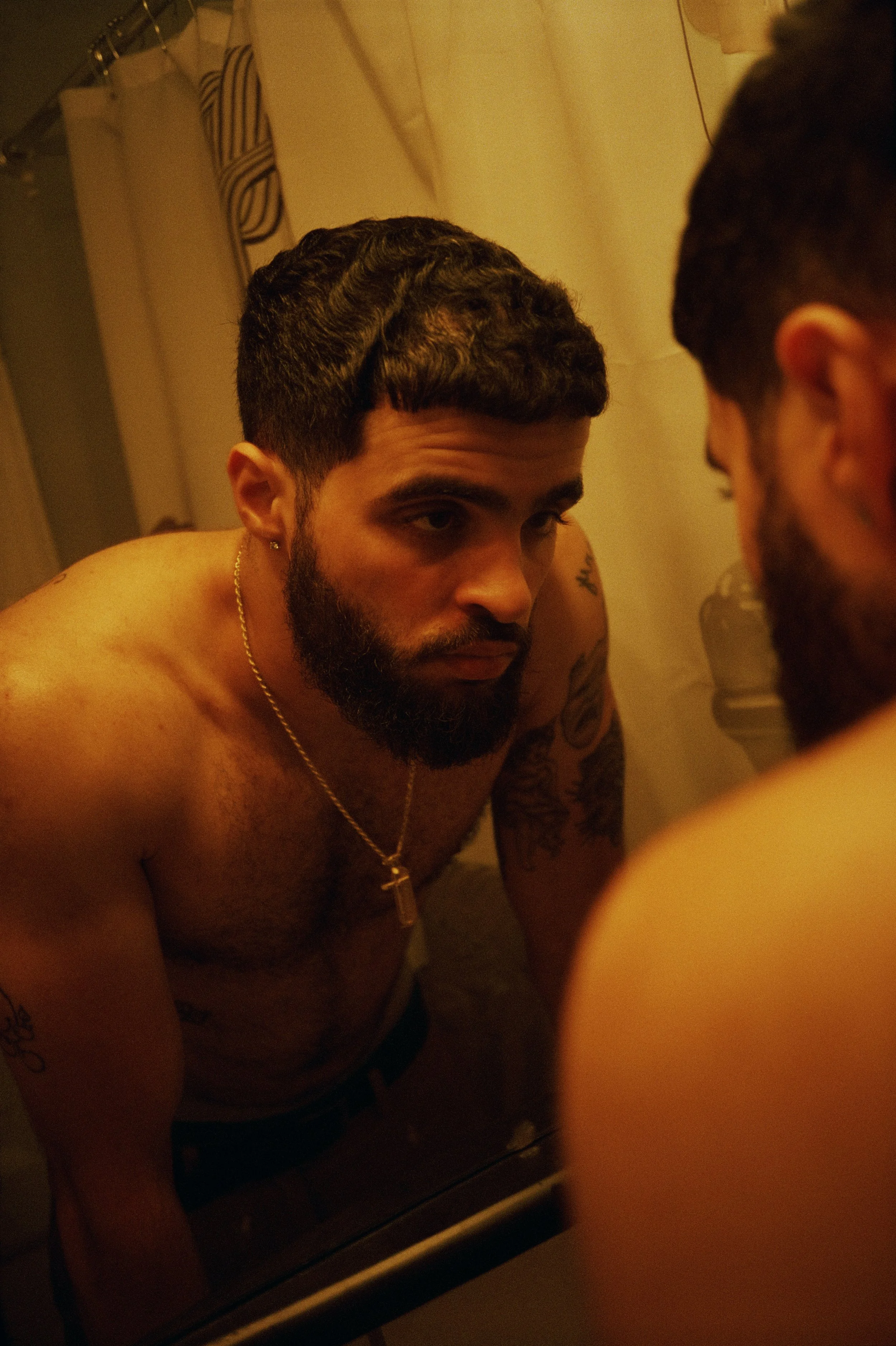
DEAN MAJD "dallas (phoenix ash)", 2022.
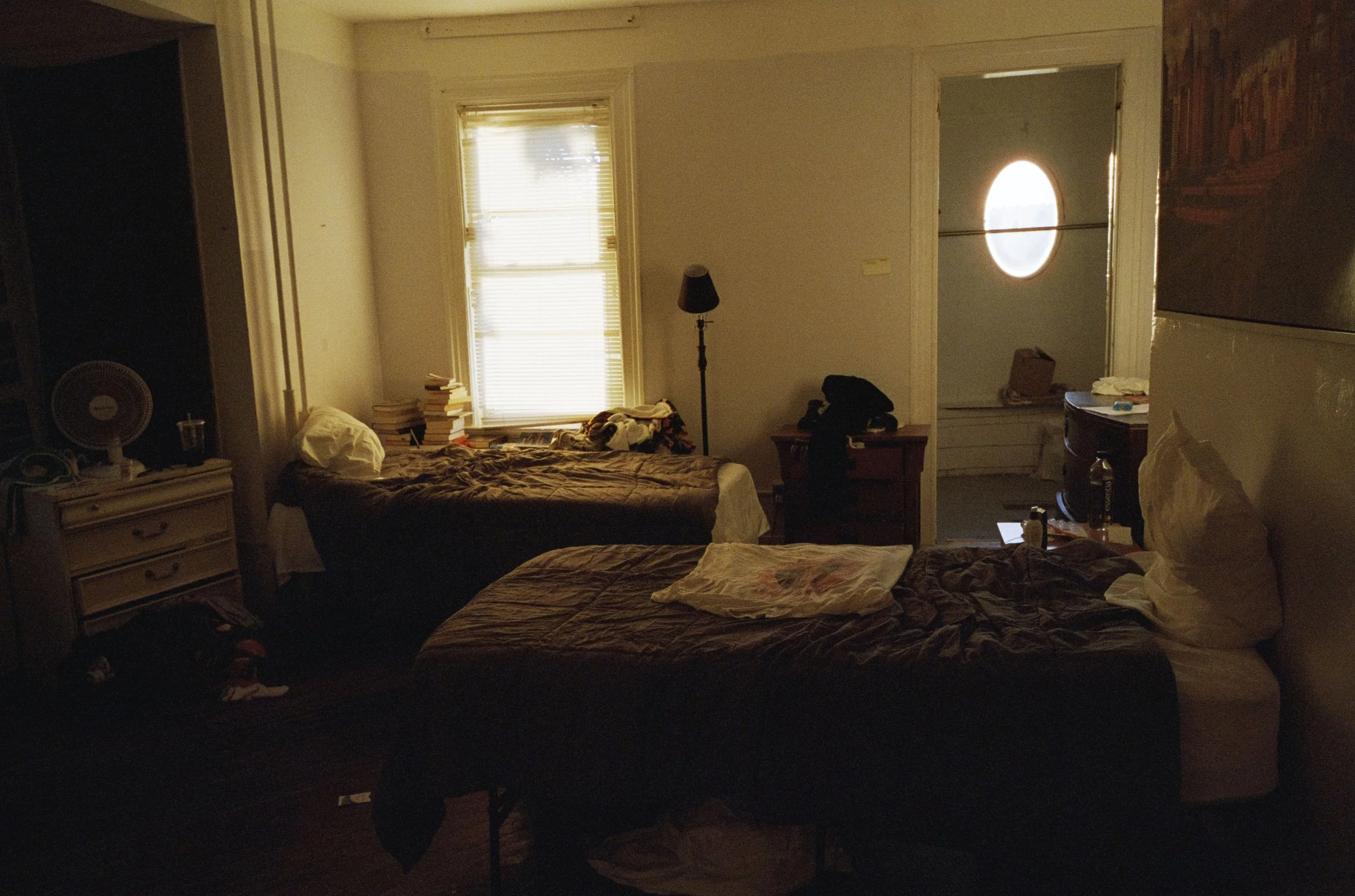
DEAN MAJD "empty beds at a halfway house", 2023.
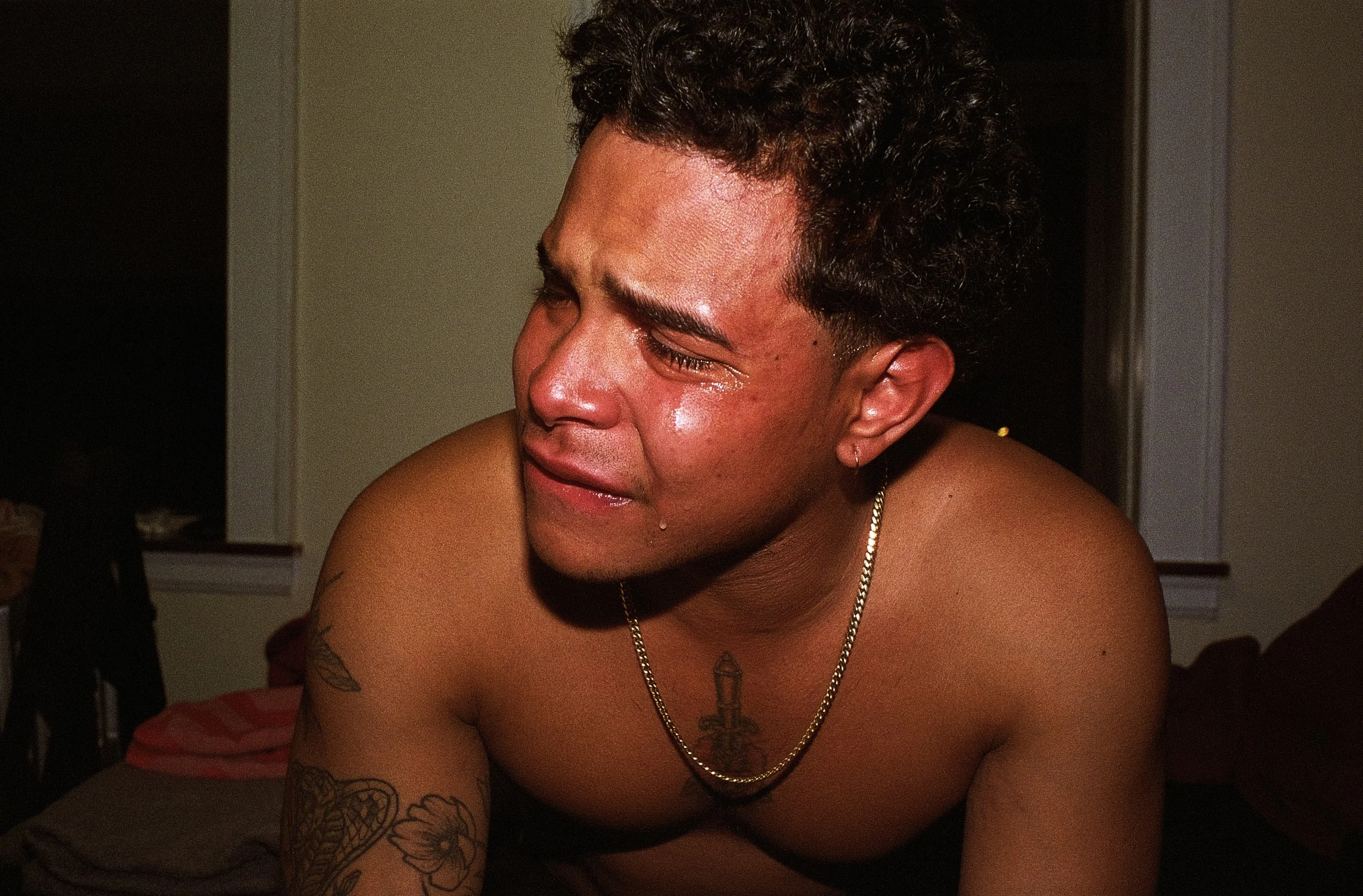
DEAN MAJD "ivan crying in my bedroom," 2021.
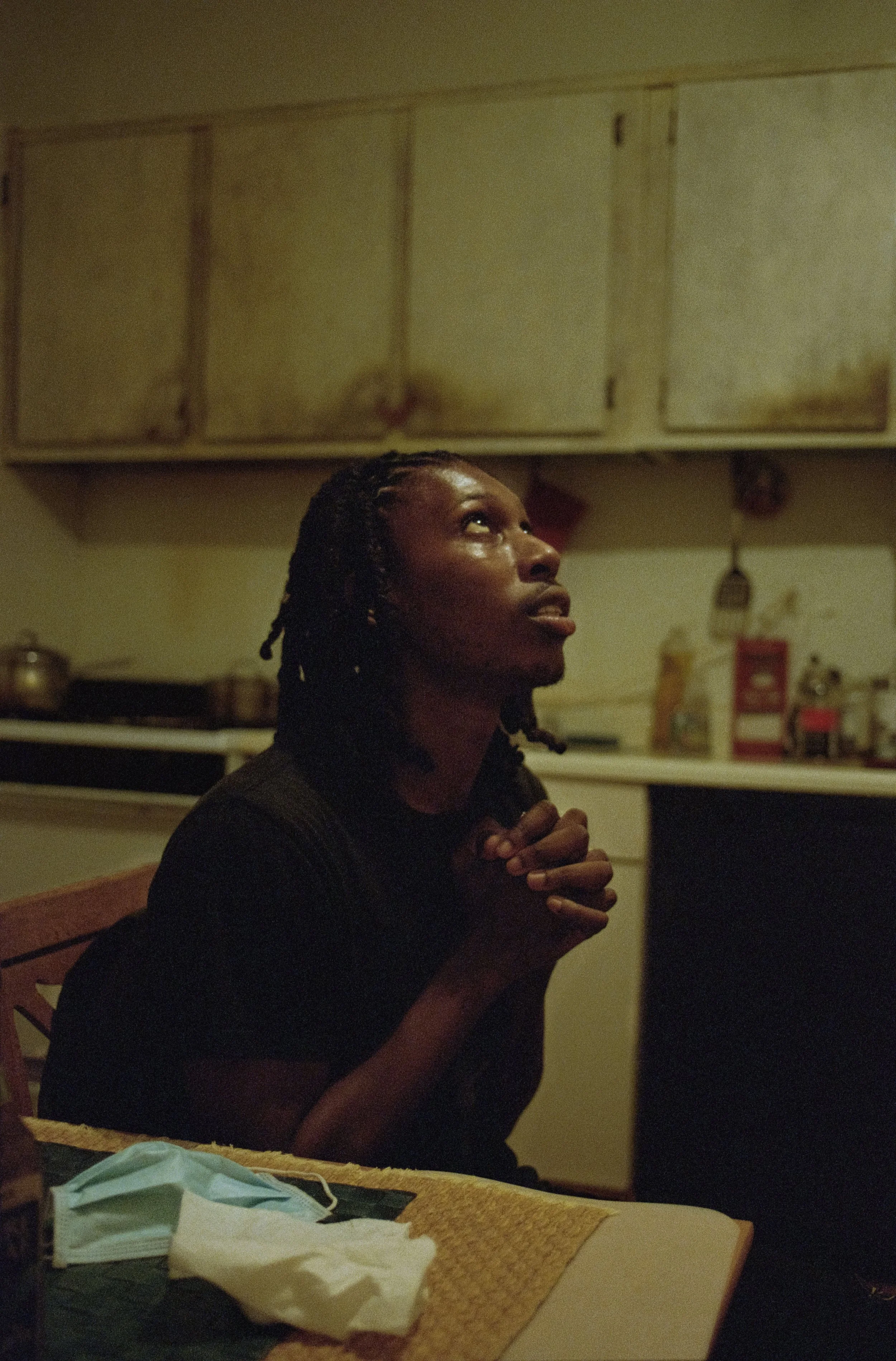
DEAN MAJD "mohamed (prayer)", 2020.
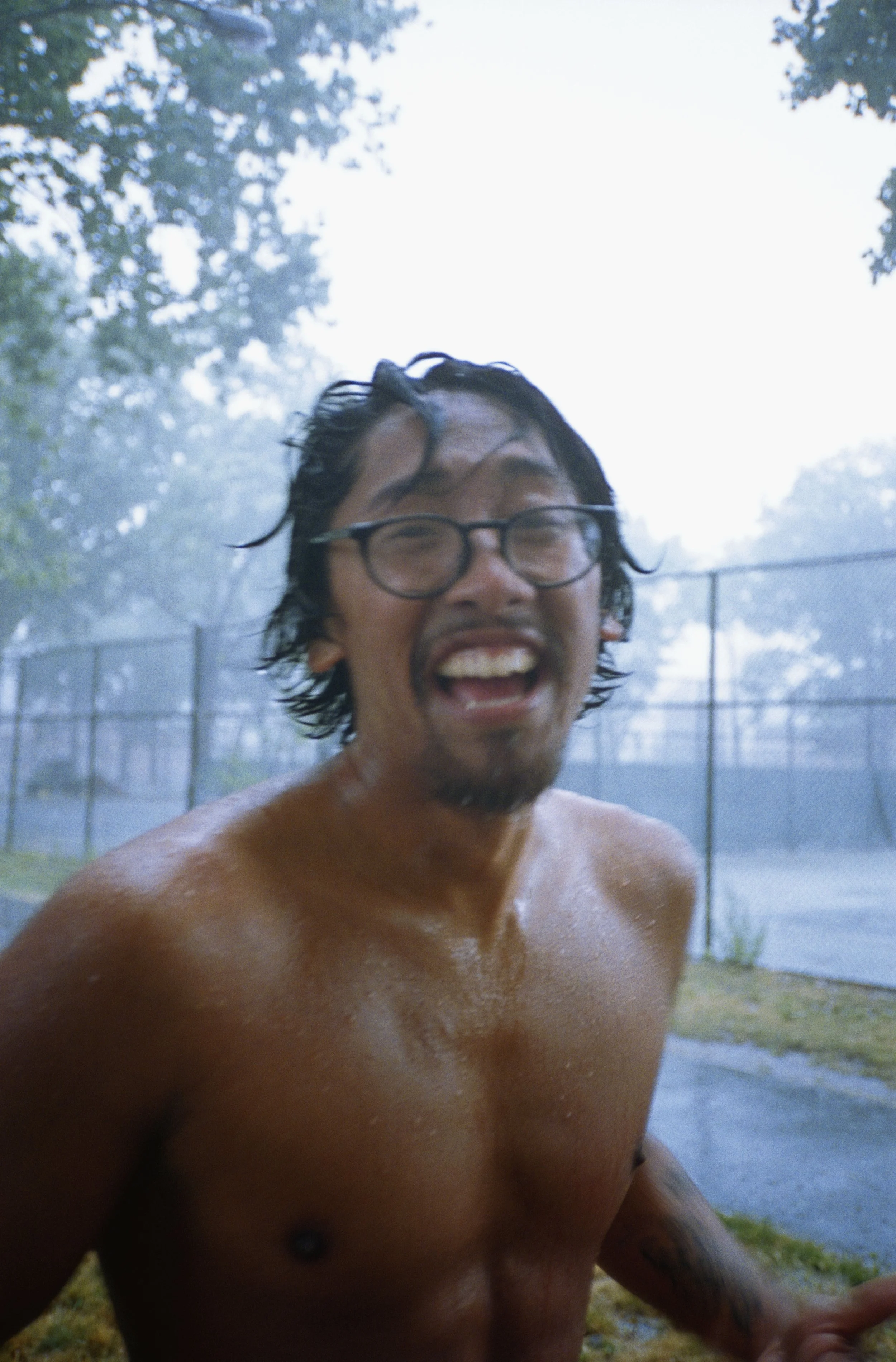
DEAN MAJD "suba (sunshower)," 2020.