

By Lyle Rexer, March 10, 2026
In those halcyon days of general troublemaking (ca.1970) there was good reason to commandeer the copy machine in the dorm – or the library, or the student center. An exemplary case was Seagrams. He was a campus pet picked up and impounded by the local Ann Arbor authorities for canine vagrancy. The radicals mounted a campaign to get him out. Suddenly across the University of Michigan campus, in more locations than a Talib Kweli poster blitz in Brooklyn, flyers went up with the dog’s portrait, a sad sack depiction somewhere between Snoopy and Mr. Peepers, but with a raised fist-paw, and the words: “Seagrams is your brother, Free him!” The motivations for the copy machine were obvious: art, politics, speed and volume.
Mostly missing from “Hard Copy” are politics, speed, and volume, as well as a good deal of art. What we have instead is a memorial for a technology and a time that seem at once familiar and desperately distant. The exhibition, through May 4, is the most recent of several iterations in a series of exploring the Jurassic reproduction technology of the copy machine by putting it to use in a contemporary context. That context appears to me purely aesthetic. Aaron Stern, who curated the exhibition with David Campany, invited a number of artists, including John Divola, Zoë Ghertner, Takashi Homma, Shaniqwa Jarvis, Ryan McGinley, Thomas Ruff, and Collier Schorr, to contribute images, which Stern then subjected to Xeroxing (I use this verb generically) in a variety of ways. Those results were then scanned and digitally printed, yielding objects three times removed from the original. The final step enabled changes of scale that would have been difficult if not impossible on the earlier analogue copy machines. Clearly the history of the medium is not the point, nor is nostalgia, at least not exactly, and certainly not the current activities of these artists, whose work often seems far distant from the ICP versions, regardless of their enthusiasm for the project. So what is?
Image copying technology was born in 1938, but its popularity, like television’s, was a postwar phenomenon. Homes didn’t have copiers, but offices and businesses did, and by the late 1960s they were institutionally everywhere. Mostly they were used to replicate pages of text. When it came to photographs, the images they produced, on paper and in black and white could vary wildly in tone and sharpness. This exhibition celebrates the idea that copying degraded and otherwise distorted the original, which was itself often a copy – pages from newspapers, books and magazines, or photographs (themselves copies after all). It is easy to see how such a demotic form of image production slotted into strategies of Pop Art and Conceptualism, not to mention its hijacking for political purposes. Bruno Munari set up a Xerox machine at the 1970 Venice Biennial, and in the same year Lucy Lippard’s contribution to the landmark MoMA exhibition “Information” called for the use of a copy machine. These gestures underscored technology’s role in subverting notions of artistic authorship, uniqueness, and craft – a subversion that began with the arrival of photography, almost exactly a century before the invention of the photocopier.
A bit more context would have been welcome, even revelatory, illuminating for example the aesthetic connection between the uses of the photogram and the Xeroxed image. But looking backward would have undercut the impetus for the exhibition, not to mention its seriousness. For despite its celebration of the “poor” image, the show seems to operate under a contemporary inflationary pressure, a “go big or go home” agenda that has a surprising impact on many of the photographs it reproduces. On tables and walls at ICP, collections of images from the different artists have been transformed into vast frieze-like collages. This works with material from Thomas Ruff’s internet forays, for example, but doesn’t with Stephen Shore’s photographs – snapshots, really – from his youthful days chronicling Warhol’s Factory. Individually, as they were displayed at MoMA during Shore’s retrospective, the pictures provided a precocious teenager’s glimpse into a legendary world. They were worth peering at and savoring. Degraded by the copier, they flatten out into a mass, which may be the point. Any nostalgia for the black and white print, the snapshot, or the photo diary is banished. The images now live in a sort of vaguely punk never-never land of bad pictures of bad subjects.
So many of the photographs get leveled by the process that it is very difficult to care about most of them. None of them gains in poignancy. A preoccupation with the temporariness of paper ought to have mitigated this a bit, awakening viewers to the fragile materiality and timebound opportunism of images from copiers and heightening the expressiveness of what, in their original forms, are often cool works. As Julia Margaret Cameron understood long, long ago, the less precise the image the greater the opportunity for a viewer to project and engage emotionally. Only with a few installations in the exhibition did that occur for me. One was John Divola’s series, “Dogs Chasing My Car in the Desert”(1996–2001/2025). The grainy and overblown images (size does matter in this case) put me in the car, and I could hear the dogs – alas, not including Seagrams – barking like crazy all the way down the hall.
Takashi Homma’s “Thirty-Six Views of Mount Fuji” (2023-2024), thematically speaking an oldie but a goodie, called for a much different level of attention. Some of the earliest photographs made in Japan had Fuji as their subject. They were sometimes mounted on silk scrolls as if they were traditional ink drawings. Homma has a more specific reference in mind, the artist Hokusai’s print series of the same name from the 1830s. His homage and reconsideration of Hokusai is best experienced in book form, with its several gatefolds. Gone from the ICP are the delicate shifts of mood and temperature of Homma’s color. Yet he consented to the translation, and I think I understand why. Through the changes of perspective and above all scale in the assembled gray paper “views,” an idea of Fuji persists. We can’t maintain the great photographic illusion that we have direct access to the thing itself. Hokusai’s audience didn’t think so either. But the distanced sense of Fuji as a symbol, despite all the cliches and the visual poverty of the copier, renews the mountain as a meditational opening, an invitation to focus, inwardly. Perhaps this distancing process can liberate us a bit from our fears of technology in the so-called post photographic age. Perhaps it can encourage us to practice seeing what doesn’t change through the shifting frames of what does.
Lyle Rexer is a writer, critic and educator who lives in Brooklyn. His novel, ‘The Book of Crow’, has been recently published by Spuyten Duyvil.
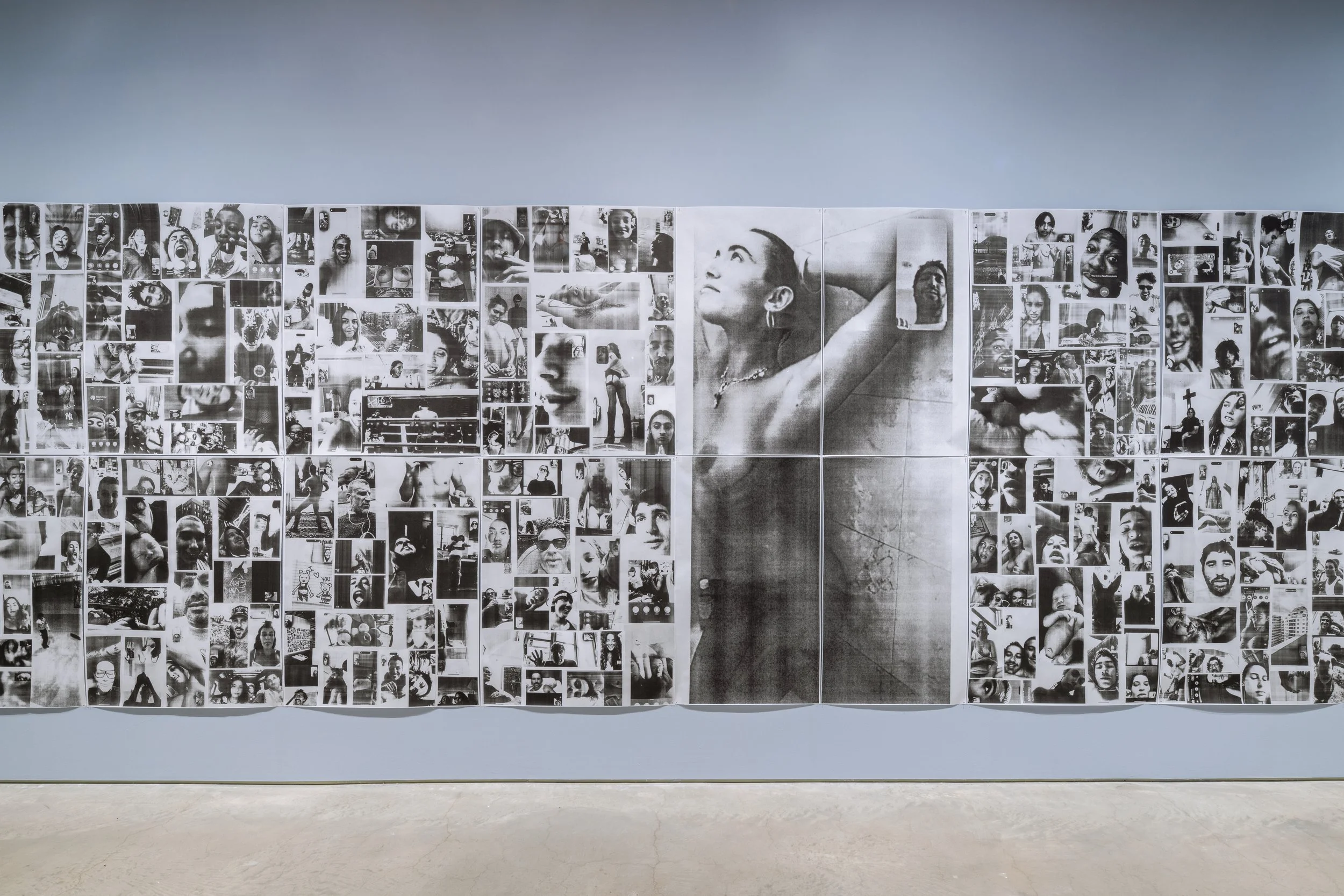
INSTALLATION VIEW "Hard Copy" ICP 2026.

JOHN DIVOLA from the series "Dogs Chasing My Car in the Desert", 1996–2001/2025. Photocopy by Aaron Stern © John Divola.

RYAN MCGINLEY "Falling (Light Leak)", 2013/2025. Photocopy by Aaron Stern © Ryan McGinley Studios.
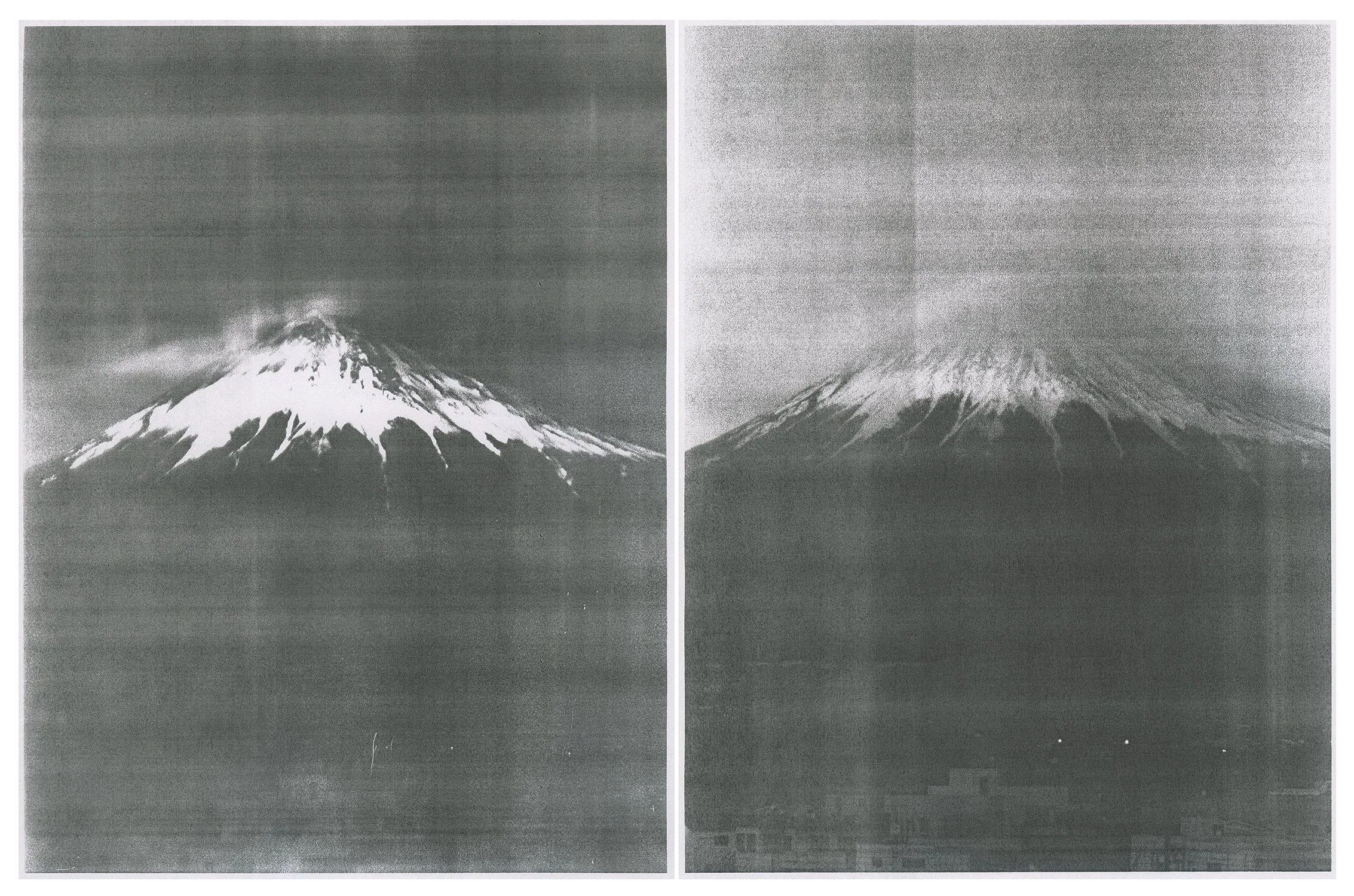
TAKASHI HOMMA from "Thirty-Six Views of Mount Fuji", 2023/2024. Photocopy by Aaron Stern © Takashi Homma.

THOMAS RUFF, from "Nudes," 1999–2012/2025. Photocopy by Aaron Stern © Thomas Ruff.