
By Jilke Golbach, April 10, 2026
A sculpture, not a photograph, sits at the centre of Yumna Al-Arashi’s exhibition at Huis Marseille through June 26. Were it not for the boxed-up figure beside it (a version of Giambologna’s 16th-century statue of the Roman god Mercury), it could easily be missed, blending into the classical surroundings of the museum’s landscaped garden at the back of a historic canal house in Amsterdam. Weathered to that same blue-green hue of eroded metal, Al-Arashi has cast her own body in bronze to push Mercury quite literally out of its place – staking a claim to stand at the centre of this space with its legacies of colonial-era wealth and power, while making it seem as if she has always been there.
Below the statue, a wind god blows upward, projecting Mercury – or, in this case, Al-Arashi – forward on a stream of air, one foot balancing delicately on its rising gust of wind. The sculpture feels symbolic for this forcefield of a show, astonishingly Al-Arashi’s first-ever solo museum exhibition. Titled “Body As Resistance”, it is an exhibition in which wind subtly recurs: felt in clouds photographed across the Yemeni landscape, in the flow of a magenta-coloured burka, and in the form of invisible movement – a current forcing change in one direction or another.
On show are multiple series made between 2013 and 2024 in which the Yemeni-Egyptian-American artist explores the currencies of the body – her own body, women’s bodies – in relation to notions of visibility, intergenerational connection, diasporic identity, and resistance. Starting from the premise that her body both serves as a conduit to the world and ‘solicits an uncomfortable gaze’, Al-Arashi uses (self)portraiture, landscape and documentary photography to examine the visual regimes and modes of representation through which women’s bodies are framed, controlled, and reduced worldwide.
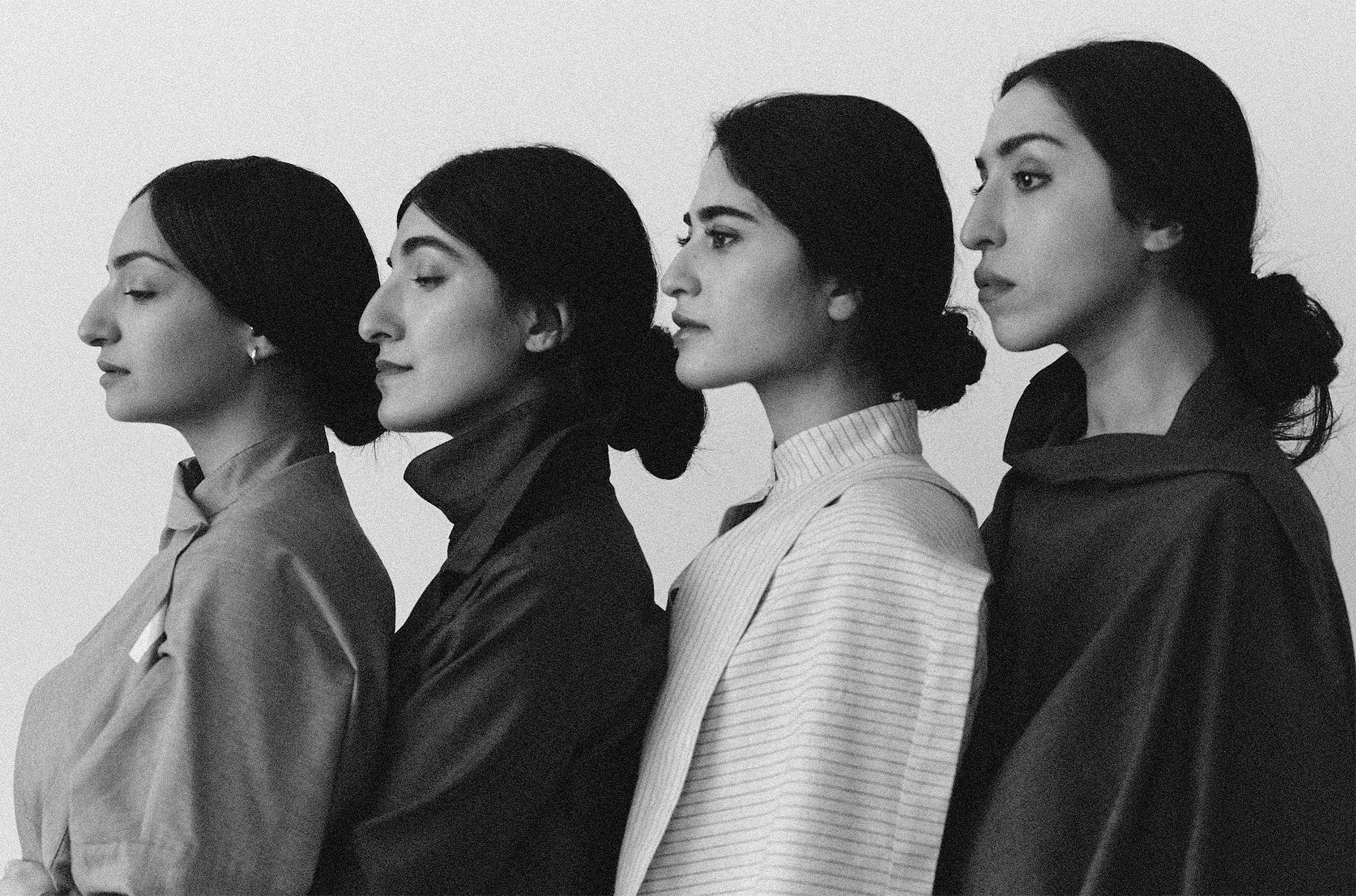
For Al-Arashi, who grew up in Washington D.C. and came of age in the anti-Islamic climate following 9/11, the body as a political and politicised entity has registered as an inescapable fact. The exhibition opens with early photographic works made in Northern Yemen in 2013-2014, just before civil war closed the borders of her ancestors’ country. In the imposing landscape, veiled women stand tall in confident solitude, asserting presence through a performative gesture that subverts the negative depictions of Yemen common in Western media. The second room holds only two group portraits – “Axis of Evil” (2020) – in which Al-Arashi and three friends are captured, once in profile and once facing towards the camera, emphasising the similarities in their appearance. Together, the two bodies of work form a poignant juxtaposition, undercutting the demonisation of places like Yemen, Iran, Afghanistan, and Iraq, and the vilification of their people based on ideas linked to physical traits.
Al-Arashi’s practice is itinerant by nature, reflecting her multi-faceted life and identity that takes her from America to Yemen, Switzerland to Lebanon, and North Africa. Dozens of black-and-white prints the size of postcards, arranged in grids, line some of the museum’s corridors and wall spaces. This series, “The Road” (2017), consists of images taken while traveling in North Africa in preparation for “Aisha”, published as a book by Editions Patrick Frey (2024). Shot through car windows and windshields, the monochromatic pictures capture winding roads, mountainous landscapes, domestic interiors, and people at work and rest – a visual stream of consciousness, a counterpoint to the vibrantly coloured photographs of “Aisha” itself, a project inspired by a memory of Al-Arashi’s Yemeni great-grandmother and by a tradition of facial tattoos seen among older generations of women across the Arab peninsula and North Africa.
With “Aisha”, Al-Arashi explores the body as archive, ‘carrying memories and forming bridges between different generations’ through spirituality, matriarchal traditions, and embodied forms of knowledge. Her search for the meaning of the women’s facial tattoos – and for a depiction of the tradition that runs counter to those found in European colonial archives – led her to present an abundance of photographs rather than a distilled selection. In an active push against the archival impulse to order, classify, and categorise, “Aisha” includes every picture taken, creating what Al-Arashi calls an anti-archive, or ‘an archive of love’. And yet, one of her accompanying poems reveals what a burden it remains to relieve oneself of the weight of (photography’s) history:
‘when women see
the heavy machine
hanging off my shoulder
a tension arises
shame washes over me’
Shame – and its opposite, liberation – resurfaces across other series in which Al-Arashi uses her own body to confront the representation of women. In “Let Me In” (2024), she places her naked body in relation to Zurich’s public sculptures of nude women, adopting their poses or nestling her limbs into their rounded forms. The images are radical in their fearless execution and yet, in the moment of their making, Al-Arashi notes that ‘hysteria and shame wash over me’. Elsewhere, four large-scale self-portraits arranged like a weathervane – again, the wind – see her embody the elements of earth, air, fire, and water as linked to the cardinal directions north, east, south, and west across different cultural traditions. The erotic body bursts off the walls: emancipatory, empowered, spellbinding. Legs wide open across a mountainous view, the artist provokes that she is ‘fucking the Alps’.
Across the different bodies of work, Al-Arashi oscillates between vulnerability and defiance, fear and audacity – a tension that reflects the depth of her engagement with the body as a site of political conversation. As she puts it: ‘To choose how I look becomes my greatest rebellion; to push myself again and again through the motions of shame – a sport I have mastered – this is my greatest political act’.
In the pounding heart of the museum – Huis Marseille’s breathtaking‘red room’ – comes a moment of repose. A meters-wide photograph from the series “Shedding Skin” (2017), depicting women and children in a Beirut bathhouse, spans almost the full width of the room. Its golden tones, glistening bodies, and atmospheric warmth evoke the visual language of orientalist painting – deliberately so. The ‘shedding’ here is not only of dead skin but of those deeply engrained Western perspectives that exoticize the Other. Al-Arashi reclaims the bathhouse as sanctuary: a place of sorority, community, and freedom where the ‘uncomfortable gaze’ can finally be shed. ‘In this space your currency of clothing and beauty is not accepted,’ she writes against the western gaze. ‘It’s useless here, and I feel free. My womanhood is all I have left.’
Jilke Golbach is Curator at Foam, Fotografiemuseum Amsterdam and has previously held curatorial positions at the London Museum, Barbican Art Gallery, and Rijksmuseum. She holds a PhD from University College London.

YUMNA AL-ARASHI "I Am Whoever You Want Me to Be" 2018 © Yumna Al-Arashi.
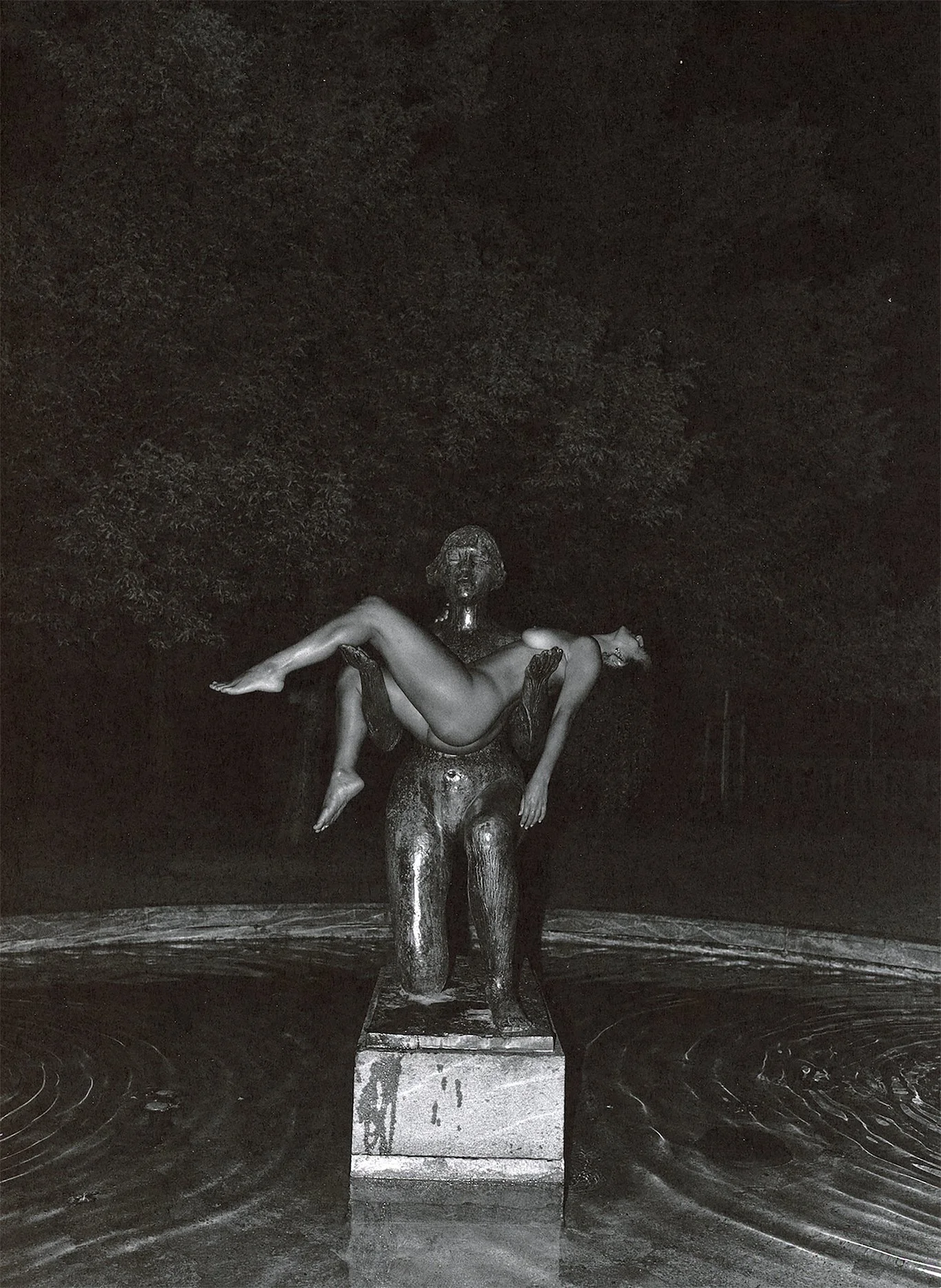
YUMNA AL-ARASHI "Let Me In I" 2024 ©Yumna Al-Arashi.
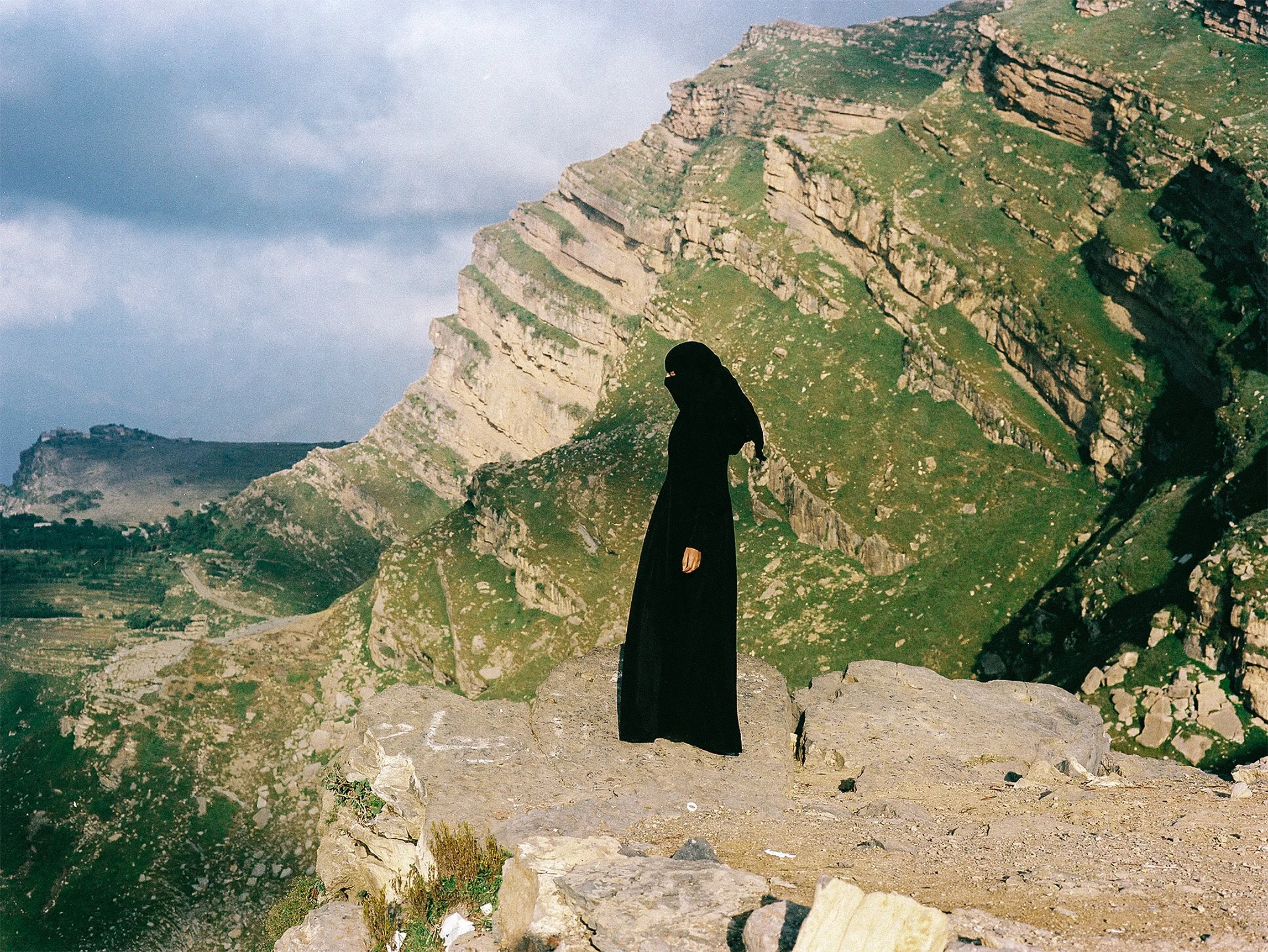
YUMNA AL-ARASHI "Northern Yemen I" 2013. ©Yumna Al-Arashi.
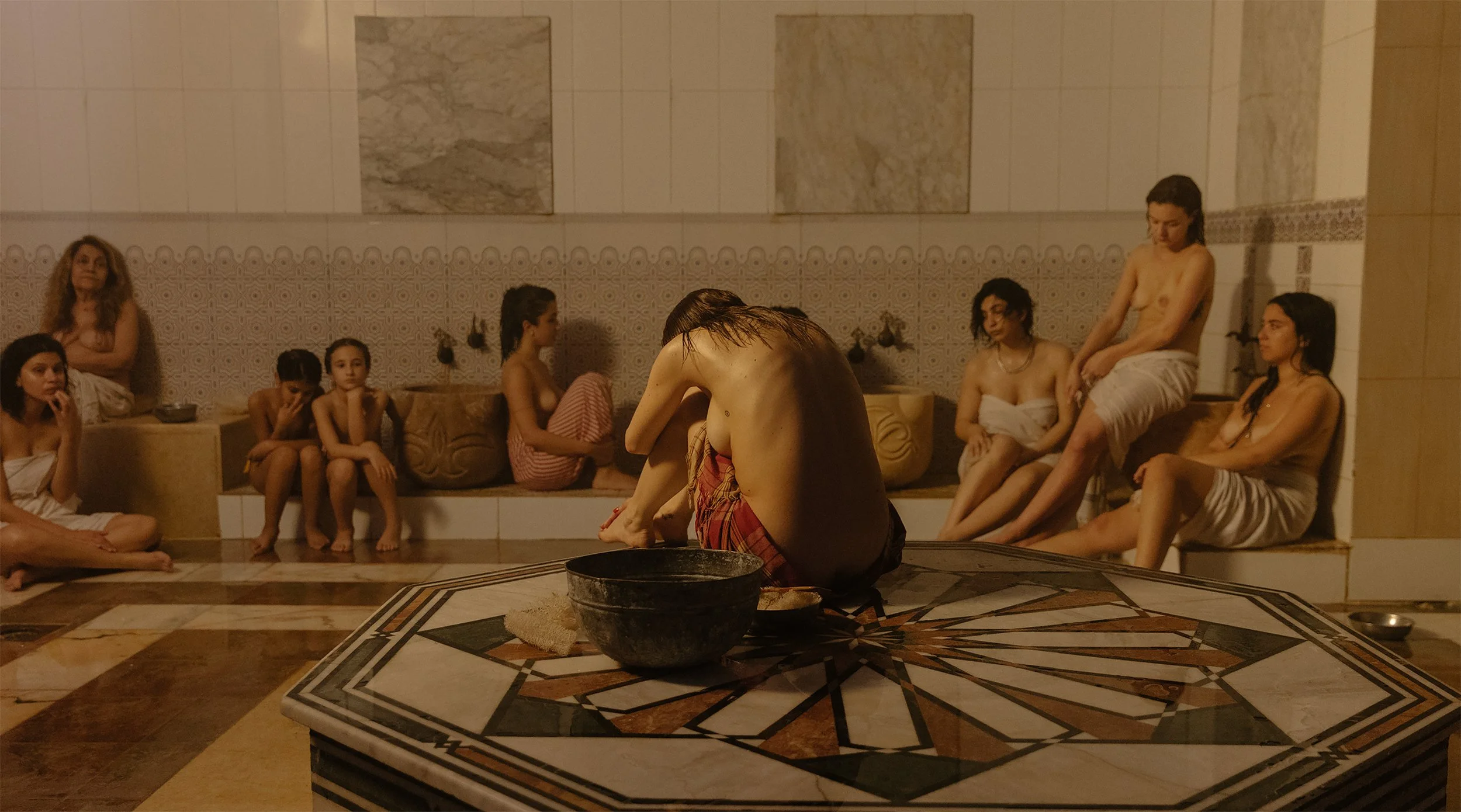
YUMNA AL-ARASHI "Shedding Skin I" 2017. ©Yumna Al-Arashi.
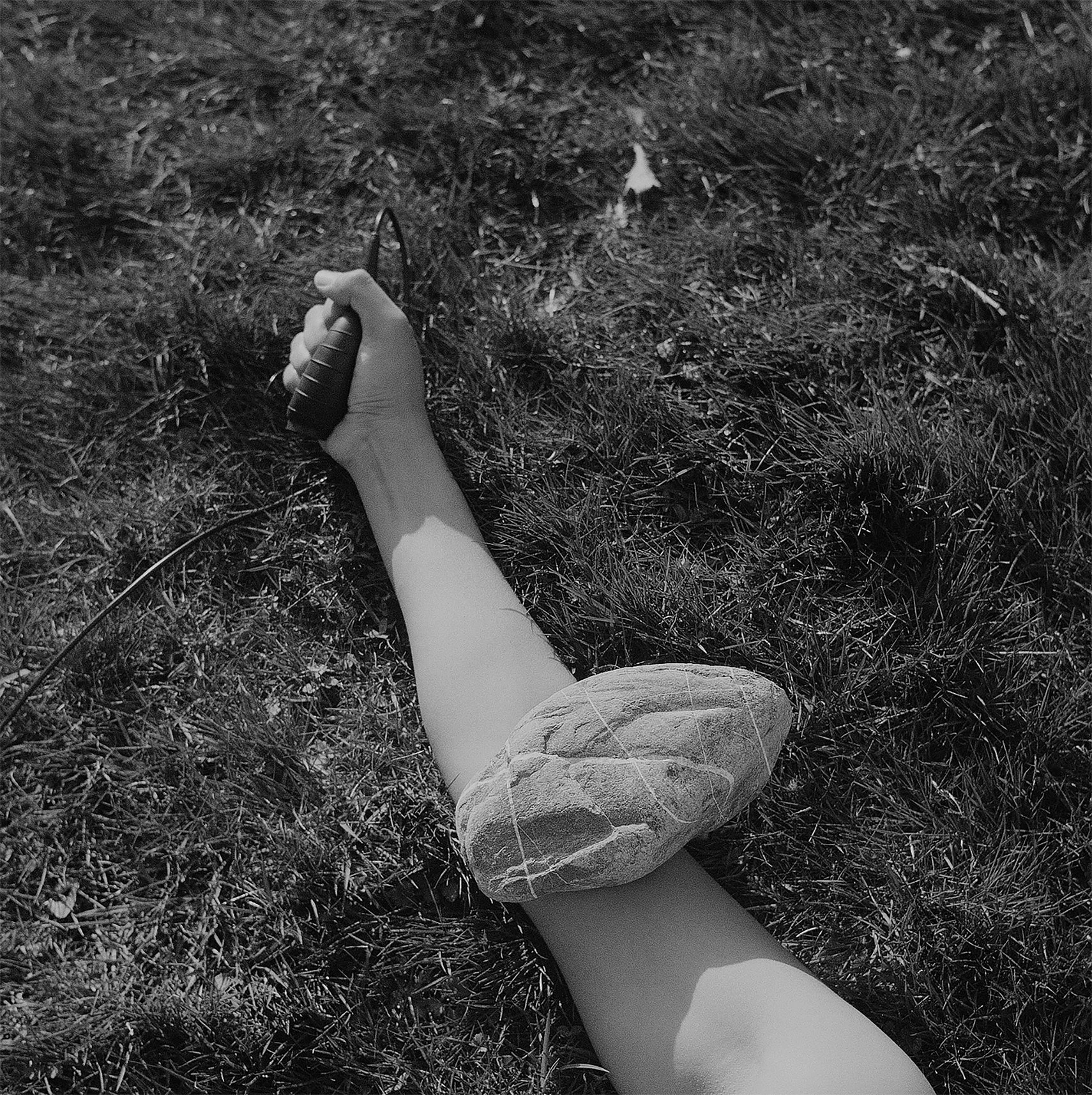
YUMNA AL-ARASHI "Untitled", 2020 ©Yumna Al-Arashi.