
By Ted Barrow ‘Arbus’s Sixties Chapel’, April 10, 2026
I am going to Rome tomorrow, and I probably won’t get to see the Sistine Chapel (new pope just dropped; Easter at the Vatican, Rome post-covid is never not crowded). Bummer. Diane Arbus’s “Sanctum Sanctorum” now at Fraenkel in San Francisco through May 22, offers what I will surely miss next week in a strangely salient way. Or rather: it stages, in advance, the condition of that missing—the peculiar experience of standing before images that are both vividly evident and structurally absent.
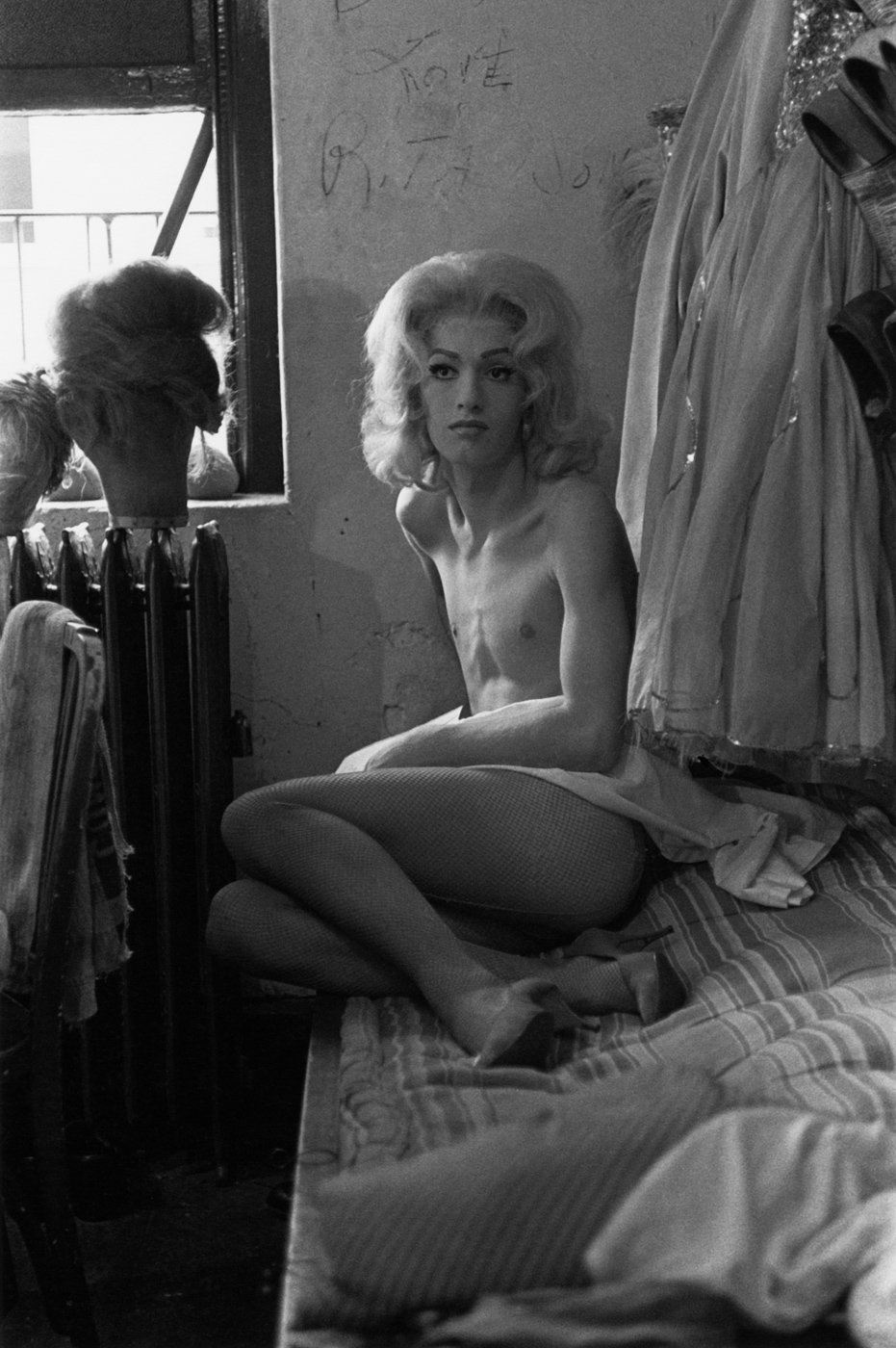
In San Francisco, having traveled from David Zwirner in London, “Sanctum Sanctorum” seems less like a sequence of photographs than like a chamber calibrated for emphatically slow, reverent looking. Isn’t that, after all, what photography has always been? Images that trace life before the flood, boxed, alchemized in a dark room? The title asserts it, referencing both the private bedroom and that space of furtive intimacy between Arbus and her subjects. The result is a précis on what she saw and what we now miss: fabulously engaging bodies in often grubby or gloriously or dowdy cluttered rooms, each photo a pneumatic moment that burst a split second after Arbus’s aperture shut. Has any photographer ever sought this kind of intimacy with their subject before, and is it not unfair to subsequent photographers to compare what came after to this?
So how might Michelangelo’s ceiling link to this experience?!? Not because Arbus’s figures resemble the sibyls and prophets in any literal sense—though sometimes they do—but because they begin, uncannily, to behave like them. This fanciful analogy steadily shifts from formal appearance to temporal span as Arbus’s cast starts to feel less like looking at the recent past than like recognizing a historical interval as pronounced as that which separates us from the Biblical scenes overhead in the Sistine Chapel.
Hate to start it out this way, but here it is: “Norman Mailer” (1963) photographed by Arbus, splays and bends in his suit against a chair with a compressed intensity that places him among the ignudi or prophets—all figures who strain under the weight of excessive meaning with erotic vim. Left leg hanging akimbo over the arm rest, he leans back into the scalloped velvet chair with a gaze and gesture that pushes into our space. But the more striking point is not the echo of pose; it is the sensation that Mailer, like the sibyls, belongs to a world whose codes no longer adhere to ours. His presence, though legible, perhaps iconic, is still oddly remote, stretched to a balloon skin thinness of near abstraction. I can’t help but think “what an asshole he must have been,” like the god of the Old Testament; but also “what kind of brutal, fabulous and bygone world could have produced that kind of asshole?” The same kind of asshole who so perfectly said “giving a camera to Diane Arbus is like giving a hand grenade to a baby.” Like Don Henley’s “Deadhead sticker on a Cadillac” from ‘Boys of Summer’ which loses its trenchant edge the farther from 1984 we get, describing Arbus as the grenade-wielding baby illuminates something about the precarious optimism of America in 1963. In that pop-saturated decade of absolute confidence that forked into sybaritic hedonism and world-changing conviction, Arbus’s encounters with her subjects come across as the last time it was assumed that rooms meant a privacy that could be protected.
This resonates across the show. Arbus’s marginal subjects now register less as freaks than as emissaries from a bygone world, one which pathologized doubt but held optimism close like a sacred scroll. Their interiors feel hermetic not only because of the intimacy Arbus secured, but because the very idea of such intimacy now seems insane. Mirrors reflect cluttered closets— a real joy is to see the tricky way that Arbus expands and contracts and even sometimes reflects the rooms her people inhabit when mirrors show up in her photos. Our pocketed phone mirrors are less fun house and more dark screen today. The rooms, the gestures, the modes of self-presentation: all appear both hyper-articulated and faintly obsolete, like a language we can translate but no longer quite speak.
Michelangelo’s sibyls prophesized Christ’s arrival, an idea without a conclusion, absorbed in texts we can’t access, their authority grounded in unbridgeable distance. We can’t expect to understand them fully; their opacity is the condition of their meaning, and they sit in ropy coils that ward us off from what they present. For kicks, let’s extend this analogy: Arbus’s world feels Biblical—not in sacred content, but as a legendary era removed from our time. These singular models and their bedrooms all take on the quality of scenes whose immediate context has been lost, leaving only form, affect, and the looming pressure to find meaning. I think I can imagine what the cabin at the nudist camp in New Jersey smells like, I can almost recognize the “types” her figures stand for, August Sander-like, but that notion quickly slips away the way an old song half-remembered in a dream does. Like Michelangelo’s frescoes, we are aware that something immense is being staged, and equally aware that our access to it is belated.
So what happened? Arbus’s subjects once seemed close enough to provoke ethical discomfit: did we look too hard, too clinically, too curiously? Now such dilettantish takes seem nitpicky, far enough away to provoke not judgment, but empathy. We the viewer are less a voyeur than a reader of exotic insignia, our gaze scans across glossy surfaces for clues that can never fully resolve into narrative but instead proffer discomfiting wonder. Bearing a not un-freakishly hirsute shoulder, “Sharon Goldberg” (1965) looks, sphynx-like, beyond us to Arbus, the gorgeous print the only trace of the intensity of this hushed encounter. “Nancy Bellamy’s Bedroom, N.Y.C”(1961) might just as well have been shot by Daguerre, the way it seems so hermetically static in frozen dust.
The Sistine sibyls foretold a future that only later would make itself known. So, too, do Arbus’s subjects. Presenting a past that has become strangely prophetic—not because it predicted our present, but because it now appears as its prehistory, this bricolage of early, unstable identities makes up our own. Bedrooms are hardly private now, and we all face countless lenses; this is the gap that separates their world from ours. I recognize myself in these avatars of freakish inscrutability not because they look like me, but precisely because nothing does and I no longer expect it to. In this sense, the missed trip to the Sistine Chapel is not so disappointing. The structure of that encounter—the awareness of distance, the effort to read across it, the acceptance that meaning will remain incomplete—has already taken place.
Standing in Fraenkel Gallery, one looks at Arbus’s photographs the way one imagines looking up at Michelangelo’s ceiling: not to recover a lost world, but to register the gap that separates art from life. And within that gap, something like understanding flickers, not as clarity, but as recognition of how far, and how strangely, we have descended. Plus, all things considered, ours is a time when it’s a lot easier to spend hours with Diane Arbus’s muses than minutes with Michelangelo. Fraenkel is in San Francisco, the Vatican is in Rome.
So be it. Go see it.
Ted Barrow, PhD, is an art historian who works as a lecturer, writer, and curator in San Francisco. In addition to publishing regularly about art, Barrow hosts a show called "This Old Ledge," that explores the history of the built environment of skateboarding.

Diane Arbus “The Backwards Man in his hotel room, N.Y.C.” 1961 © The Estate of Diane Arbus

Diane Arbus “Brenda Diana Duff Frazier, 1938 Debutante of the Year, at home, Boston, Mass.” 1966 © The Estate of Diane Arbus
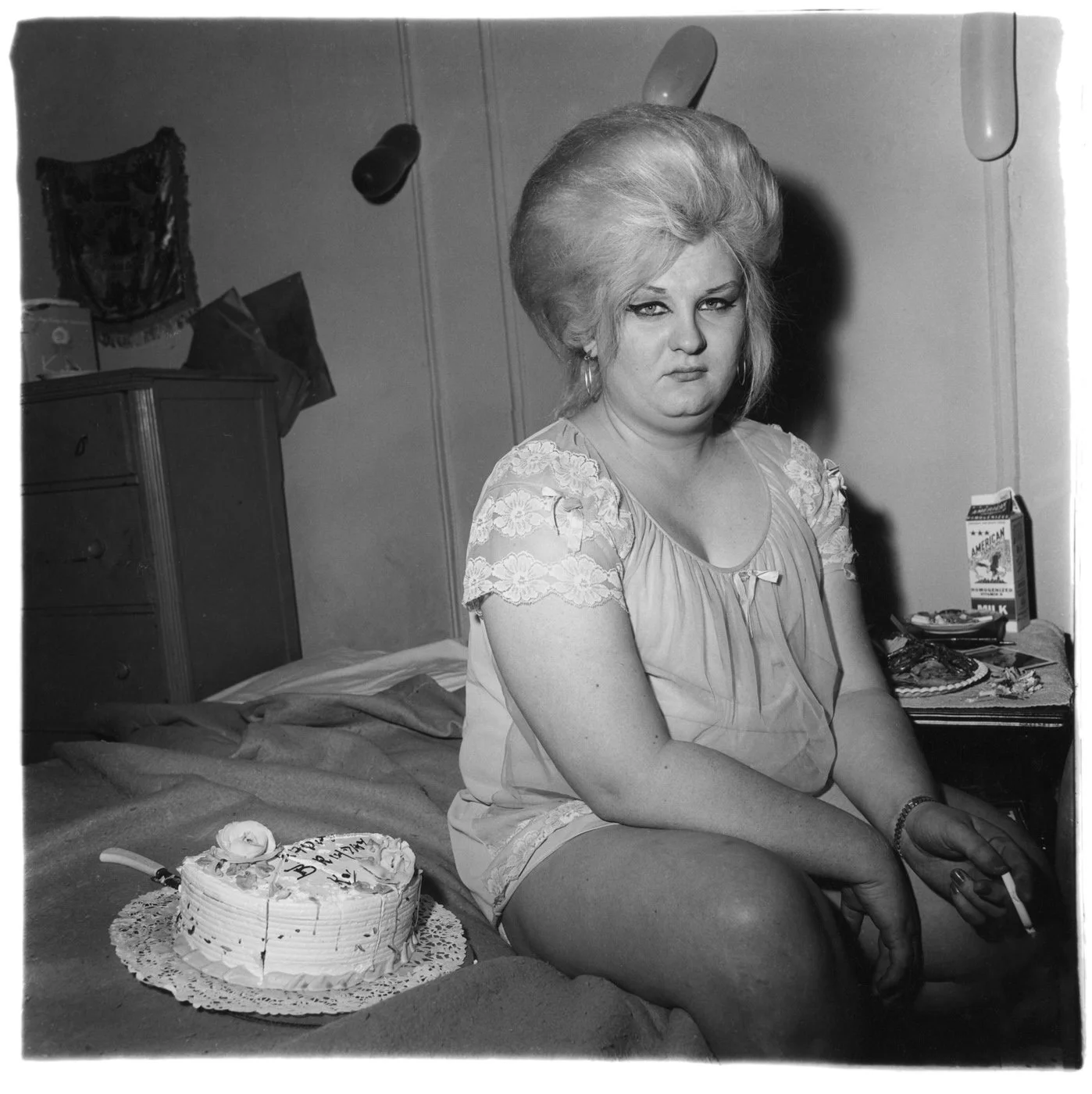
DIANE ARBUS “Transvestite with her birthday cake, N.Y.C. 1969” © The Estate of Diane Arbus
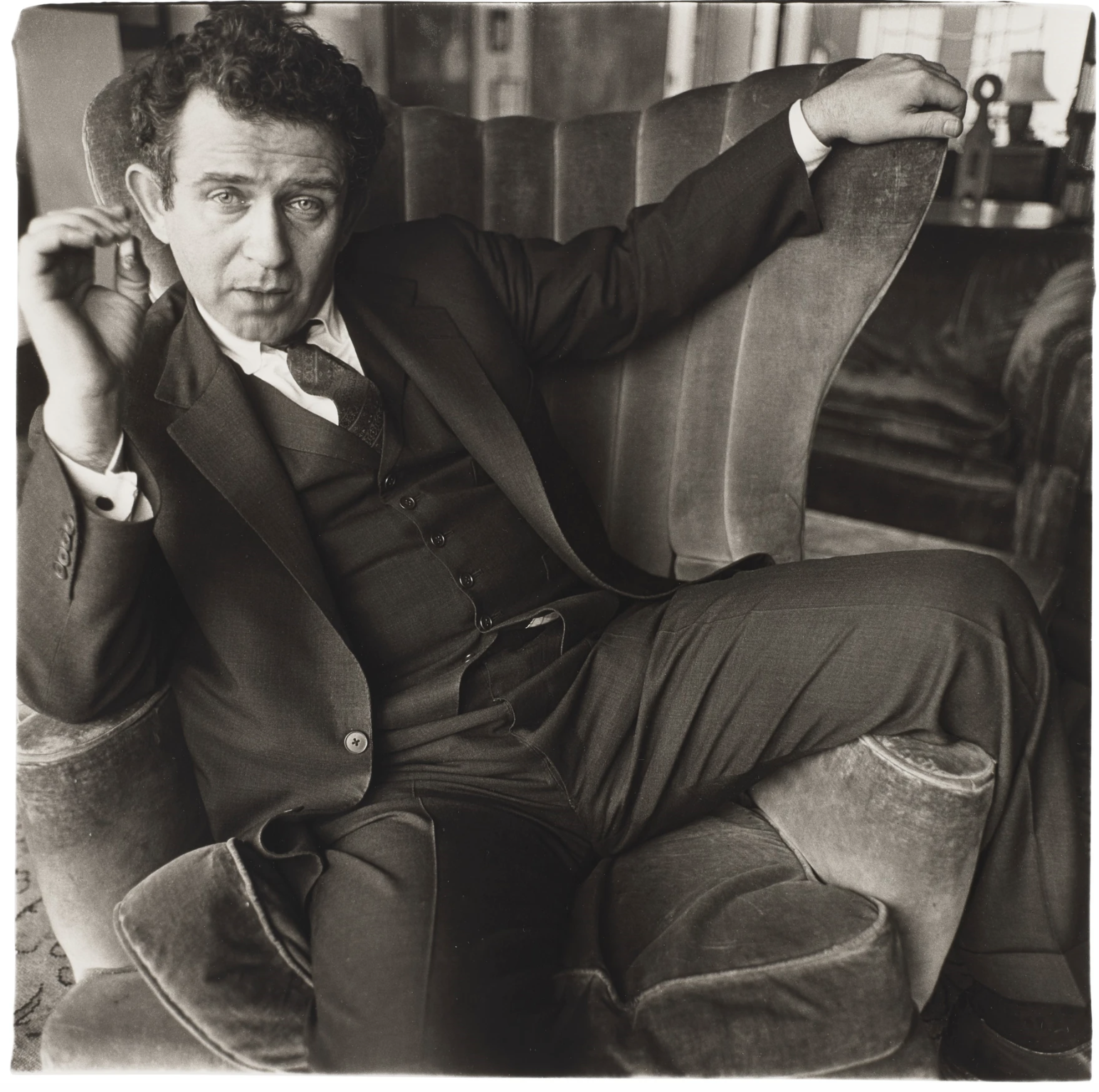
DIANE ARBUS “Norman Mailer at home, Brooklyn, N.Y.1963” © The Estate of Diane Arbus