
By Isa Walter, May 10, 2026
The first room of the retrospective exhibition ‘Can love be a photograph: 40 years of Inez and Vinoodh’ is filled with portraits of the artists’ loved ones. Intimate yet unnerving, posed individually on a bed, the figures in each frame stare intently down the lens in a series of enlarged Polaroids. Their necks bent at an unusual, uncomfortable angle, mouths slightly open and eyes staring, they have an eerie and disturbing, quality about them.
After meeting during their studies in Amsterdam in the 1980s, Inez van Lamsweerde and Vinoodh Matadin embarked on a life-long partnership, both in art and in love. The portraits which open the exhibition come from one of their first series, titled “Me”, from 1998. The series which they describe as a study of themselves through those they love the most, works almost like a reflected or refracted self-portrait. The uncomfortable poses and unusual staging play with that space, creating portraits which are at once intimate and alienating.
Starting in the 90s, Inez and Vinoodh were early adopters of digital image editing tools, specifically Quantel Paintbox, an early precursor to photoshop. Using these tools of advertising to critique its effects nods to a Pop Art lineage, while to focus on image manipulation previews the massive digital tide which was then just beginning to change. The resulting series still feel sharply critical today.
This sense of discomfort and the grotesque constitutes a core part of their practice. In another room, large, bright photographs take inspiration from advertisements, using digital manipulation to an uncanny end. In “Thank you Thighmaster”, nude women printed larger-than life, their genitalia smudged to smooth, plasticy oblivion; “The Forest” sees muscular men recline, flexing their biceps in too-tight jeans, as they sweep their glossy curled hair away from their face with a smooth, well-manicured hand. In “Final Fantasy” toddlers in shiny pink leotards, hair in platinum, ‘American Girl’ curls grimace at the viewer – their smiles have been replaced with those of adult men. To add to the sinister, mechanised feel, their hands press against an invisible barrier, like toys pressed against cellophane windows.
These early experiments in playing with gender, age and beauty provide a blueprint for much of their often surreal work for fashion magazines which followed. In one photograph, two women walk down a white-picket-fence American suburban street, in sharp, muted tweed tailoring. Pink orchids grow from their faces, petals emerging where their noses should be, and gaping anime doll eyes painted over their own. In another, a model leans against a cabinet in a kitchen, an exaggerated, boxy hip protruding unnaturally from her slim waist. The models in these shoots are, of course, beautiful, but they carry a playful, subversive and grotesque quality which in turn amplifies their beauty.
Their son, Charles, appears frequently in their work. One of the most striking examples is a diptych, in which he appears dressed in turn as each of his parents. “Charles as Inez” and “Charles and Vinoodh” sees him don wigs and leather jackets, shot in black and white in a studio setting, posing in a pastiche of a fashion photographer, peering through the lenses of his camera and his Rayban Wayfarers. In these photos, the push and pull of their practice comes to the fore. The pair’s work exists in this dichotomy; between analogue and digital, between humour and sincerity, between beauty and the grotesque, between Inez and Vinoodh. Throughout their oeuvre the most consistent presence is this tension, and what is built in this void between the two of them. For them, as much as love can be a multiplicitous, shifting, nebulous thing, so can a photograph.
Isabel Walter is an assistant curator and editorial assistant at Foam, Amsterdam.
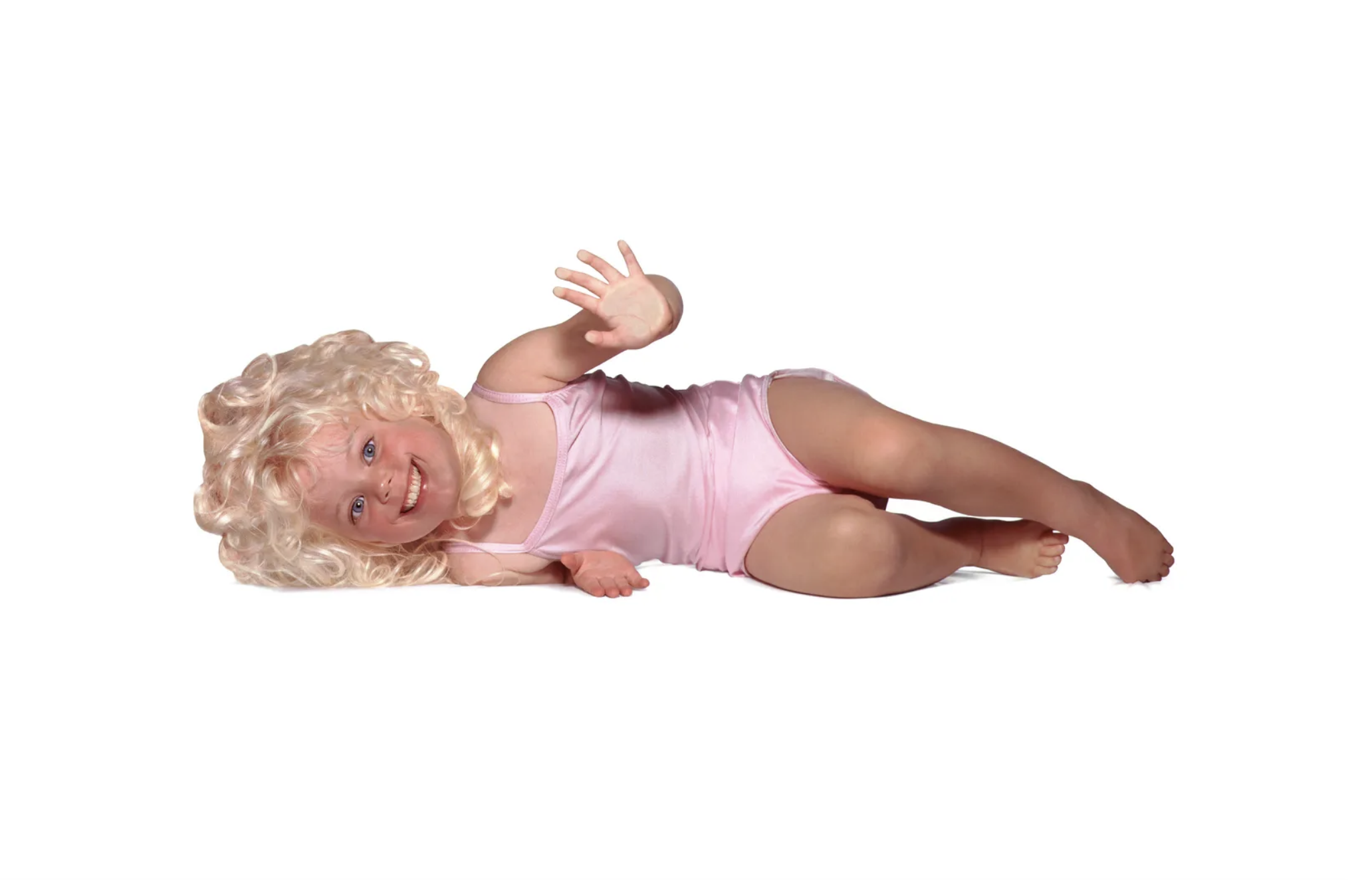
INEZ AND VINOODH "Final Fantasy, Ursula" 1993.
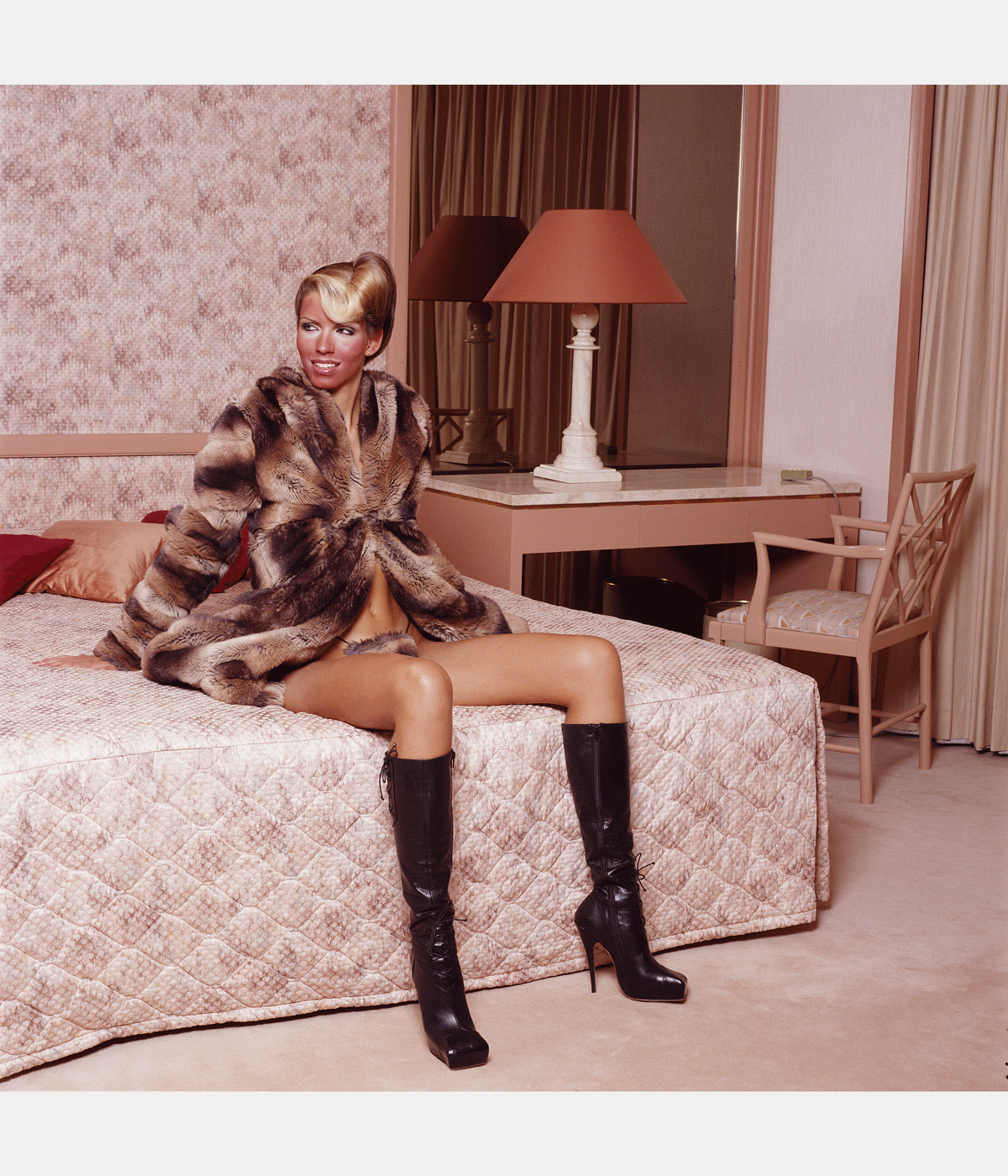
INEZ AND VINOODH "Kym", 1994.
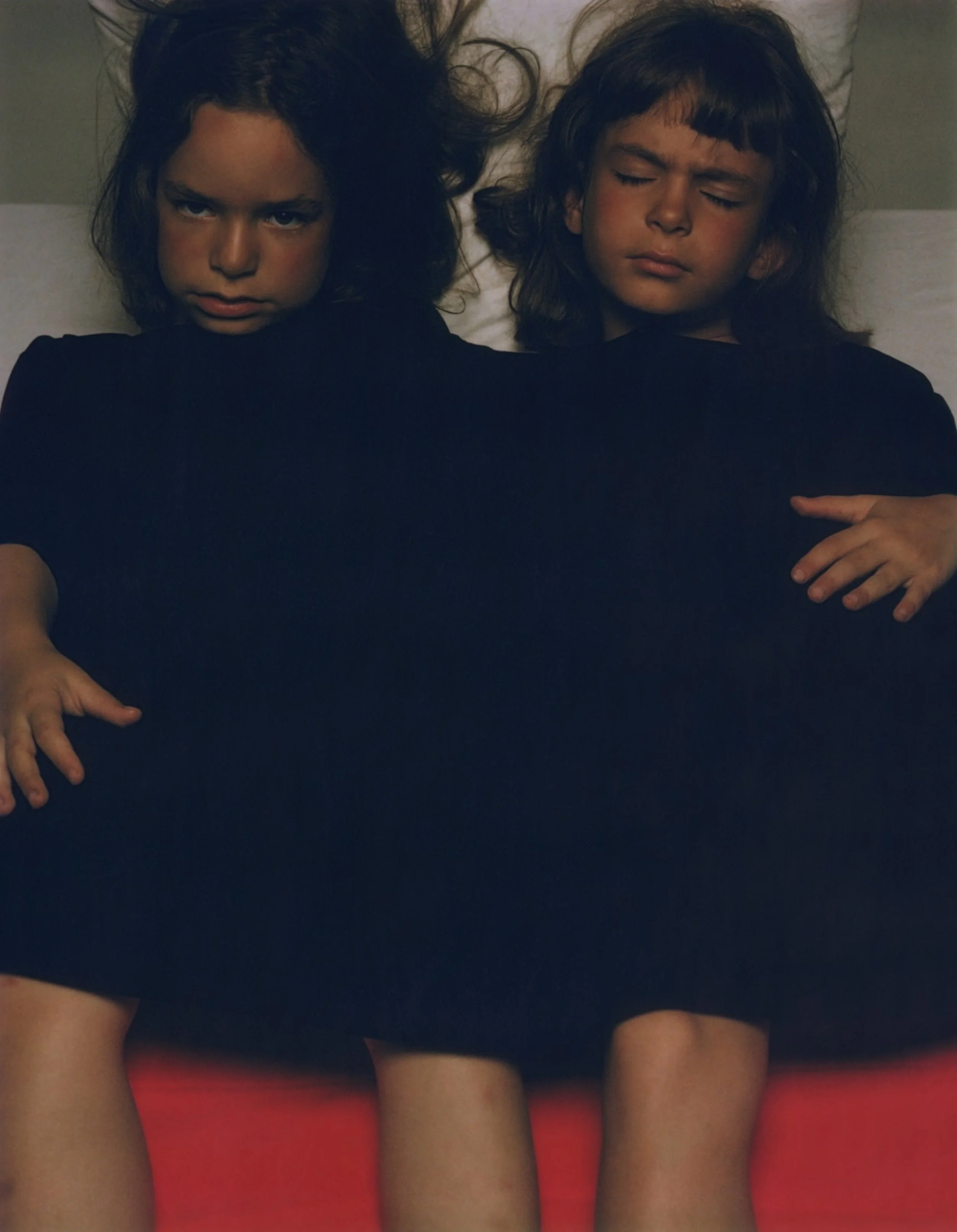
INEZ AND VINOODH "Me #05", 1998.

INEZ AND VINOODH "Taylor Swift and Benjamin Time Magazine" 2023.

INEZ AND VINOODH "The Forest: Andy" 1995.

INEZ AND VINOODH ”Bill Murray New York Times Magazine" 2004.