
By Rica Cerbarano, June 10, 2026
If there is one exhibition perfectly suited to the spaces of the MAST Foundation in Bologna, it is the one currently on view: “Bernd & Hilla Becher: History of a Method”. Few topics align more closely to the mission of this philanthropic institution, founded in 2013, which advances initiatives at the intersection of technology, art, and innovation, with particular emphasis on photography. More than 350 original black-and-white photographs by the Bechers are on display through September 27, accompanied by an extensive body of archival and contextual materials, including drawings, books, and posters. Together, these works reveal the complexity of the artistic production of the couple who redefined not only industrial photography but the whole contemporary visual culture.
Curated by Gabriele Conrath-Scholl, their son Max Becher, and Urs Stahel, the exhibition unfolds across ten sections that examine the themes and methods underpinning the Bechers’ work. The title, “History of a Method”, signals the curatorial approach: rather than focusing solely on the artists’ most recognizable visual strategy—the typologies,—the exhibition seeks to illuminate their subjects, working methods, and procedural frameworks, offering a portrait that moves beyond the reductive interpretation of their practice as merely a matter of industrial subjects and grid-based displays.
Indeed, it is difficult to think of the Bechers without immediately picturing their celebrated photographic arrays. These carefully ordered arrangements function almost as sculptural installations: drawing on the formal rigor of Minimalism—with its emphasis on geometry, seriality, and material presence—they opened up an entirely new field of inquiry for photography and whose influence continues to this day.
The typologies—series of images depicting subjects like mines, extraction towers, gasometers, coal bunkers, blast furnaces, and silos, composed of nine to twenty-four photographs arranged in a grid—occupy a dedicated section. They constitute the highest degree of formalization achieved in the Bechers’ artistic research, underscoring the scientific rather than the historical or sociological nature of their approach. The juxtaposition of images—in a network of visual relationships that operates not only horizontally and vertically but also diagonally—functions as a genuine comparative analysis. It is a classification of forms and structures reminiscent of biological taxonomy, where living organisms are organized into families, species, and subspecies; in this case, what is being examined is the industrial environment. It is no coincidence that, in her early photographic experiments, Hilla devoted considerable attention to documenting natural elements, often drawing on visual scientific schemas in her studies and teaching.
Their method is one of categorization, ordering, and theorization. A method that transforms a tangible, concrete, and historically specific phenomenon into a language—a system of writing and reading the image governed by broader principles, such as those of ‘New Objectivity’. Photography here is conceived as being completely independent of political agendas and ideological conditioning. Indeed, to produce an objective photograph also means liberating the medium from ambiguity, which can become a tool of manipulation in the hands of those in power. It is important to remember that both Bernd and Hilla Becher grew up under Adolf Hitler’s regime and witnessed first hand the use of German art for propaganda. The Bechers drew on the “neutral” photographic tradition established by August Sander, as well as by Karl Blossfeldt and Albert Renger-Patzsch, developing what would become their lifelong mission: to demonstrate that the spirit of the mid-twentieth century “is reflected in the buildings and machinery of technology”, as they observed.
The exhibition thus offers a comprehensive account of the Bechers’ practice, devoting ample space to bodies of work beyond their famous typologies. Particular attention is given to the industrial landscapes they created between 1962 and 1999 in various countries, depicting blast furnaces, gravel plants, coal mines, and lime kilns. These early works encourage viewers to identify with the two artists as they travelled through Europe and North America in their Volkswagen bus, searching for sites that they first located on maps and then explored on foot.
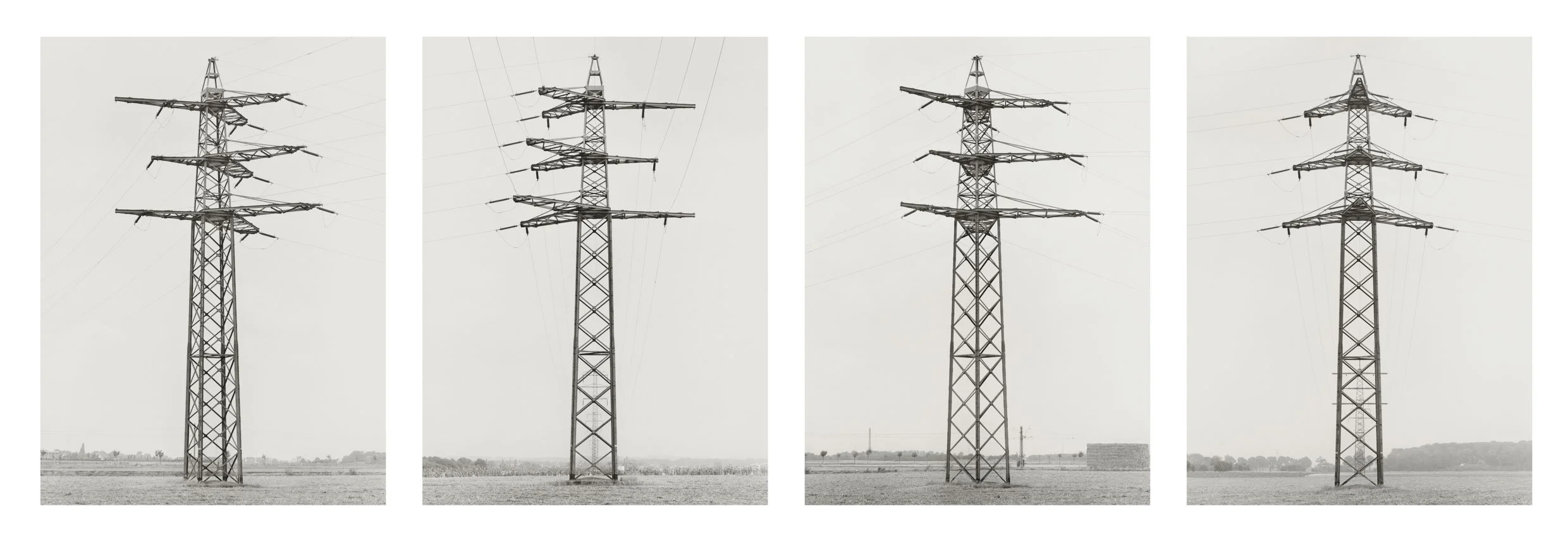
A section is devoted to the “Unfoldings”: systematic juxtapositions of photographs depicting the same subject from several directions and therefore from multiple sides, always at a comparable distance.
Highly fascinating—and relatable because of the shift from the industrial to the domestic—is a gallery dedicated to workers’ housing and half-timbered houses. The Bechers document the three- and four-storey apartment blocks of post-war architecture, which provided the population with new living spaces and a modest sense of comfort after the heavy bombing that devastated the industrial regions alongthe Rhine during the Second World War. On the other hand, their attention to these houses, especially those found in the industrial area around Siegen is of particular personal significance as Bernd Becher’s native region. Seen through the collective and repetitive framework of the Bechers’ grids, these houses become emblematic of their artistic sensibility. They embody their interest in industrial, vernacular, and anonymous culture and they reflect an artistic trajectory shaped by their training in graphic design, commercial photography and typography. This background fostered a deep appreciation for lines, empty spaces, order, and geometry.
The exhibition is punctuated by an installation dedicated to some of the photographers of the Düsseldorf School of Photography— Andreas Gursky, Thomas Struth, Thomas Ruff, Tata Ronkholz —where Bernd Becher taught from 1976 to 1996. Featuring works from the MAST Collection, it highlights both the legacy and the continuing relevance of the Bechers’ method.
The lower floor of “History as a Method” turns to the artists’ formative years. Here, the exhibition traces their individual artistic paths and reveals how these eventually converged into the collaborative practice for which they became renowned.
Particularly compelling are Bernd Becher’s early photographic collages, created in response to the rapid demolition of the Eisernhardter Tiefbau mine in Eisern, a site he had initially been documenting through drawing and meticulous graphic studies. With the limitations of manual documentation and the urgency imposed by the mine’s imminent destruction, Bernd turned to photography. He produced a series of photographs using a 35mm camera and assembled the images into composite collages that functioned as documentary records and autonomous artworks, simultaneously. These photocollages testify to a longstanding fascination with the industrial buildings that populated the landscapes of his childhood, marking the beginning of the monumental undertaking that would define the Bechers life’s work: the cataloguing and preservation of the rapidly vanishing industrial archaeology of the modern West.
The section devoted to Hilla presents a remarkable series of macro photographs of liquids, alongside photograms of plants and animals. These works already hint at the rigorous investigation of form. In their taxonomic approach, industrial structures are effectively treated as living organisms—entities to be observed, classified, and compared according to recurring morphological characteristics.
The exhibition unfolds as a quiet, measured, and carefully choreographed journeythrough the Bechers’ world. Exceptionally well arranged, the wall texts are accessible to a broad audience, and the neutrality that characterized the artists’ practice isconvincingly conveyed through the presentation. Yet the curators make a bold and unexpected choice.
Before reaching the exit, visitors pass through a corridor devoted to the human dimension behind this work. Through photographs and personal quotations, the two artists—until then largely concealed behind the apparent objectivity of their work—gradually emerge in front of the camera. It becomes clear that, despite the coolness, neutrality, and emotional restraint often associated with their images, the extraordinary body of work they produced was ultimately born from love: love for one another, love for photography, and love for the environments that shaped their lives. What emerges from this exhibition is a rare form of awareness: of artists capable of weaving their own biography into the broader historical fabric of their time.
Rica Cerbarano is a curator, writer, editor and project coordinator specializing in photography. She writes regularly for Il Giornale dell’Arte and has also contributed to Vogue Italia, Camera Austria, FOAM, among others.
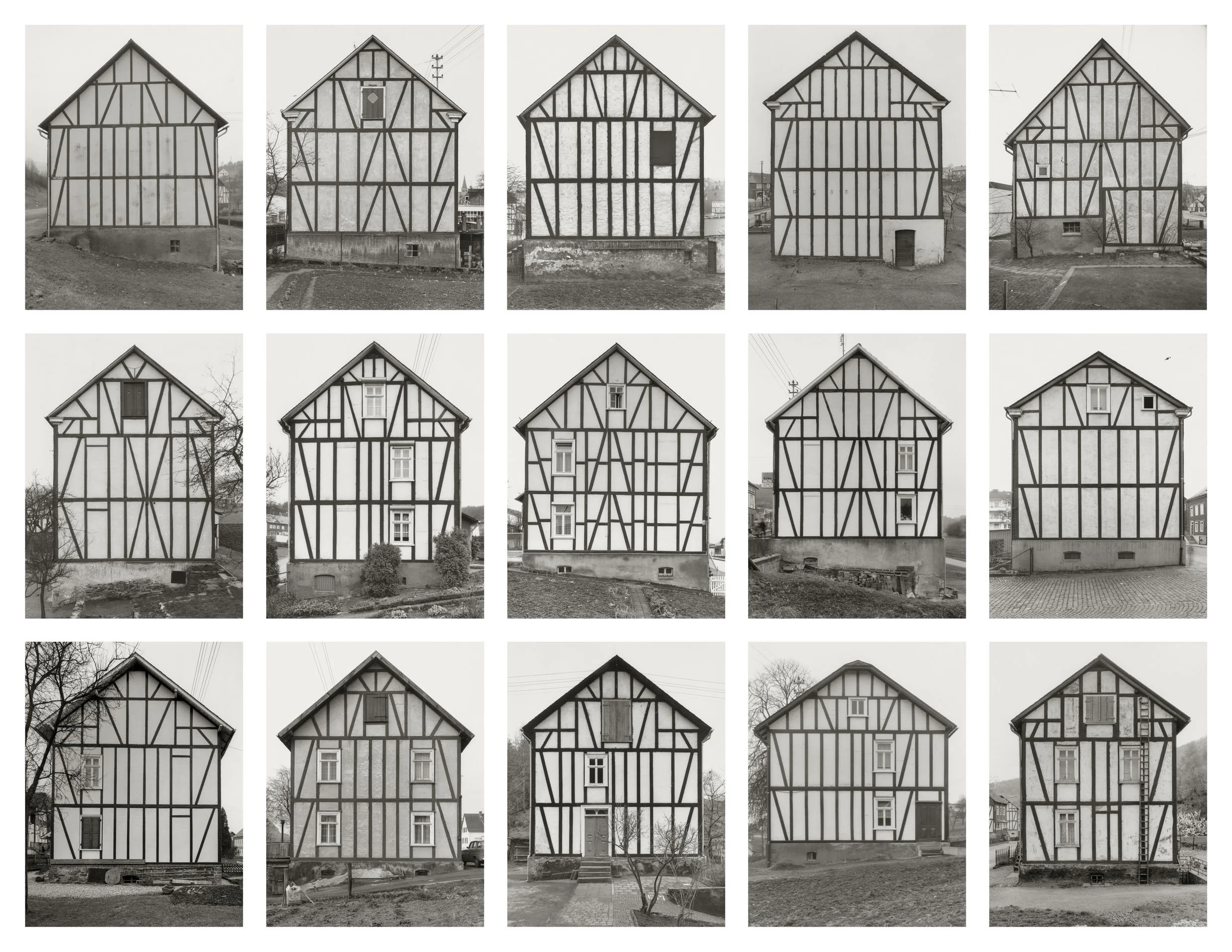
Bernd & Hilla Becher “Framework houses of the Siegen Industrial Region” 1959-1973 ©: Die Photographische Sammlung/SK Stiftung Kultur, Bernd & Hilla Becher Archive, Cologne, and Museum für Gegenwartskunst Siegen, acquired with funds from the Kunststiftung NRW
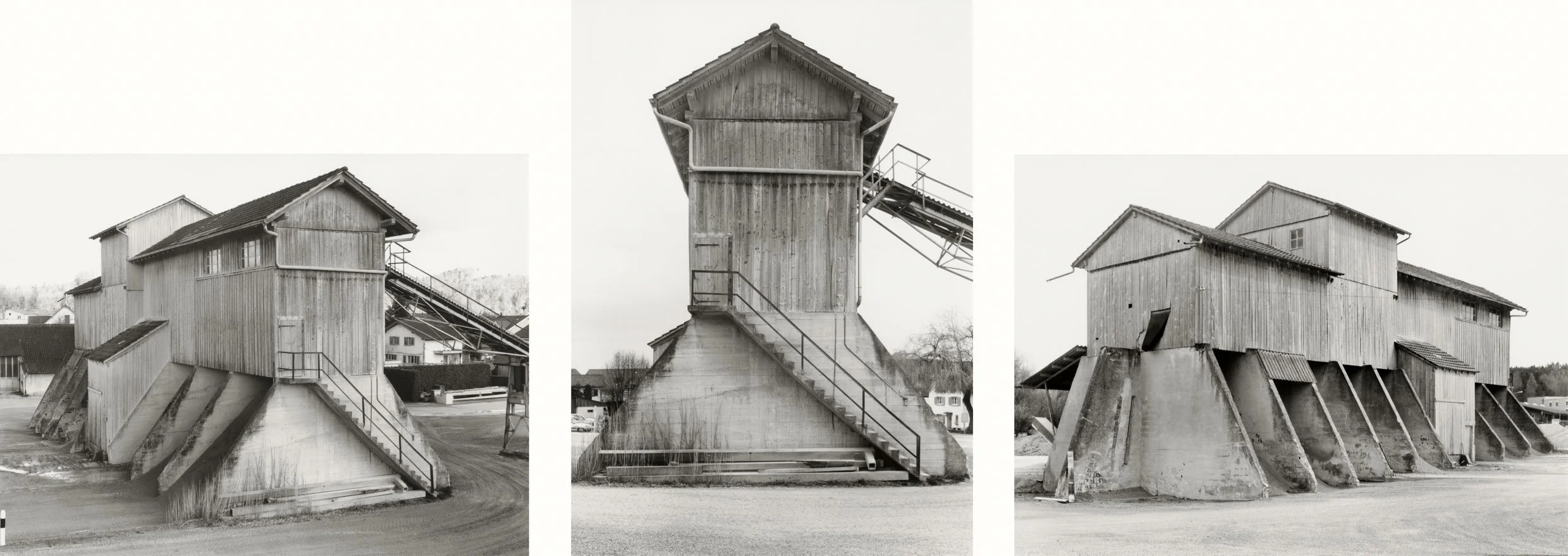
Bernd & Hilla Becher “Gravel plant, Oberbüren, St. Gallen, Switzerland” 2001 © Estate Bernd & Hilla Becher, represented by Max Becher Courtesy Sprüth Magers
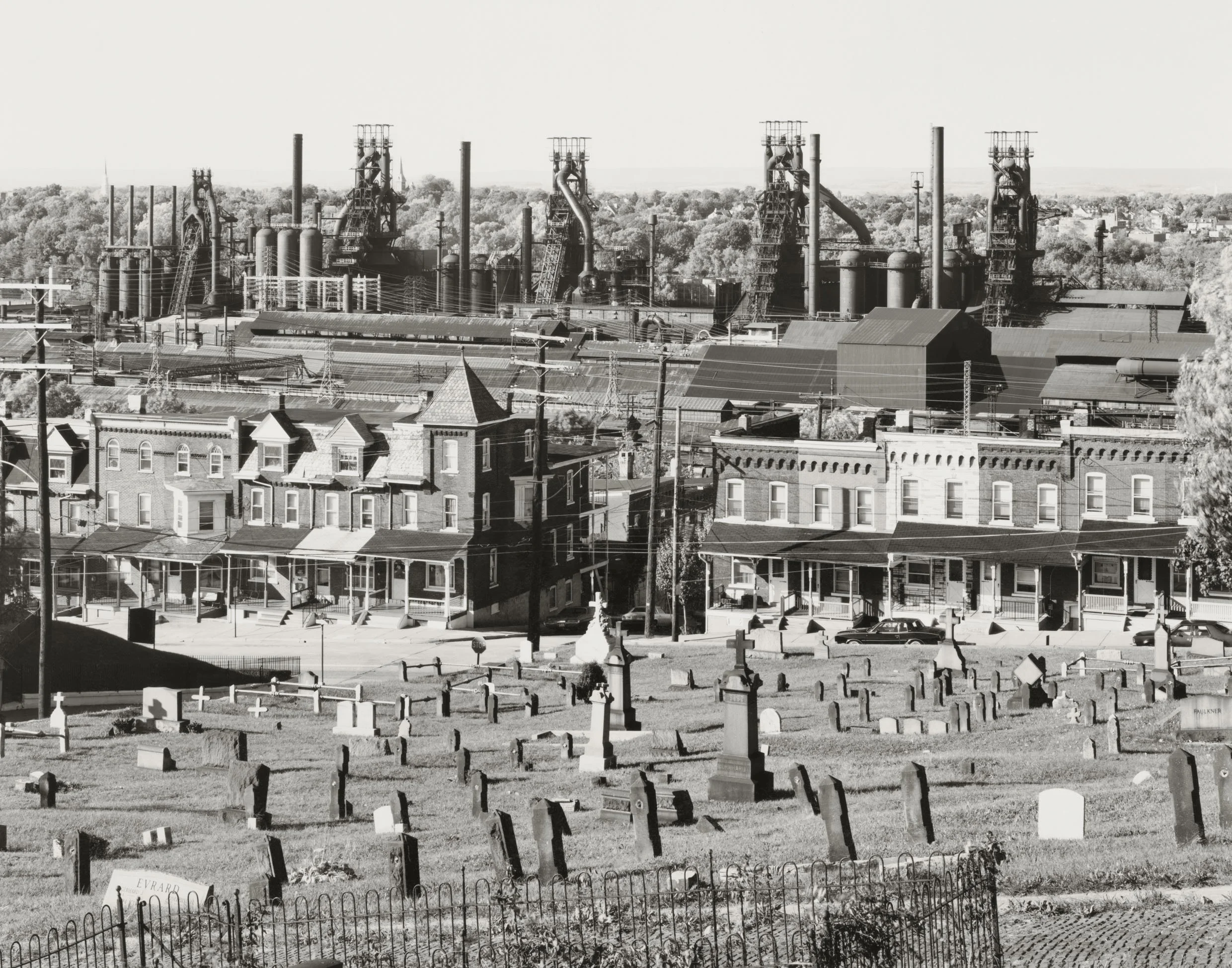
Bernd & Hilla Becher “Bethlehem, Pennsylvania, USA” 1986 © Estate Bernd & Hilla Becher, represented by Max Becher Courtesy Die Photographische Sammlung/SK Stiftung Kultur – Bernd & Hilla Becher Archiv, Cologne
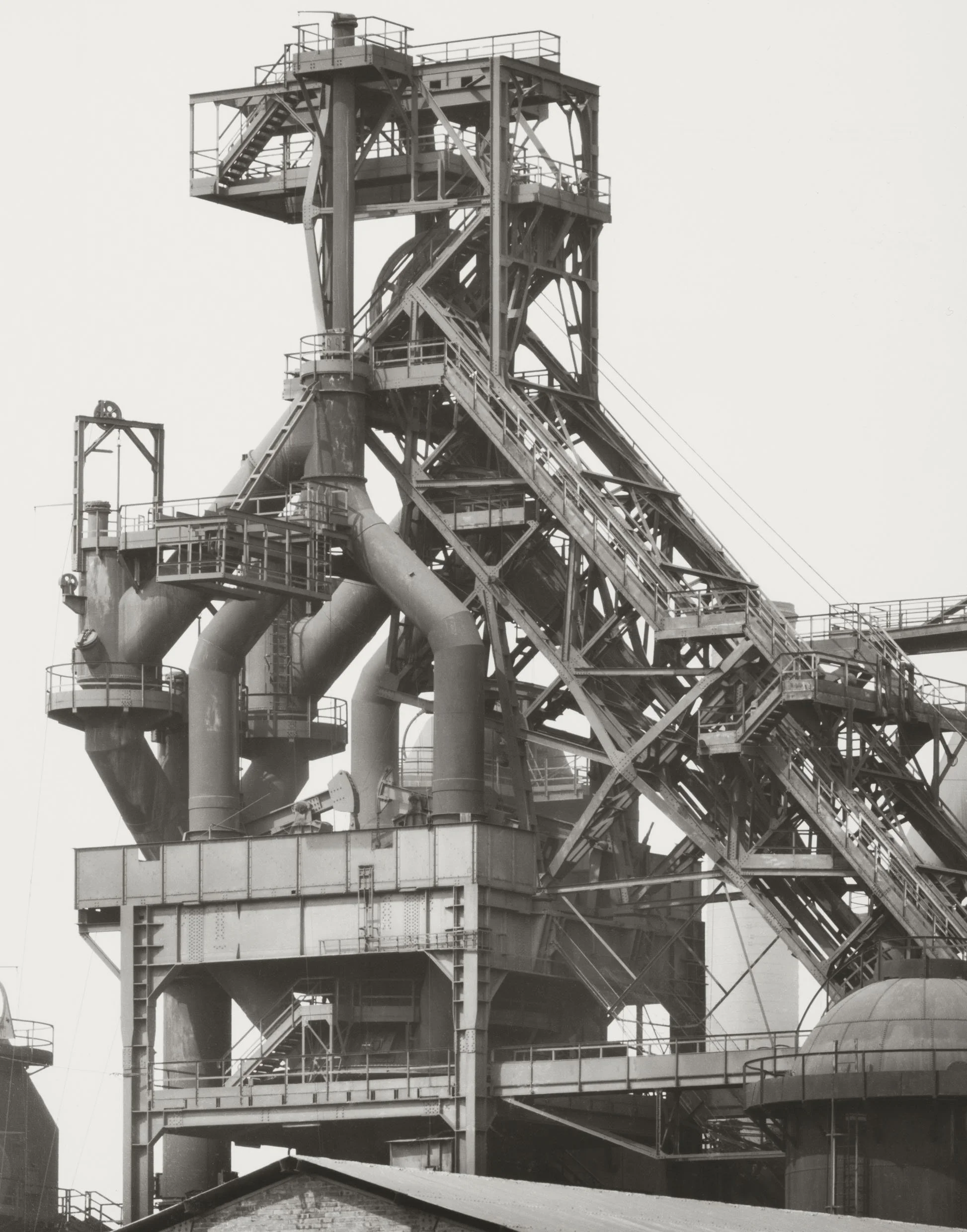
Bernd & Hilla Becher “Blast furnace, c. 1930, Blast Furnace Plant, Esch, Luxembourg” 1969 © Estate Bernd & Hilla Becher, represented by Max Becher Courtesy Die PhotographischeSammlung/SK Stiftung Kultur – Bernd & Hilla Becher Archiv, Cologne
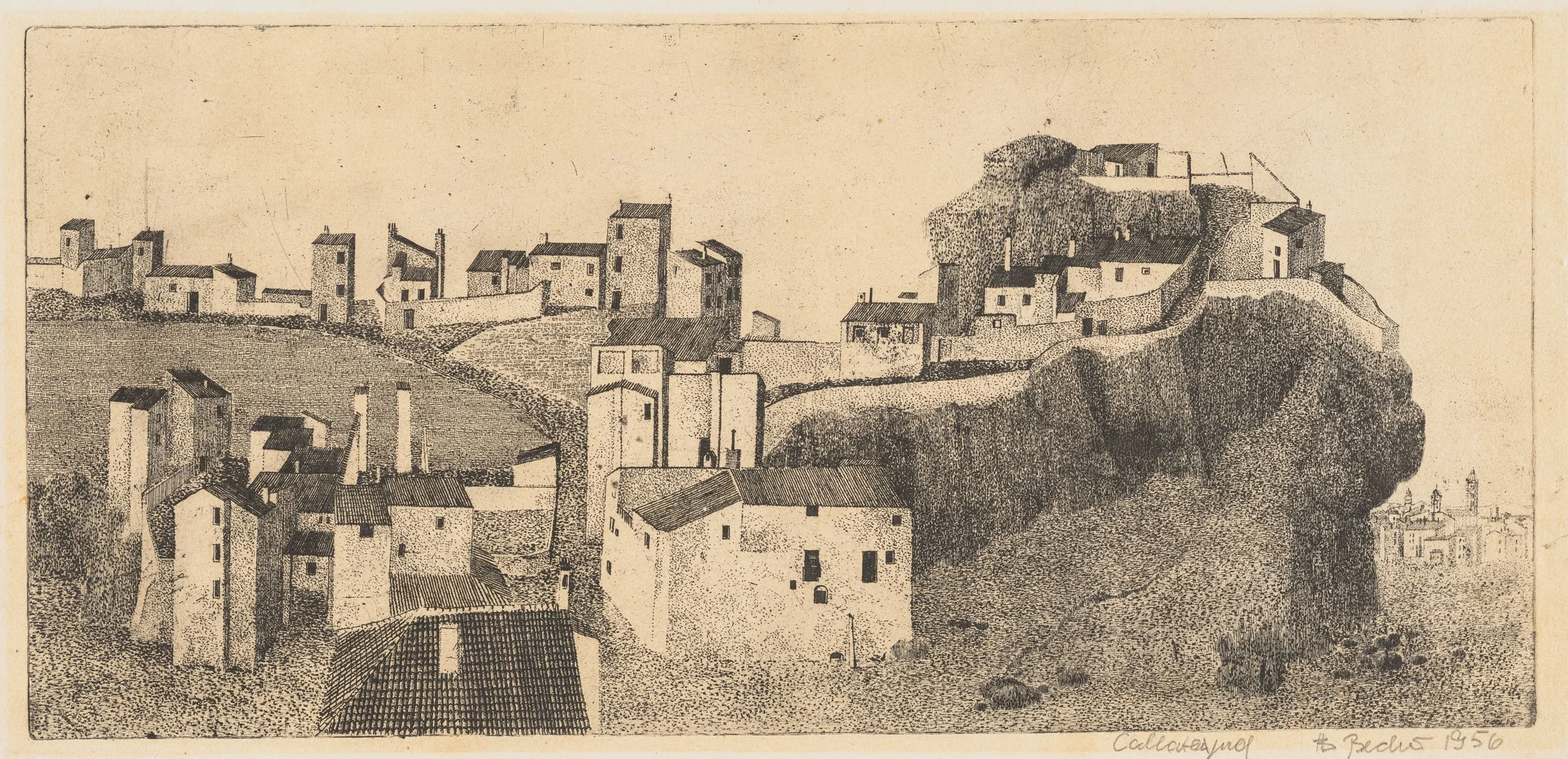
Bernd Becher “Calatayud” 1957 © Estate Bernd & Hilla Becher, represented by Max Becher, courtesy Die Photographische Sammlung/SK Stiftung Kultur – Bernd & Hilla Becher Archiv, Cologne