
By Danielle Ezzo, October 10, 2025
Archives, and their systems of classification, rely on the logic of order to be legible. They impose taxonomies and hierarchies through which material is to be understood. In “highlifetime”, David Alekhuogie’s exhibition at Yancey Richardson Gallery, there’s a relationality to knowledge, where meaning emerges not from top-down ordering, but from the field of associations between visual information and history.
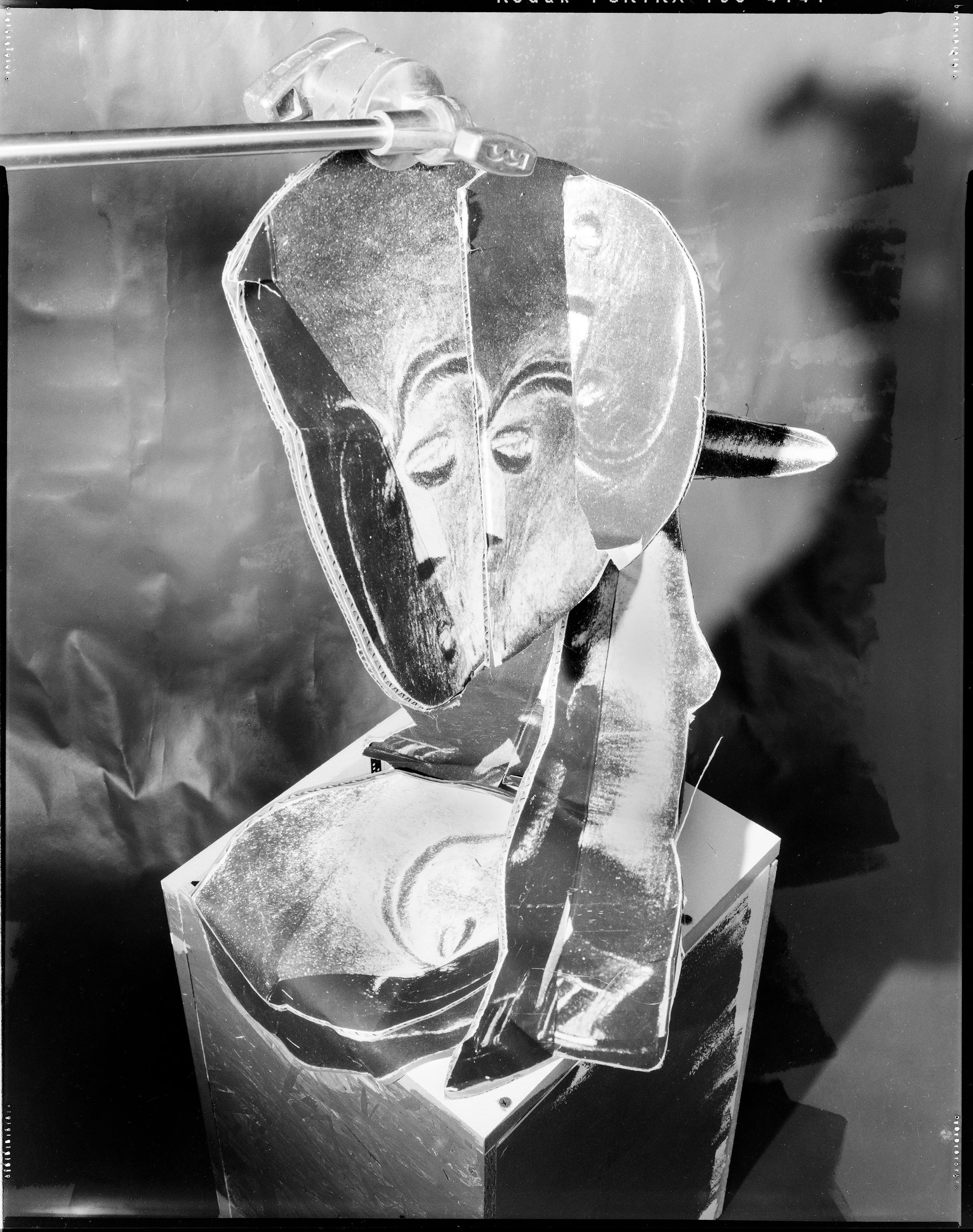
In the main space, seven wall-mounted photographs are set into thin wooden frames, some skewed and leaning, others stacked atop one another, partially occluding the images behind them. This physical overlapping replicates the conceptual layering within the photographs themselves, which begin with Walker Evans’s 1935 documentary images of African sculpture commissioned for MoMA’s “African Negro Art”. Re-exhibited in “Perfect Documents: Walker Evans and African Art” at the Metropolitan Museum in 2000, Evans’s photographs became a model for how African art was absorbed into the Western museum: flattened, ethnographic, aestheticized for a white gaze.
Rather than treating Evans’s archive as a closed system, Alekhuogie engages it as an interlocutor. By rephotographing Evans’s work, he reframes what Evans once fixed, claiming the right to question, disturb, and redirect their meaning. Facsimiles of the black-and-white images are printed, cut, and staged against vibrant, patterned African textiles. The artifacts are folded into cardboard approximations of sculpture, creating a shallow false depth.
One photograph, “Nefertiti as Elizabeth ‘A Reprise’” (2024), presents Elizabeth Taylor as Cleopatra from the 1963 movie of the same name, her shadowed blue eyes bisected by the image of an Egyptian artifact. The juxtaposition unseats Hollywood’s mythological power to authenticate through storytelling and instead exposes the troubled apparatus of representation into a single unstable surface.
David Alekhuogie makes apparent the limitations of taxonomy and opts for a constellatory approach. A stack of artifacts is not simply a pile of objects, but a relational field, where meaning is generated by proximity. The practice recalls Édouard Glissant’s Poetics of Relation, where opacity, entanglement, and juxtaposition resist classification and instead open onto other forms of relation. In one assemblage, “Heddle Pulley (Deconstructed)” (2024), James Baldwin’s “The Artist on Fire” sits on top of Frank Snowden’s “Blacks in Antiquity”, driving this point home—the urgency of the artist’s duty reasserts Black presence in the classical canon. Yet, for all the rigorous historical excavation and reordering, David Alekhuogie remains partially obscured within his own system of relations. We see his intellectual and cultural influences, but less of the subjective position that mediates them. What does it mean to construct a constellation without revealing one’s coordinates within it?
In the project space adjoining the main gallery, his earlier series “Pull_UP” (2017–) engages similar concerns through distinct but complementary strategies. Large-scale prints focus on tightly cropped waistlines, making low-slung, sagging pants the cultural signifier through which Black masculinity is coded, surveilled, and policed. Layered bands of fabric transform into blocks of color, collapsing body and fashion into abstraction. Here we see a gesture toward the individual that exists within the larger system.
Yet, abstraction performs a double, but potentially dubious function: it elevates street style, an often devalued or, in this case, stigmatized fashion trend, into aesthetic form while being at risk of sublimating its political charge. David Alekhuogie’s work asks whether reconfiguring reductive, often violent, histories into a new seductive visual form can itself constitute an act of repair.
Taken together, “highlifetime” and “Pull_UP” trace an undeniable continuum between past and present, revealing how media representations shape and color our understanding of contemporary self-presentation. Yet as David Alekhuogie deftly dismantles the historical to clear a path for new visions of self, I find myself searching for him, even more, in the frame and wondering where, within this constellation of references, he stands.
Danielle Ezzo is an interdisciplinary artist and writer. She is the author of If Not Here, The Where? published by Silent Face Projects in 2023, and is on the faculty of ICP.
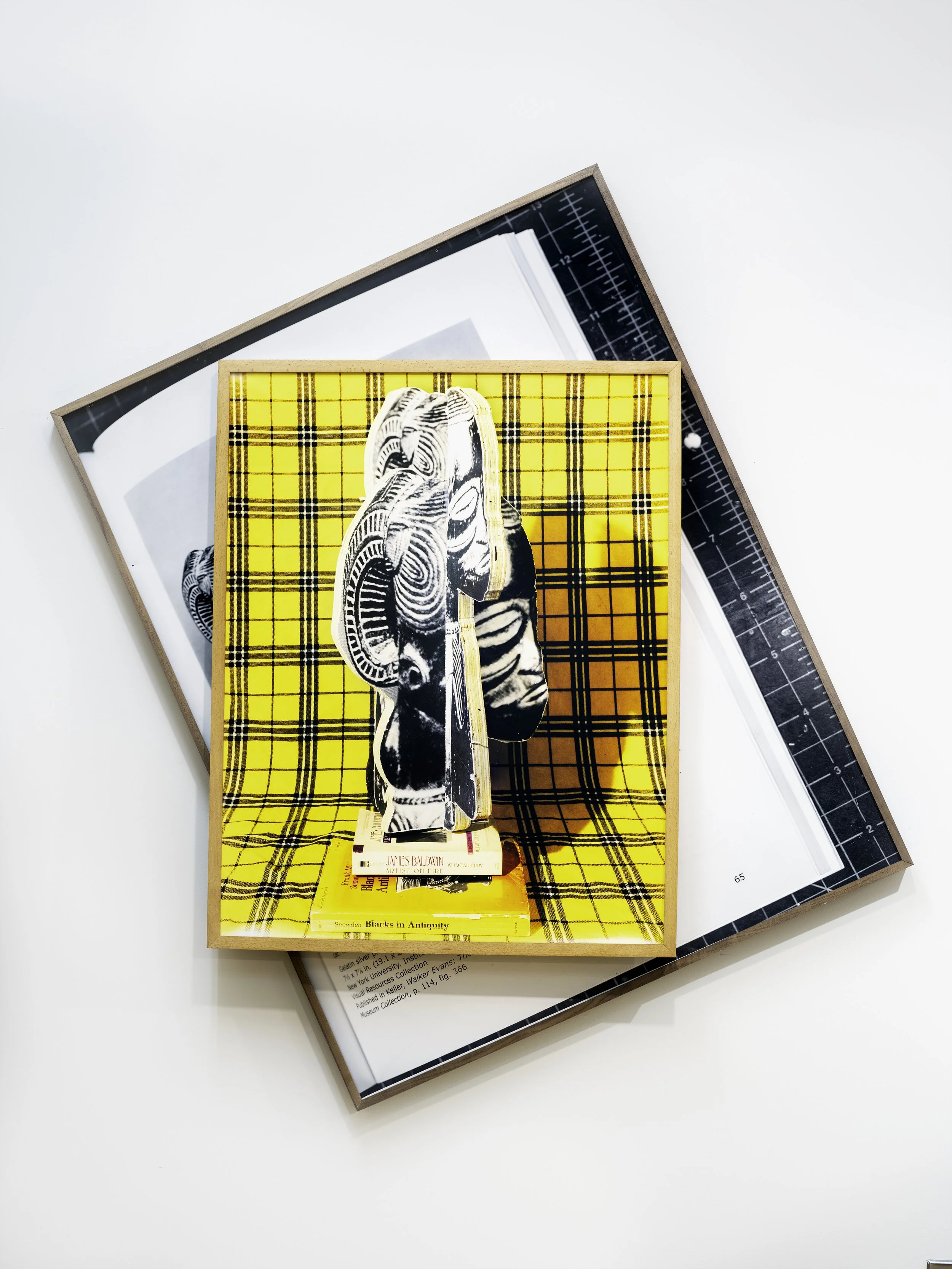
DAVID ALEKHOUGIE "Guro Bobbin/2", 2024.
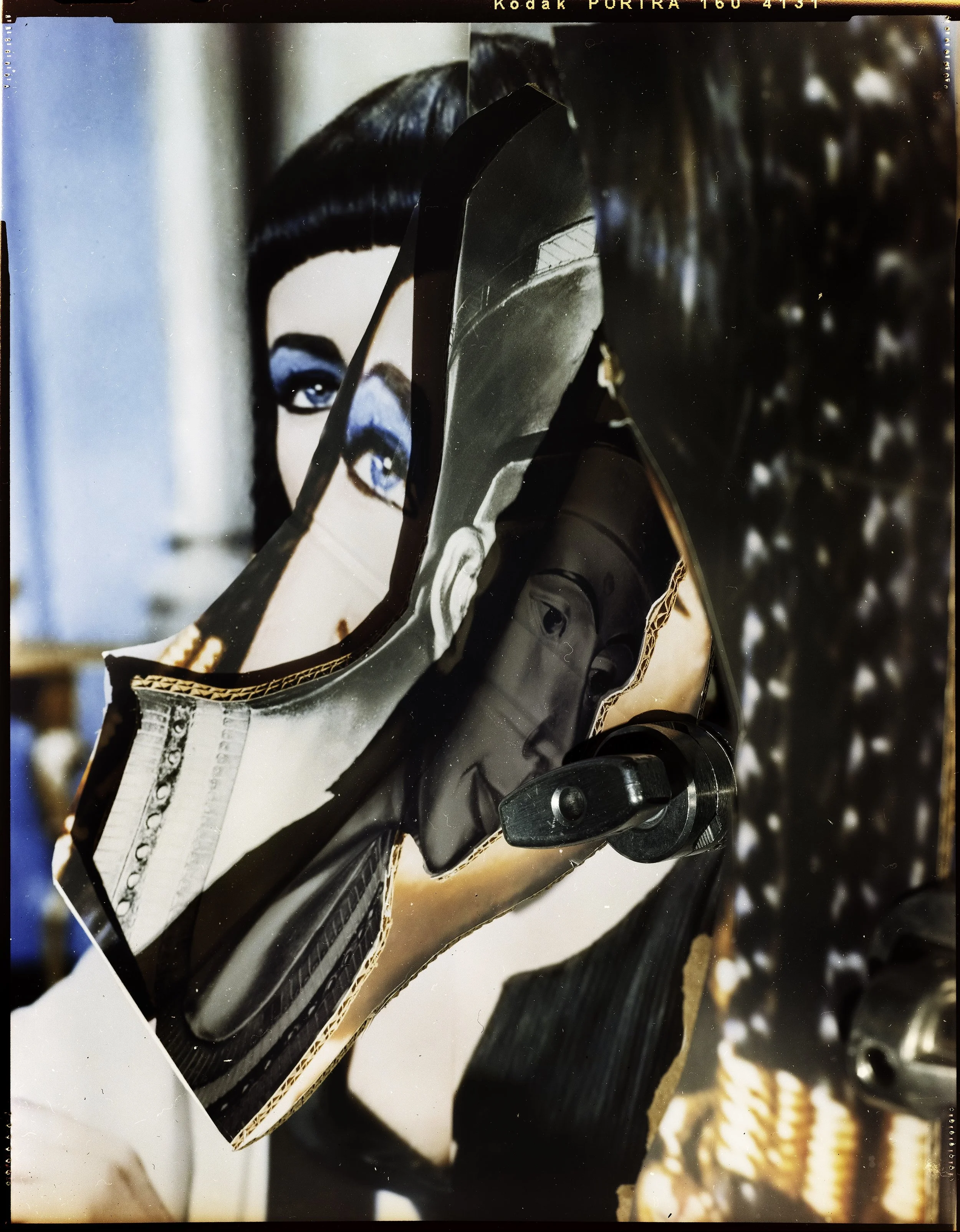
DAVID ALEKHOUGIE "Nefertiti as Elizabeth A Reprise", 2024.
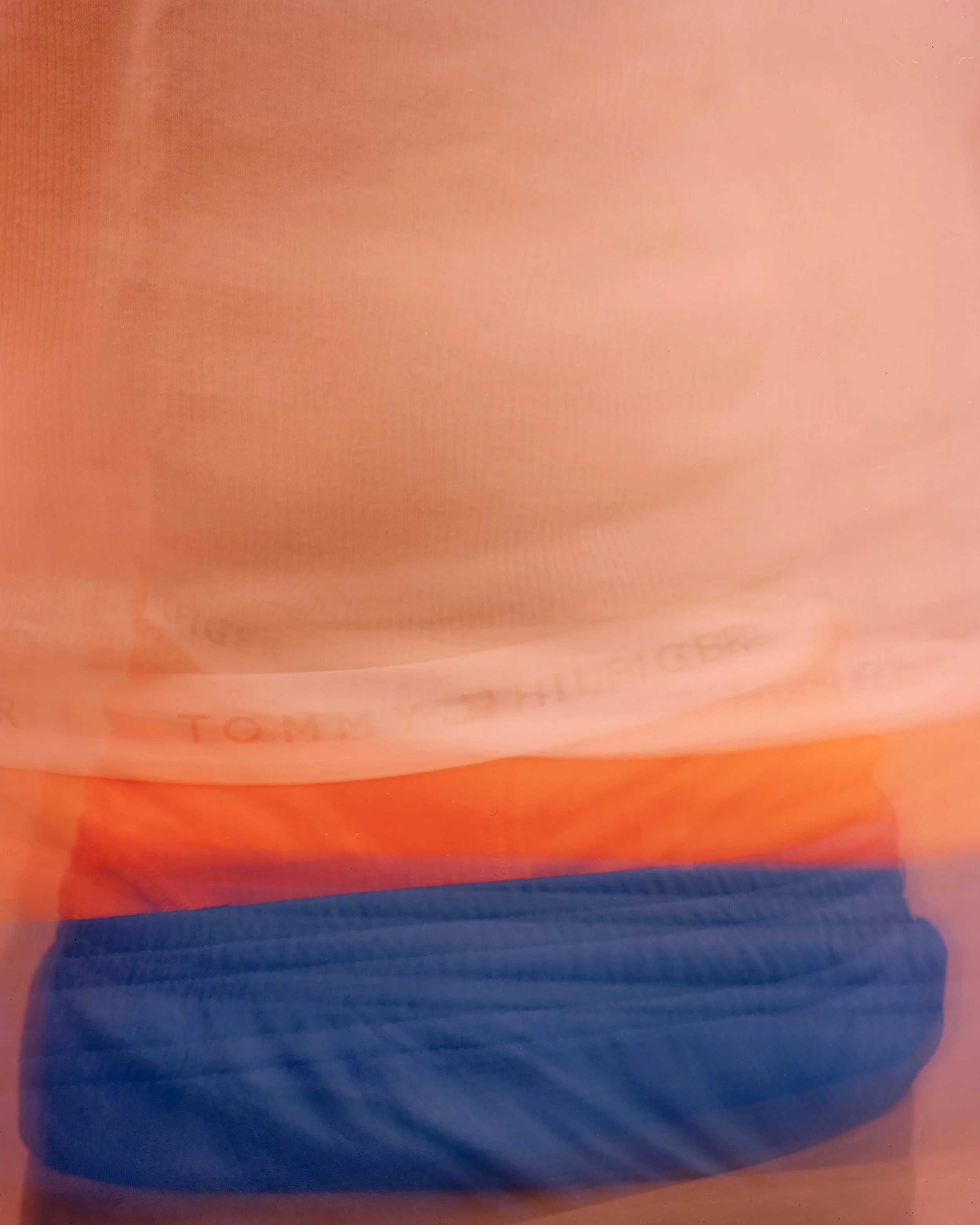
DAVID ALEKHOUGIE "Pull_Up w/o/b", 2017.
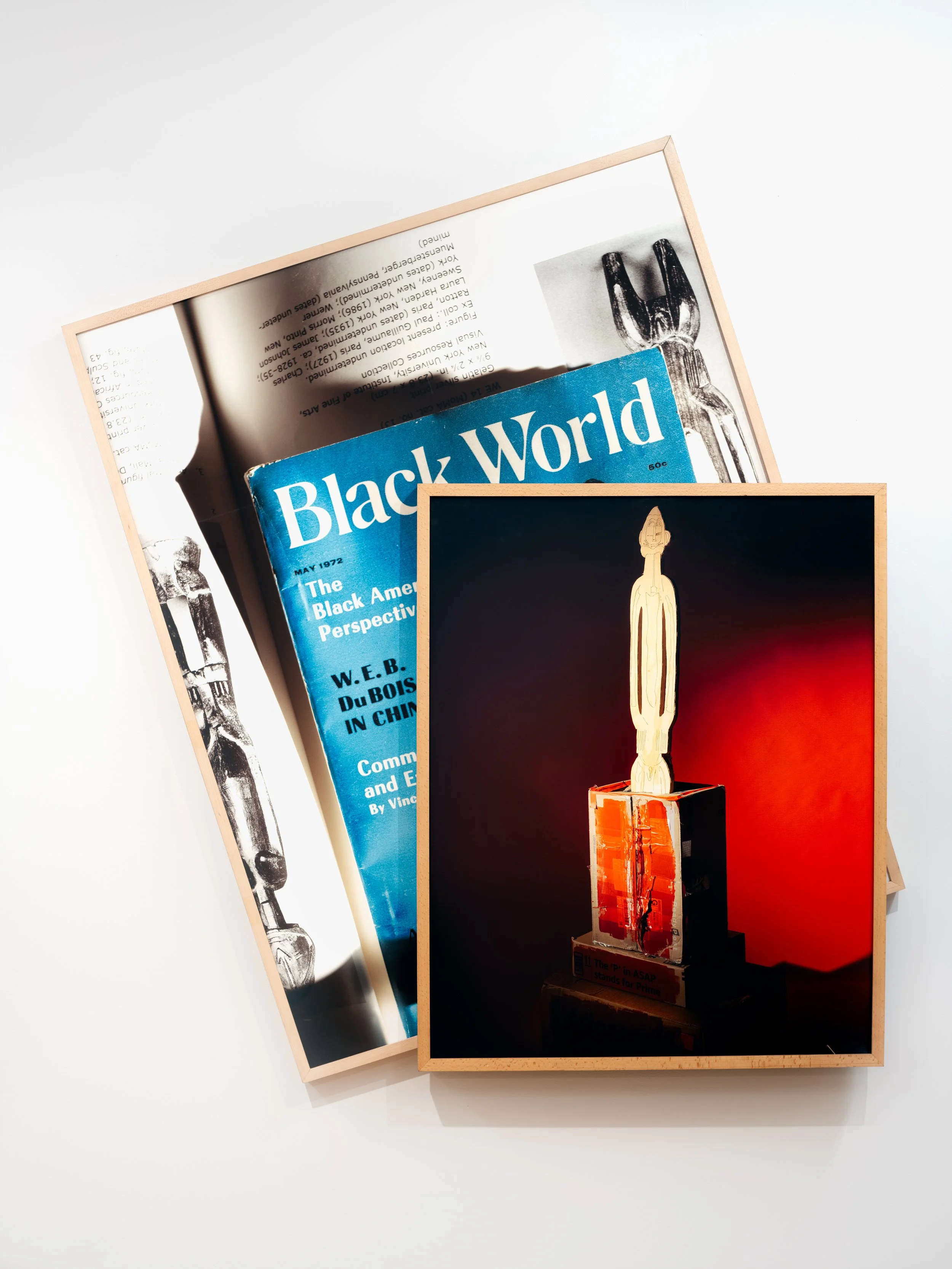
DAVID ALEKHOUGIE "Standing Ancestral Figure Drawing 1 (Deconstructed)",2024.
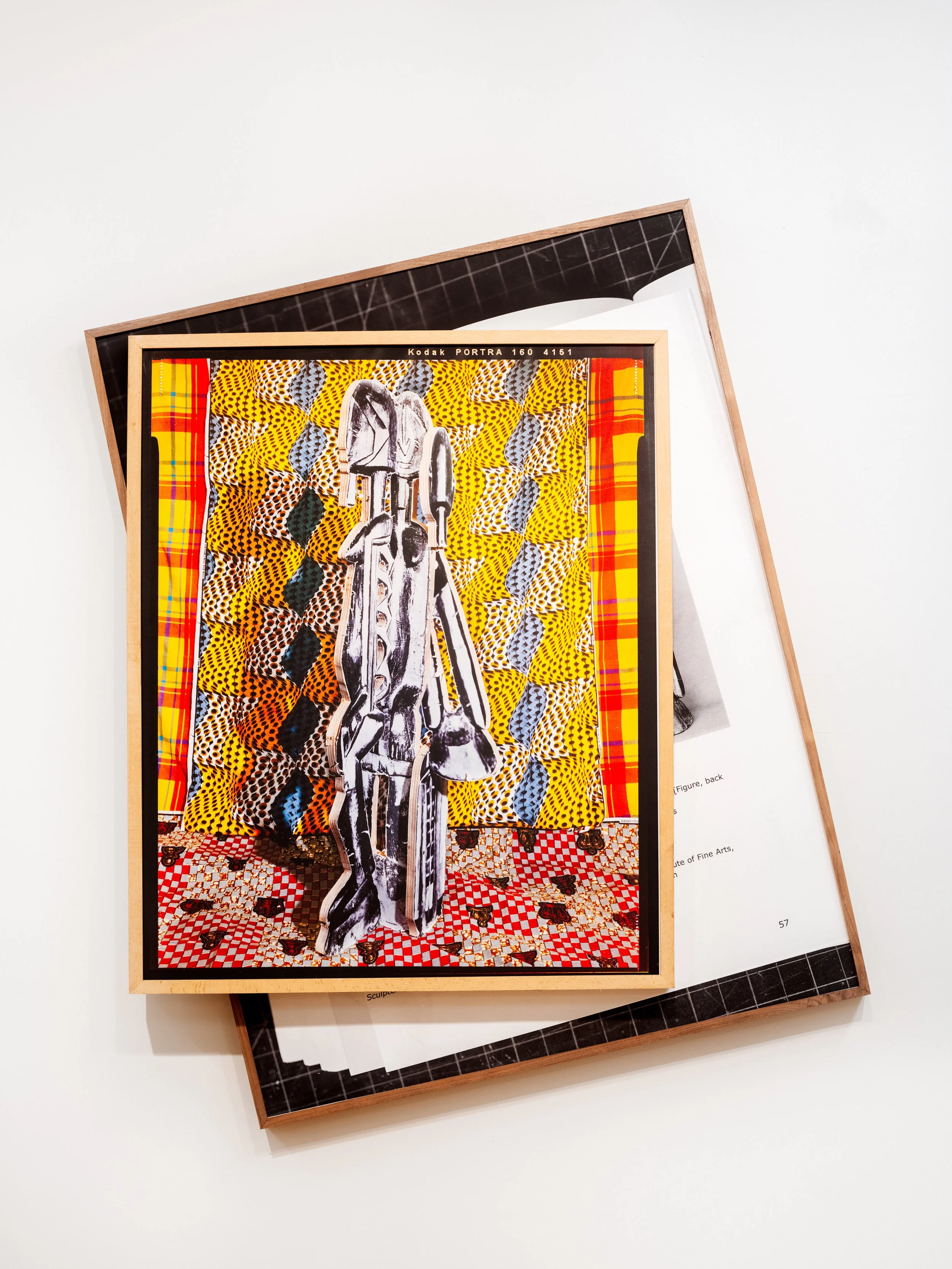
DAVID ALEKHOUGIE "Standing Figure 1/1 Spectulative View", 2024.