

By Taylor Dafoe, October 10, 2025
Two years ago, MoMA initiated the “next phase” of its decades-long New Photography program with an exhibition of seven artists from Lagos. The show’s global aperture signaled an abrupt redress to a curatorial history that, for all its triumphs, tended to privilege formal ideas and a white, Western lens. It was successful, but the bigger vision behind the museum’s pivot remained blurry. What, we might have asked, is the goal for this next era of New Photography?
No such questions linger over this year’s 40th anniversary edition of the series, “Lines of Belonging,” which brings together 13 artists and collectives from four international cities, all of which were founded before their current nation-states: Johannesburg, Kathmandu, Mexico City, and New Orleans. Here, the lines that bind the creatives of these disparate places are drawn not through technology or geopolitics, but a shared belief in community, heritage, and mutual aid.
Examples of these lines are literal in the work of South African artist Lindokuhle Sobekwa, whose contribution to the show, a wall-mounted collage called “uMthimkhulu IV (The Great Tree)” (2025), is made up of Tiffany-thin papers printed with images of branches. Together, they form a family tree on which the artist—born a year after the end of apartheid in 1994—has charted his ancestral roots with paint, pastel, and archival photos. Excised pictures of eyes appear throughout: are Sobekwa’s predecessors watching over him or just being watched?
Nearby, a pair of photo-sculptures by fellow Jozi artist Lebohang Kganye feature cutout characters from Muthi Nhlema’s speculative, post-apocalyptic novel about the return of Nelson Mandela, "Ta O'reva" (2015), mounted on a rotating chassis. As the gears of this crude apparatus creak, the scenes rise and fall in and out of frame, all while a spotlight cast shadows on the wall behind. Kganye’s works gestures toward the future, but their shifty, disjointed angles evoke a feeling from the past: the constant displacement of life under apartheid rule. That era may be over, but its psychological aftereffects are not.
Several artists use photography in its capacity to preserve the present or revisit the past. L. Kasimu Harris’s photos of old New Orleans bars, lounges, and other haunts are both ecstatic and desperate: a celebration of a local culture that is being gentrified away before our eyes. Another New Orleans-based artist, Gabrielle Garcia Steib, offers a series of vitrines filled with old family photos, news clippings, and immigration documents that chronicle her family’s path from Nicaragua to Mexico to Louisiana. As much as the story on display is personal, it also represents the countless other diasporic communities that have contributed to the creolization of New Orleans and beyond.
For her part, Renee Royale, who has taken Polaroids of the Louisiana landscape, then soaked them in an admixture of dirt, river water, and other matter from the same stretch. It’s a dirty process sifted through dirty land—historically the site of climate catastrophe, displacement, genocide, and slave trade—but, surprisingly, the images come out looking cleansed. The beauty of these swirling, pastel pictures seem at odds with the artist’s intent, leaving us to wonder, for a second, if the abstraction of the images has also abstracted their message. But this is revelation by way of replication: the whitewashing of the enlarged Polaroid mirrors the whitewashing of the brutal histories interred in this soil.
The process-oriented conceptualism of Royale’s work stands out among other, more direct approaches in the show. Sandra Blow’s portraits of queer artists, friends, and performers in Mexico City are as vibrant as the community she’s honoring. Prasiit Sthapit’s ghostly photos of life around the Narayani River, a dividing line between Nepal and India that has changed course over time, are presented in an accordion-style foldout that embodies the slipperiness of nature and political borders.
One of the show’s simplest works is also one of its most affecting: a hallway-sized installation of archival photos documenting half-a-century’s worth of activist efforts by Nepali women. The images were culled from “The Public Life of Women: A Feminist Memory Project” (2023), an evolving archive assembled by a Kathmandu-based organization called the Nepal Picture Library, and are adhered directly to MoMA’s walls with little adornment.
In the strictest sense, these pictures are not examples of “new photography.” They are not formally inventive or conceptually rigorous. But sometimes the most powerful thing a photograph can be is just a photograph, and here, the artists and curators let the material of “The Public Life of Women” be just that. They step aside so that the true work—the historic grassroots labor of women who begot real, tangible change—can show through.
Taylor Dafoe is a writer and photographer. His work has appeared in BOMB, Cultured, Frieze, and Interview, among other publications.

GABRIELLE GARCIA STEIB "Nueva Orleans es la Frontera Espritual con El Caribe" 2020-2025.

LEBOHANG KGANYE "Untouched by the ancient caress of time from the series Staging Memories", 2022.
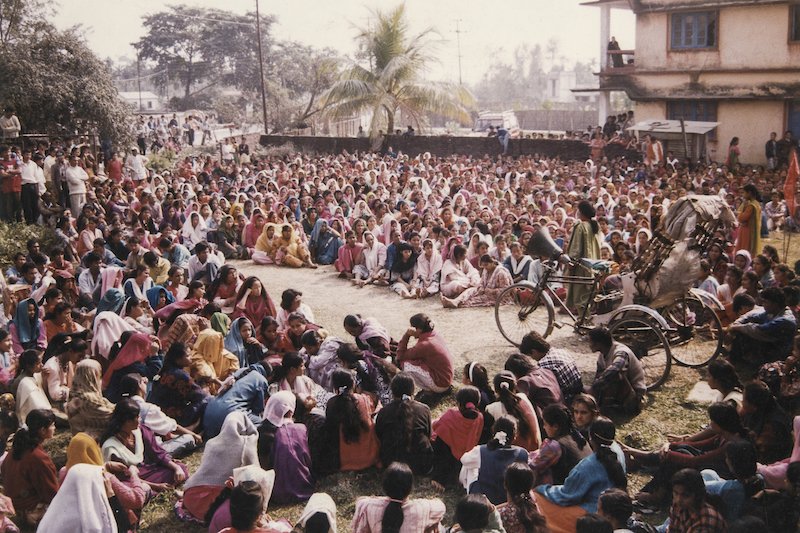
NEPAL PICTURE LIBRARY, 2025.
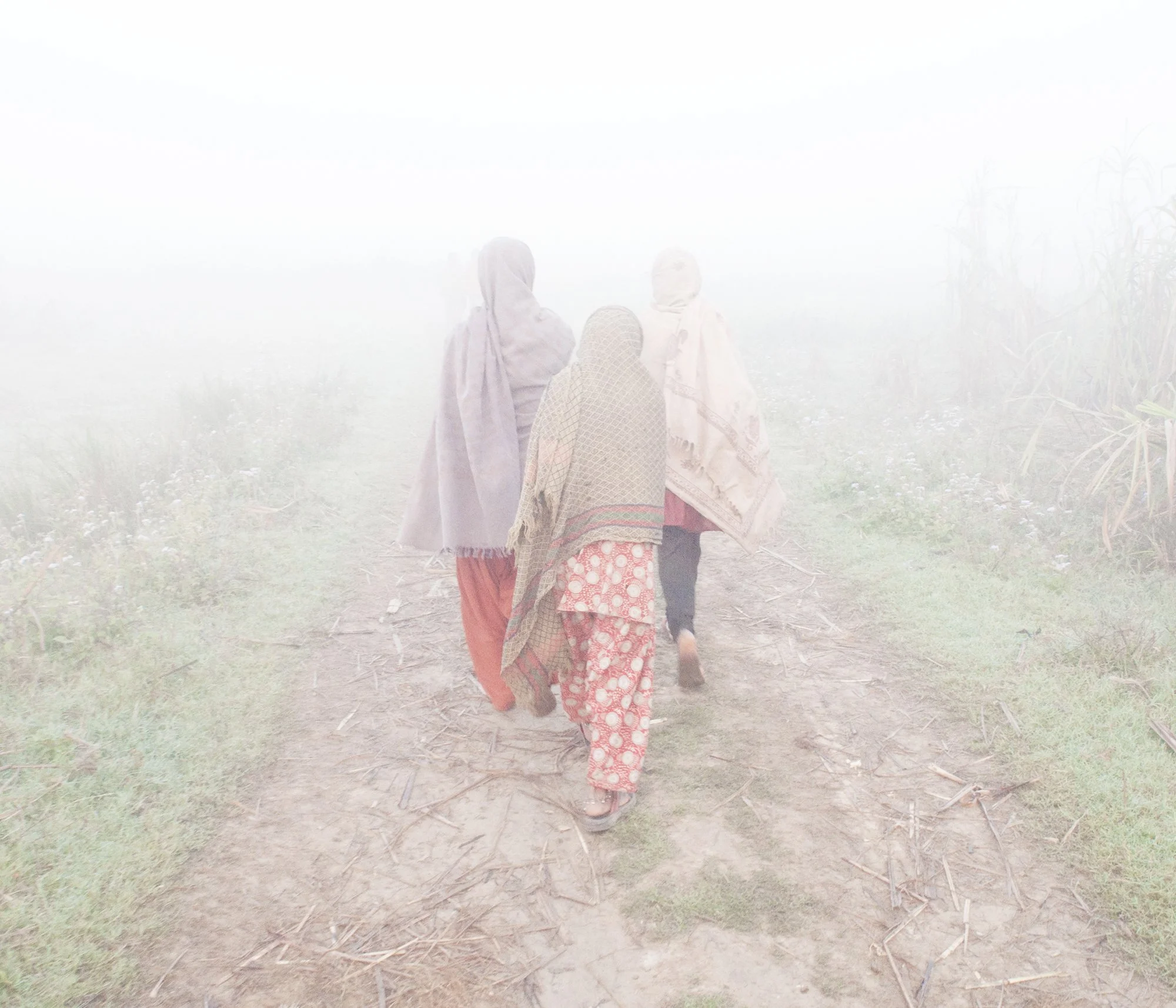
PRASLIT STHAPIT "Change of Course, 2012-2018", 2025.
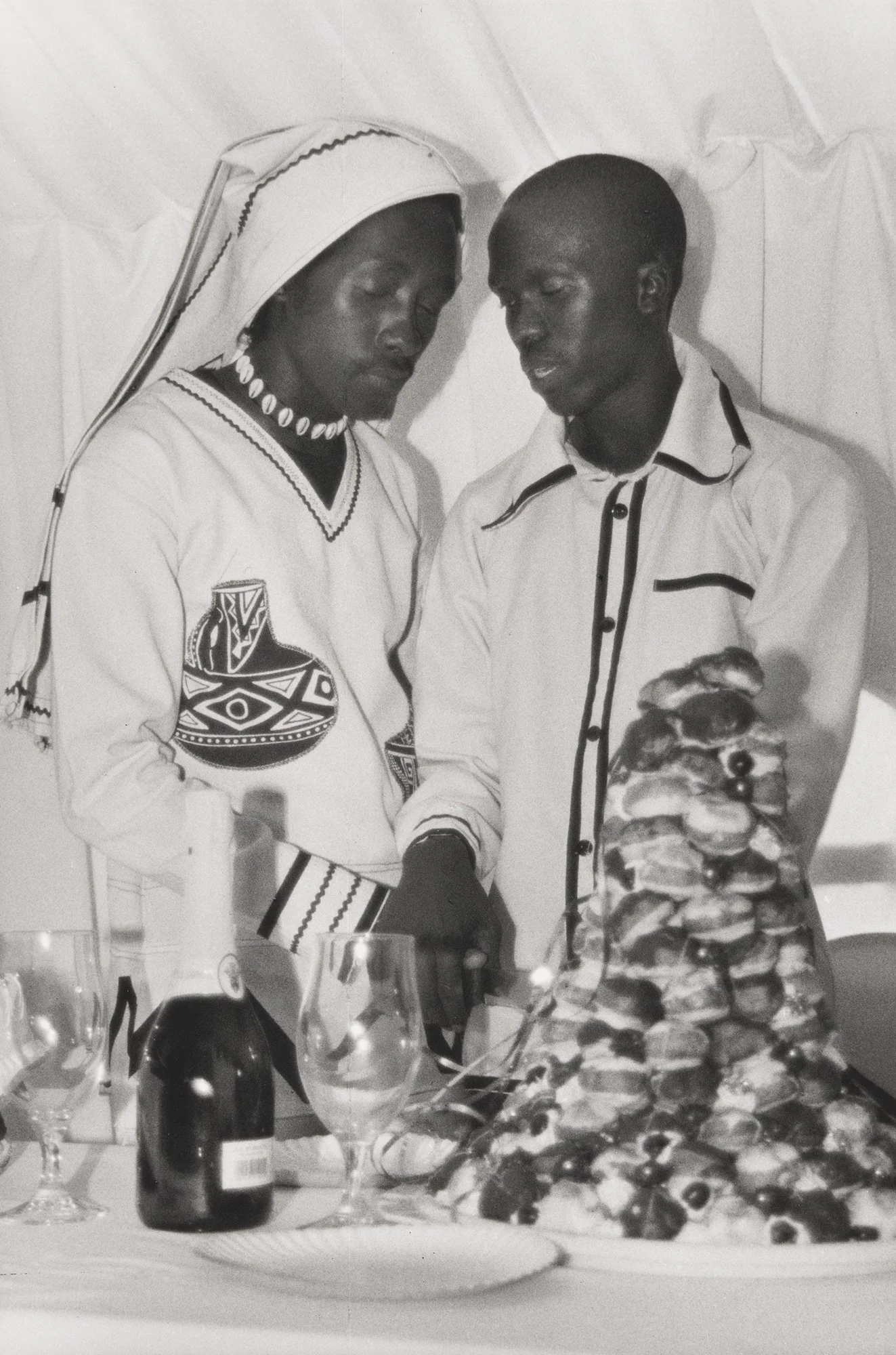
SABELO MIANGENI "Faith and Sakhi Moruping, Thembisa Township", 2024.
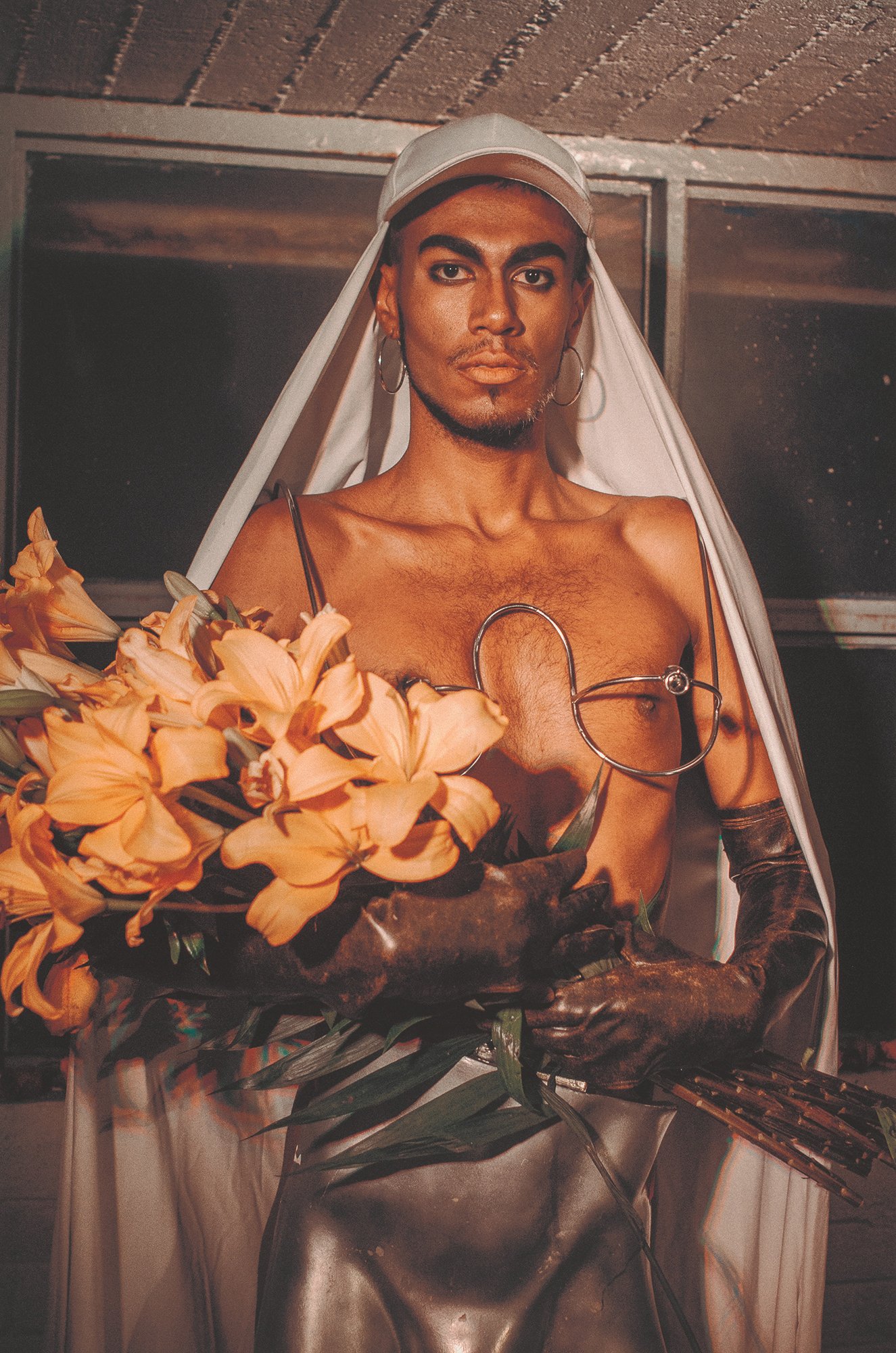
SANDRA BLOW "Alan Balthazar", 2017.