By Nancy Keefe Rhodes, September 10, 2025
“My belief is that all archival research reveals an understanding of ourselves through the engagement and custodianship of materials that are not our own—that it deepens our sense of empathy for others.” —Aaron Turner, from the Introduction, exhibition catalog
“What if memory is not solely an act of recollection, but of discovery and creation?” —Donasia Tillery, from the gallery wall text
To start, curator Aaron Turner said he wasn’t going to discuss theory in his artist talk. “The Archive as Liberation”, an exhibition held to August 29, comprised thirty-two works by eight artists including two filmmakers and Turner wanted to talk about those relationships: how he met, worked with, and noticed the work of each collaborator in this exhibition, came to want to do something greater with each, and in turn fostered relationships among them. This manifests in the exhibition itself---where many works speak across the gallery with each other--- so that being in the space has an immersive effect that undermines both the notion of framing and the definition of photography as a 2-D medium. And in the important catalog, where some comment on or interview each other: Raymond Thompson, Jr., and Wendel A. White; Alec Kaus and Harrison D. Walker and filmmakers Chrisato Hughes and Savannah Wood.
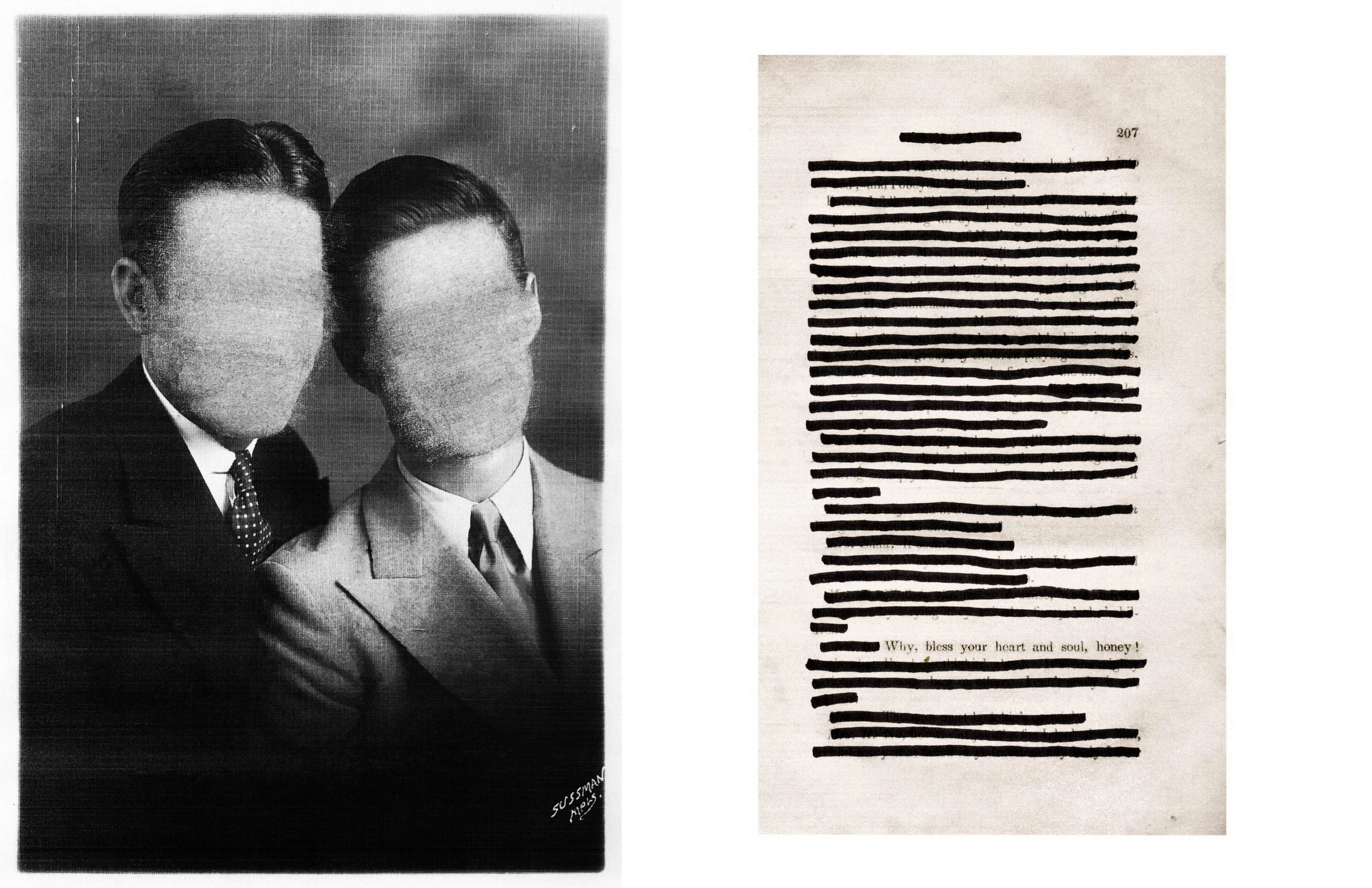
Turner can easily talk theory if he likes. He uses a 4 x 5 view camera to make beguiling collaged still lifes with archival photographs, addressing identity, history, Blackness as material, abstraction, and of course, the archive. He directs the Center for Art as Lived Experience (CALE) at the University of Arkansas. This exhibition catalog, in partnership with Light Work, is CALE’s first research publication, and his Introduction makes clear that he thinks about what “the archive” is and could be. Turner notes Arthur Jaffa’s term “polyventiality, the impulse to deal with multiplicities.” As theories go, surely “the archive” is one of today’s most intense buzzwords. But against the assumption that an archive is the storage vault for prized dead objects that one acquires, Turner & Co. advance more expansive views: that archives can comprise living bodies and the land itself. Archives thus speak simultaneously from the past in the present and to the future, recover and reanimate what’s erased, even provide self-preservation. Key to this recovery is Turner’s insight into one lesson about the ravages of late-stage capitalism and its extractive aspects: that “custodianship” for any archive requires recognition that it belongs to others and is never solely one’s own, that it grows one’s capacity for empathy. Hence the fairly demanding and exacting challenge this exhibition poses for viewers. Except for editor Donasia Tillery’s exhibition wall text and a small, laminated gallery key hung in one corner, not a single name or title graced any of the thirty-two works. There were no training wheels here.
In demanding a direct encounter of us, this exhibition deliberately evokes Turner’s emphasis on relationships, challenging each of us to establish that first. Just two examples: Wendel A. White’s 2021 photograph of fifteen closed 1850 Daguerreotype cases from Joseph T. Zealey’s infamous collection of enslaved individuals kept at Harvard, echoes the grid of nine close-up portraits by Raymond Thompson, Jr., on the opposite wall, from “It’s Hard to Stop Rebels That Time Travel” (2022-23). In the catalog Thompson says he printed these portraits very dark because he “wanted people to work hard to see the faces and to make them look like landscapes.” It takes a minute to pry open both the Zealey cases and these portraits.
Repeated watching of Savannah Wood’s short film “Hard to Get and Dear Paid For” (2020) was similarly revelatory. The recurring image of the land (in Wood’s family for seven generations) photographed multiple times over years included an enduring tree line with a break, which then spoke to calista lyon’s work on the opposite wall. Lyon depicted, both in collaged archival photos and the enormous vermillion-backed central collage, “Remembering Future” (2023), the 1851 Gold Rush devastation of Victoria, Australia and especially the destruction of beloved trees on land now reclaimed by the Dja Dja Wurrung people. As media, collage is also exactly right when your subject is carving up enormous slabs of earth.
Beyond the gallery is lots of help with the theory part: an extremely pleasurable and readable catalog and the adjacent reading room with the photo books of Turner and others in the show, and a rich horde of other archival projects. When you can step next door and open Wendel A. White’s massive “Manifest/ Thirteen Colonies” or Andre Bradley’s “Dark Archives,” it’s not the same as a printed bibliography. And since I teach a course in the Western leaning heavily on landscape, seeing Terence Malick’s “Badlands” (1973) there about stole my heart.
Nancy Keefe Rhodes teaches in Film & Media Arts at Syracuse University and writes about film, photo, and visual arts.
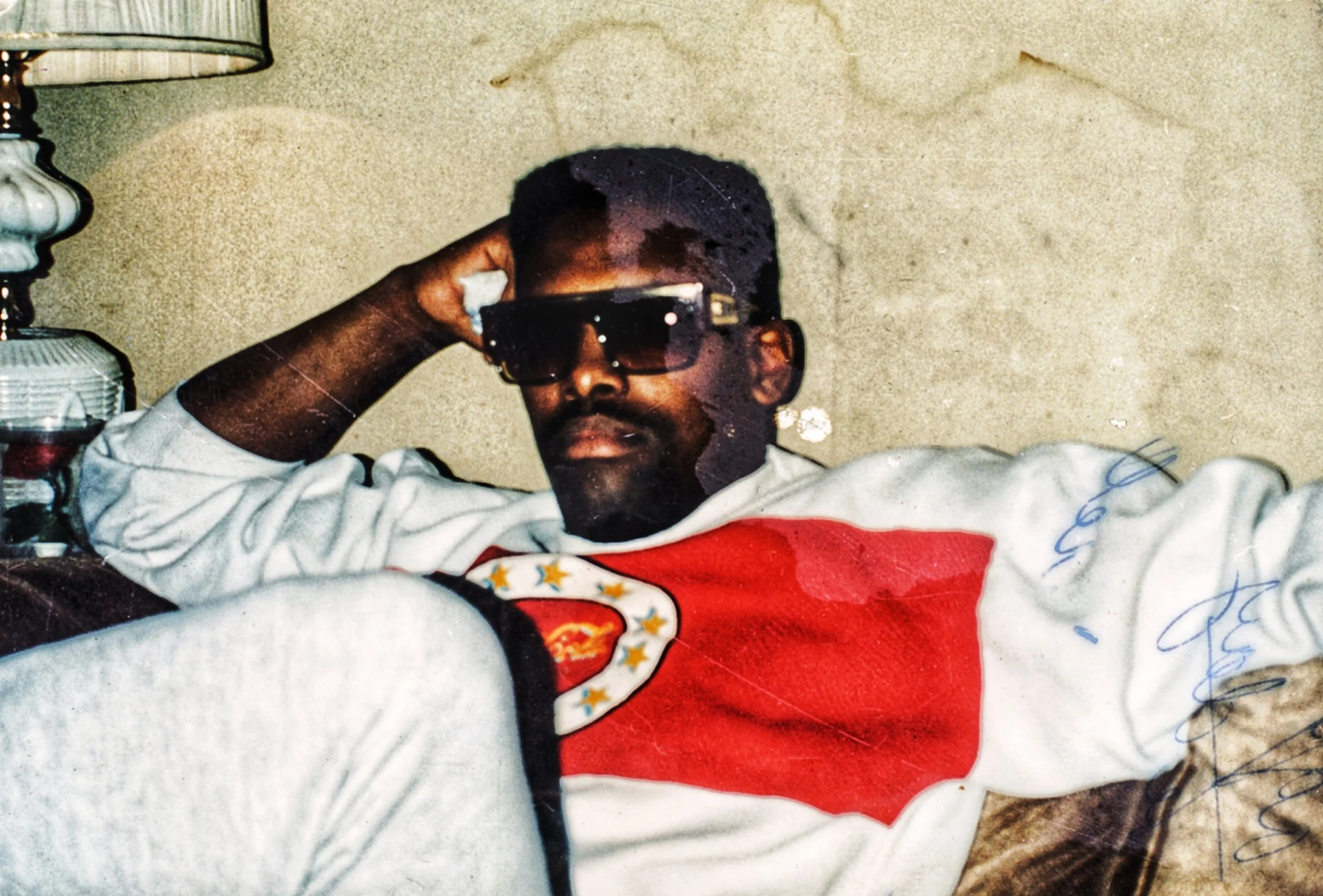
ANDRE BRADLEY "Uncle 1981" 2014.

calista lyon "courtesy of State Library of Victoria and N.J. Caire, Victoria Hill, Bendigo, Victoria, Australia, 1877", 2023
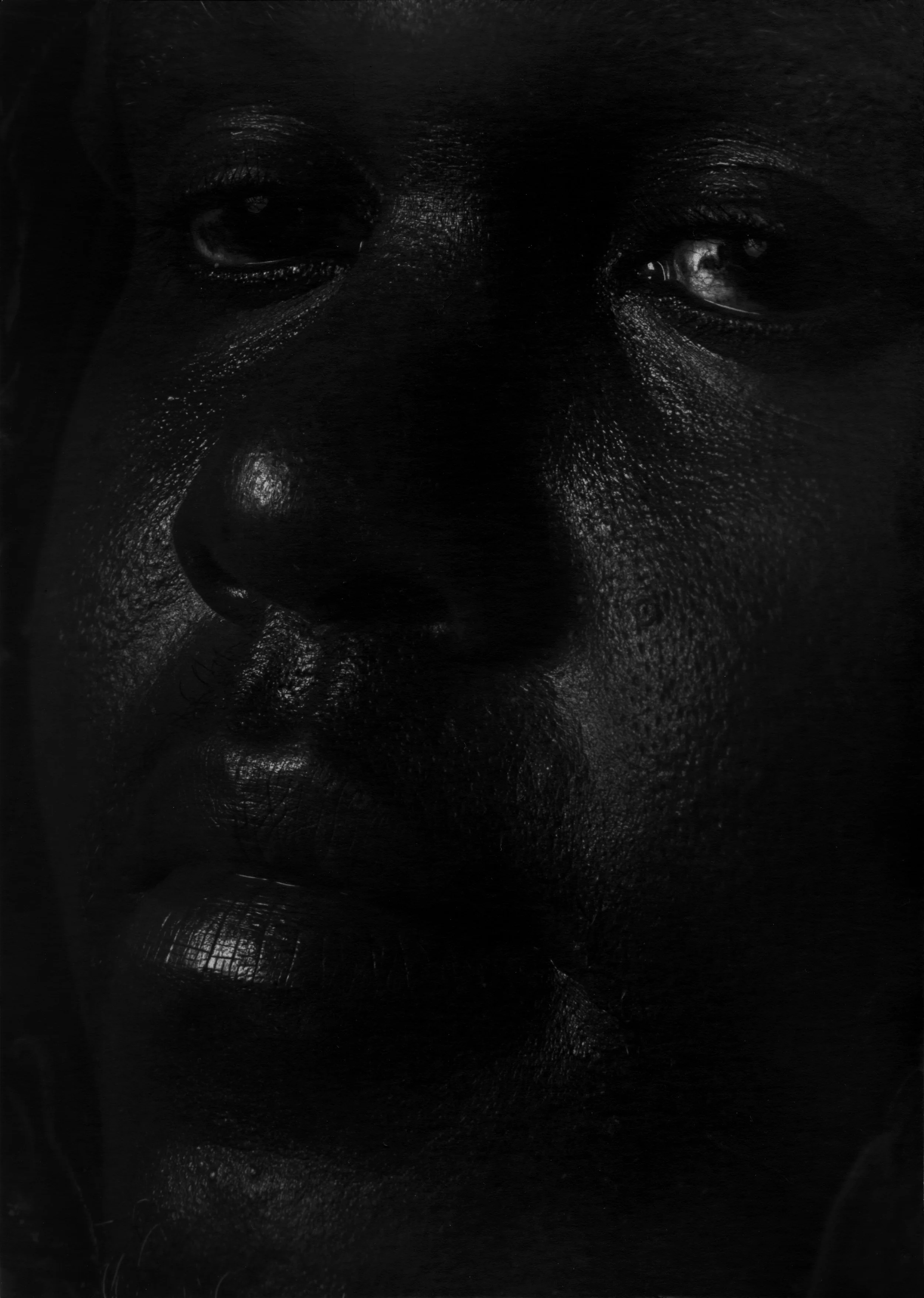
RAYMOND THOMPSON JR. "Untitled #004" 2024.

SAVANNAH WOOD "Hard to Get and Dear Paid For" 2020.

WENDEL WHITE "Daguerreotypes by Joseph T. Zealy, 1850, Peabody Museum of Archeology and Ethnitcity, Harvad University", 2021.