
By Zach Ritter January 10, 2026
About two-and-a-half minutes into Genesis Báez’s video work “Cloud” (2019), two people speaking from off camera try to describe what they see in the nighttime sky, with its sparse and slowly moving cluster of clouds setting off a faint glow in the stars above. Like each preceding voice and every one that follows, they speak from a position we cannot see, as the video only shows us different views of the sky throughout day and night. Though the voices we hear belong to Báez and her family, and the sky they watch is overhead Yabucoa, Puerto Rico, the video omits these details. Instead, what it emphasizes with each cut and successive round of interpretation is the attempt to visualize what is not directly in front of one's eyes. Among the forms the larger group of voices believe they see are animals, continents, faces, and flowers, some of which we might notice ourselves, having at one time or another likely gazed at the cosmos in much the same way. The aforementioned pair, speaking about the clouds and constellations of stars overhead, see none of this: “There’s something, but…” “I don’t know what it is.” “I don’t know, either.”
This qualified certainty that something of significance is there to be seen, even if it remains oblique and difficult to behold, neatly summarizes a main source of dramatic tension and formal ingenuity in Báez’s photography, both of which are apparent in “Holding Water” at Dashwood Projects, on view through January 17th. The exhibition features works Báez made over the past five years, key images that were also included in her remarkable photobook “Blue Sun/Sol Azul” (Capricious, 2025).
Although it’s a decidedly concise presentation of just nine prints hung throughout the small gallery, Báez weaves a far more expansive tapestry of feeling and atmosphere than we might expect, with pictures that move freely between vivid description of fleeting sensations and a more archetypal mode of representation, one where gesture, detail, and setting are eclipsed by the metaphor they help create. The themes and elements of style that characterize these prints are the same ones that run throughout the whole of her work, from the use of objects and the courting of phenomena that instill transparency or complicate formal boundaries, to the patient exploration of how the specificities of place—in Báez’s case Puerto Rico, the site of diaspora for her family—can imprint themselves on the body and mind alike.
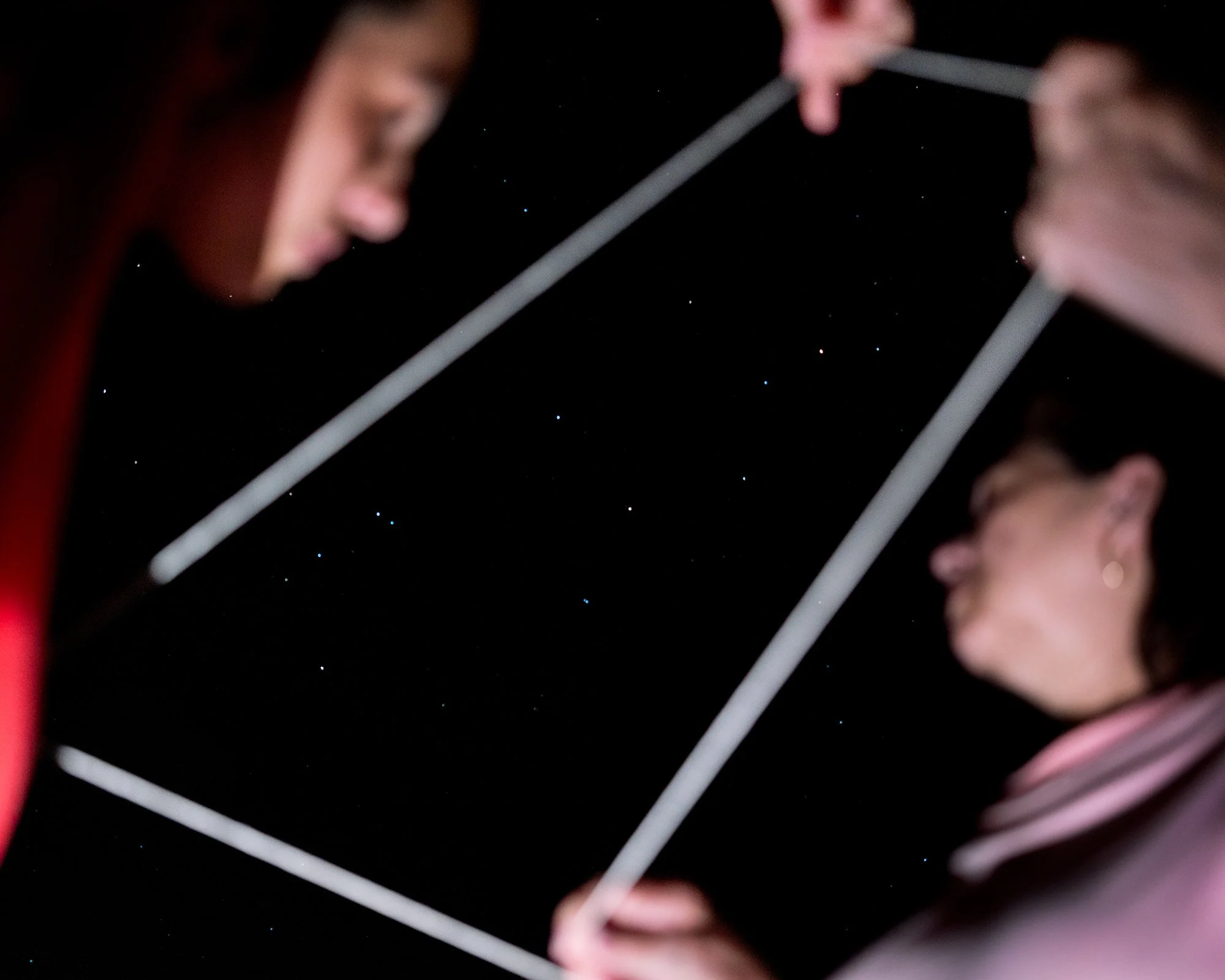
Báez often constructs her images in such a way that encourages us to look through them in search of meaning beyond what they describe. The gestures and moments of performance that are the subject of pictures like “Departure Rehearsal II” (2025) and “Crossing Time” (2022) have a potently allegorical quality, such that composition and light, precise and vivid as they are, evoke something greater than the scene itself. In “Constellation” (2024), two women hold a string flat between them to frame the stars and sky above. Unlike the speakers in “Cloud” there is no musing about what the constellation reveals. Instead, it is the construction of the image itself—the women blurred by the exposure, the stars framed by the string made significant simply by being within it—that suggests a deeper level of meaning, a cosmic reflection, perhaps, on the device of framing and its power to create both form and relationship whenever used. “Parting/Braid” (2021) shows the shadows of two women, their bodies obscured by a translucent curtain, as one braids the other’s hair. Their spectral presence, and the soft golden light that filters in from the left side of the picture, transforms an otherwise familiar act into a scene of ritual and symbolism, one where the specificities of time and place, of who these women are to each other and to us, seems a register of meaning remote and subdued.
Though it may be tempting to think that the deepest meaning of these photographs, perhaps even their ultimate point, is to be found beneath the surface of what they plainly show, Báez reminds us time and again how resolutely photographic they are, how thoroughly they are inscribed with the materiality of their making. Put differently, these pictures insist not only on the moment captured at the release of the shutter, they also vividly evoke the moments preceding it and those that followed. Time and duration—how they feel and how Báez registers them—are as crucial to these pictures as are their capacities for metaphor. The hands that perform the titular act in “Lifting Water” (2017) work to raise a large glass container of water off the ground, their cooperation necessary to keep it from spilling over. While the light refracts and flares through the bottom of the container, we can just as easily imagine it having been different before and still different after, as each effort results in a new expression of light and form. Báez frames the four women in “Shadow Loop” (2020) in rhythmic procession, with subtle fluctuations in light and differences in gesture suggesting some urgent purpose. What bonds of kinship or necessity have brought them together?
Báez retains a measure of contingency and chance in her pictures despite regularly using some degree of rehearsal when making them. Though the gestures and arrangement of bodies throughout the exhibition have, to some extent, been planned rather than found by good fortune, the pictures are hardly reducible to whatever designs the artist may originally have had. Rather than try to translate her ideas into a series of elaborate photographic tableaux, she is just as likely to uncover the miraculous through an attention to what is ordinary and observable. Pictures of this sort, such as “Condensation (San Juan Airport)” (2019), emphasize the quiet beauty and embrace of circumstance that have characterized Báez’s work—qualities that will surely remain present with each new picture and project—each new inquiry into form and photography, community and history.
Zach Ritter is a writer based in Brooklyn, New York. His writing has appeared in American Suburb X, the Brooklyn Rail, Hyperallergic, and Photograph Magazine, among other publications.
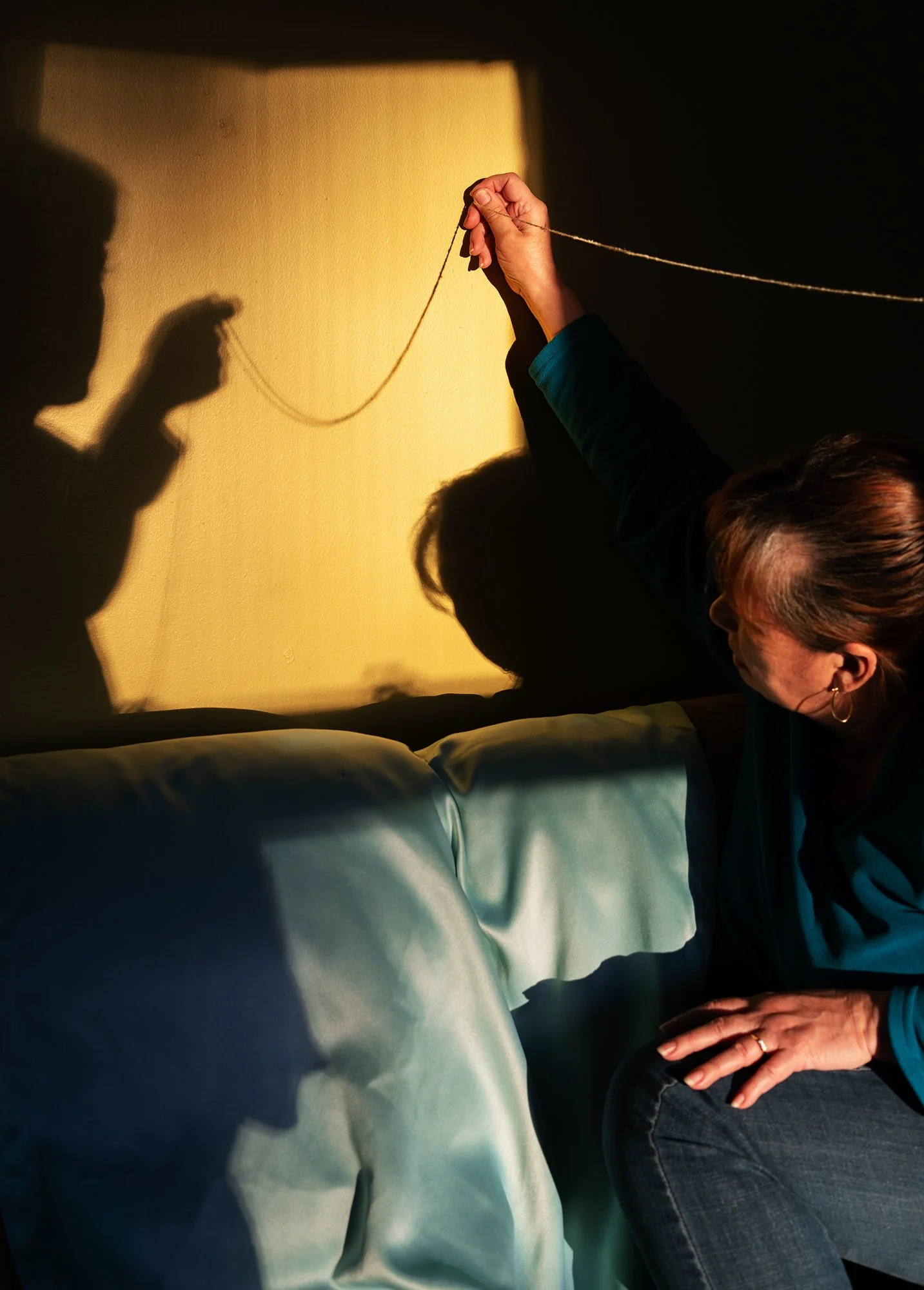
GENESIS BÁEZ "Crossing Time" 2022-2025.
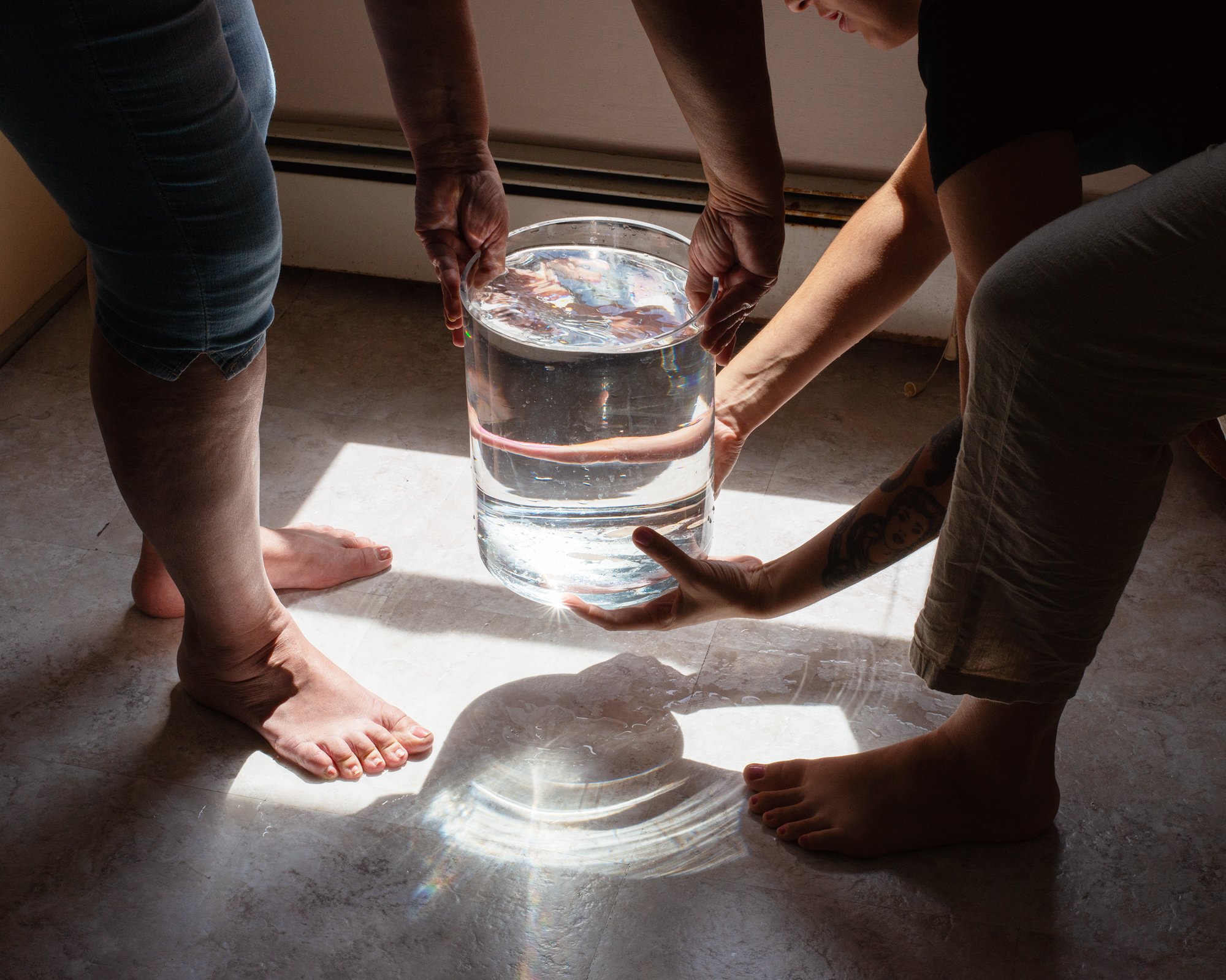
GENESIS BAÉZ "Lifting Water" 2017-2025.
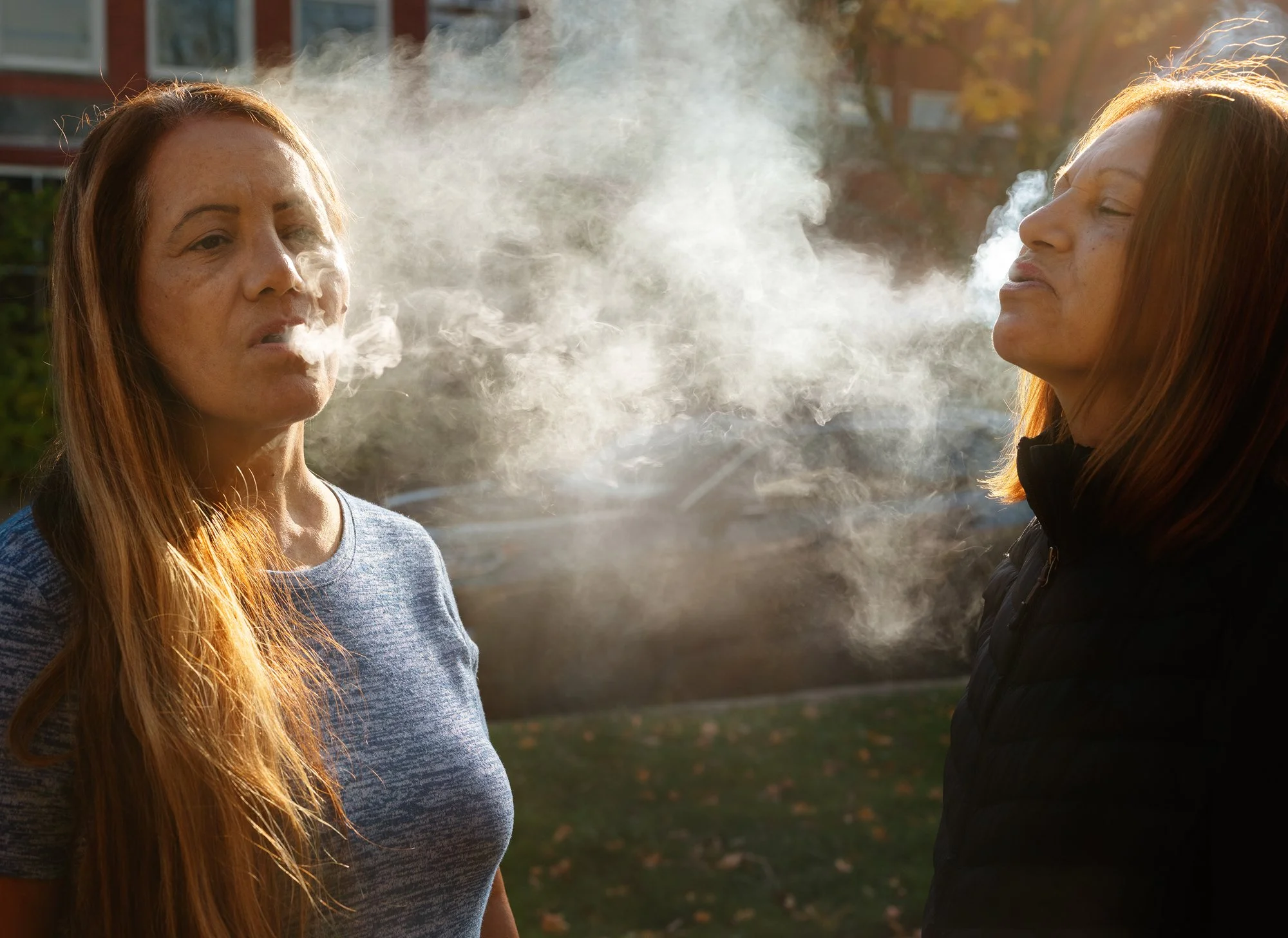
GENESIS BÁEZ "Our Breath" 2023-2025.
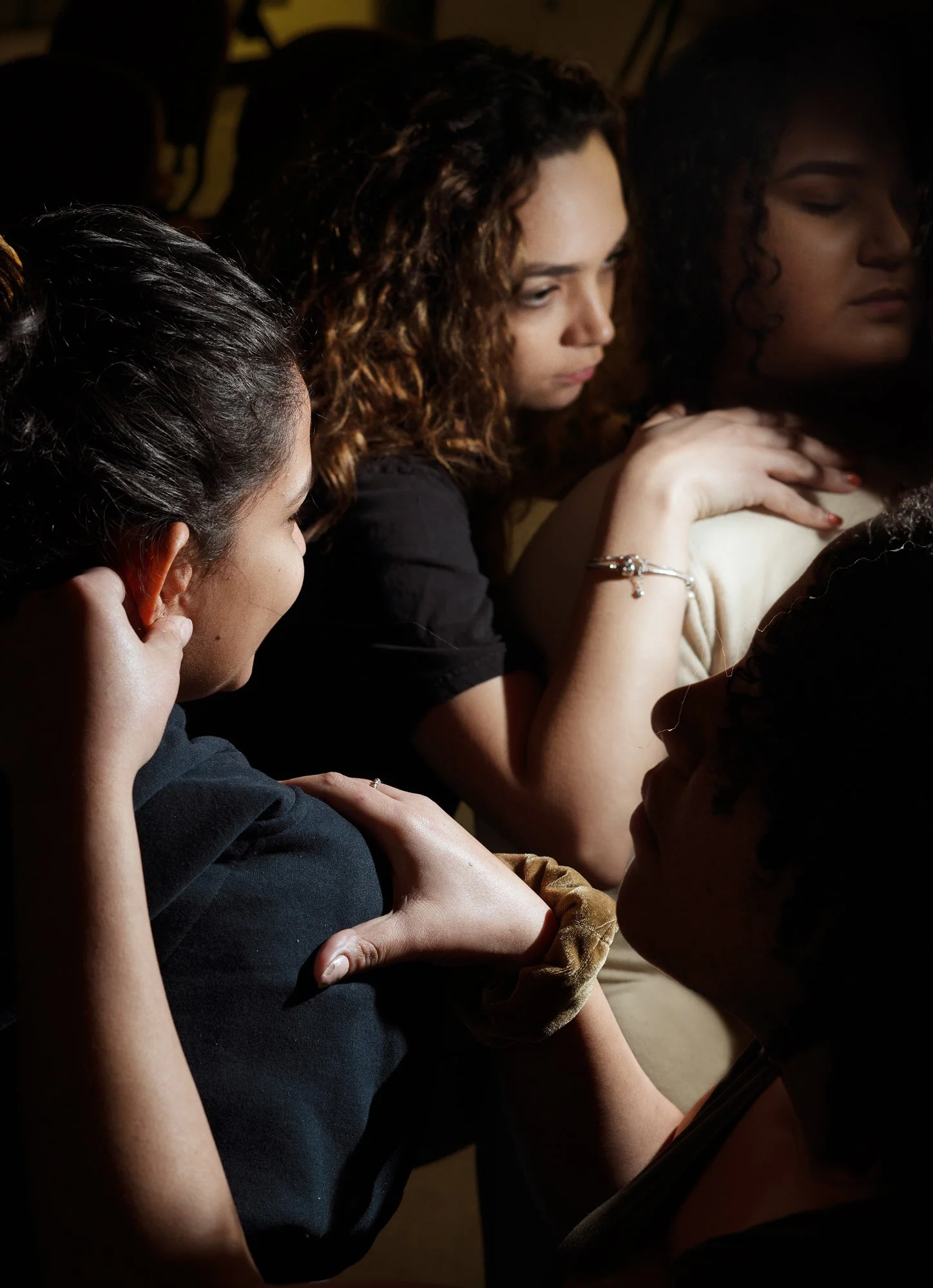
GENESIS BÁEZ "Shadow Loop" 2020-2025.
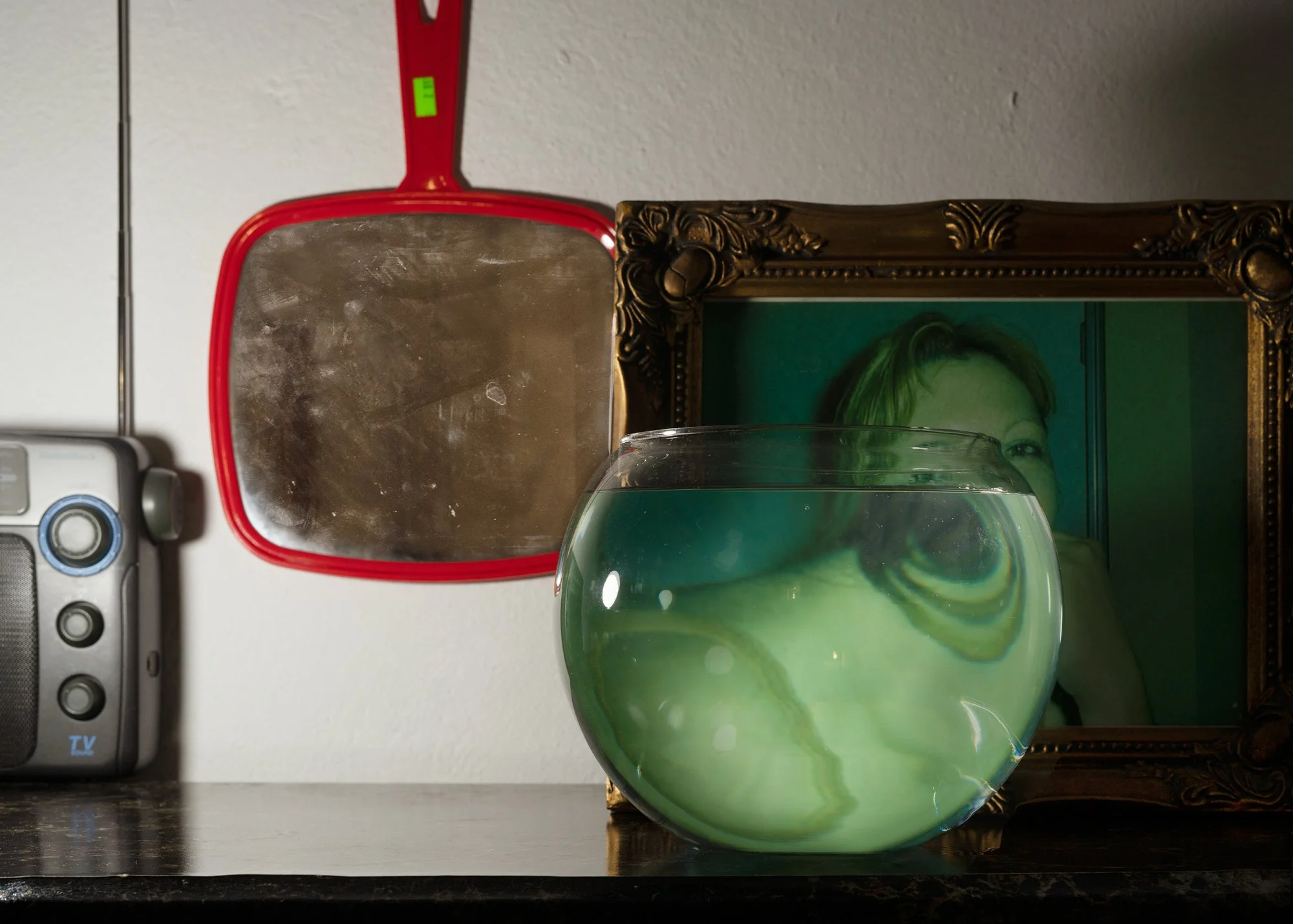
GENESIS BÁEZ "Sound is also a wave" 2024-2025.