
By Yael Friedman, October 10, 2026
It is rare to find exhibitions and exhibition spaces as perfectly paired as these two at the Alice Austen House and at AMR Art Dumbo. Each are separate and quite different but they were organized in tandem and should be seen in quick succession with “Italian Story “ as the foundation.
The Alice Austen House, constructed in 1609 in Staten Island, between the Verrazzano Bridge to the south and the ferry to the north, is a portal into a feminist, queer, and creative world that seems as unlikely as its bucolic setting. The house and its namesake are a revelation. Elizabeth Alice Austen (1866-1952), a well-heeled socialite and the first woman to own a car in the borough, upended and redefined Victorian middle-class expectations. She became a talented and fearless photographer who cast her gaze on the women around her and peered across class and geography – you might mistake her photos of immigrants on the Lower East Side for those of Jacob Riis. She also traveled with her life partner Gertrude Tate to Italy in 1905 and 1906 and returned with stunning photographs that range from landscapes to street scenes and a world that one rarely sees with such sensitivity. Her determination was formidable, but her eye was searching and subtle.
Andrea Modica is likewise extremely determined and deeply empathetic. “Italian Story,” curated by Victoria Munro, includes 39 photographs from over four decades of work. The subjects vary widely but each one brings the viewer inside a beautifully constructed composition, made with Modica’s 8 x10 camera and printed with a 19th century hand-coated platinum process. The images feel so intimate as to be almost claustrophobic. Their warmth and sensuality ensure they are not. With this antique camera her subjects have to pose still and Modica’s familiarity saturates the images. Her process and choice of camera often evince a nearly modernist formalism, but she imbues much feeling and subjectivity. Her nudes all fill the frame, and even in her still-lifes, like “Radnor, PA” (2023) the shape and texture emerge, becoming almost abstracted.
Modica’s images, her pioneering journey as a female photographer, and the exhibition setting, bring to mind the work of the modernist Italian-American photographer Tina Modotti (1896-1942). Modotti created often formally and politically doctrinaire work, stridently wielding her Marxism and modernism. Here, it is almost as if a breeze blows through Modotti’s more static sensibility, softening it and allowing for the presence of subject and photographer.
In perhaps the most arresting and intimate image, “Modena, Italy” (2010), a man holding a young child reaches up above with one hand to a decorative inset in the wall behind him. He and the boy look straight at the camera as he does so, his arm and the structure forming a continuous central line dividing the frame. The composition is so finely tuned but with just as much tenderness as formal construction. Modica can be a master storyteller, and this is a beautiful example of nearly perfect composition that in other hands might feel less alive.
“Italian Story” forms a perfect foundation for “Catholic Girl” in Brooklyn. Like curator Munro has done at the Alice Austen House, the AMR Dumbo founder and director Annabelle Rinehart wanted to carve out a space that championed women and queer artists and became a natural partner to collaborate on these exhibitions.
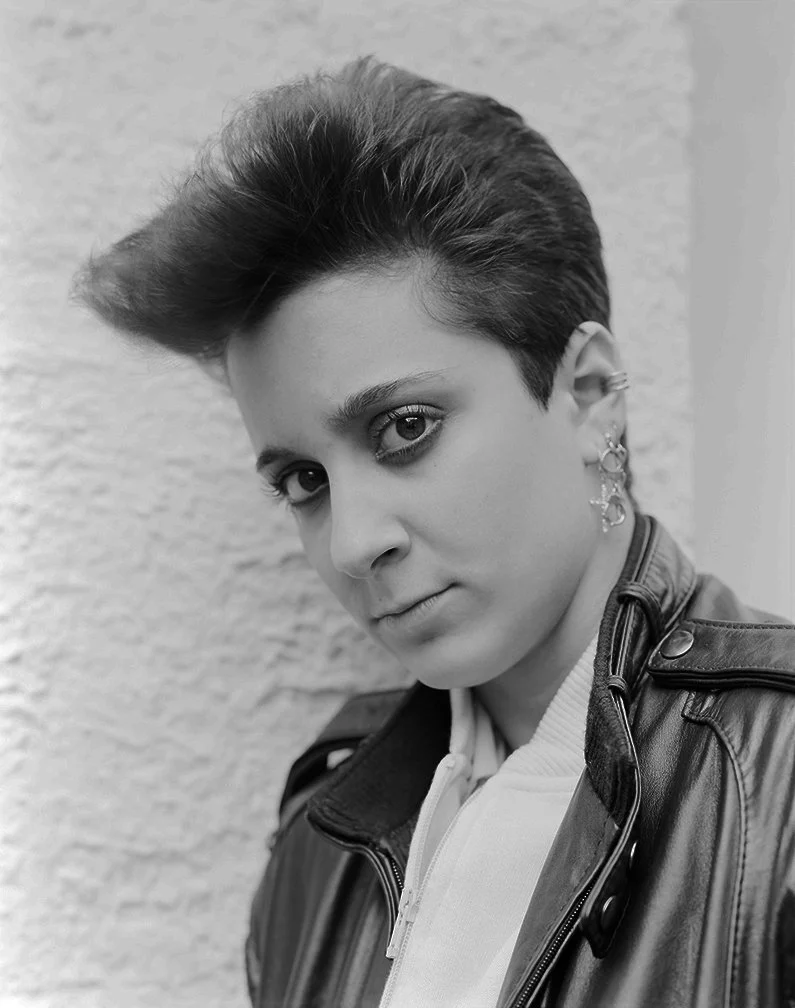
“Catholic Girl “ is consummately set at AMR Art Dumbo. It includes 18 photos from 1984, of girls at Modica’s alma mater, Fontbonne Hall Academy in Bay Ridge (she graduated 6 years prior). It is thrilling to see this series of 80s Catholic school girls and their uniforms set against the white walls – the photos are already cool, 80s punk and Brooklyn teenage angst staring defiantly from faces framed by big hair and a fair bit of fronting. The sameness of the school uniforms guides one’s eye to the individual.
These personalities feel barely contained. As their uniforms conform, they must work hard to express themselves: in their tough looks, their hair, their leather jackets, their postures, they transgress their strict traditional homes, their Catholic schools, their expectations of one another. Experimentation and fluidity of gender norms course through these portraits -- natural byproduct of the era, and of the teen years of trying on different identities, and perhaps freedom from the teenage male gaze. This is a kaleidoscope of the feminine ideal.
As Modica recalls, she arrived back at Fontbonne when she was in graduate school, mostly to visit her art teacher, Len Bellinger, who helped set her on a path toward art as calling and vocation. She hadn’t planned this project, but as a young artist, it helped anchor her as a photographer. With Diane Arbus and August Sander as two of her main influences then, Modica was drawn to the compelling and the repulsive. Returning to school and revisiting that often-difficult but thrilling time in her life was a kind of gravitational pull. These portraits reflect this.
Modica has spoken about how her personal history led her to become an artist. As an Italian American daughter in that era, her family did not expect her to develop her potential professionally--her brothers had pressure to become doctors or lawyers, and she only a good wife and mother. That left her free to roam and invest herself in more “frivolous” pursuits, like art. This shadow existence allowed her to be invisible and move through her world more freely. One can speculate that being a Victorian socialite also gave Alice Austen space to pursue her harmless “hobbies” and she had the means to do so. But the determination and resourcefulness (and talent) and understanding of how you can marshal that freedom, in an age when both Austen and Modica did not have models to look to, are entirely these two women’s radical achievements.
Yael Friedman lives in New York, and her reviews and essays have appeared in the Los Angeles Review of Books, The Economist, The Forward, Haaretz and The Daily Beast, among other publications.
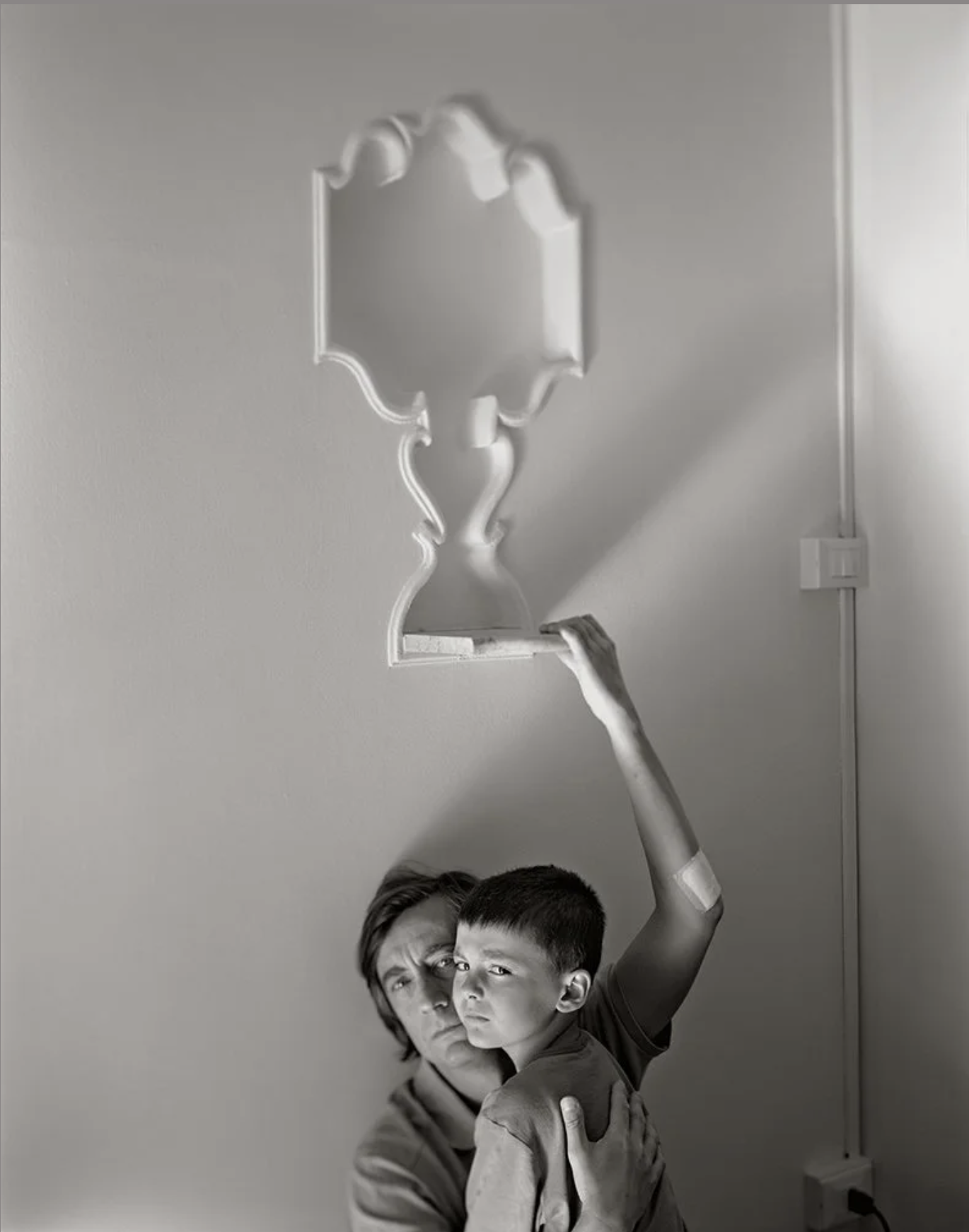
ANDREA MODICA "Modena, Italy" 2010.
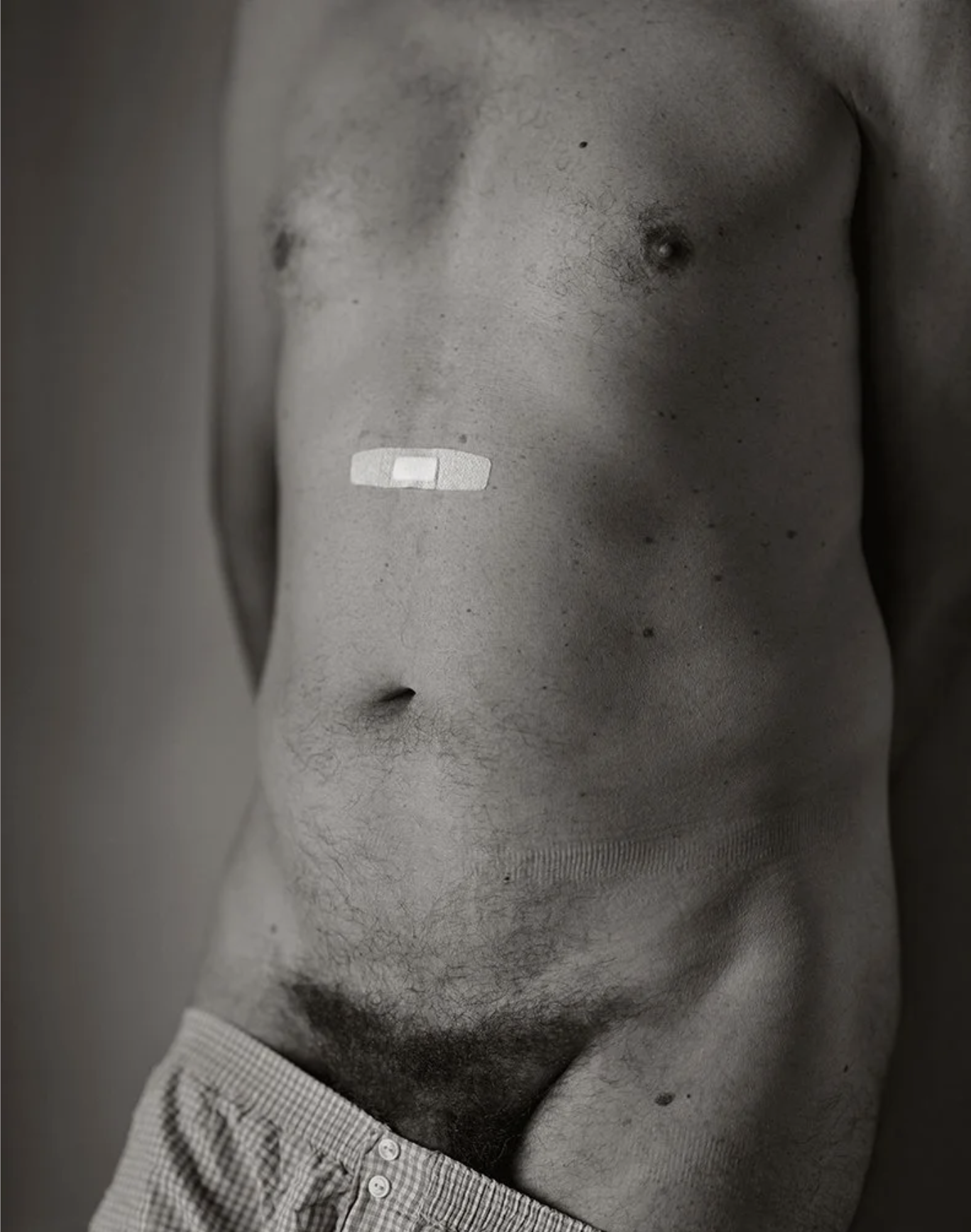
ANDREA MODICA "Modena, Italy" 2016.
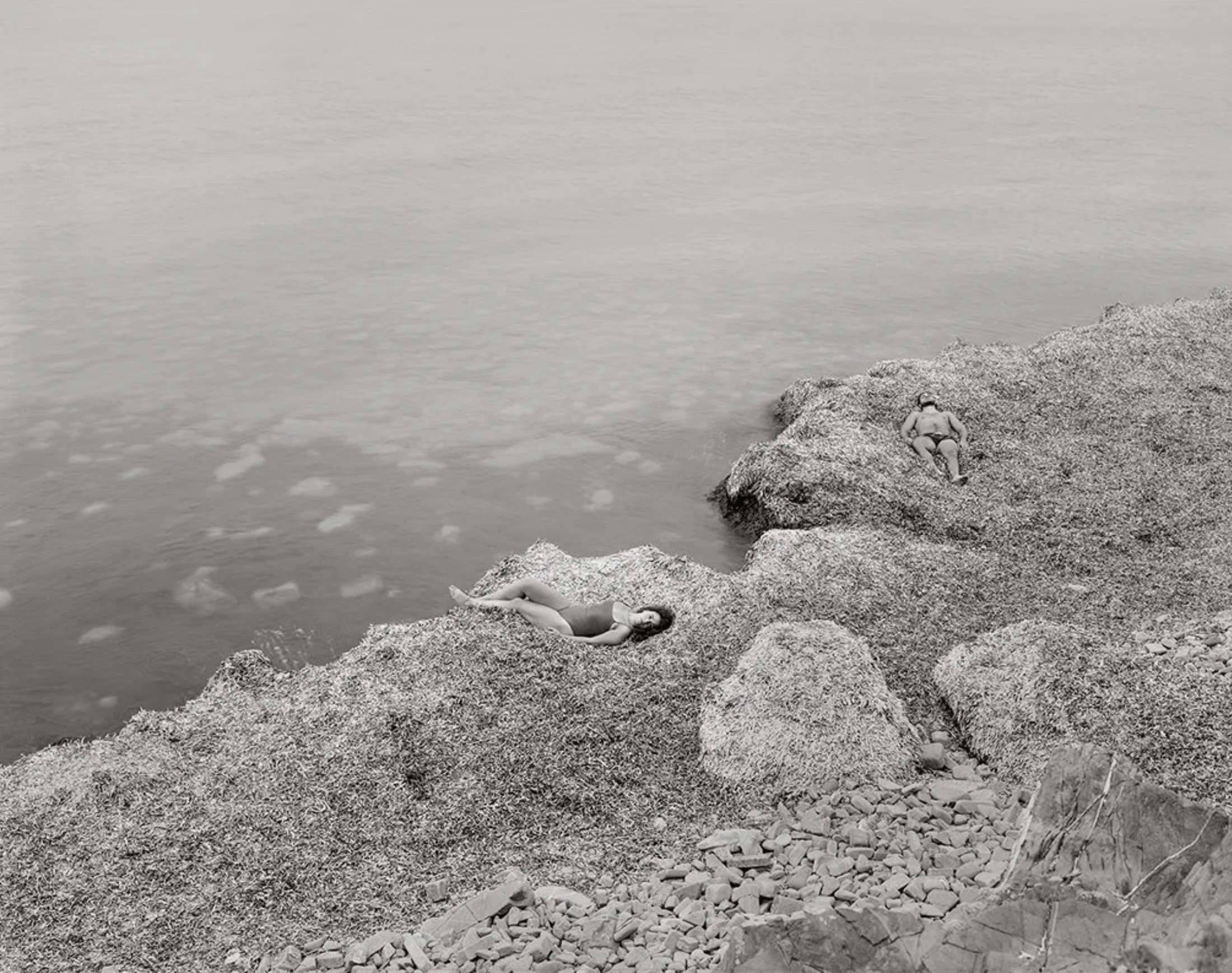
ANDREA MODICA "Punta Licosa, Italy" 2025.
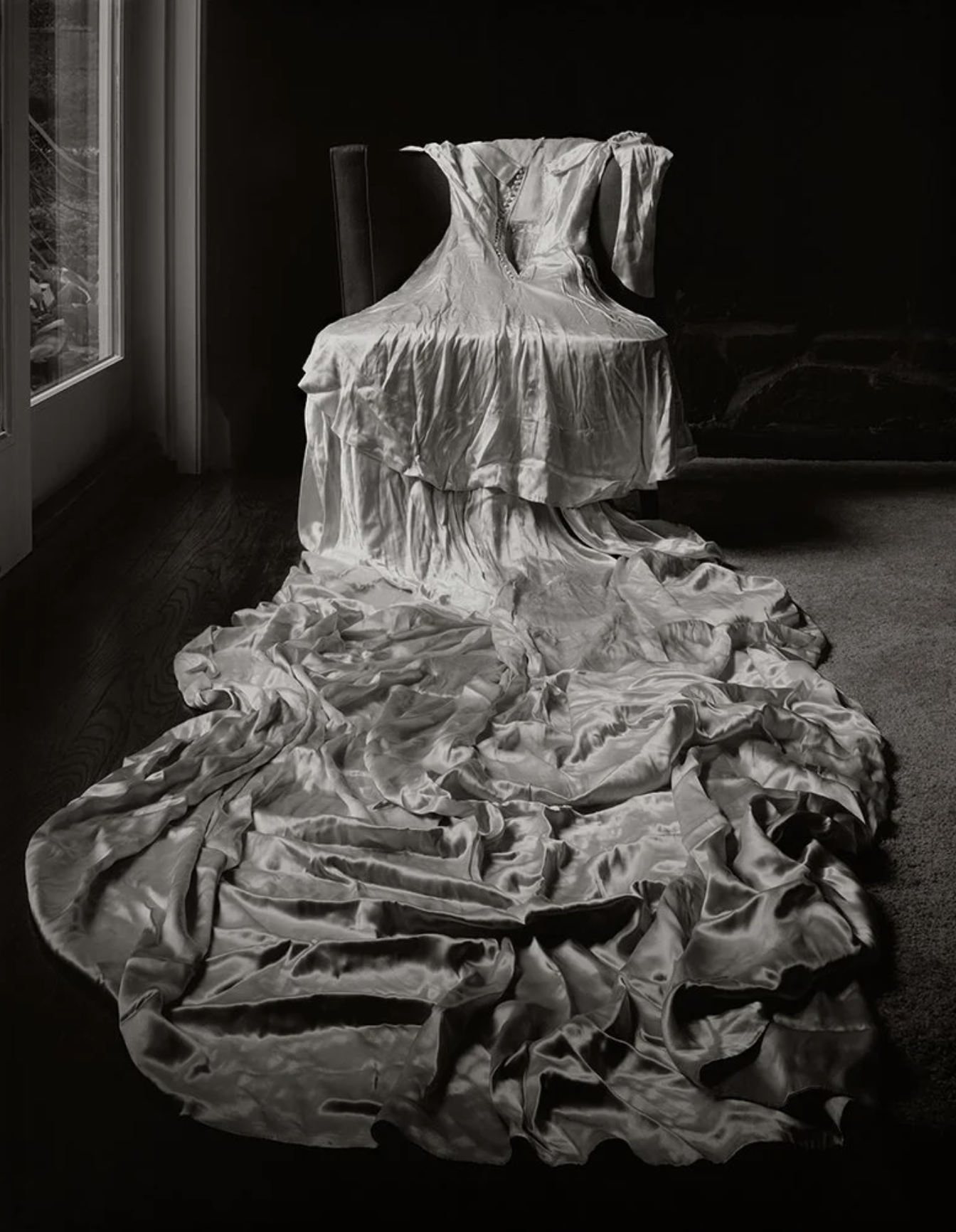
ANDREA MODICA "Radnor, PA" 2023.
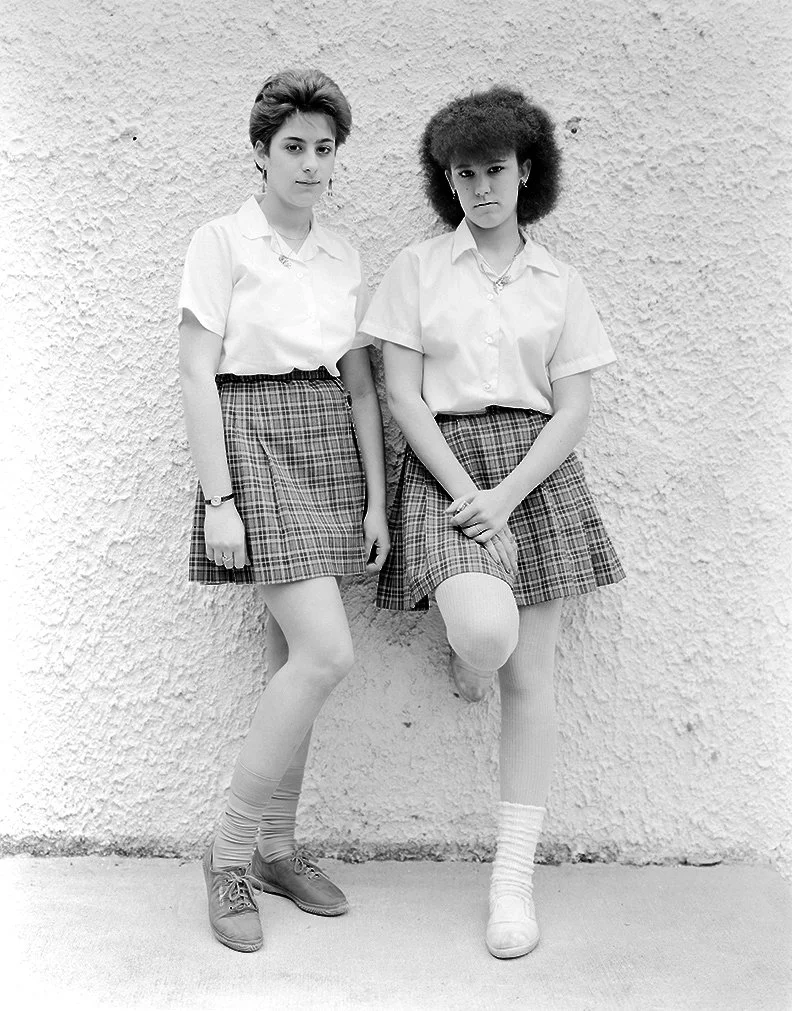
ANDREA MODICA, "Brooklyn New York" 1985.