
By Natalie Krick, November 10, 2026
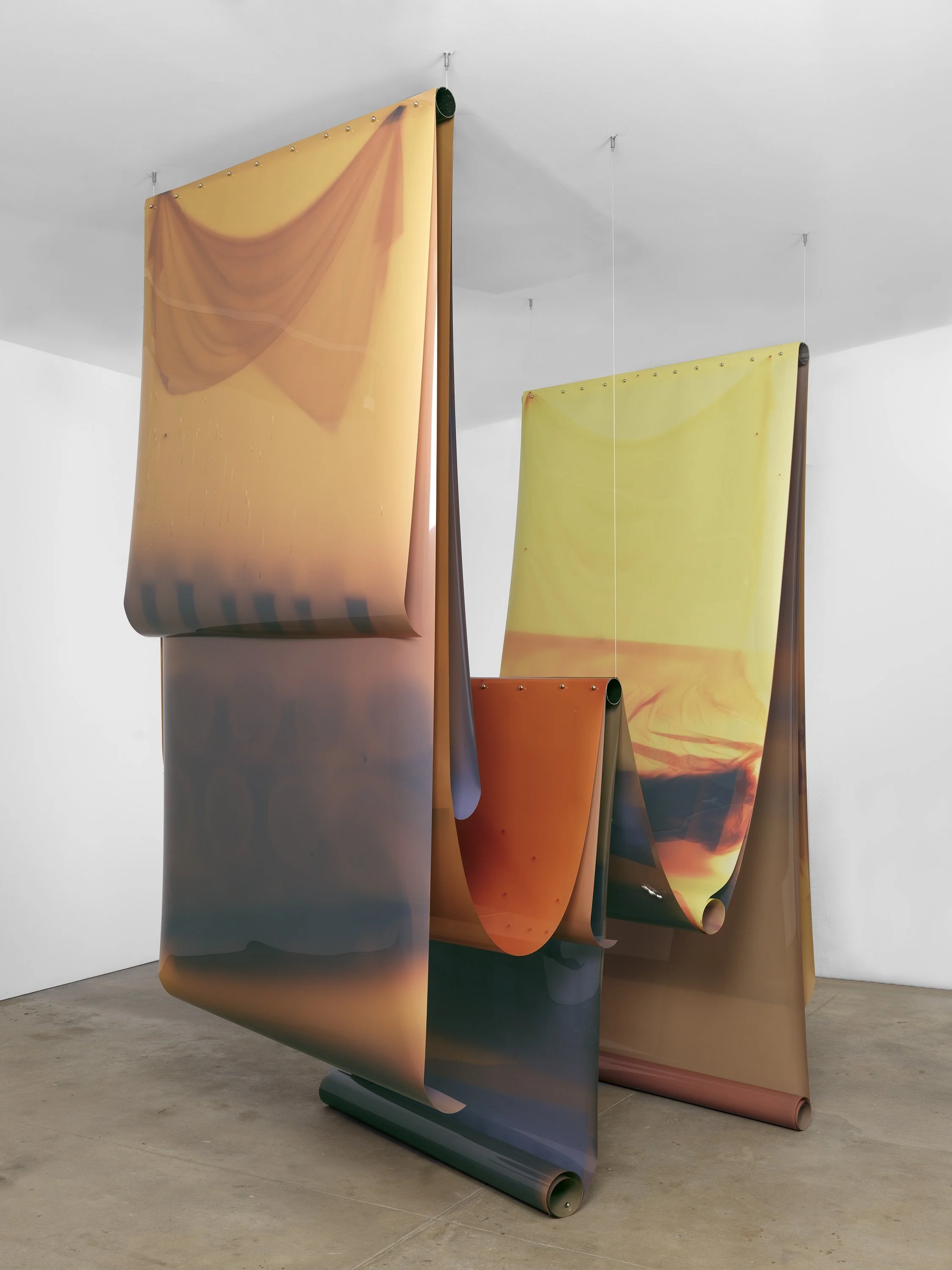
Large sheets of unfixed, light-sensitive film, far larger than my body, flow down from metal tubes suspended from the ceiling. Shades of light yellow fade into muted orange and warm darkness. Ombre. Sunsets. Rothko. The swaths of film in “Molt (Woodridge-Seattle)”, are exposed to light in a process that the artist, Lotus L. Kang, calls tanning. These long exposures are made in various places, including her greenhouse studio in upstate New York. The skins, as she refers to them, continue to fluctuate in tonality and color, responding to and absorbing the light in each space where they are exhibited. Unlike most photographs, they are never entirely fixed, they shift, holding and recording the evidence of their experiences. Occasionally, I find a representational image within these abstractions - a piece of draped fabric or drips that resemble bodily fluids. I think of my body and the memory it holds. The memory that exists below my consciousness.
Another room of “I hear the hollow boom of time” holds “Azaleas III”, an installation that includes a rotating chrome wheel wrapped in rolls of 35mm transparency film. This large contraption makes me think of film processing but is instead used as a kind of film projector. Stripes of colorful abstractions wash over my body and the small sculptures and objects arranged around the gallery. Wine bottles and bronze and aluminum castings from a cabbage leaf, a pear, anchovies and a human ear. The projections cycle from the floor to the wall to the ceiling; all who enter the space play the role of the skins in the previous room, absorbing the light of these images. Cycle. Circular. Here, the photographs are fixed but nearly impossible to make out amid the spinning and bright lights. Their forms are in constant motion, refusing the stillness we typically associate with photographs. Again, Kang thwarts and transforms the semiotic experience of photography.
My relationship with photography often feels like a complicated mess that I will spend the rest of my life failing to untangle. Precisely because it is not untangleable. This exhibition ignited my internal struggle. My mind was spinning with technical photographic questions upon encountering the large sheets of film. How were these made? Where does one acquire these gigantic rolls of film? What are they used for? I was distracted by questions with concrete answers. I felt frustrated with my reaction, realizing that my inquiry was not curiosity but a defensive attempt to demystify. I wanted to understand how the images were made rather than sit with what they were doing to me.
My specific reaction is most likely because of my background and fraught relationship with photography. Kang points to "the industrial" again and again through her materials—the large sheets of film, the metal airplane tubing, the large rotary sculpture. She does not negate the mechanical or semiotic nature of photography. Instead, she points to it while simultaneously evoking its haunting physicality. The work seems to hold these seemingly opposing qualities together: the photograph as a fixed mechanical record and photography as an unstable, embodied experience.
This work calls upon my sensuous, embodied experience and the photographs that shape, restrict, and confine my existence in the world. Photography's promise of permanence feels antithetical to our existence as evolving, changing, cyclical beings. And yet, perhaps photography's relationship to permanence is more complicated than I have allowed myself to consider. Roland Barthes describes his realization upon looking at a photograph of Napoleon's youngest brother: "I am looking at eyes that looked at the Emperor." He points to a particular haunting in this transference of light and embodiment, which then attains its own physicality as a photograph. The photograph fixes a moment, but it also carries something forward: the light that once touched a living body, the presence of someone who is no longer there. This was an amazement that he felt no one else seemed to share, and many would probably consider this observation utterly absurd today. The ubiquity of photographs distracts us from their lingering presence. Perhaps this haunting nature of photography is only available when we allow ourselves to be open to it.
Natalie Krick is an artist based in Seattle, WA who teaches photography at Green River College. Her work was included in the exhibition “Digital Witness: Revolutions in Design, Photography and Film” at LACMA.
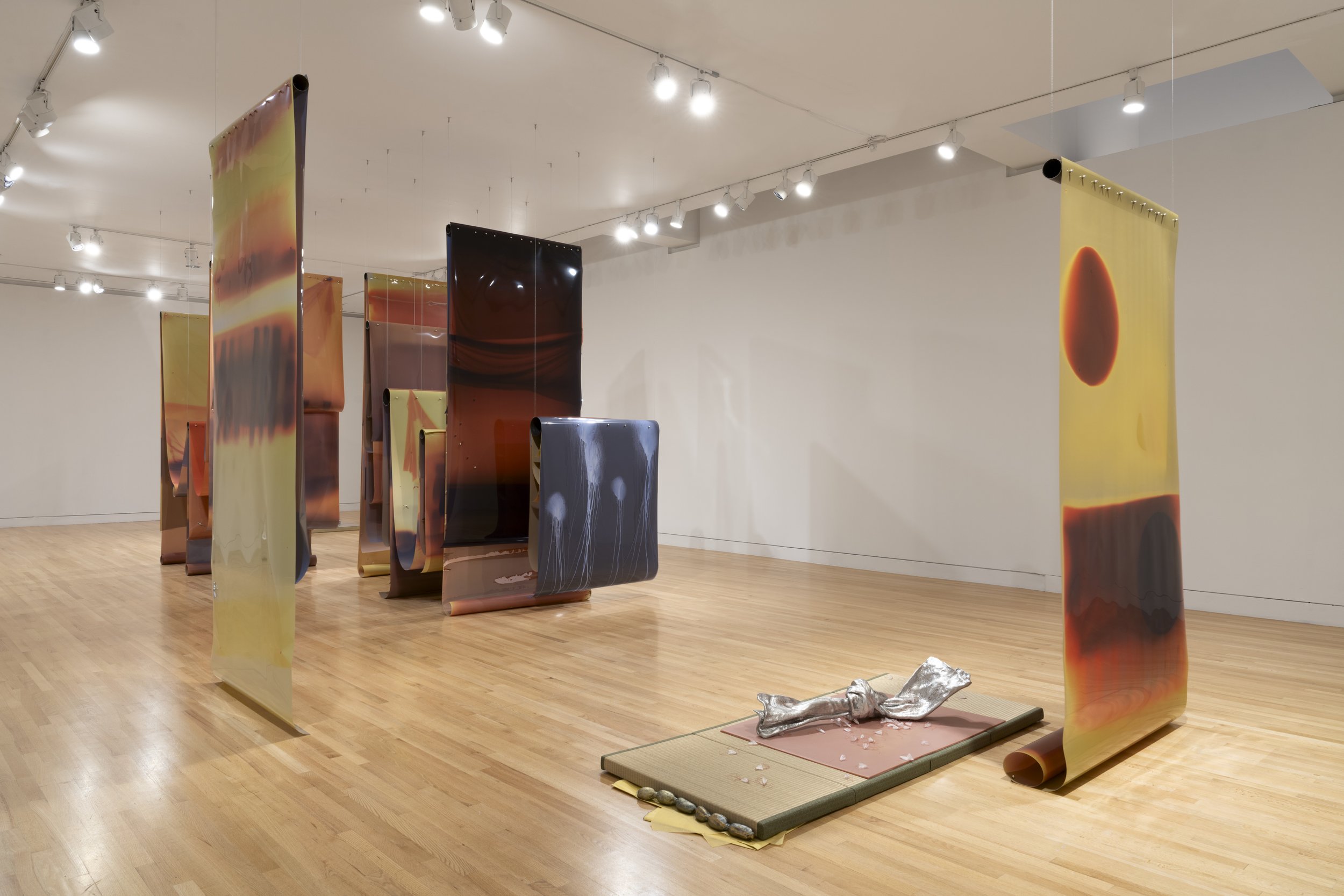
Installation view of Lotus L. Kang: I hear the hollow boom of time. Frye Art Museum, Seattle, 2026.
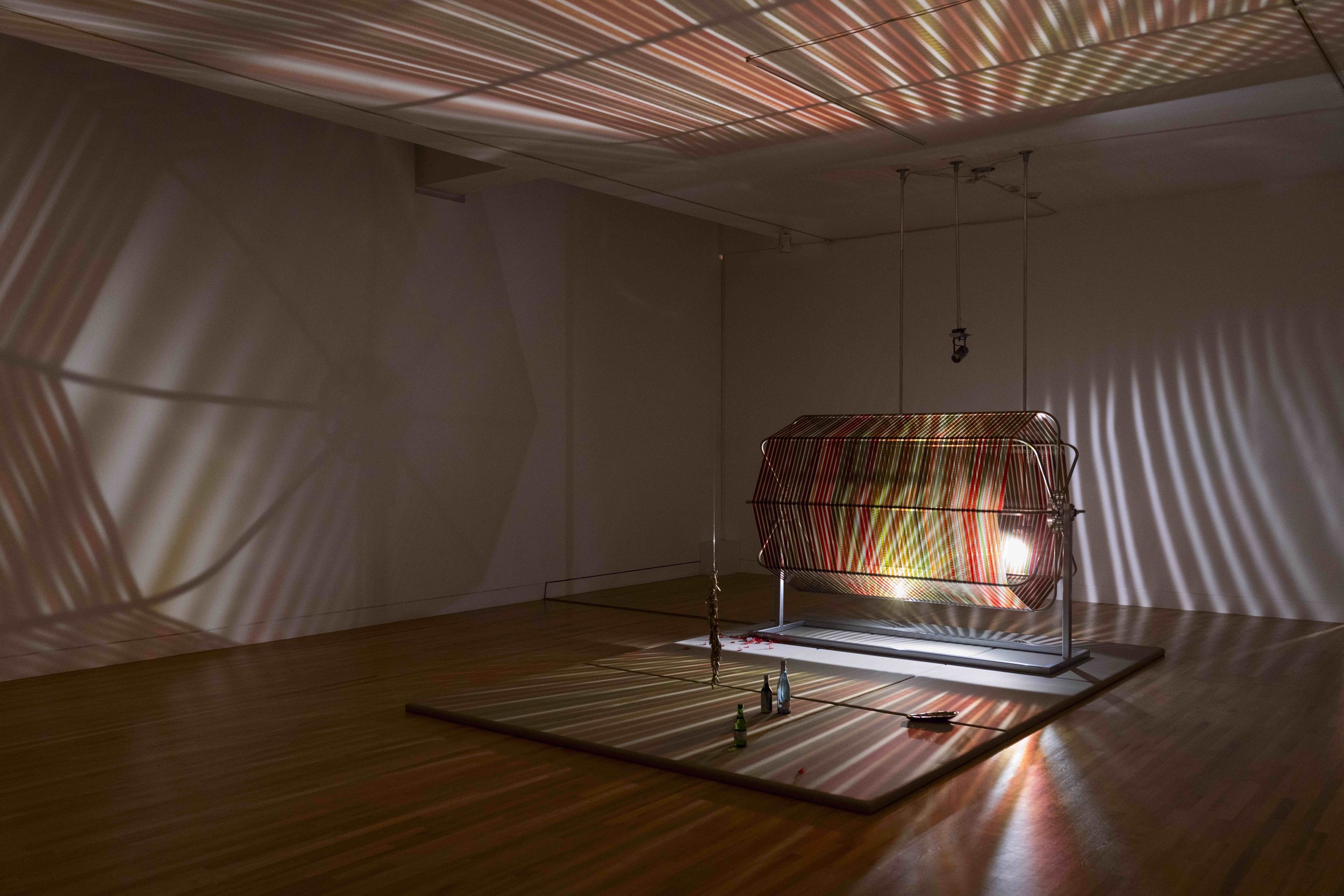
LOTUS L. KANG " Azaleas III", 2026. Courtesy of the artist; Franz Kaka, Toronto; Commonwealth and Council, Los Angeles; Esther Schipper, Berlin; and Kukje Gallery, Seoul.

LOTUS L. KANG "Azaleas II" 2025.Courtesy of the artist and 52 Walker, New York.
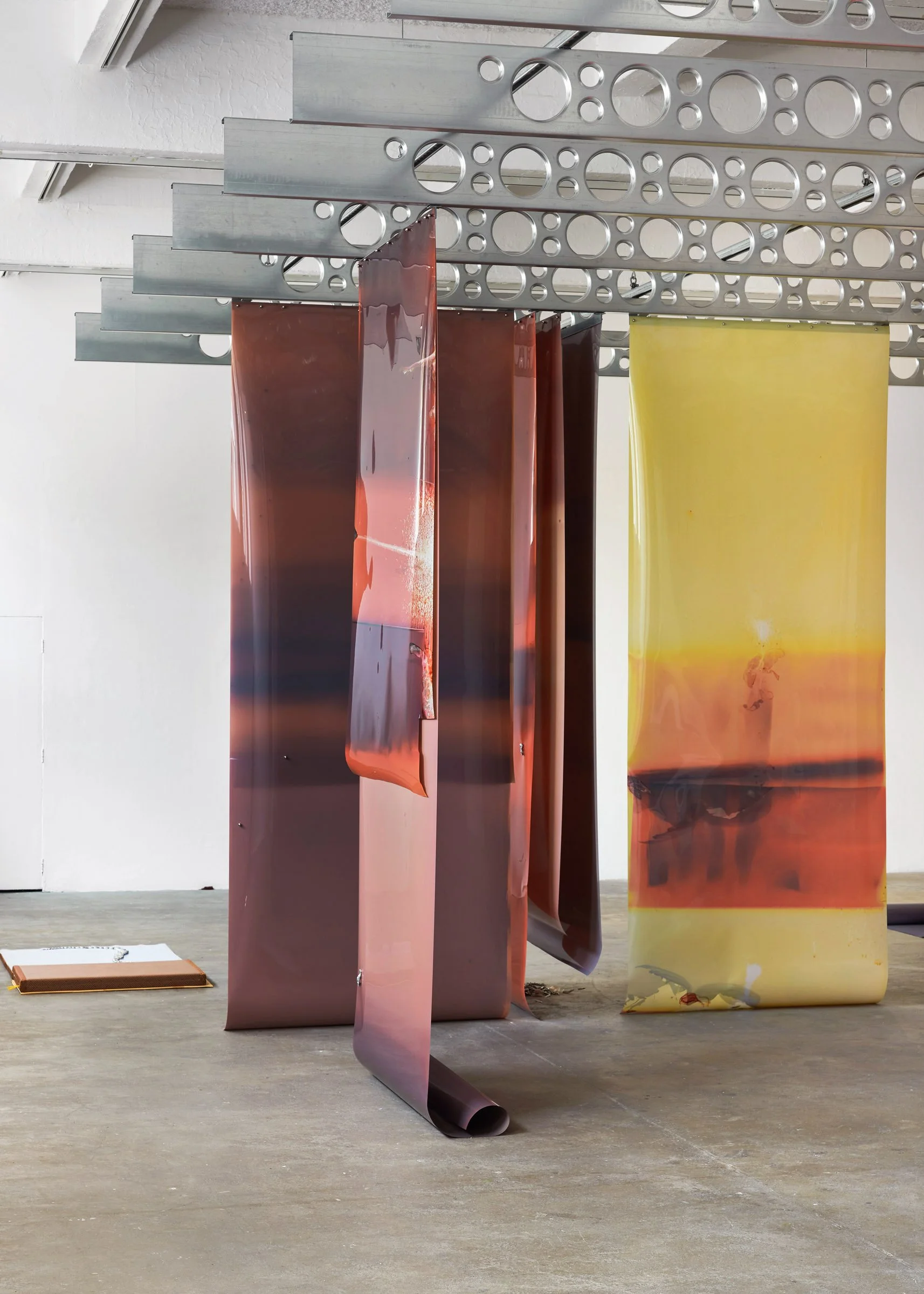
LOTUS L. KANG "In Cascades" 2023. Courtesy of the artist and Chisenhale Gallery, London.