
By Meredith Breech October 10, 2026
On view in “Voices in the Mirror” are some of Gordon Parks’s most iconic images, interspersed with quotes from his collaborators, family members of his subjects, and leading cultural voices of today. The full accounts of these voices —from Kathleen Cleaver and Qubilah Shabazz to Deborah Willis and Thelma Golden—bring a rich perspective to the exhibition that go beyond the short quotes included on the wall. But with or without these, the chance to see this singular artist’s work in person is meaningful.
There are many works in the exhibition that are striking and unexpected— an image of Giacometti’s sculptures in France, a single hand holding a cigarette through bars, a window in Harlem. One of his most significant images is a woman and child, both in dresses, standing underneath a large neon sign that says “Colored Entrance," and is just one in a series of Black subjects navigating around signs of segregation. The other five in the exhibition, all taken in Mobile, Alabama, while Parks was there on assignment for Life, are set around various storefronts, primarily a Dairy Queen. The visual markers of the time period are there in the subjects’ clothing, the ice cream shop’s graphics, and of course the parallel “Whites” and “Colored” signs, which, all these years later, remind us that every societal structure, including those that Black Americans turned to for necessity and leisure, presupposed their subjugation. Parks enables us to witness their everyday grace.
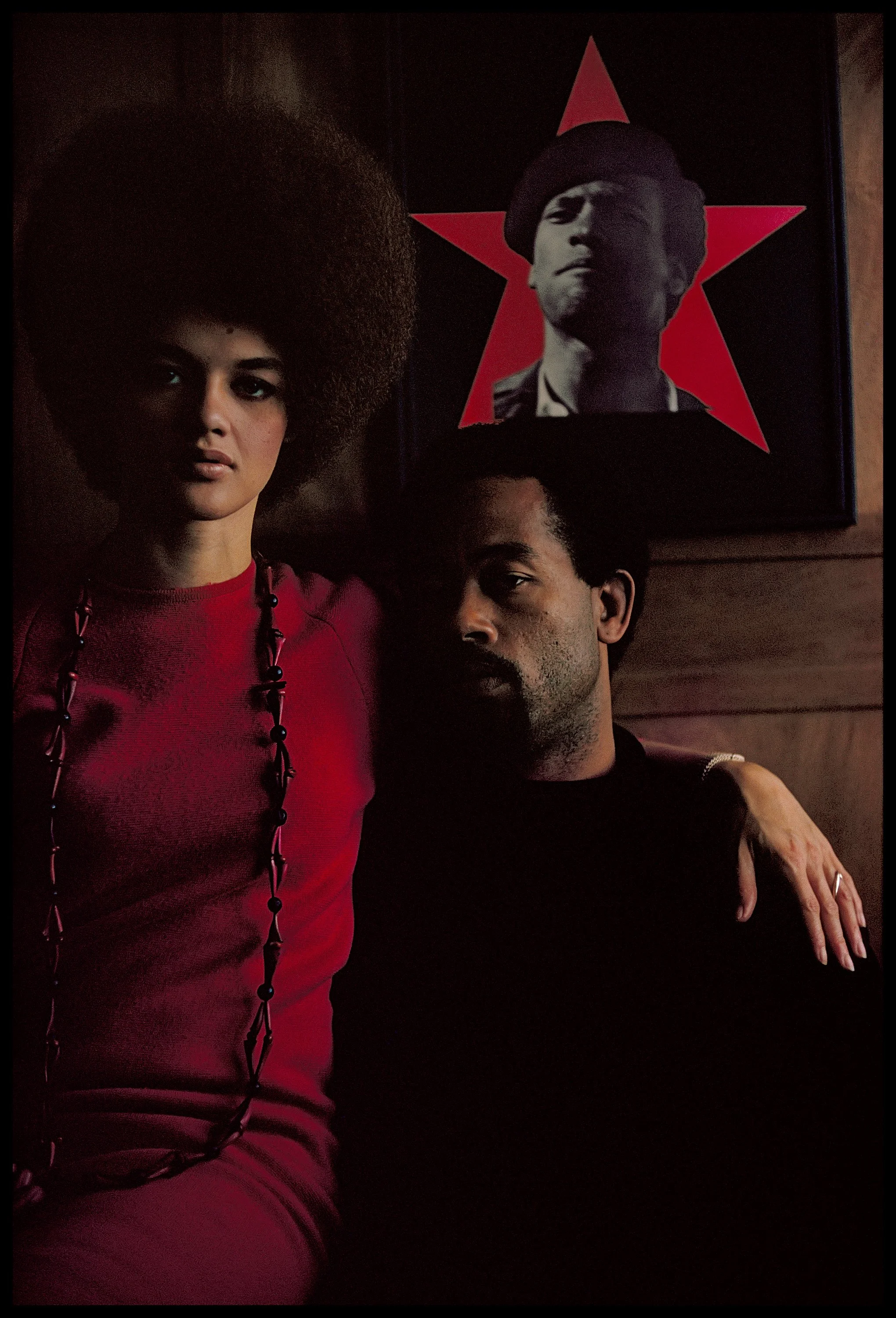
The exhibition includes several portraits of notable figures, including Muhammad Ali, Rosa Parks, Eldridge and Kathleen Cleaver. Several more are of Malcolm X, including two at public appearances and a few more intimate portraits. One in particular positions him standing on a bench, leaning back slightly with a camera up to his face pointed at something out of frame, and a couple of children behind him. In this image, Parks captures the overlapping roles of subject and image-maker in the work of this revolutionary figure. Across from these three portraits of Malcom X are images Parks took of the crowds at the March on Washington in 1963. In both, he is careful to show the crowd interrupted with symbols of the Nation—in one, they are framed between two American flags, in the other the shape of the crowd is contorted around the corner of the reflection pool, in which the hazy form of the Lincoln Monument is seen. They demonstrate the revolutionary power of image-making that Gordon Parks wielded with his camera, and the wisdom of Civil Rights leaders who made use of this tool of resistance in their own ways.
In a separate room from the main hall upstairs, a selection of images shows Black people at home and in nature. Here again, Parks uses structures to frame his subjects—this time, communicating enclaves of safety and community. The most quietly stunning photos in the exhibition are of a group of boys playing and relaxing by a body of water, centered within an archway that reflects in the water below, surrounding them like a protective dome. Another features two women talking through the window of a slanted house, one inside breastfeeding, the other standing outside in her Sunday best, church fan in hand. Gordon Parks centers the everyday grace of Black Americans as they navigate, resist, and live within the confining structures of American society, and brings us through time to see them with his intimacy.
Meredith D. Breech is an independent curator who was previously Associate Director of Exhibitions at Fotografiska, New York. She was part of the inaugural cohort of the Studio Museum's Arts Leadership Praxis in 2024.
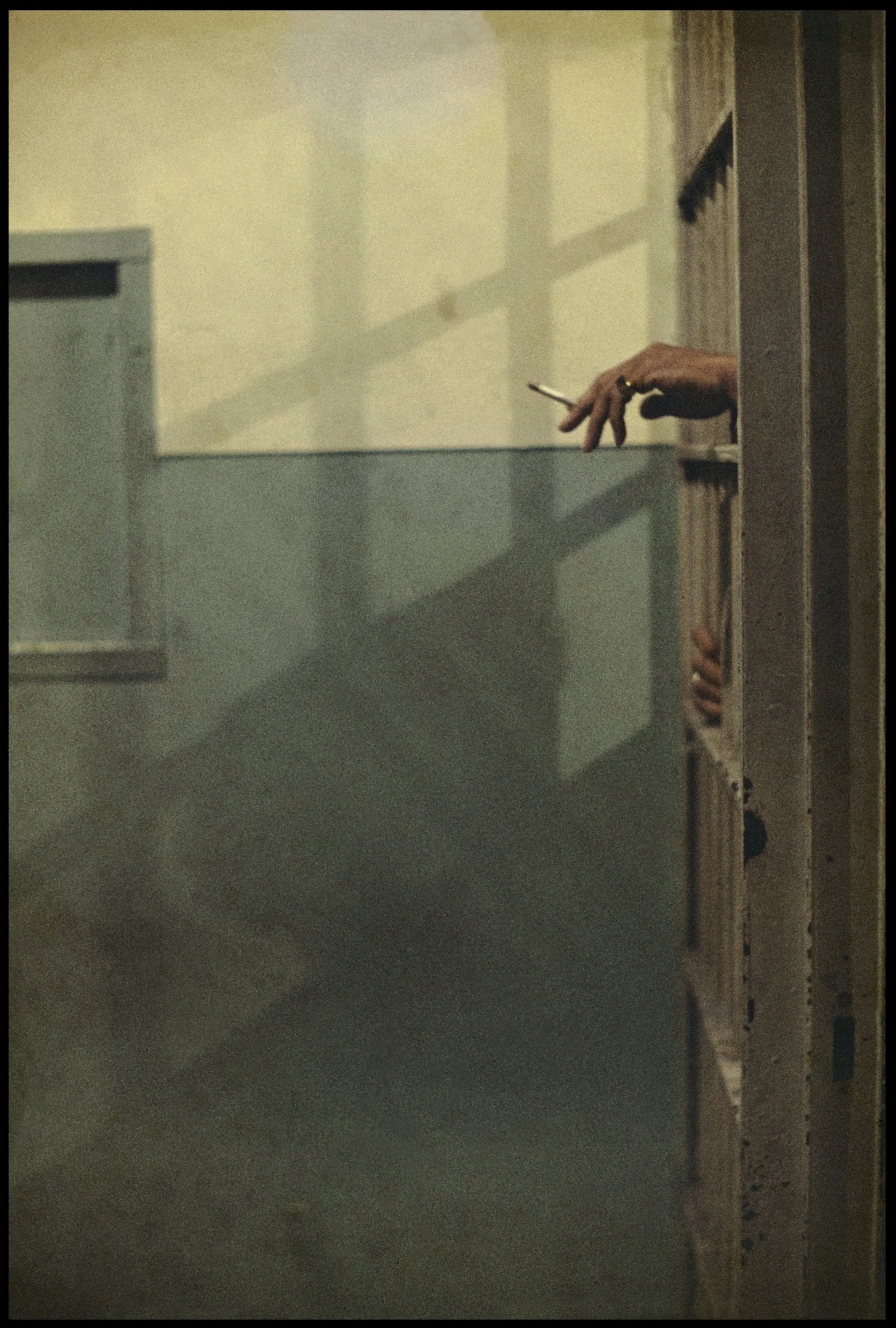
GORDON PARKS "Untitled, Chicago, Illinois" 1957.
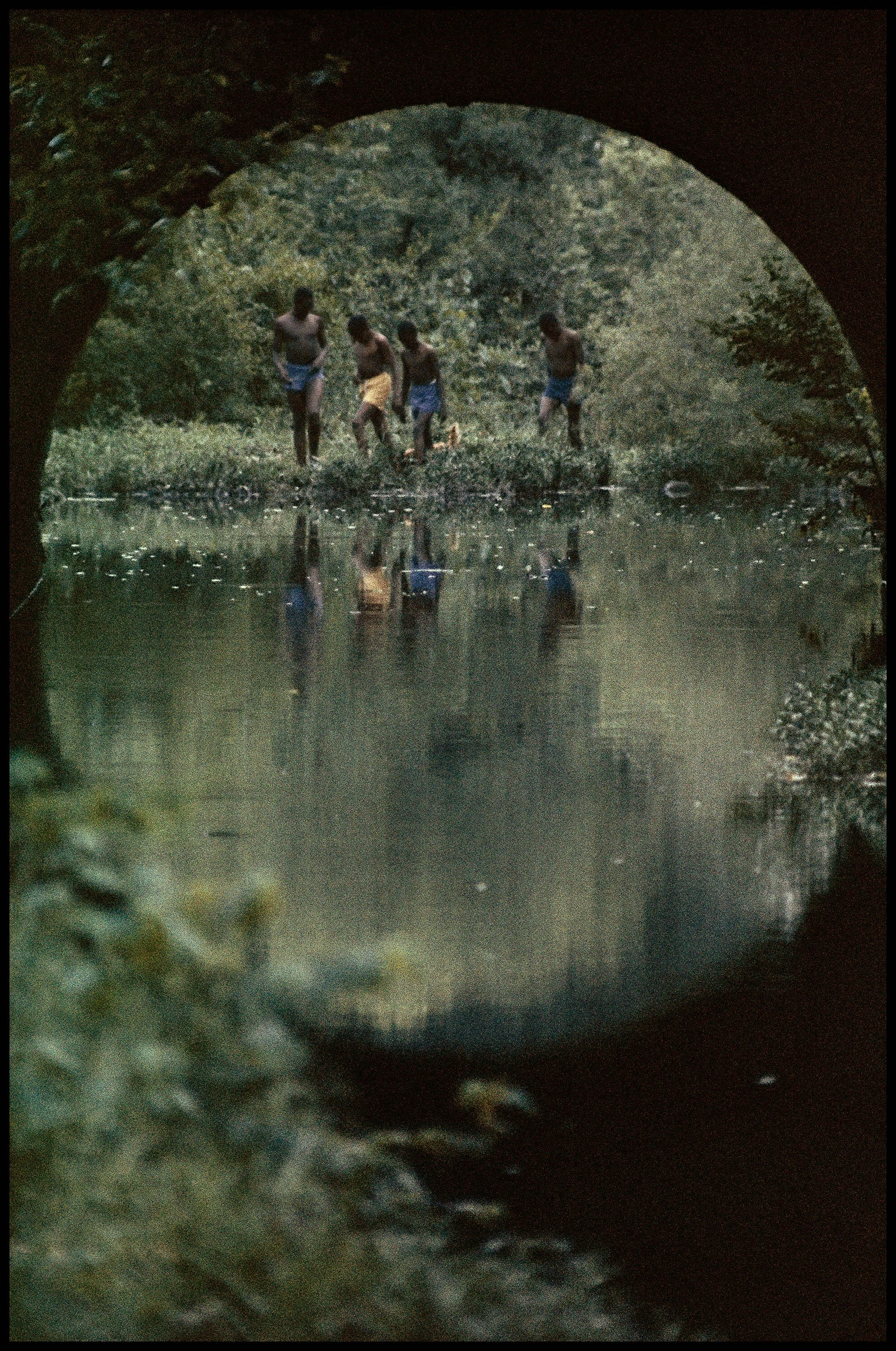
GORDON PARKS "Untitled, Fort Scott, Kansas", 1963.
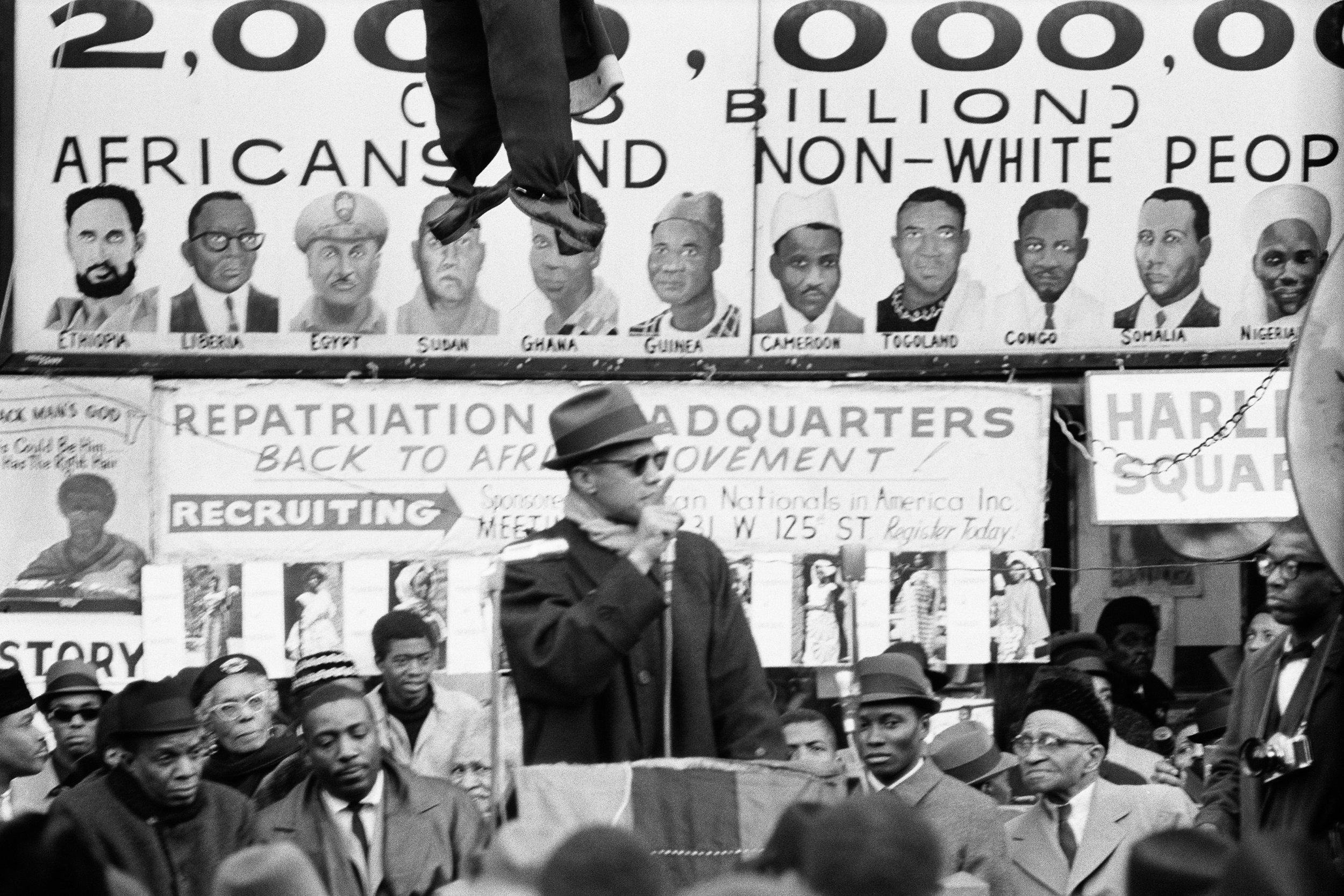
GORDON PARKS "Untitled, Harlem, New York" 1957.
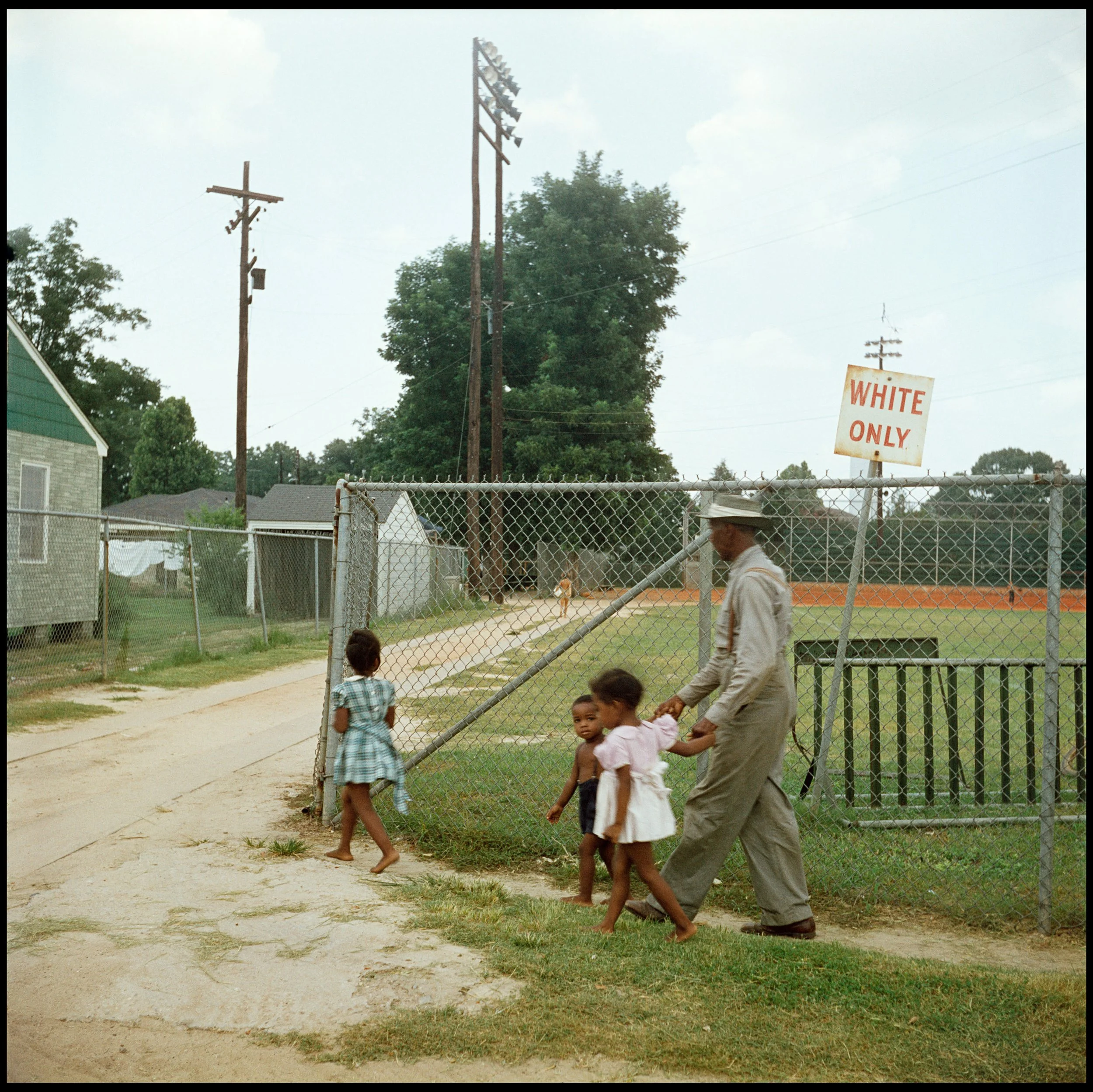
GORDON PARKS "Untitled, Mobile, Alabama", 1956.
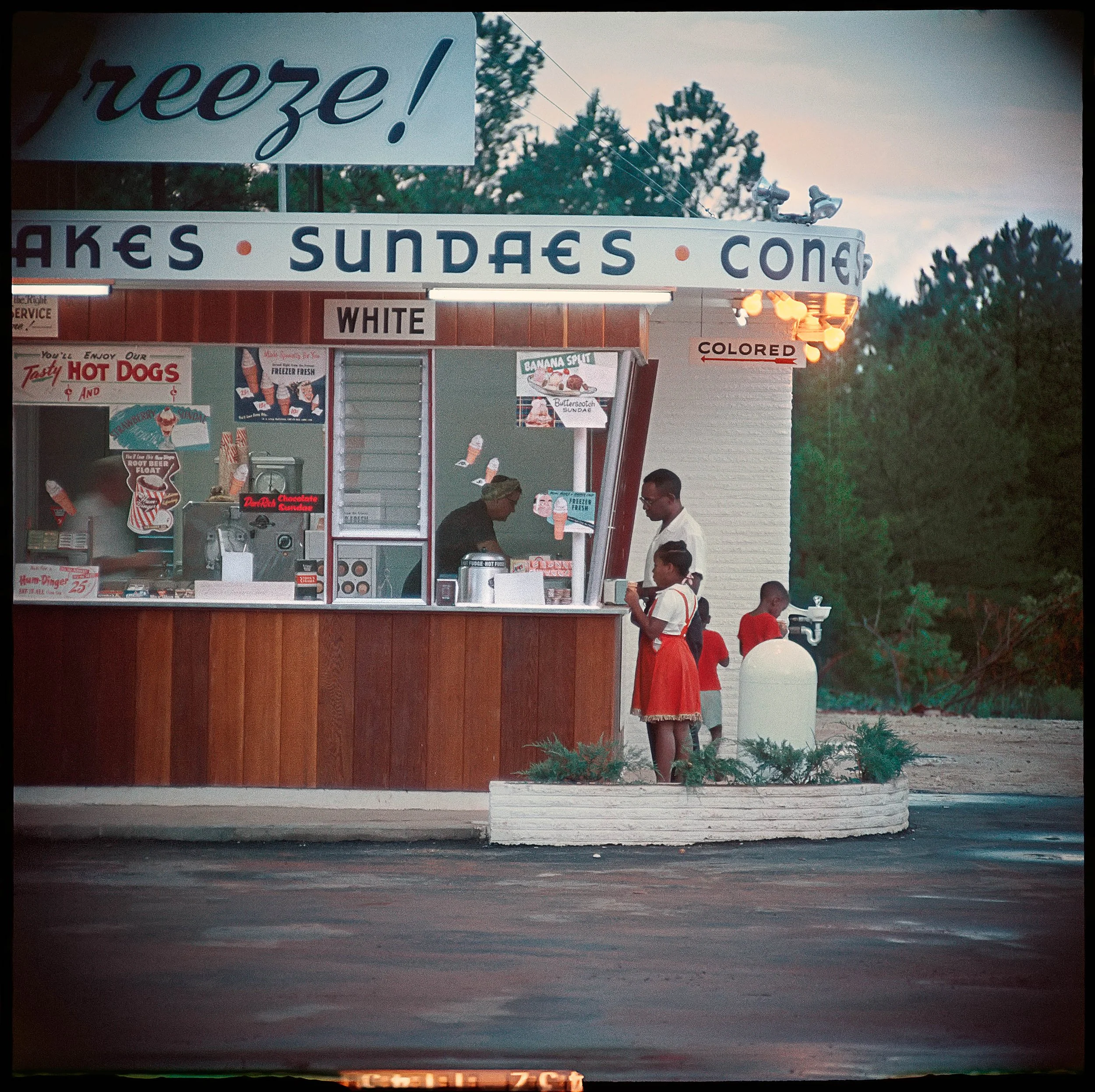
GORDON PARKS "Untitled, Shady Grove, Alabama", 1956.