

By Daniel McInnis, November 10, 2026
The writer Edwidge Dandicat wrote a short essay on the photography of Widline Cadet for Aperture. The images included were from Cadet’s portfolio “Soft”(2017-2020 ), black and white portraits taken in New York City parks, the subjects deliberately posed but seemingly unaware of the camera. The images served as part of her journey to connect with friends and family, and to visualize the internal emotional landscape of Black women.
Since then, Cadet’s work has expanded to include color images, video, found objects, and sculpture. Her work is based on the tricky ambition of retroactively assembling a visual archive of one’s own family, without having complete access to the subjects themselves. She has no images of her maternal grandmother, for example, yet seems determined to find both physical and spiritual bridges to her relatives’ absences. Cadet’s work offers a spectatorship of immediacy—we are placed at the same time between a photographic adoration for her family and the inability to see them completely.
“Seremoni Disparisyon (Ritual [Dis]Appearance)” travelling from The Milwaukee Art Museum has relocated–and not without physical challenges–to the Zaha Hadid-designed Contemporary Arts Center in Cincinnati. It’s a fearless observance organized by curator Kristen Gaylord (and furthered by Jessica Orzulak) of Cadet’s singular diasporic life, exploring her more recently developed American identities and then back at what she longs to remember from her childhood in Haiti.
Her work is a perfect counterpoint to Trevor Paglen’s concurrent show at the recently opened FotoFocus Center. Both exhibitions attempt to define the unphotographable within real geographies. In Paglen’s case: military secrets, algorithmic behaviors, and unexplained phenomena. In Cadet’s work, it is the irrefutable, powerful, incessant connections to one’s own family and the locales that define it.
Cadet’s collective presentation consistently blurs and subverts temporal division. The artist is searching for a theater of the timeless, purposefully (and refreshingly) minimizing a specific chronology. When did this wedding or this funeral take place? Are these women next to her sisters or friends? Does it matter? Who has already passed on… and who remains in our present?
She seems to be asking: are our memories ever in order?
Cadet has spoken of her work being as much about diasporic losses—of language, culture, and physical places—as it is about the economic and artistic opportunities she appreciates in the United States. As Cadet put it, “I want to have a place where the losses can live eternally but also celebrate the gains. I want there to be room for both.”
The entrance to Cadet’s exhibition brings you into a family’s living room, with a towering portrait of her father behind a red velvet camelback sofa. The scene’s ephemera are lovingly selected and arranged. There are photographs, assorted furniture, plastic flowers, a window to the sea, and a small silver lizard on the wall. The objects are not exactly the originals, but reminders of what was once her family’s. The CAC space is divided thoughtfully into separate sections of familial homage, including one made for her mother and one for her father. This delineation of parental altars keeps the seemingly random symphony of images ordered and easier to discern.
The exhibition is an astonishing high-wire act that balances how all three tenses of time define our relationship to family while avoiding all the pitfalls sometimes associated with “personal” work: cliché, self-importance, or the viewer’s inherent disconnect. The photographs are sumptuous, dependent on dramatic chiaroscuro lighting in some cases, and riotous, punchy color in others. The vibrant colors of warmer climes are everywhere: the orange of koi, the reds of bougainvillea (in Haitian Creole: bougenvilye), and the walls purposefully awash in Caribbean pastels of yellow and pink. The exhibition’s aesthetic choices seem like purposeful echoes between her original home in Haiti and her more recent relocation to Los Angeles.
The constructed scene in “Seremoni Disparisyon #1 (Ritual [Dis]Appearance #1)” was taken in the waters of Fishers Island, New York, during a formative artist’s residency while completing her MFA. Cadet credits this piece as leading her into “Seremoni” as a whole. “It took so long to make one image that I was deeply satisfied with. This image opened the door to many of the works that I’m making now—going deeper into the sculptural realm, and doing more collaging together with video, photographs and installation. That image is the beginning of so much of this exhibition.”
Cadet submerges herself in the Atlantic waters that physically connect Haiti to the US, and places within her view the objects that conjure memories of her home country: self-portraits as a child, a fabric simulacrum of a palm tree, aluminum roof sheeting and tarps. It’s a physical manifestation of her fragmenting memories. Cadet says of moving: “Home is a fluid place. I’ve been in the US for two-thirds of my life now. I still call New York home, and now I call L.A. home.”
Cadet’s work is often purposefully ambiguous. The work draws us in with mysteries in both light and dark spaces, with twinning and double figures throughout. Sally Mann said of images: “If it doesn't have ambiguity, don't bother to take it. I love that aspect of photography—the mendacity of photography—it's got to have some kind of peculiarity in it or it's not interesting to me." Cadet’s work allows strangers to share her obsession with personal complexities and she seems content to leave some puzzles for us to solve.
Perhaps most striking to the uninitiated are several nighttime images of figures without identity—young women in white dresses drifting through frames with inky black backgrounds. Cadet speaks of the figures in these images as women who transform at night, in Creole Lougawoo or Lougarou (from the French loup-garou or werewolf). Rather than a large wolf, the Creole version is often envisioned as an ordinary person—an elderly neighbor or woman during the day—who sheds her human form at night and transforms into light itself. This fable is beautifully conveyed in “Mayens Distans (Touching Distance)”, as if the viewer suddenly sighted these nocturnal figures floating by, one moving slowly forward and the other looking straight into the camera. Or is it the same figure shown in two different places at once?
It’s telling how much Cadet’s work inspires a psychological sanctuary while so many immigrants to the US have collectively experienced such intense political vitriol. This exhibition is geographically close to Springfield, Ohio, a small city that experienced a substantial influx of Haitian immigrants starting in 2014 only to find more recent federal policies terrorizing those communities. The exhibition is a vital immunization against recent xenophobic attempts to devalue the humanity of immigrants and cross-cultural experiences.
Dan McInnis is an Associate Professor of Photography and Digital Media at University of Toledo. A solo exhibition of his work ‘Elementary’ occured at Wright State University in 2024.
(Quotes were obtained from the artist during an interview on November 3, 2026.)
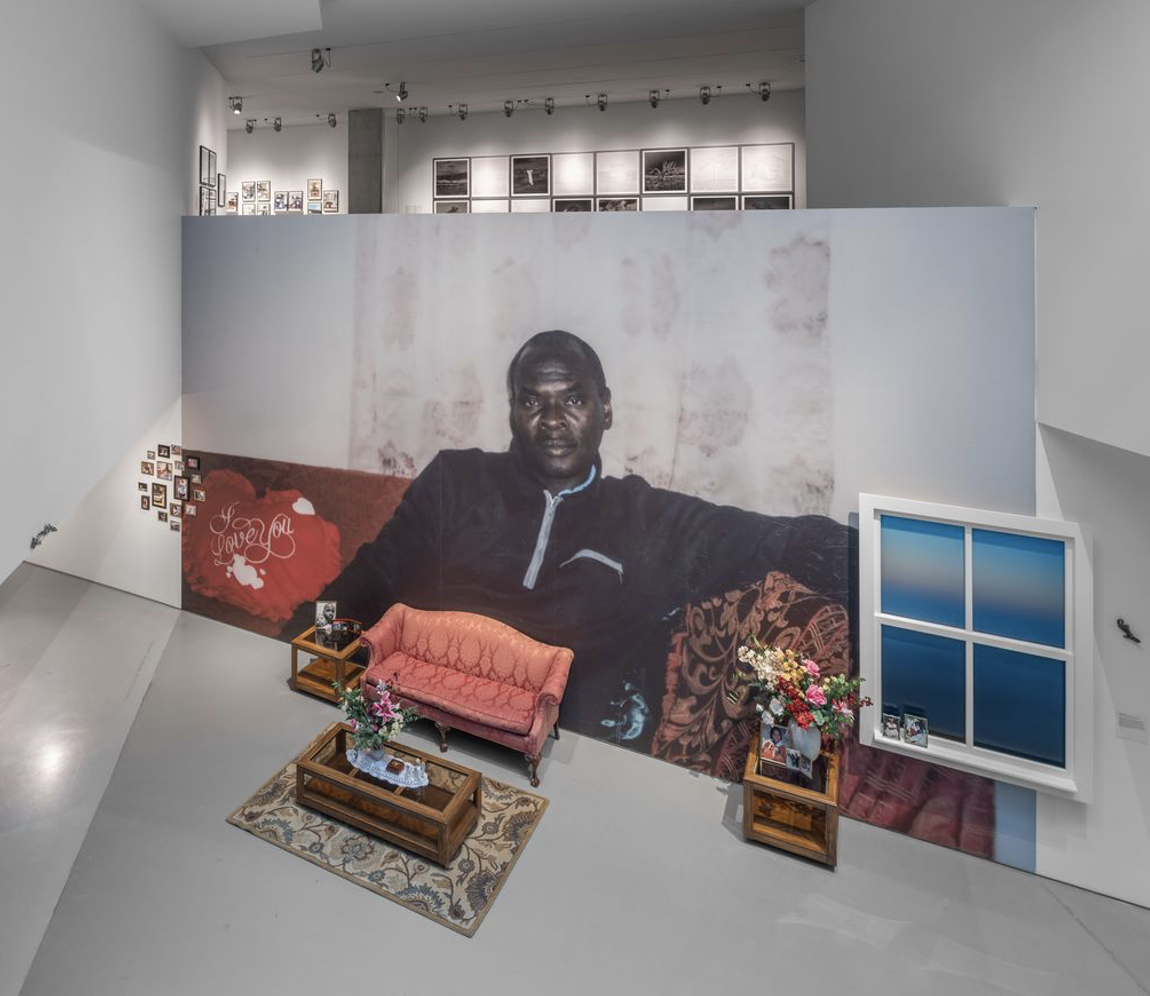
Installation view Widline Cadet “Seremoni Disparisyon (Ritual [Dis]Appearance)” at Cincinnati Contemporary Arts Center, 2026.
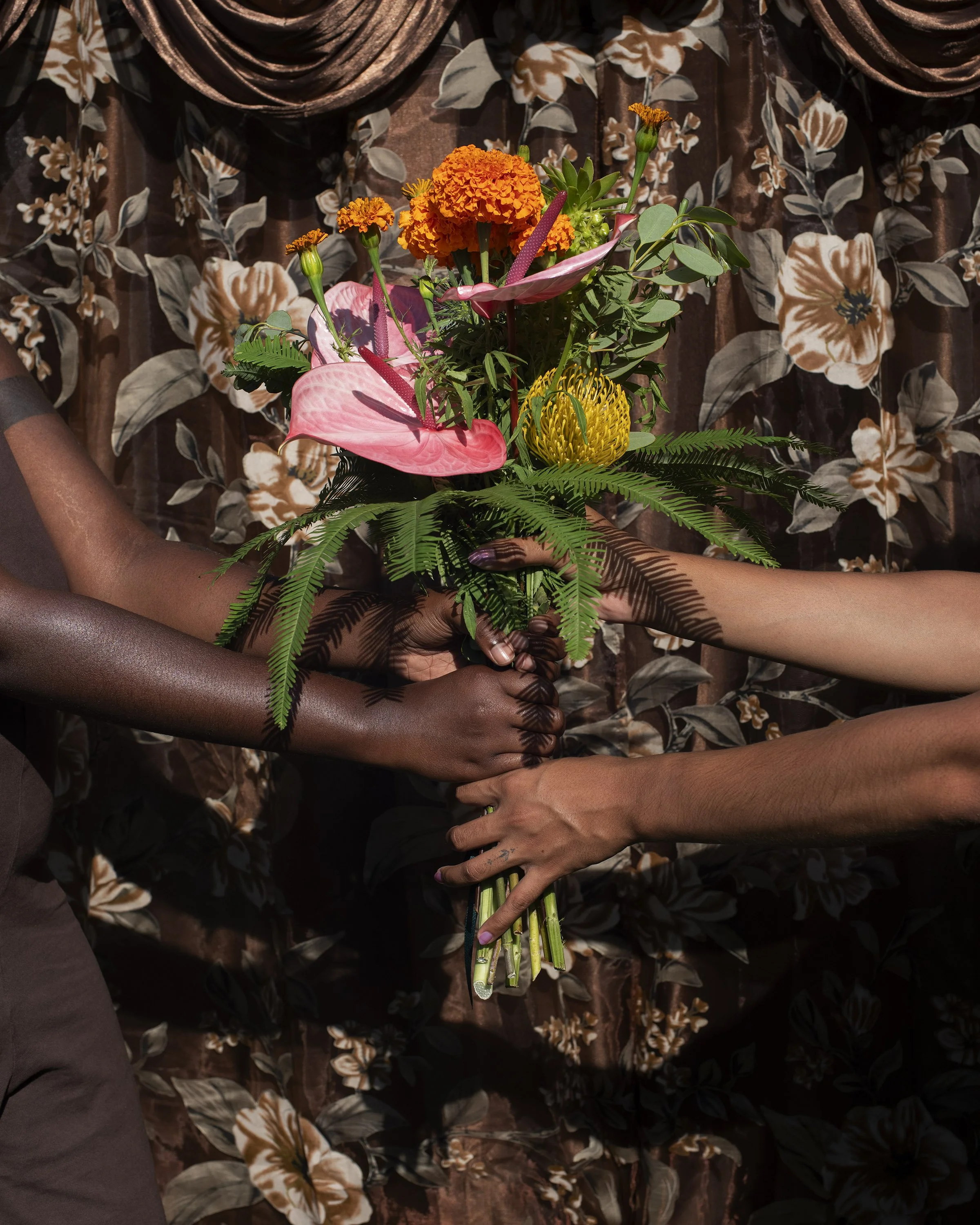
WIDLINE CADET “An Echo of Gratitude” 2023, Courtesy of the artist and Nazarian / Curcio. © Widline Cadet.
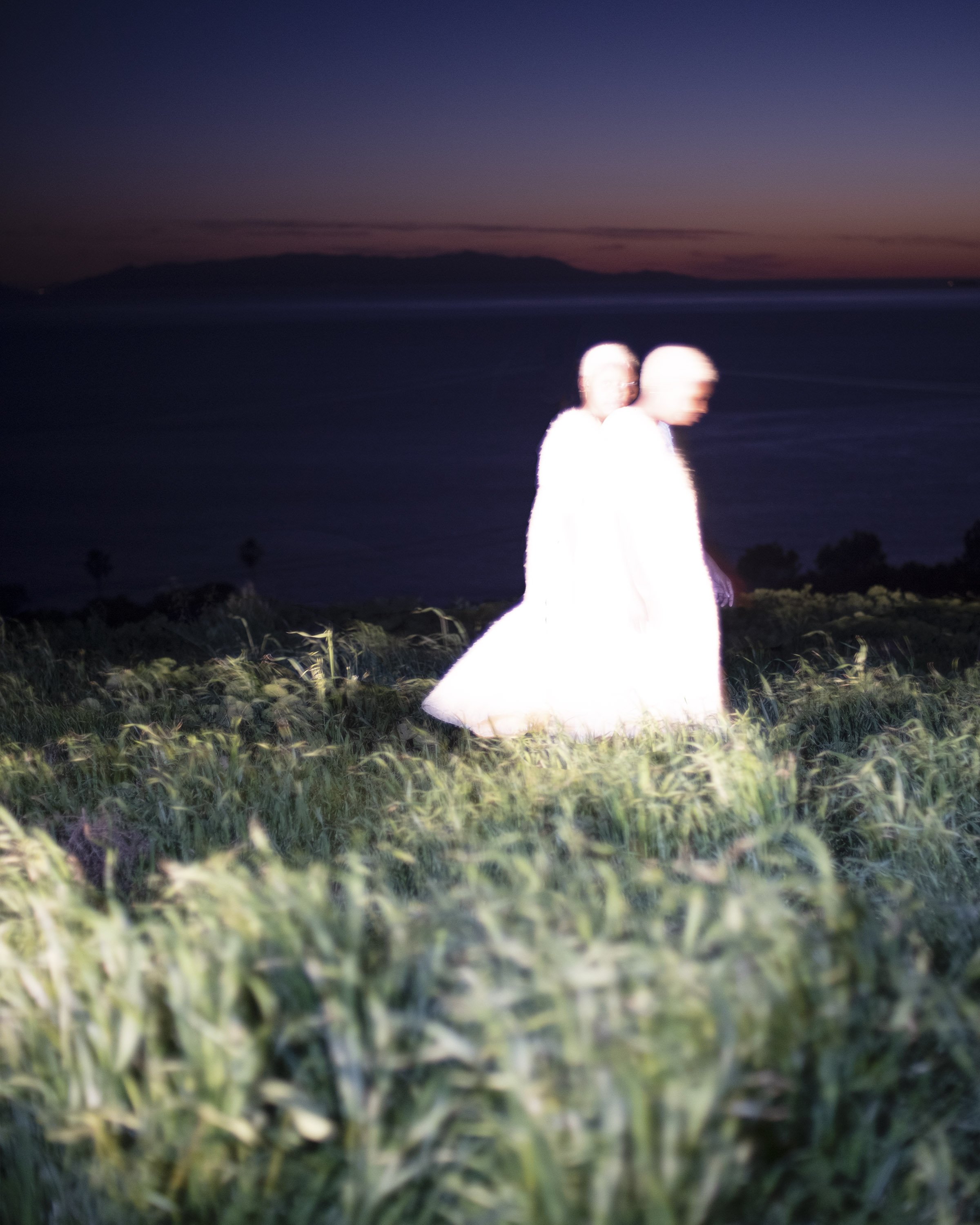
WIDLINE CADET "Manyen Distans (Touching Distance)", 2023. © Widline Cadet.
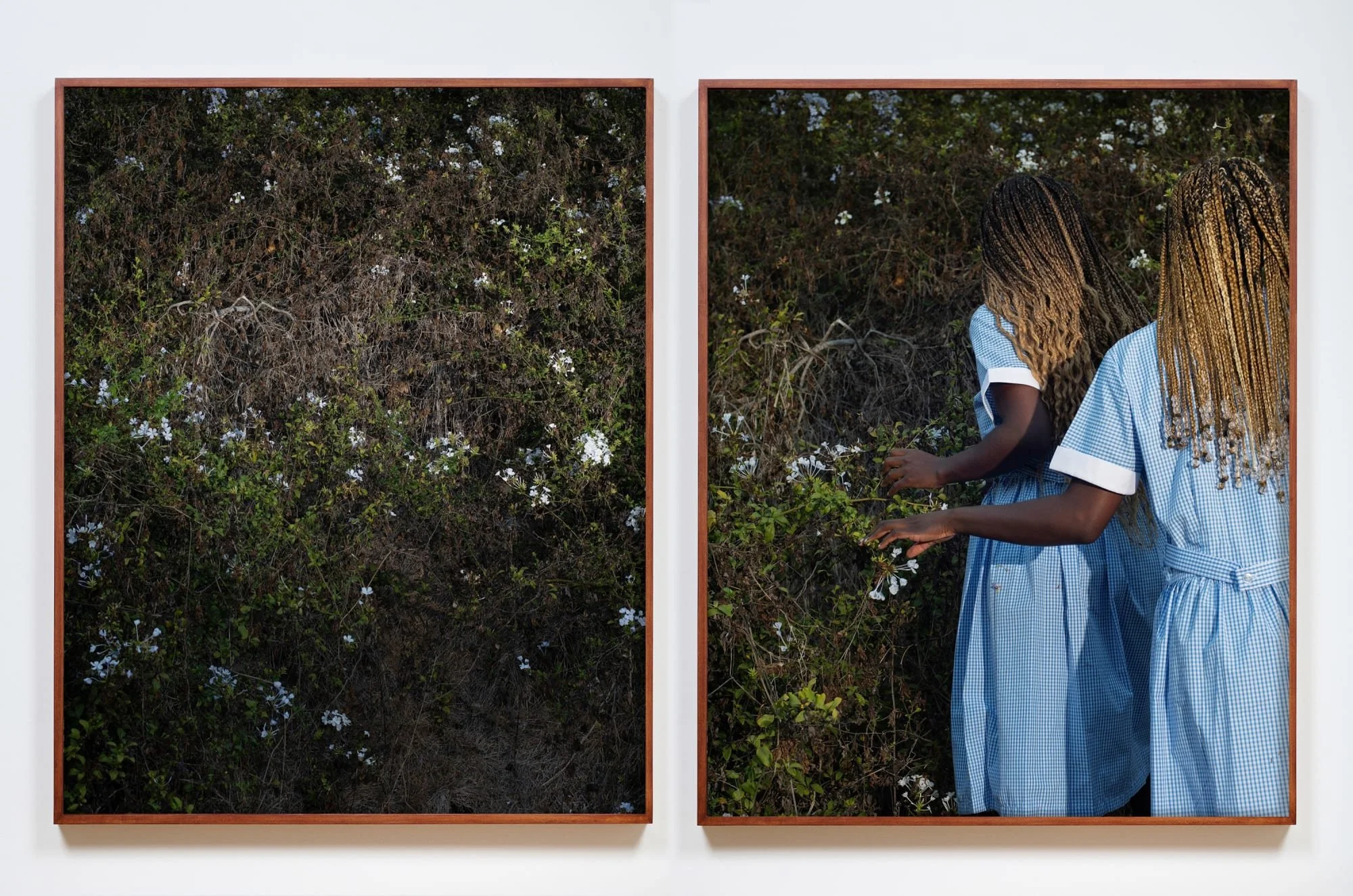
WIDLINE CADET "Si Ou Ta Dwe Bliye Wout Lakay Ou (Lè Tout Limyè Yo Etenn) (Should You Forget Your Way Home (When All The Lights Go Off)” 2021. © Widline Cadet.
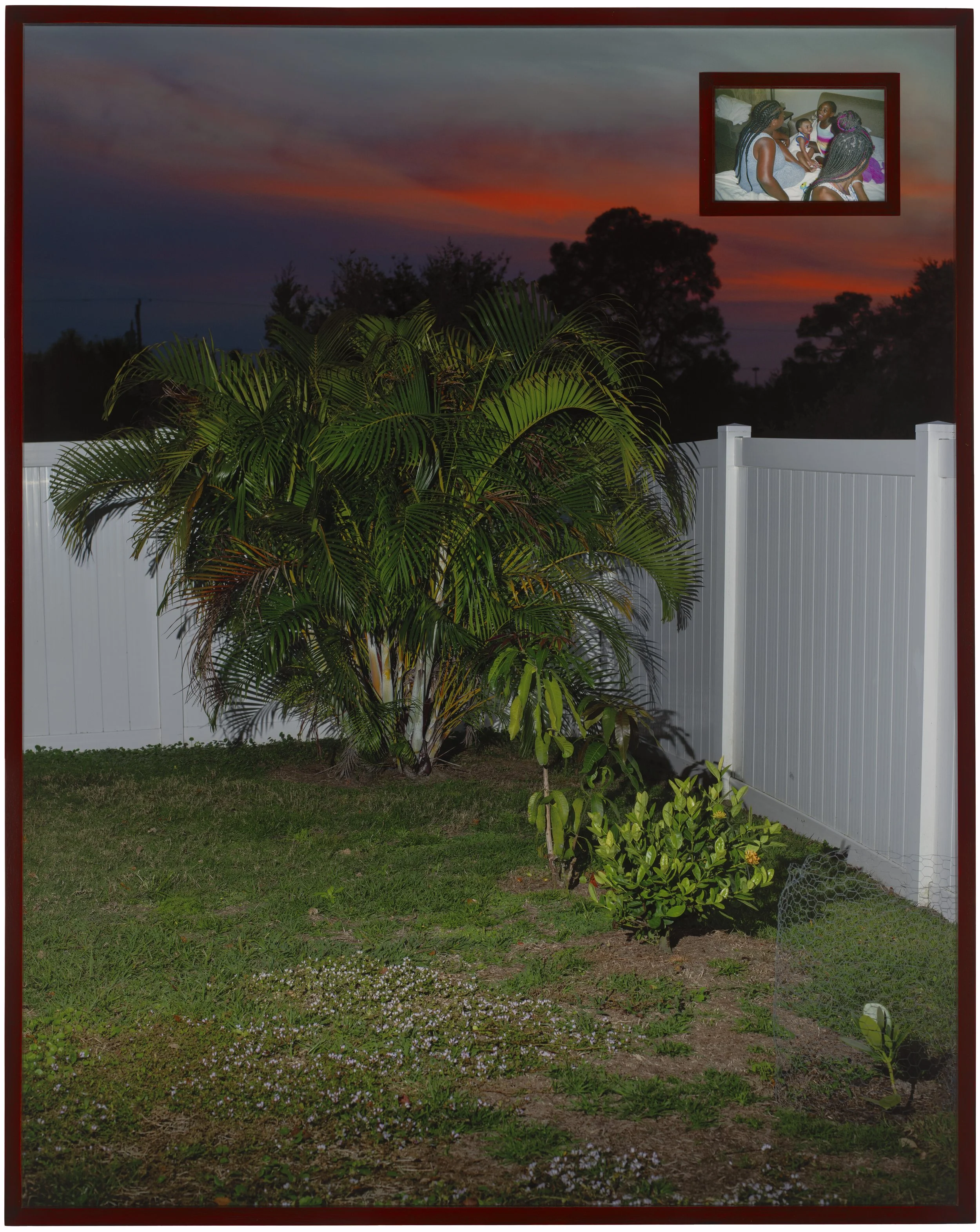
WIDLINE CADET "Sé Sou Ou Mwen Mété Espwa m #3 (I Put All My Hopes On You #3", 2021. Milwaukee Art Museum, Purchase, with funds from the Lucia K. Stern Trust. © Widline Cadet.