
By Katie Rex, May 10, 2026
In commercial galleries, fashion photography exhibitions occupy a peculiar and often difficult territory. While the original context is typically for mass market, photographs arrive in the gallery already demoted by some as being too manicured and pristine and bound to advertising to withstand the intimacy and integrity of fine art. Staley-Wise Gallery is no stranger to the challenges at hand, a space long dedicated to treating fashion photographers as revered and collectible artists. This go-around, they enter the territory with “Helmut Newton x Steven Klein: on the dark side”, a joint exhibition placing the two blockbuster image-makers in tandem and their promises of eroticism, humor, and darkness.
The premise is straightforward, identifying Newton and Klein’s shared themes of sex, power, and theatrical excess. At its best, the show offers tantalizing pleasures. The polished allure in Newton’s prints and the scale of Klein’s outrageous scenes offer an immediately legible meeting of two photographers, who understood the formidable power of women’s sexuality. It’s a rare chance to consider how different generations used the female body, luxury, and the implication of danger as visual material. There’s something undeniably satisfying about seeing these two photographers presented together without apology; coding the works together as their own language. The exhibition understands that these images were never merely about vapid tropes, but function as immersive storytelling.
Still, on the dark side is also weakened by the very simplicity of this framing. The exhibition text gestures toward shared inclinations, but it fails to fully establish why these two artists belong in conversation beyond superficial aesthetic overlap. The darkness promised by the title remains underdeveloped. In 2026, sensuality alone isn’t especially provocative. Eroticism doesn’t equate to menace or scandal in the ways it did when many of the images came to light. What feels more interesting now isn’t whether these photographs are shocking, but what kind of power is assigned to the subjects.
What can be seen most clearly between Newton and Klein, is two very different approaches to process. Newton’s photographs feel like effortless, private moments captured by the precision of a lurking voyeur. Inside a single scene, they conjure seduction and wit in the hierarchy of society. While his subjects conform to the rigid standards of Western beauty, they occupy their environment with unnerving vigor.
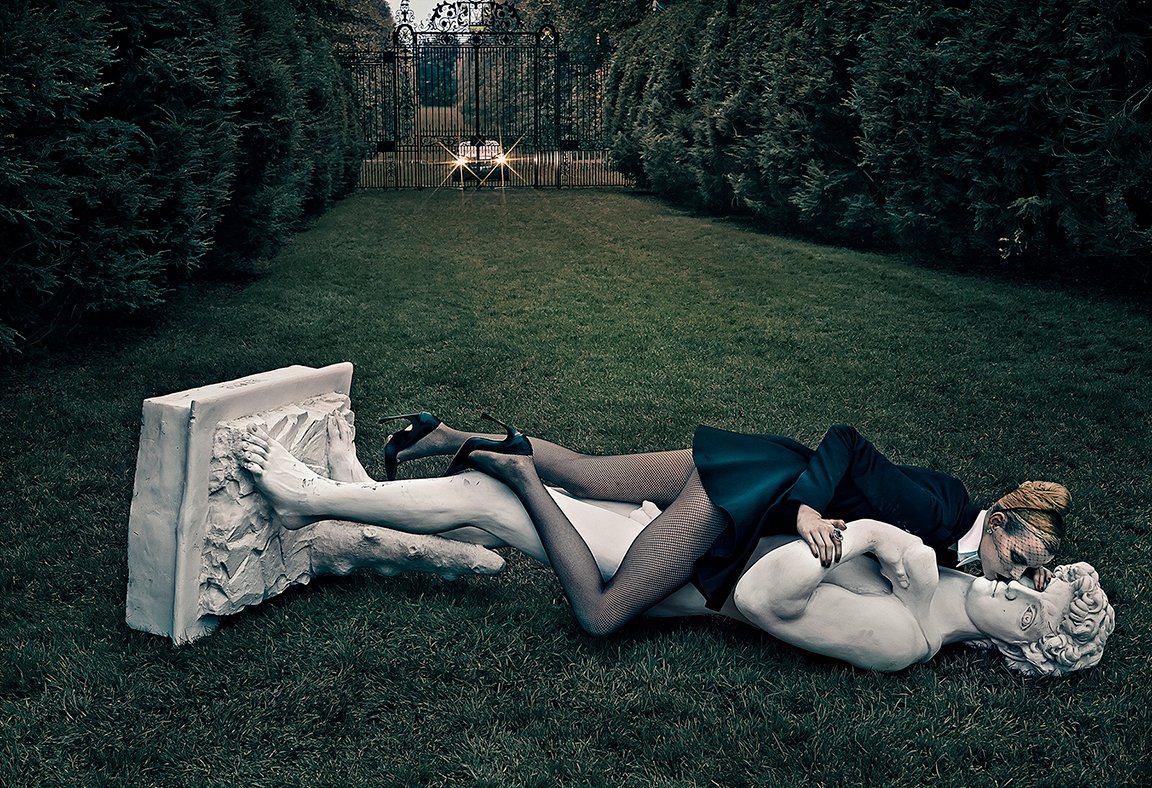
In contrast, Klein’s images are saturated with staged symbolism and absurdity. Where Newton creates drama through distance and constraint, Steven Klein is an architect of wild accumulation. The photos are a maximalist fever dream, with elaborate styling, synthetic color washes, and sculpted bodies that appear caught in a cold, glossy violence. He understands the absurdity and consequence of beauty and celebrity; pulling it together into one polished scene where people have been reassigned from their humanity to luxury objects.
The dualities become most visible in how each photographer handles their narrative. Newton implies entire worlds through natural habits: subtle glances and dominant positions. Alternatively, Klein fills the frame with choreographed disorder. Animals, medical devices, and aggressive styling develop into scenes that are constructed to the point of suffocation, which is, arguably, the point.
The curation doesn’t particularly benefit this imbalance. Newton’s “Rue AubriotYves Saint Laurent, French VOGUE, Paris” (1975) (the clearest audience anchor in the show) is set back, placed beyond the reception desk where it sheds its weight as a centerpiece. The location may be practical, but it emphasizes how much the exhibition depends on Newton’s historical authority to stabilize the pairing. In turn, a number of Klein’s pieces fight harder to escape their own period style. His images speak to their contemporary setting; when beauty became more synthetic, branded, and clinical. If Newton photographed power as something embodied, Klein photographs it as something that can be manufactured.
What on the dark side reveals most clearly is not a shared darkness, but a shared investment in the authoritative power of femininity and sexual prowess. The exhibition treats this overlap as enough to justify the pairing, when the more compelling point is their differences. Still, the imperfection of the pairing sharpens the viewers' understanding of fashion photography itself, breaking down the accusations of vapid glamour and highlighting its intricate complexities.
Katie Rex was the Arts and Lifestyle Editor of Document Journal. She is a founder of Bound.
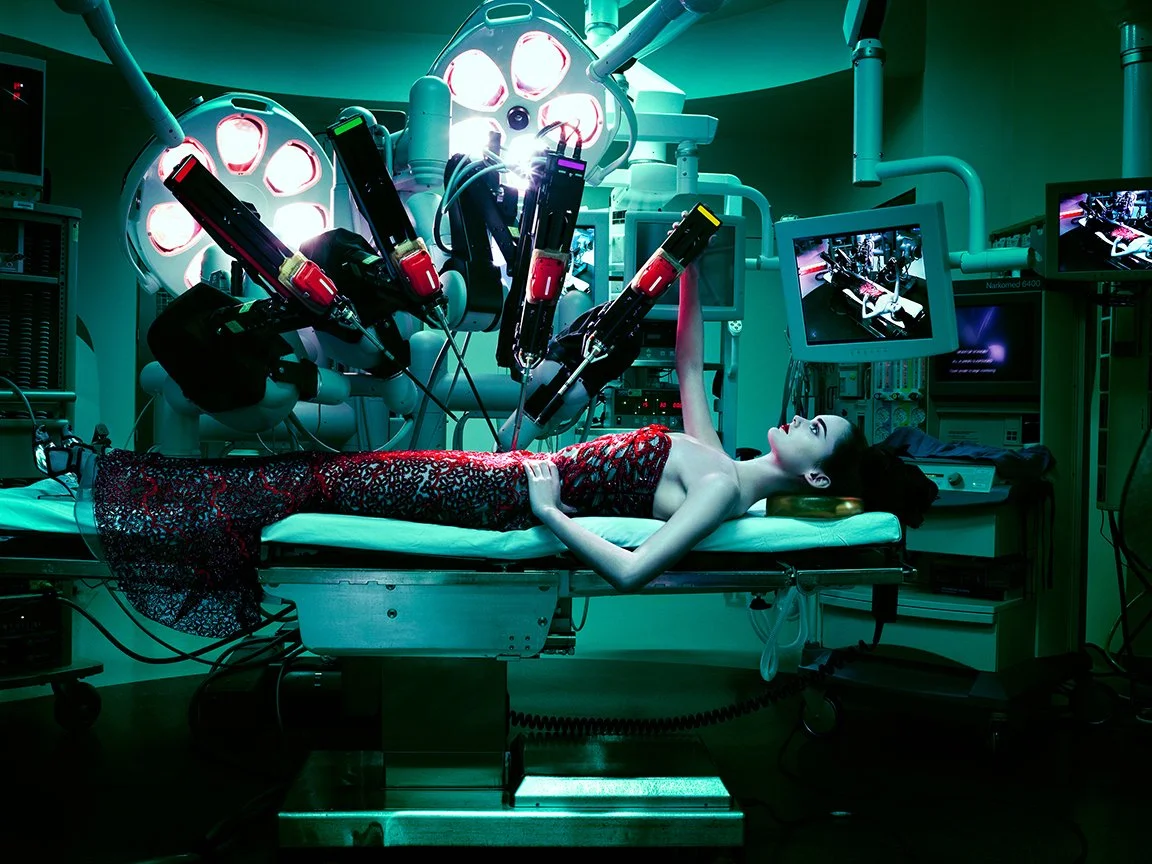
STEVEN KLEIN “Extraordinary Machines” 2005 © Steven Klein / Courtesy of Staley-Wise Gallery, New York
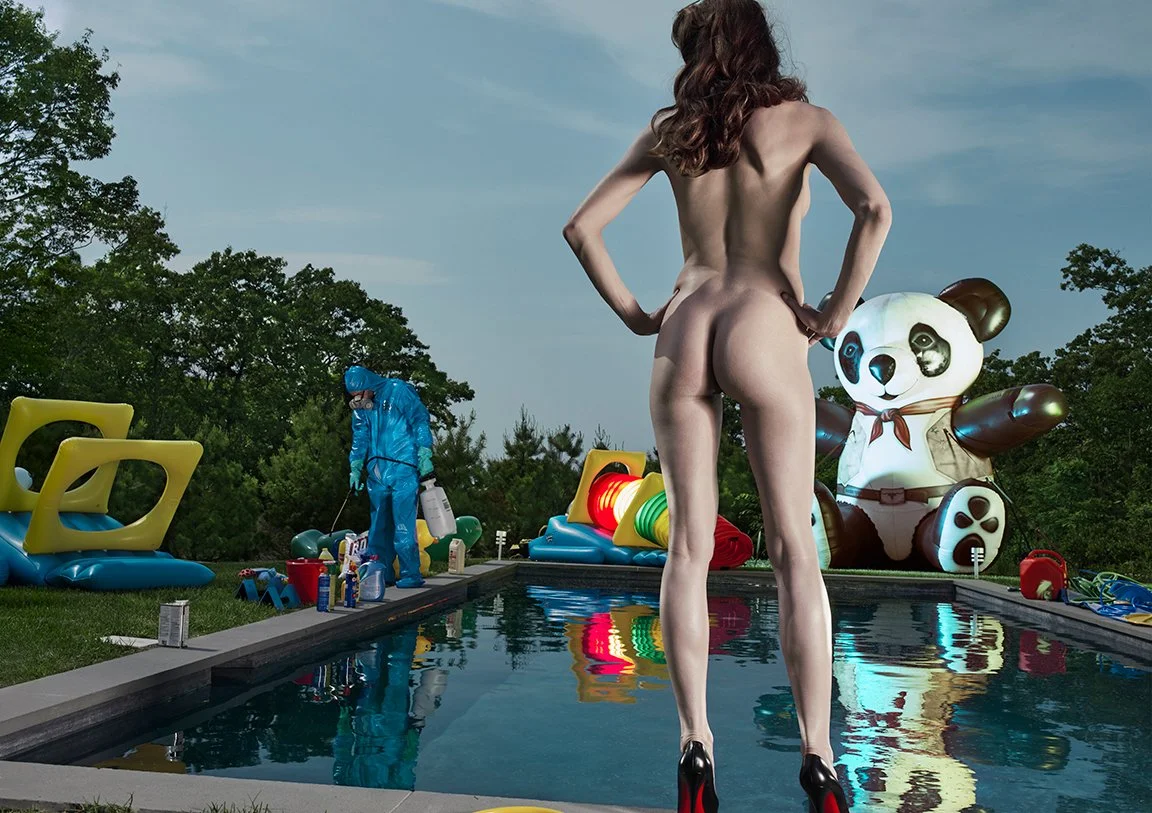
STEVEN KLEIN “Predator” 2007 © Steven Klein / Courtesy of Staley-Wise Gallery, New York
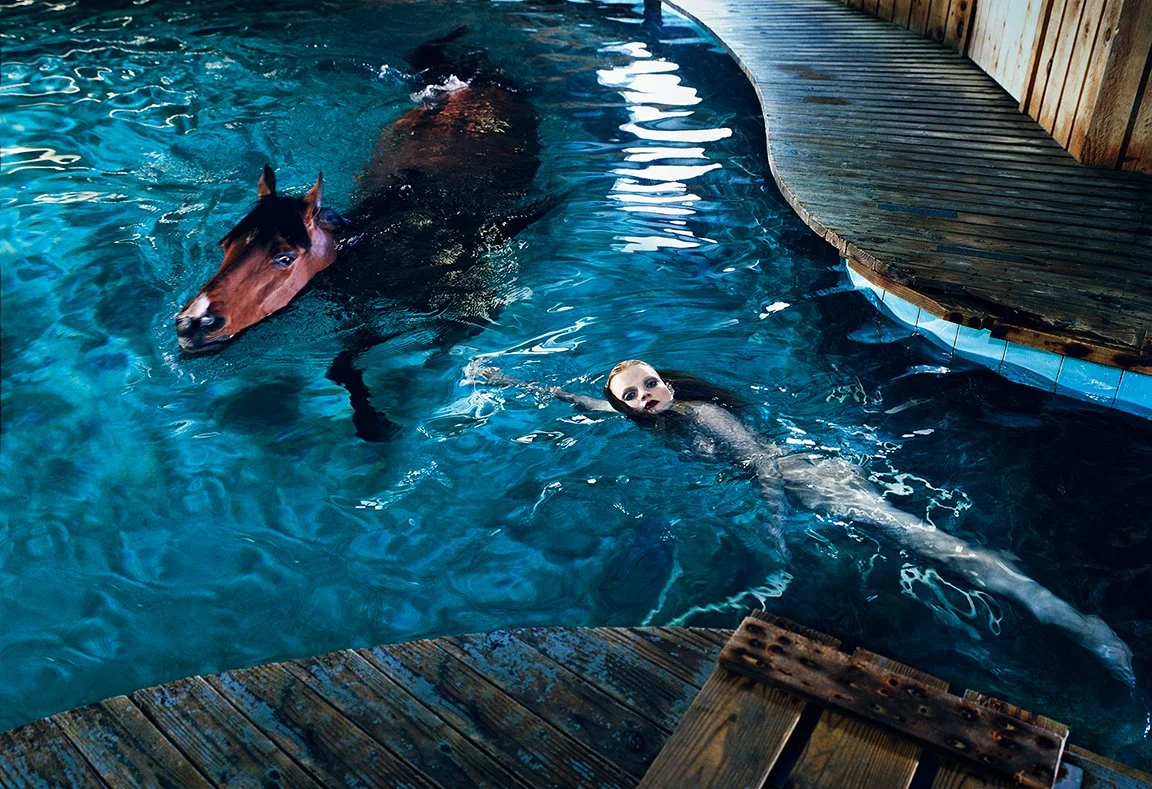
STEVEN KLEIN “The.Horse.Therapy Pool.” 2005 © Steven Klein / Courtesy of Staley-Wise Gallery, New York
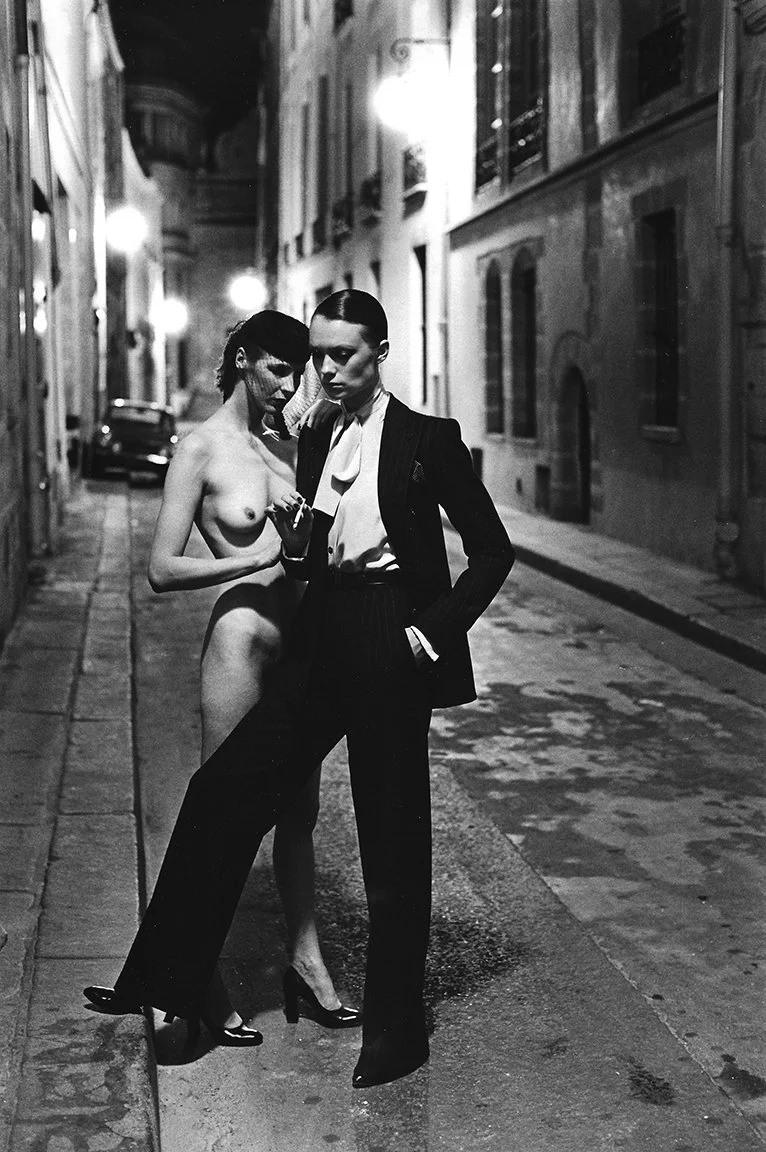
HELMUT NEWTON “Rue Aubriot, Yves Saint Laurent, French VOGUE, Paris” , 1975 © Helmut Newton Foundation / Trunk Archive / Courtesy of Staley-Wise Gallery, New York.
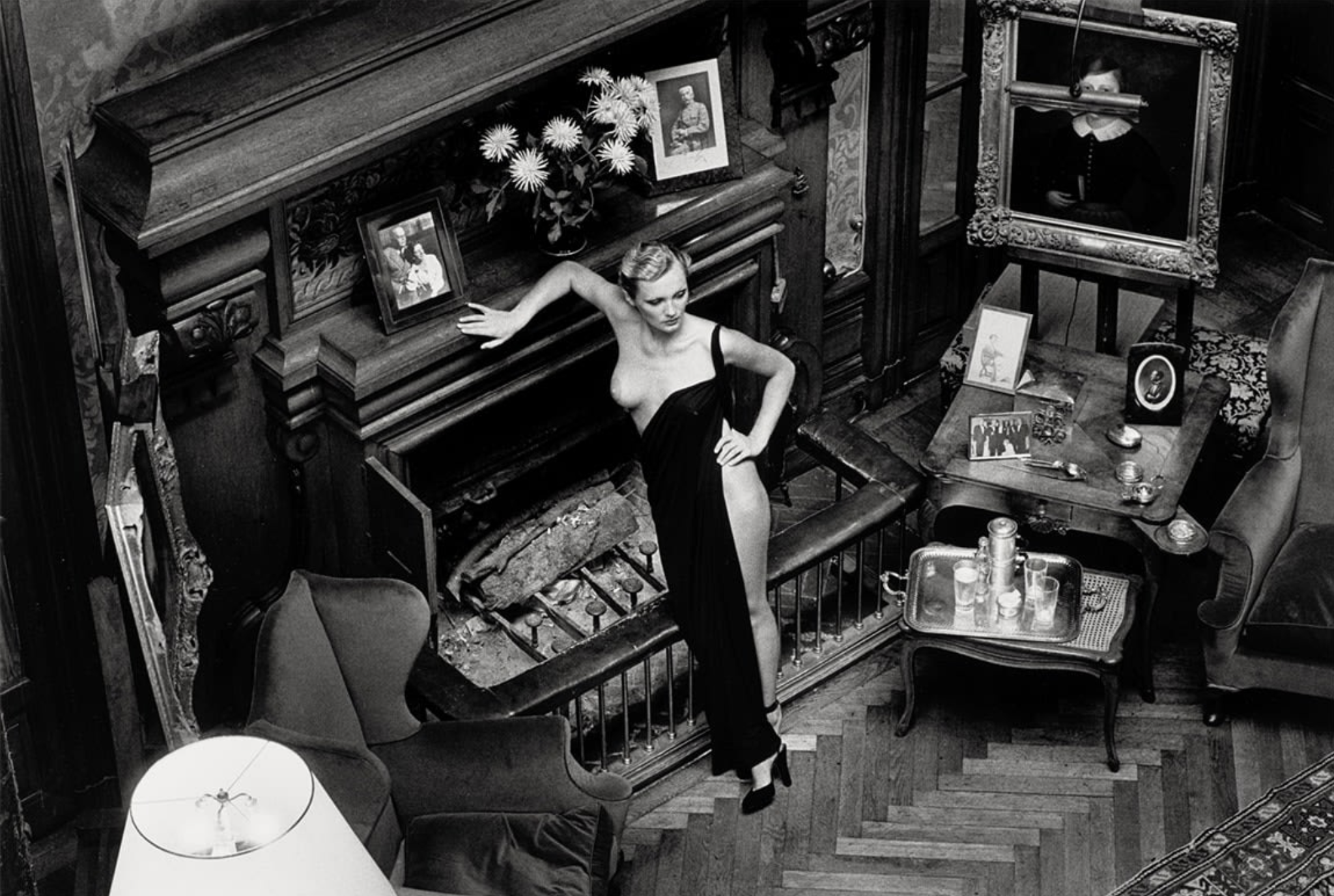
HELMUT NEWTON “Roselyne in Arcangues, France”, 1975 © Helmut Newton Foundation / Trunk Archive / Courtesy of Staley-Wise Gallery, New York