

By Yael Friedman, May 10, 2026
It’s near impossible to show images of New York from the 1970s and 1980s without making viewers feel like they are looking at artifacts of a very bygone era. And yet somehow, at the Bronx Documentary Center, an exhibit of legendary photographer Martha Cooper’s work, defies this archival impulse. In “Martha Cooper: Streetwise”over 100 photos, from her seminal images of graffiti and breakdancing to previously unseen images of drag racing, hang unframed and affixed with magnets to the walls of this cavernous former church in the South Bronx. They burst with the color, energy, movement and joy of Cooper’s subjects, upending the reflexive nostalgia and lament projected onto this period of the city’s past.
Cooper has gained a cult following for her documentation of graffiti and graffiti artists. As a photographer, she translated and elevated the images and worlds of these kids, whose tags on walls and trains were part of the daily life of every New Yorker, to whom, as individuals, they were otherwise mostly invisible. Her iconic 1984 book with fellow photographer Henry Chalfant, “Subway Art” (Thames and Hudson), which took years to find a publisher (to many, graffiti was only ever emblematic of urban blight) was quickly disseminated across the globe, passing through the hands of countless underground artists marking and playing in their own cities. The book served (and continues to serve) as both a manual and source of inspiration, helping usher a still vital global movement of street art. It is hard to imagine Banksy without Cooper, and many commissioned street murals, including by Shepherd Fairey, draw from her photos and pay tribute. And yet, while she has had dozens of shows around the world and has a dedicated Martha Cooper library at the Urban Nation Museum in Berlin, this is somehow her first retrospective in New York. The Bronx setting, informal display, and broad range of photos serve her body of work and her subjects in a way that a more formal gallery or museum show would not.
In 1977, as the first female staff photographer at Rupert Murdoch’s New York Post, Cooper spent her days driving her small yellow Honda the length and breadth of the city. In addition to assignments, her editor, Susan Welchman, tasked her with finding feature photos called “weather shots.” To find these and finish her roll of film each day, Cooper began driving through the Lower East Side, drawn to scenes of children at play amid this crumbling urban landscape – building clubhouses, making go-carts, tending to their pigeon coops. While many eyes scanned these late 70s streets and saw only the tears in the urban fabric – empty lots filled with rubble and debris, broken fences that now enclosed nothing, old mattresses and other discarded remains of abandoned and burned out homes - Cooper saw how the kids in these neighborhoods found their raw material for play and improvisation, forging entire worlds for themselves while the rest of the city, and the adults around them, were otherwise distracted. As Susan Welchman describes it, “As an anthropologist, she loved taking photos of kids being busy – she herself was always very independent and industrious as a child, and she has always loved and admired little kids that are as well.”
One wall is dedicated to photos from her book “Street Play” from these years in the late 70s. They include arresting black and white images of kids not only “making do” with their environment at the time but absolutely commandeering it. In one photo, a young boy’s arms are wrapped around a fire hydrant to “cup” it and control the powerful stream, the rest of his small body jutting out behind the hydrant, mirroring the two huge streams of water bursting out before him. The most poignant photograph, of children climbing a fence with an empty lot and burned-out buildings behind them--the hallmarks of late 70s NYC -- most succinctly defies the visual shorthand for that time. Cooper sees with a searing honesty, but it is not a bleak one; she sees the joy as naturally foregrounded, it is there despite the other elements. As a trained ethnographer, acutely attuned to the worlds she walks through, Cooper was committed to capturing the context in which these children had to be resourceful, but they are never merely metaphors in a social commentary about this urban landscape.
Cooper’s keen sense and curiosity about children’s ability to be inventive in this environment led her to explore the city’s most visually ubiquitous youth culture – graffiti. Most New Yorkers reviled it at the time, and succeeding mayors made a great show of going to war with it. When the producers of the 1974 film “The Taking of Pelham 1-2-3” wanted to shoot their movie in the New York City subway, the MTA at first refused to allow it. After some prodding from the mayor’s office, the MTA relented but only under the condition that the subways were not depicted with graffiti on them. And yet Cooper found and celebrated this incredible universe, of young (mostly) men, who redefined the landscape of their city, and ultimately many others.
Several of Cooper’s images of the artist Dondi’s work are included in the show, as is her portrait of him in 1980, painting a train in the New Lots yard, where she once spent eight hours watching him work. Many of the artists she worked with are featured in these images, including Wild Style Crew, Frosty Freeze, Futura 2000, and so many others. More recent pictures, of female writers, are another reason this show is not just a historical record of a painted over and sanitized urban past. Even if they are of street artists abroad, the continuity, through this kaleidoscopic worldwide movement, makes the older images feel as vital as when they first appeared.
The photographer Helen Levitt famously photographed children at play in Depression-era New York. Levitt also elevated them beyond pure social commentary, but the children in her images still feel like they are at play inside an otherwise adult world, their innovations fantastical and temporary. Cooper’s kids, in contrast, create interventions in the adult world, and forge their own lasting communities, whether or not the adults see them. Geoff Dyer once asked, “Will anyone ever capture childhood as Helen Levitt did?” Martha Cooper’s body of work is a singular vision of the possibilities of childhood, and how the creativity of kids can shape the rest of the world beyond their own. It is a testament to her work and this curation that this is the exuberant ethos coursing through the show.
Yael Friedman lives in New York, and her reviews and essays have appeared in the Los Angeles Review of Books, The Economist, The Forward, Haaretz and The Daily Beast, among other publications.
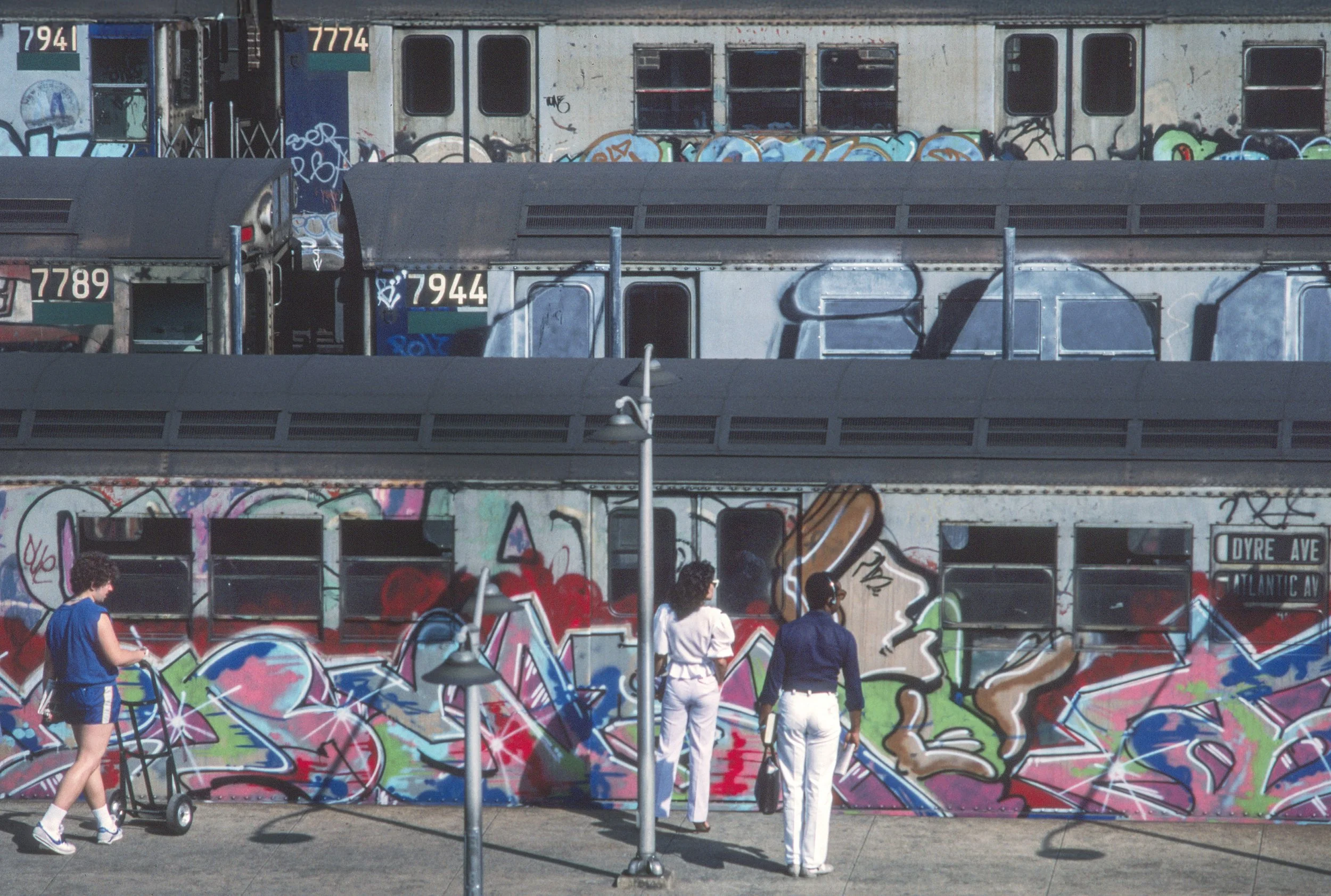
MARTHA COOPER "180th Street Subway platform; Bronx, 1982". © Martha Cooper.
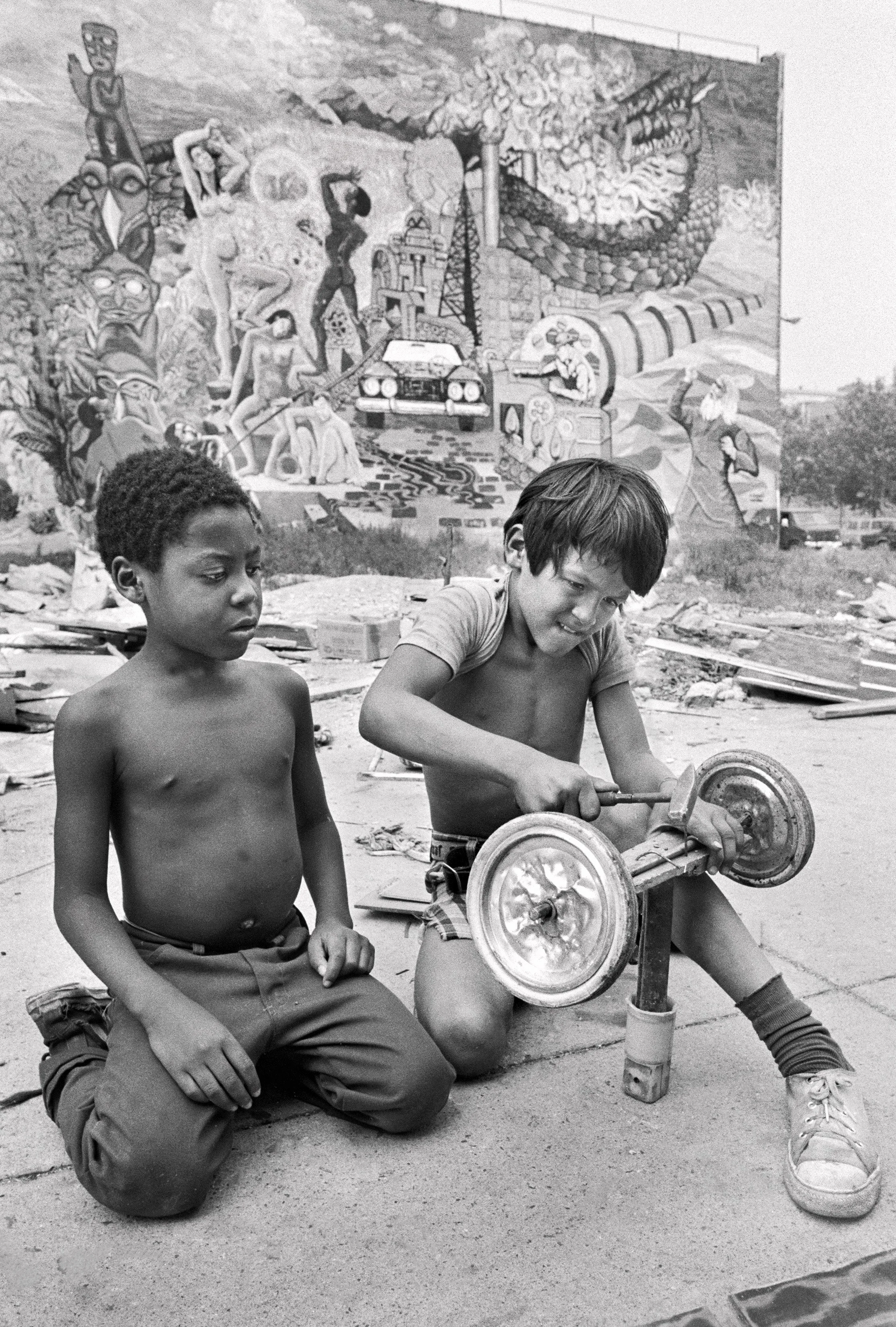
MARTHA COOPER "Boys constructing a go -cart from found materials, Lower East Side, NYC 1978" © Martha Cooper.

MARTHA COOPER "Boys practicing breaking moves on the sidewalk, Bronx 1982" © Martha Cooper.
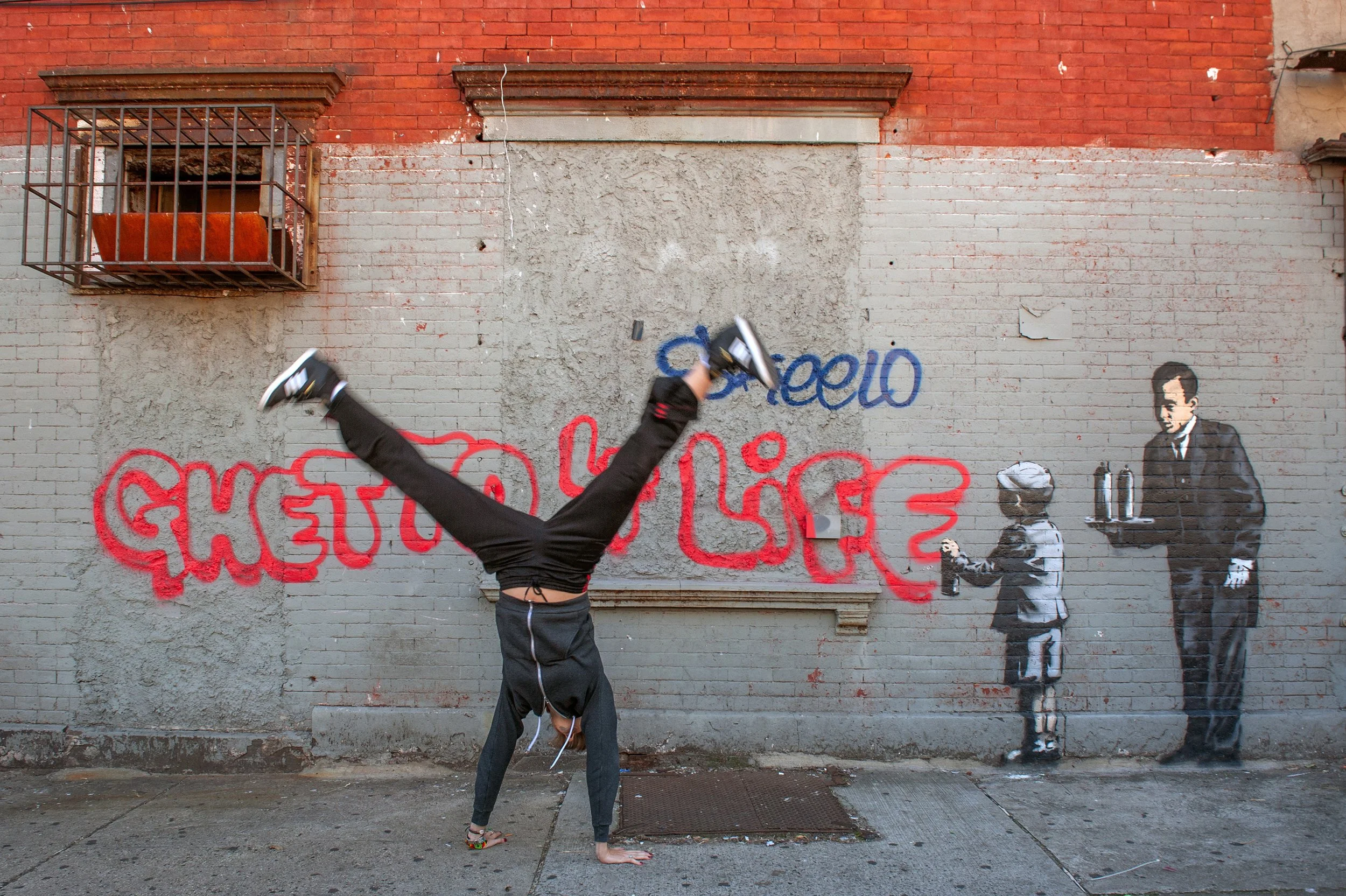
MARTHA COOPER "Ghetto For Life; by Banksy" 2013 © Martha Cooper.
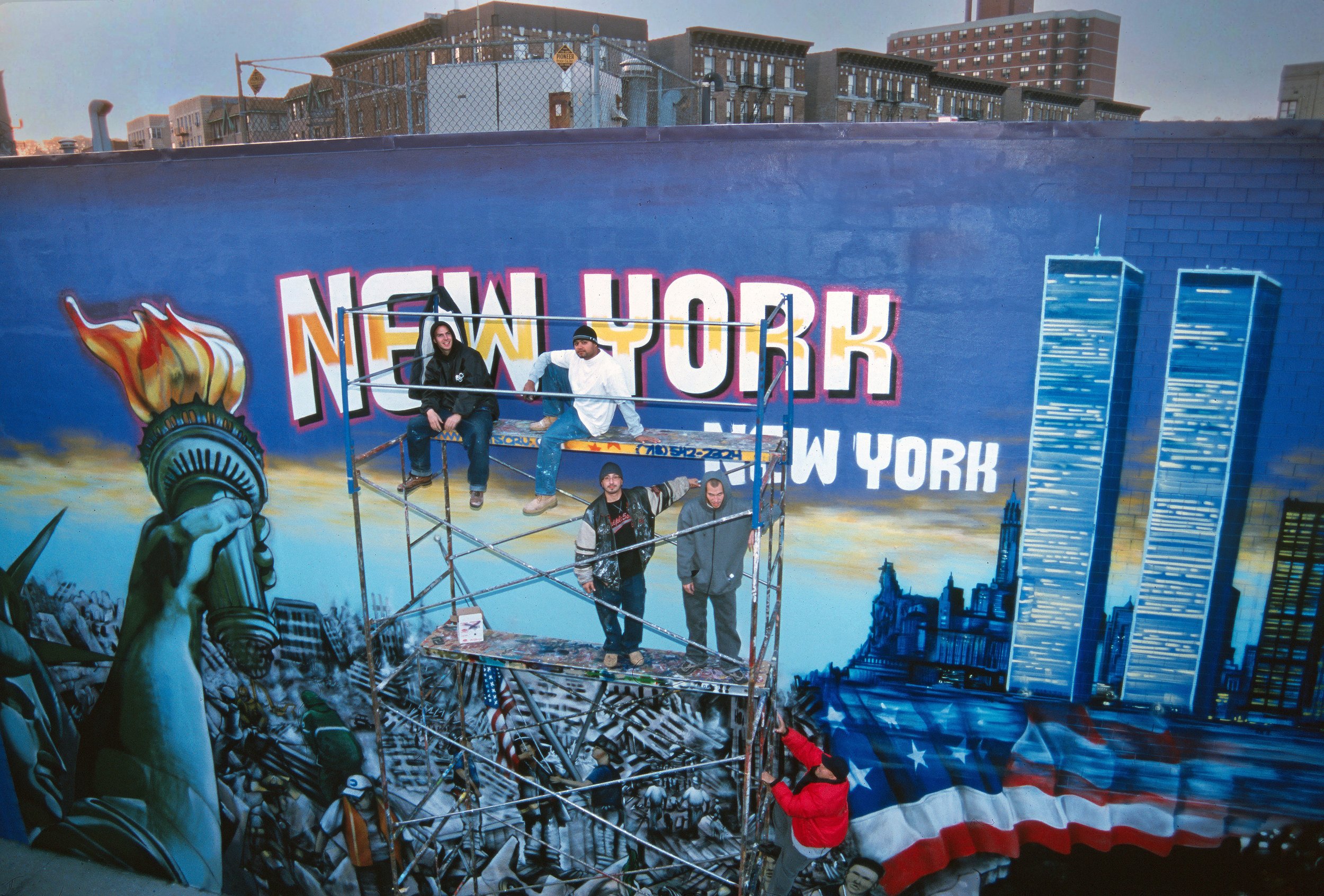
MARTHA COOPER "TATS Cru with their World Trade Center Mural seen from 207th Street #1 subway line; 2002." © Martha Cooper.