
By Zach Ritter June 10, 2026
When August Sander formalized the concept of “People of the 20th Century” in the mid-1920s, he had already spent several decades making pictures which would define some essential sections of the vast, inexhaustible, and ultimately unfinished project that occupied him for nearly half of his life. Consisting almost entirely of portraits made of German society throughout the first half of the century, the project developed organically, almost as though the work was in need of a structure to organize and support it. Though the unifying idea came later, even the earliest portraits Sander made in the1890s display the same directness and clarity that would inform those that followed nearly half a century later, suggesting that in his work style was less of a developed choice than a fundamental disposition or orientation towards the world. Indeed, there is a palpable sense when looking at Sander’s portraits that we are engaging not so much with images or prints, or even the medium itself, as we are with an entire philosophy, a ‘weltanschauung’, that might still have something to teach us about the nature of social reality.
One of the great merits of August Sander’s “People of the 20th Century”, currently on view at the Yale University Art Gallery and organized by Judy Ditner, the Richard Benson Curator of Photography and Digital Media, is that it allows us to take stock of Sander’s landmark project with a level of thoroughness and comprehension only previously available through publication. The exhibition brings together over 600 prints and comprises the most comprehensive presentation of the work to date. With the sheer scale of Sander’s totalizing ambition to document the whole of German society on full display, the exhibition renews his original line of inquiry into whether the positions we hold in society end up defining who we are more than our own self-perceptions. What the work reveals instead is that the social character of who we are is shaped by us just as it molds us in turn.
The history of “People of the 20th Century” is one defined by interruption, censorship, and misfortune just as much as it is by Sander’s perseverance and steadfast commitment in the face of those circumstances. Over the course of the first four and half decades of the century, Sander produced tens of thousands of negatives for the project, creating portraits by solicitation and commission, in his studio and at the homes, farms, and places of work of his sitters. In 1936 the Nazi regime, disapproving of Sander’s portraits of the socially marginal—the unemployed, “gypsies,” those with disabilities—destroyed an early version of his work. Despite this, he continued to photograph throughout World War II. Shortly after the war ended in 1946, the majority of Sanders’ glass-plate negatives were destroyed in a house fire, with the surviving negatives left to be the primary yet partial guide by which this seemingly limitless project would be judged.
The relationship between individual and system, between personality and type, imbues the best of Sander’s pictures with the electric charge of embodied presence. The exhibition retains the original organizational framework that Sander created, with the “Portfolio of Archetypes”—which situates country folk as archetypes for the whole of German society—followed by seven groups of pictures that are subdivided into more specific portfolios: “The Farmer,” “The Skilled Tradesman,” “The Woman,” “Classes and Professions,” “The Artists,” “The City,” and “The Last People.” With the exception of the last one, each group is subdivided into numerous portfolios, from as many as twelve in the case of “Classes and Professions,” to as few as five in that of “The Skilled Tradesman” and “The Woman.” Though they provide a measure of specificity to what are otherwise broad groupings, the portfolios ultimately become vehicles of generalization for the way they describe the class, occupation, or social position of a given subject. Though the system of classification that Sander created functions as a tool of organization, it also reflects the fluid and shifting nature of German society and of Sander’s own perception of it, as a number of the same portraits appear in multiple portfolios and with different titles, revealing the project and its structure as one that mirrored the very society Sander was documenting, one caught up in the long transition into modernity.
Enmeshed in the Cologne Progressive and New Objectivity art movements, Sander’s modernism reflected his times and was distilled through a belief in what he termed “absolute photography,” or, using the camera to record the world as it plainly appeared to be. Thinking of the camera as a tool of science almost as much as an instrument of art, Sander sought to suppress stylistic embellishment, those artful pictorial elements that—in this line of thinking—distracted from the subject. What this approach results in are pictures that, in their simplicity, aim to convince us of their objectivity, which they largely succeed in doing because what we gravitate toward is the subject of the picture rather than the image itself. The cumulative effect of the work and the exhibition as a whole, however, is to gradually show just how many different ways Sander’s decision making, from camera position and composition, to lighting, framing and depth of field, creates the very conditions that allow us to respond to his subjects.
The task before any engaged viewer of the work is immense. Unfolding across seven walls, each group and its attendant portfolios are arranged in descending order, with a space between prints to signal the transition from one portfolio to another while also providing a much-needed moment of pause. The captions are listed at the baseboard of each wall, such that one is pulled into a relentless, back and forth routine of peering into the world of a given portrait and then darting your eyes downward to find the associated text. Rather than merely supplemental, the captions were essential for Sander: they establish the subject’s position within his typology while also, and very often, communicating their exact profession, skill, or place within society that the portrait itself does not always make clear. Here we return to that constant source of friction in the work between personal identity and social convention, or between essence and representation.
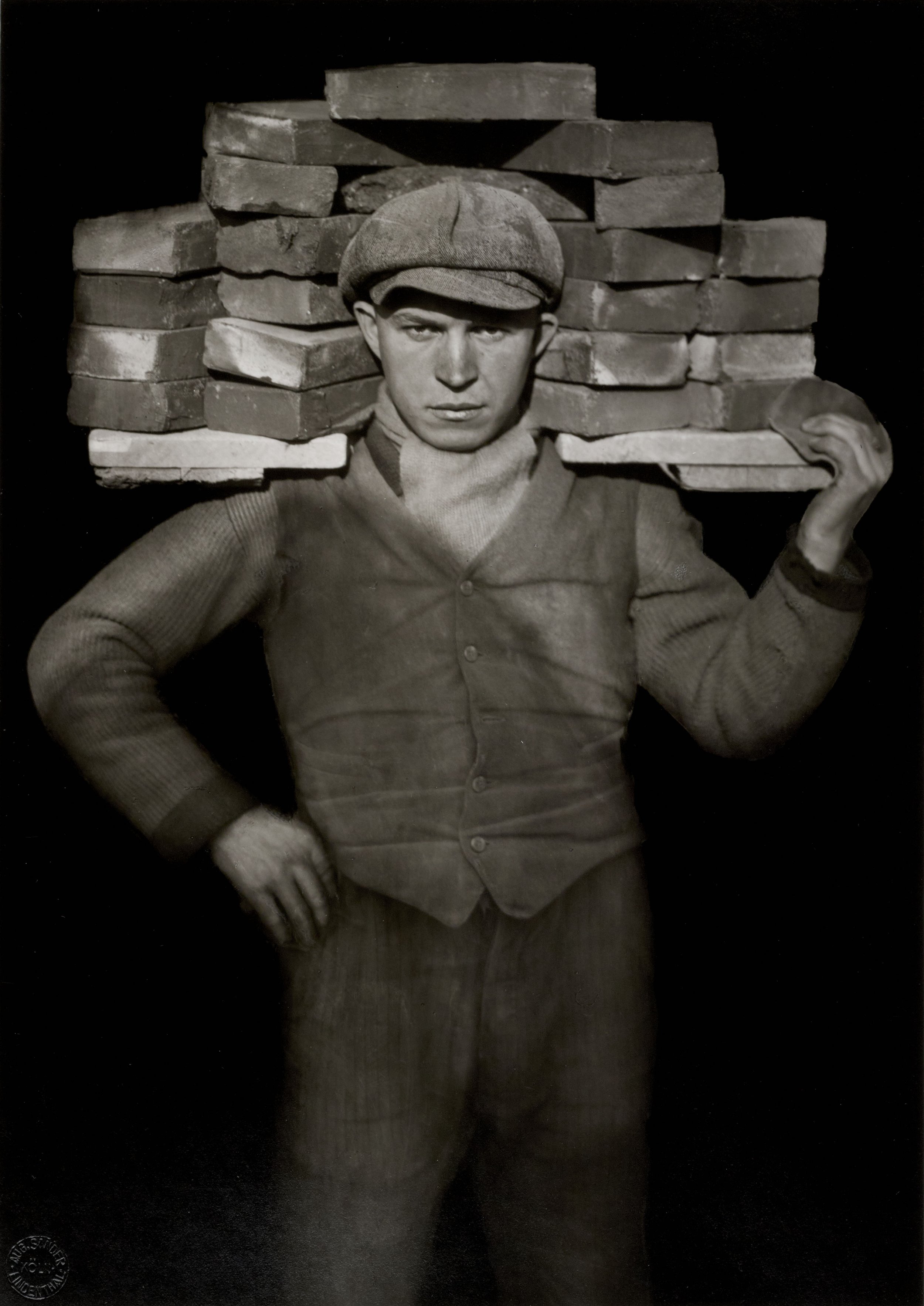
In many of the portraits the subject’s professional identity, their trade or occupation, seems to lay atop the surface of who they are and how Sander has portrayed them. The countless farmers with bodies and faces weathered by time and the unrelenting cycle of their labor; the bricklayer or house painter surrounded by the objects and tools of their trade; the mailman, judges and civil servants who not only wear their respective uniforms, but who somehow seem to have been molded by the nature of their work, its duties and responsibilities. The subjects who seem to most easily and effortlessly express their trade are often those who have been doing manual labor, whereas many of the cultural or civic workers could conceivably be swapped into other portfolios, with Sander’s captions our only guide to their social identity. Nonetheless, whether an industrialist or an architect, a butcher, tailor, or philosopher, Sander’s portraits manage to preserve some measure of their specificity and allows them to be legible as an individual subject rather than be reducible to mere social convention. It is in the great, endearing, and ultimately relatable lexicon of physical expression—of hands folded, mouths twisted and lips pursed, of shoulders squared and backs arched, of awkward smiles and self-confident glances, of uncertain postures and affected gestures—that these portraits alert us to the psychological presence beneath the surface of each image. To see the subject within or through the system, the individual past his or her typological description, all while holding onto both realities, is what Sander asks of us and what the exhibition allows us to do.
Zach Ritter is a writer based in Brooklyn, New York. His writing has appeared in American Suburb X, the Brooklyn Rail, Hyperallergic, and Photograph Magazine, among other publications.

August Sander, Kontoristin (Office Worker), ca. 1928, printed ca. 1990–2000 by Gerd Sander. Gelatin silver print. Yale University Art Gallery, Société Anonyme Acquisition Fund and Katharine Ordway Fund
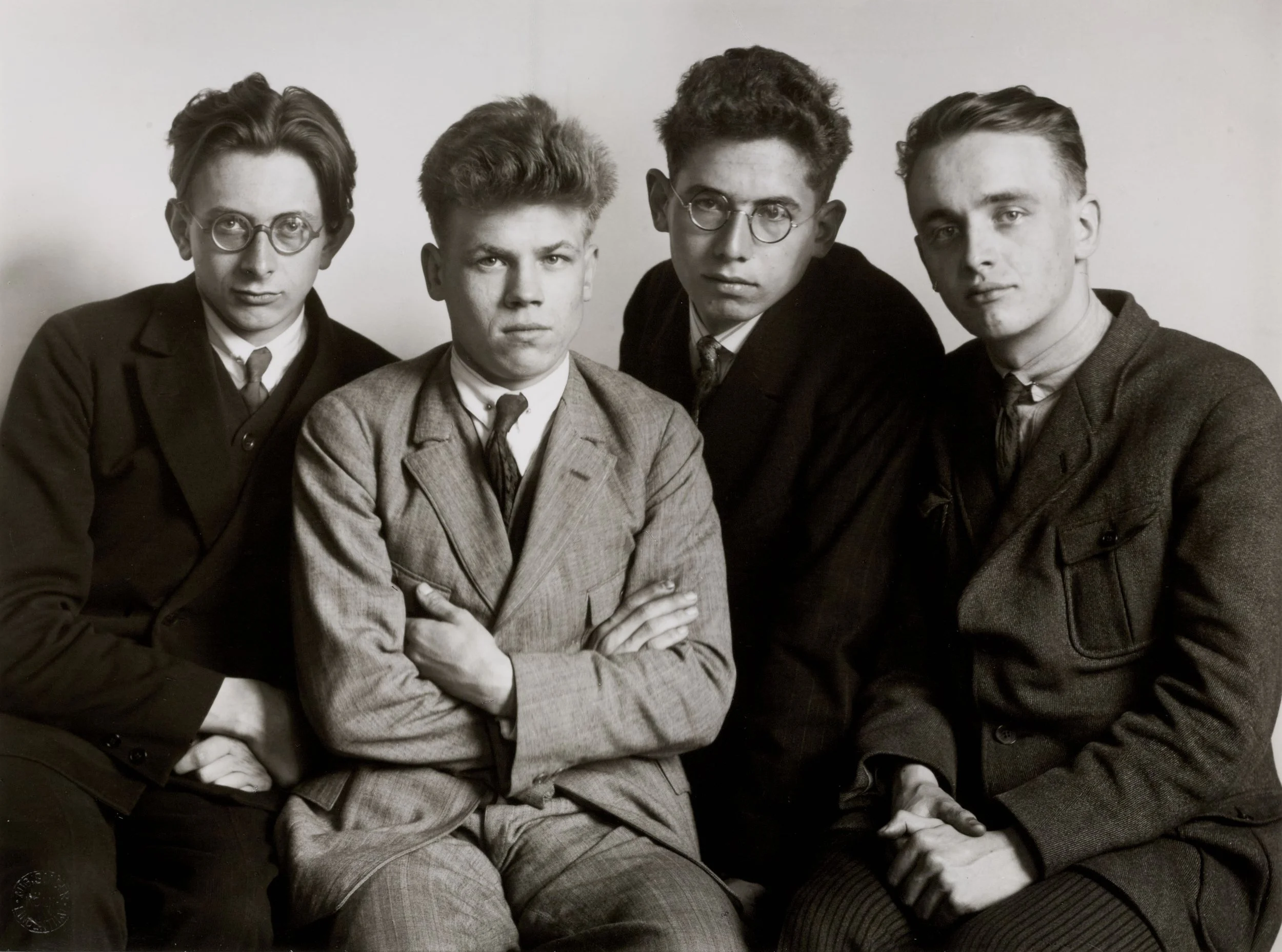
August Sander, Werkstudenten (Working Students), 1926, printed ca. 1990–2000 by Gerd Sander. Gelatin silver print. Yale University Art Gallery, Société Anonyme Acquisition Fund and Katharine Ordway Fund
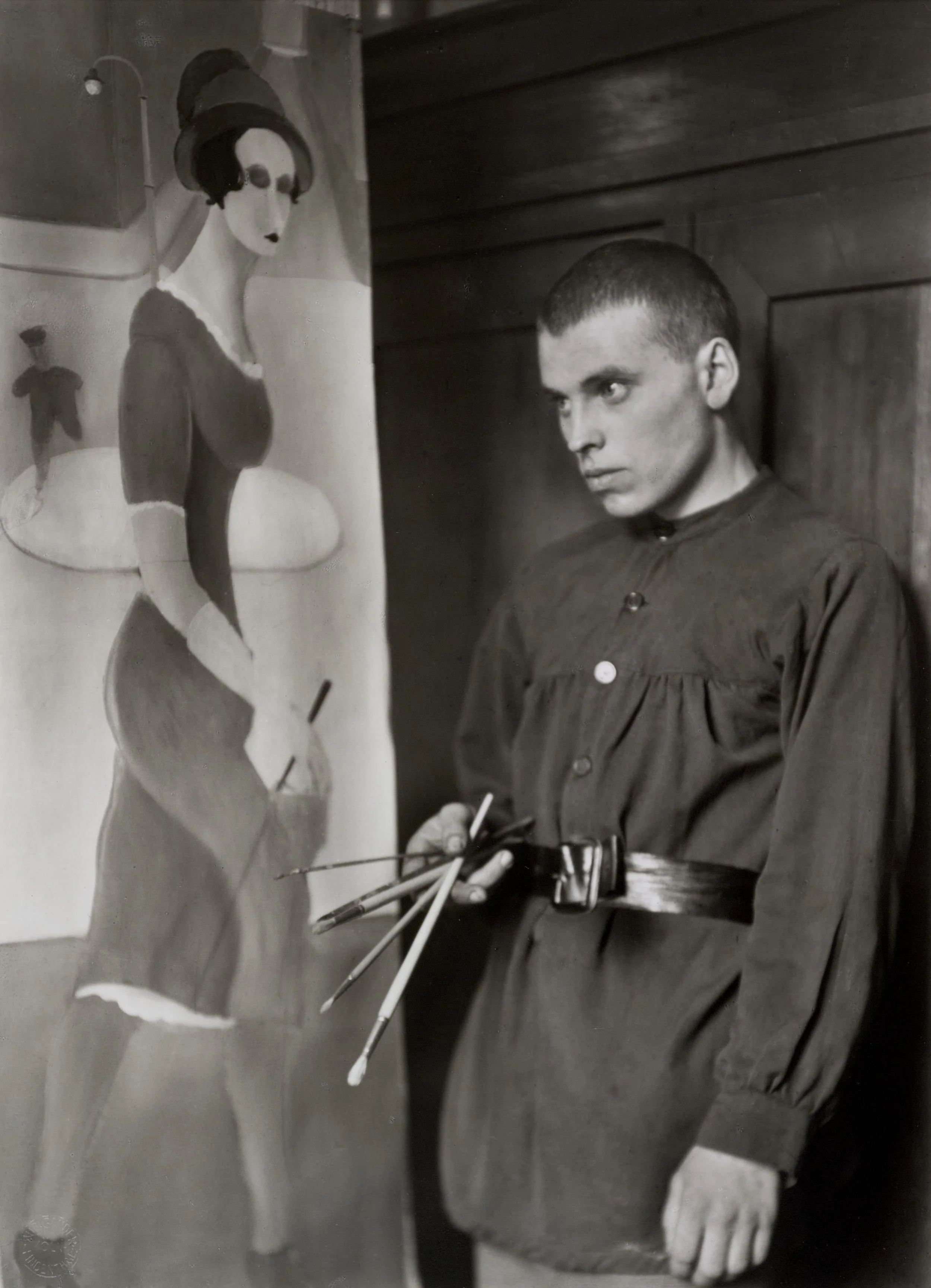
August Sander, Maler (Painter) [Gottfried Brockmann], 1924, printed ca. 1990–2000 by Gerd Sander. Gelatin silver print. Yale University Art Gallery, Société Anonyme Acquisition Fund and Katharine Ordway Fund
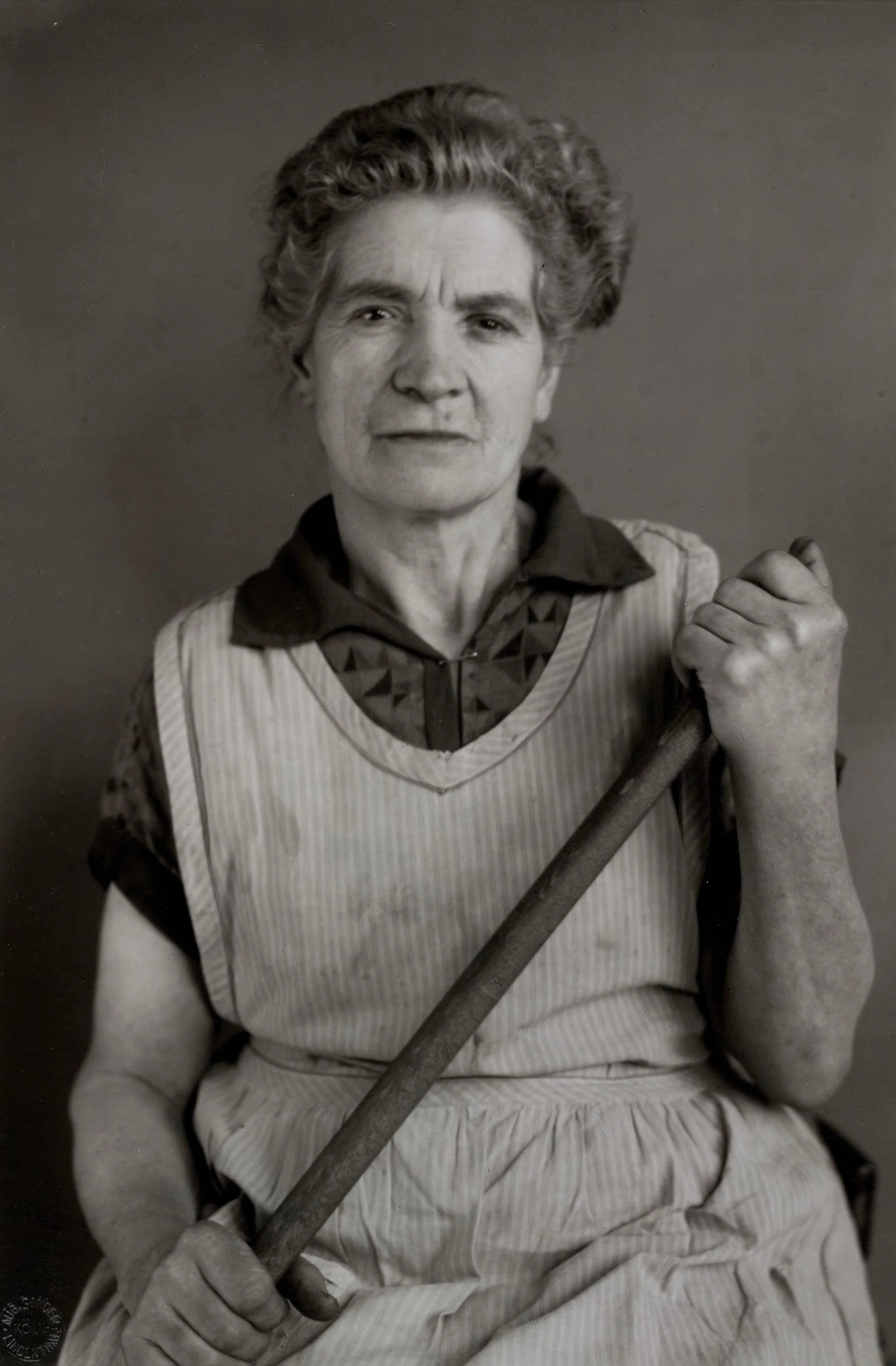
August Sander, Putzfrau (Cleaning Woman), 1928, printed ca. 1990–2000 by Gerd Sander. Gelatin silver print. Yale University Art Gallery, Société Anonyme Acquisition Fund and Katharine Ordway Fund
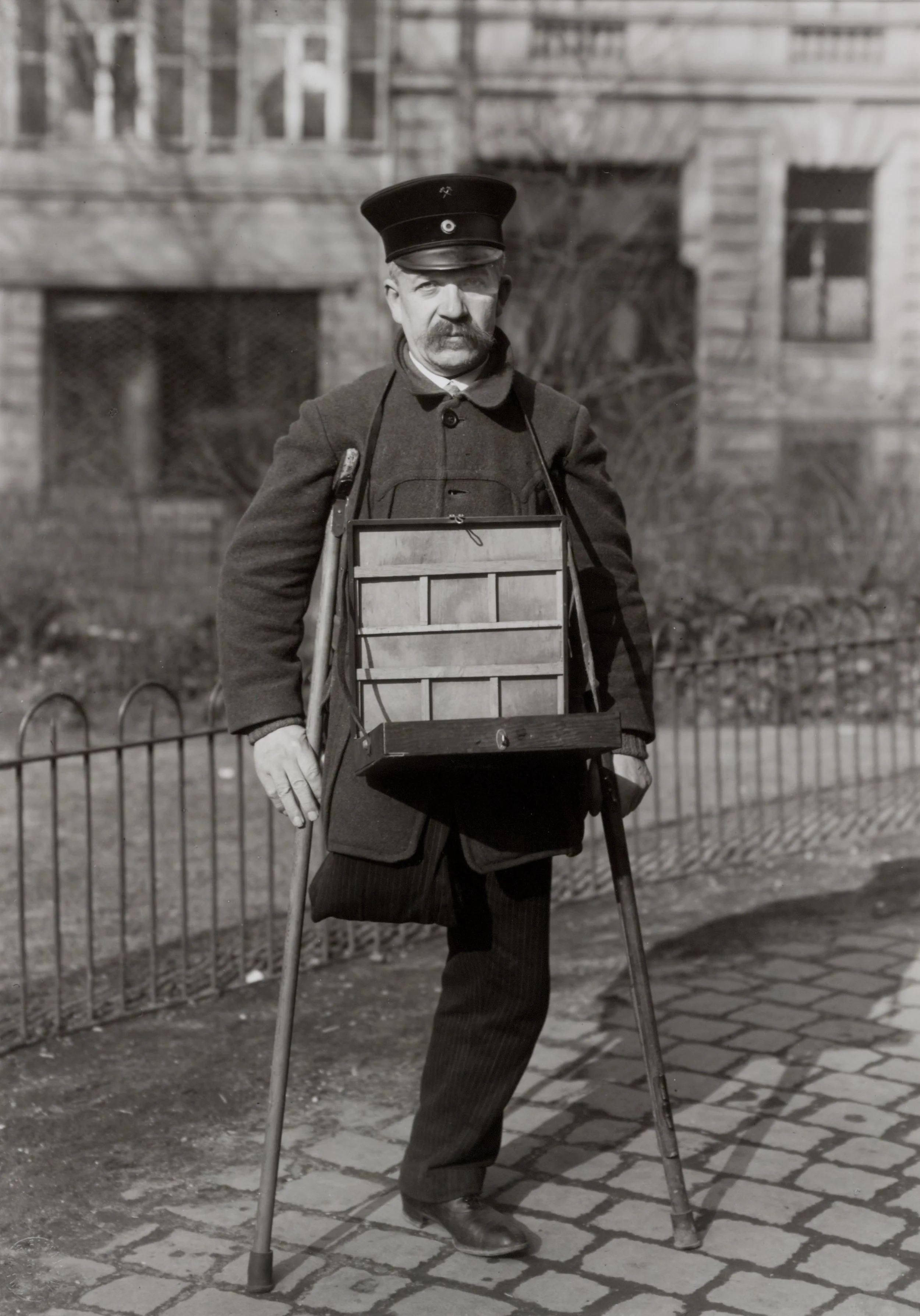
August Sander, Berginvalide (Disabled Miner), 1927–28, printed 1990s by Gerd Sander. Gelatin silver print. Yale University Art Gallery, Société Anonyme Acquisition Fund and Katharine Ordway Fund