
By Ted Barrow, June 10, 2026
In a fun talk given at the Chinati Foundation in 2001, Dave Hickey (via Leo Steinberg) offered one of the sharpest descriptions I’ve encountered of the relationship between light, time, and technology in Renaissance and Baroque painting. Describing the “ahistorical light” of Raphael — built up through thin translucent glazing and presenting saints and Madonnas in “source less, ambient, shadowless illumination” — Hickey argued that High Renaissance painting created “a condition in which the light and the light source are one.” This timeless glow was then contrasted with the time-bound, raking streaks and angled shadows cast by the very real light sources (a window, a candle, a flash of lightning) in Baroque painting. High Renaissance light shines in a timeless state, Hickey concludes, while Baroque light fixes fleeting situations in a flash. “The angle of the shadows, the source light, all reflect the ongoing flux of historical time.”
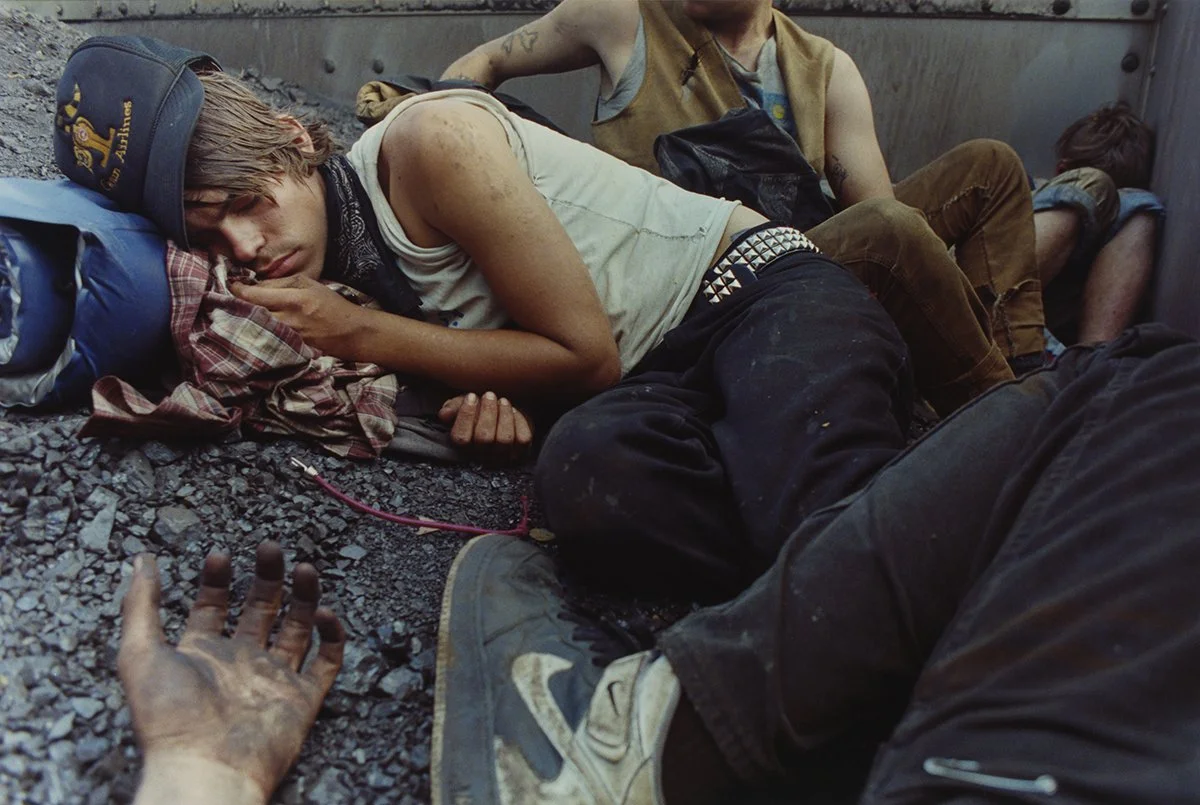
Religious subject matter aside, the distinction Hickey describes offers a revelatory approach to the two bodies of Mike Brodie’s work currently on display at Casemore Gallery in San Francisco: the eternal, source-less light of his crusty youth as a train-hopping hobo, seen in his first book “A Period of Juvenile Prosperity” (2013) and the streaking, time-based light of his later work in “Failing” (2025). The former is freighted (couldn’t help it) with the dirt, desperation, and gorgeous delirium of Edenic youthful abandon. The latter is less young exodus than survival after cataclysm.
Notice the angled horizon of #5060 (2025) from “Juvenile Prosperity,” a scene of two gorgeous and bedraggled train riders, one named Soup, dipping down from the upper left towards the right. They crouch comfortably within their own peaceable kingdom that careens through golden fields beyond a river. Despite the diagonals, everything is balanced, the warm light washes across the image from the left, setting them and the grain and the train aglow. This fleeting of serenity is belied by the fact that there really is no comfortable place for them to sit, and Brodie’s perch is equally precarious, shot as it is from another train car. Yet everyone is caught in a moment of stillness as the world thunders past. “FREE” reads across the dirty fingers of the kid closest to Brodie and, by proxy, us, as a brazen declaration ofescape.
Though shot with the same Nikon F3 as the earlier series, the second room in Casemore is darker, more controlled, more austere. The landscape is fixed, the horizons high and often level, but the view is askew, as if Brodie doesn’t quite fit in a truck and not a train. The ahistorical light of the past haunts these timebound scenes like smog: we see a shot of the road stretching towards snowy peaks as a hawk glides by in “Winnemucca, Nevada” (2012-2023). The hood and windshield of the truck, from which this was shot, frame the landscape like the confines of a cell. The bird is free, and Brodie trucks in earthly time.
Nearby, we see the tailgate of the same truck, a Dodge, on fire (Burning Tailgate, 2012-2023) with a splintered plank jutting out towards us in a sharp diagonal worthy of Caravaggio’s earthly theatrics. In the center of the gallery, a porcelain nativity scene rests in a dirty Styrofoam box covered in years of grime. On the wall, a large print (Nativity 2012-2023) hangs that displays a man in white, covered in sweat, holding the very same nativity scene in his sore-ridden arms. Brodie came across this scavenger dumpster-diving and ended up with the photo and the nativity scene that we encounter in the show. The only difference between the set in the photo and that in the gallery is that the infant Christ figure has been rotated, and the lambs have moved around. Nearby, two lambs cower in a modern manger, spotlit against a dark, dirty, wooden wall. They exude light but cast raking shadows.
Brodie lived the life he learned to shoot in “A Period of Juvenile Prosperity” and many of his muses have died. Anyone who has experienced the early death of a loved one understands how fragile youth’s state of grace really is. Photography may momentarily suspend a person outside historical time, bathed in the eternal glow Hickey describes, but death always reasserts itself. The photograph remains luminous after the body vanishes.
Ted Barrow, PhD, is an art historian who works as a lecturer, writer, and curator in San Francisco. In addition to publishing regularly about art, Barrow hosts a show called "This Old Ledge," that explores the history of the built environment of skateboarding.
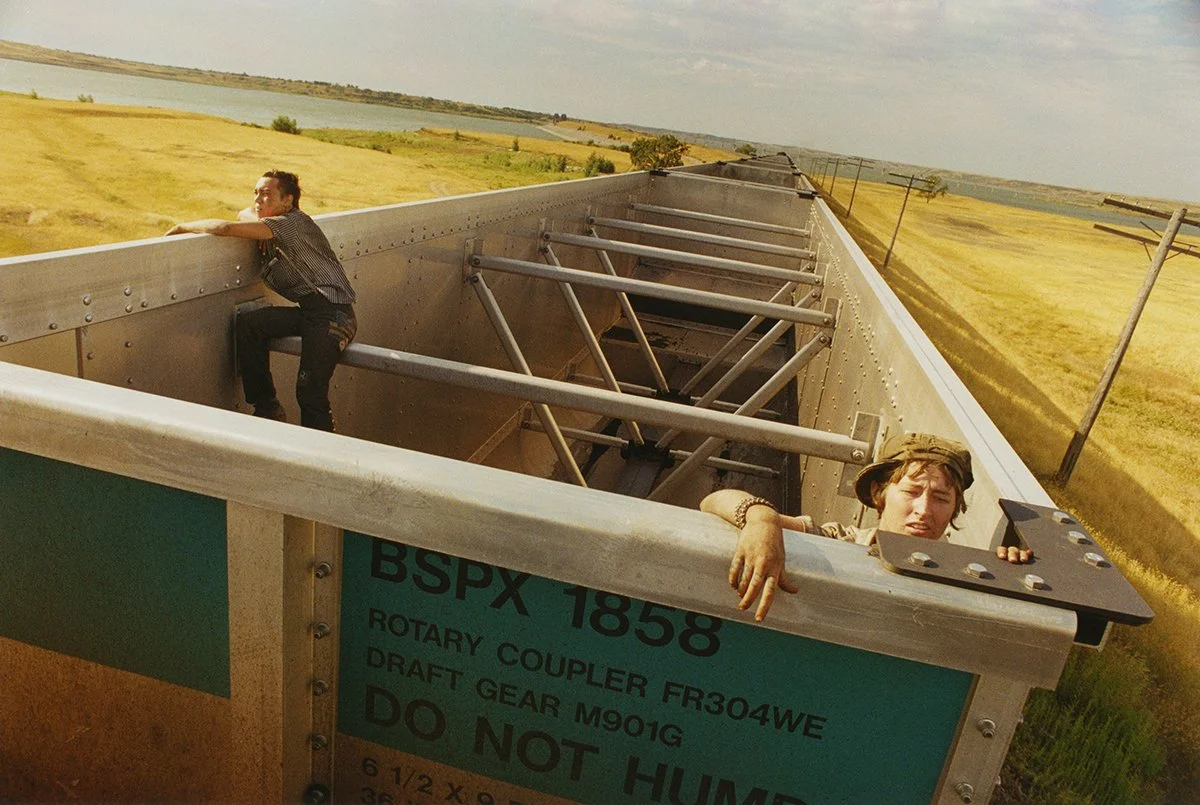
MIKE BRODIE "#5060" 2025.
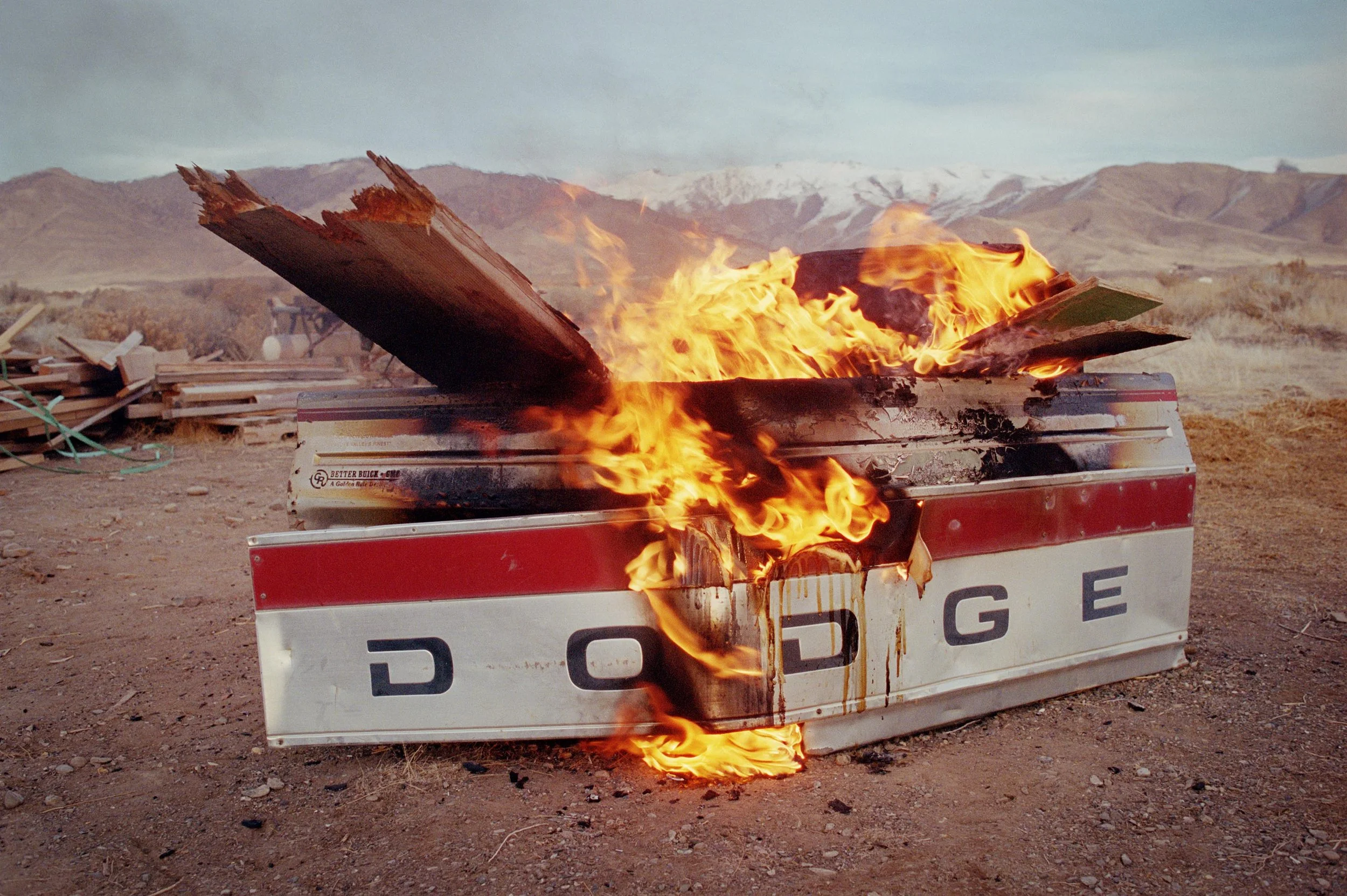
MIKE BRODIE "Burning Tailgate" 2012-2023.
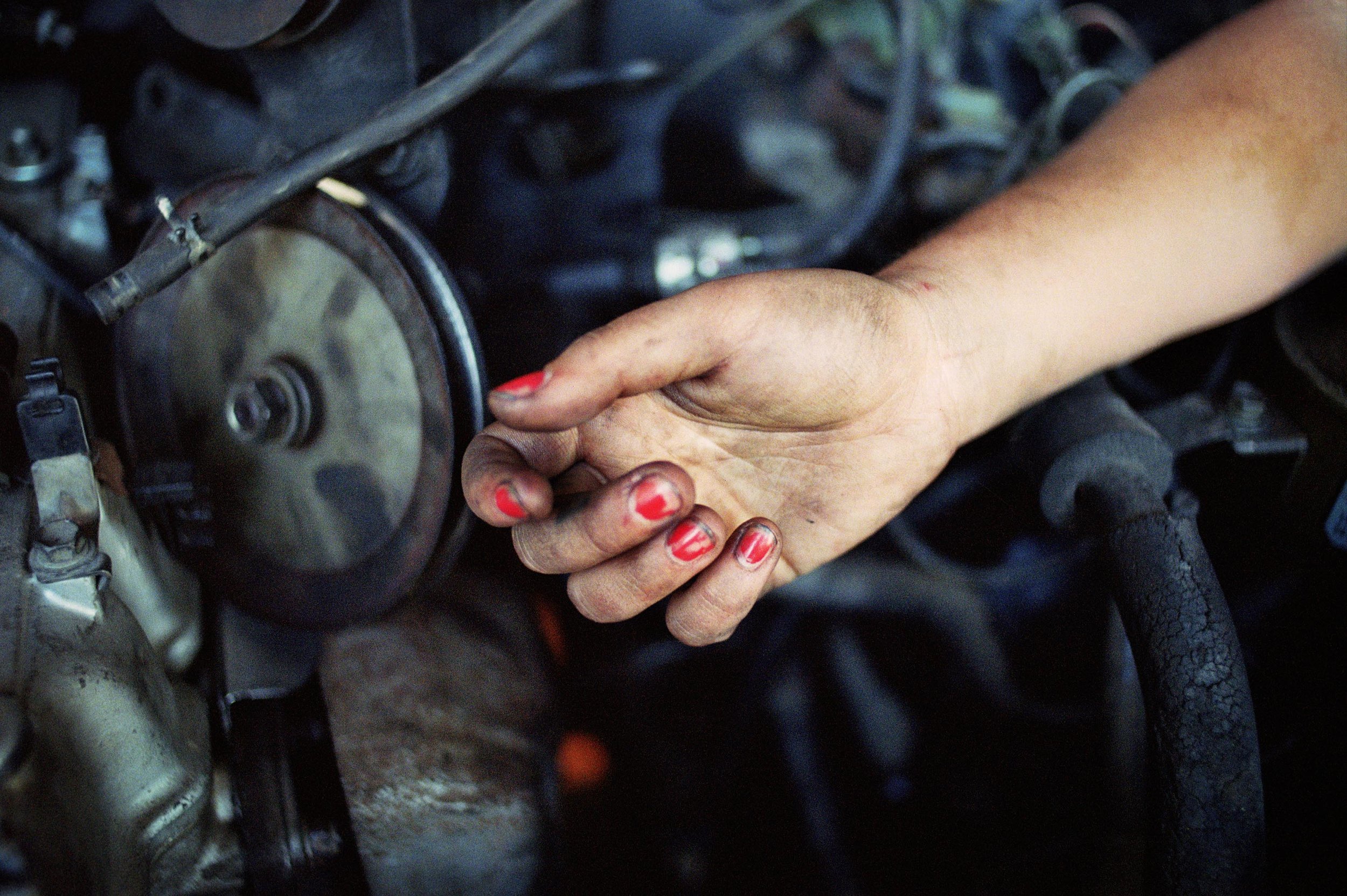
MIKE BRODIE "Celeste's Hand" 2012-2023.
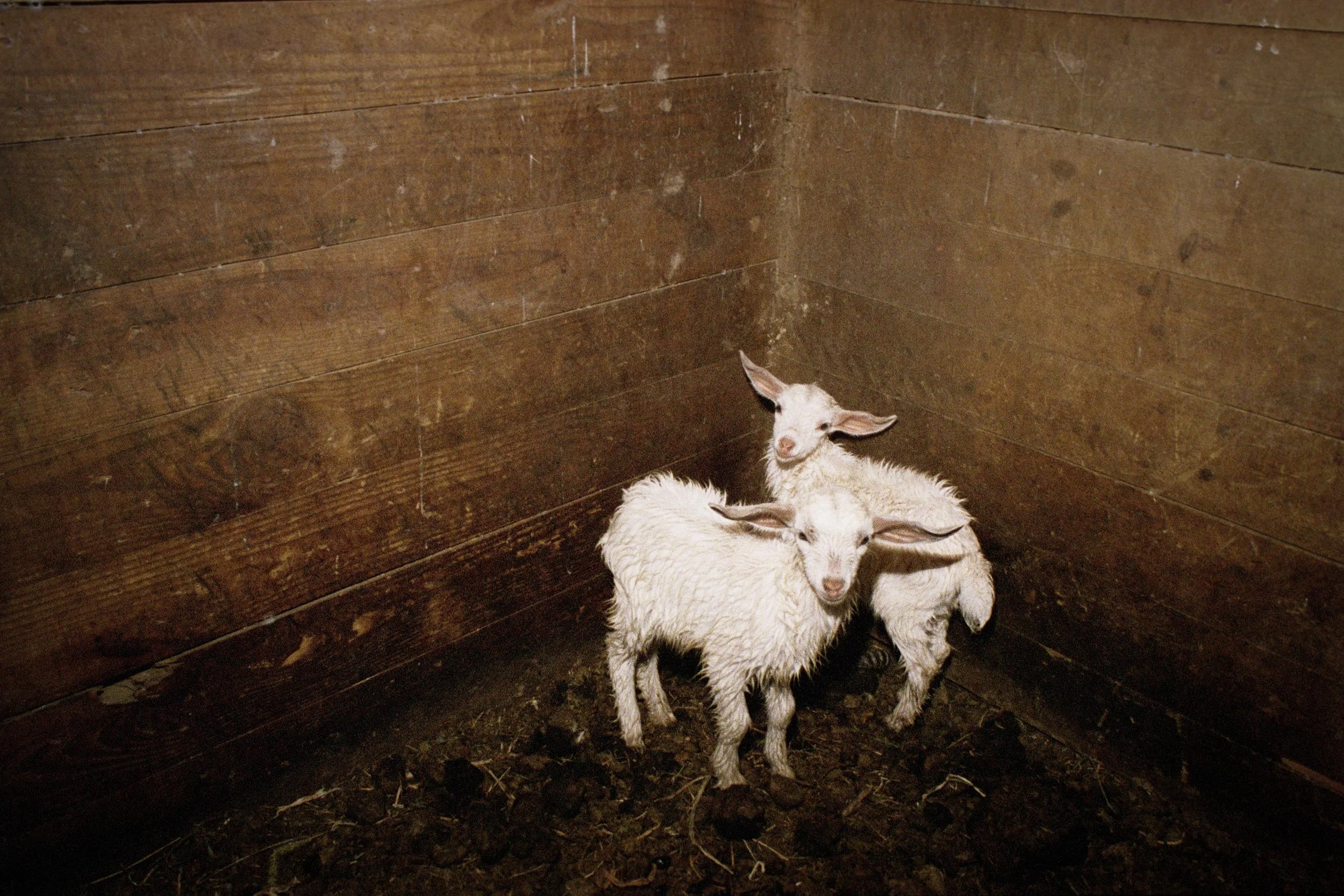
MIKE BRODIE "Two Lambs" 2012-2013.
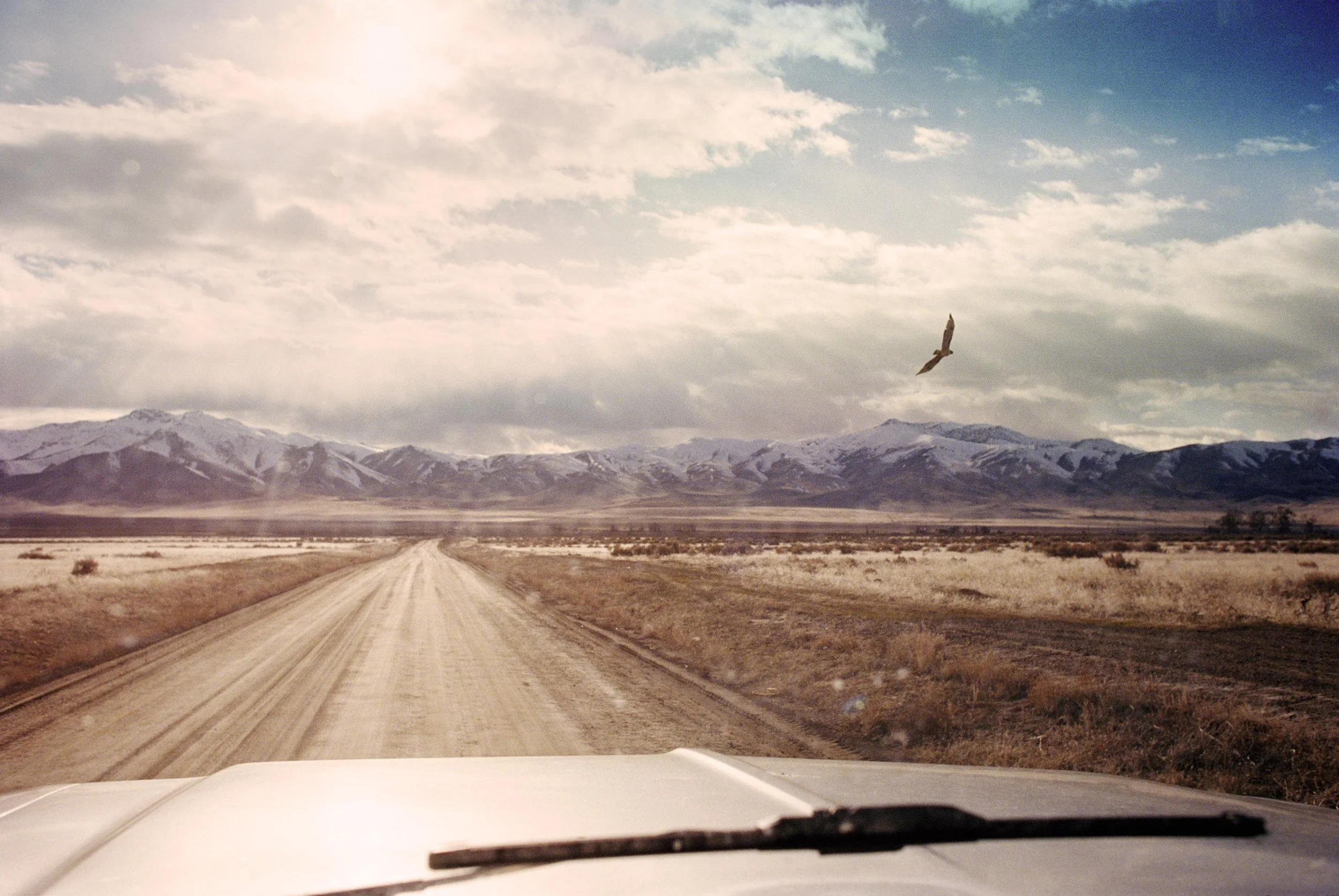
MIKE BRODIE "Winnemucca, Nevada" 2012-2023.