
By Jean Dykstra September 10, 2026
The Dutch photographer Ed van der Elsken added a handwritten note—a word of advice, or a warning—to the slipcover of the Japanese edition of his 1966 book “Sweet Life”: “In the hands of many young people, mostly the students of Tokyo Photographic College, Your camera is like a painter’s brush, it is like a violin, and it is like a gun.” Street photography, as practiced by van der Elsken, was seductive, transgressive, and scrappy. It took more than four years to find a publisher for this massive collection of gritty, personal and often pointed photographs taken six years earlier, during a 14-month trip through Africa, Asia, the United States, and Mexico with his then-wife, Gerda van der Veen. He’d originally intended to call it “Crazy World” but ultimately went with “Sweet Life”, based on the name of a steamer ship he photographed in the Philippines, an image that also shows a shirtless dockworker carrying a heavy crate of empty bottles on his back. The impish, eccentric Van der Elsken believed that life could be sweet, but he knew it wasn’t so for everyone, including, sometimes, himself.
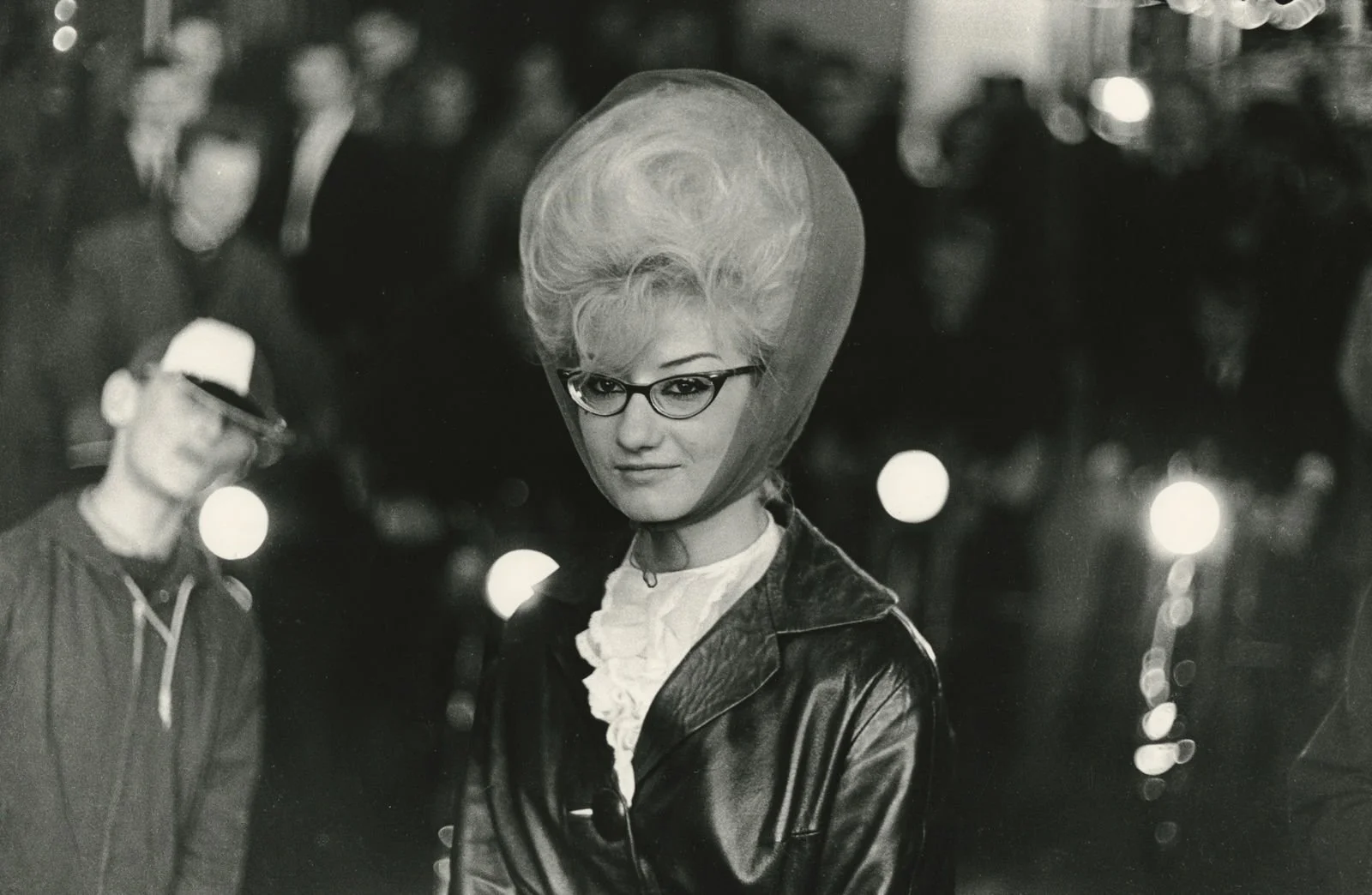
In 2019, the Rijksmuseum and the Nederlands Fotomuseum acquired Van der Elsken’s archive, including more than 8,000 prints that had been stored in his small wooden farmhouse for decades. The Rijksmuseum drew on this archive for the sprawling exhibition, Ed van der Elsken: Up Close, which includes photographs, films, book dummies, contact sheets, and notes that show, in part, how unsuited he was for a conventional career in photojournalism. The only person van der Elsken acknowledged as an influence was Weegee: on his death bed, he had his dilapidated Citroën (on view in the exhibition) painted with some of his own photographs as well as a portrait of the tabloid photographer. “Pretty young ladies in silk dresses, ministers, and boxing champions…. That's what they want,” van der Elsken ruminated. “But I want and can do something different. Dead birds and poor people…. That’s what I make beautiful.” And he did, in a photograph of an overturned garbage can spilling its contents onto a damp, deserted city street; a woman with a little white dog peering at a man crumpled on the curb on 42nd Street in New York City; a woman in cat’s-eye glasses and a towering beehive in Amsterdam; a series of intimate photographs of Emilie Nord giving birth (years before Carmen Winant’s 2018 series My Birth); and of course, his photographs of the circle of disaffected but glamorous young people in 1950s Paris that made up his first, unclassifiable book “Love on the Left Bank” (1956).
Van der Elsken had already photographed the kohl-eyed expat Australian artist Vali Myers—who Patti Smith described as a “Beatnik gypsy mystical witch”—and her bohemian friends, when he decided to create a semi-fictional narrative about them. (Smith found “Love on the Left Bank” when she was about to board a bus from Philadelphia to New York City, and Myers embodied a life and look that Smith was seeking.) Van der Elsken cast Myers as the fictional Ann, and he photographed her and her comrades drinking and dancing in Parisian cafes, getting high, sleeping on benches in the metro station. A portrait of Myers, looking sultry in a white turtleneck sweater, arms crossed as she leans against the wall, shows the graffitied word “reve” (dream) behind her, but van der Elsken had cropped out the letter “g;” the word is actually “greve”—strike, and the photograph somehow captures both the political realities of Paris and the romance of the proto-punk outlaws with whom he felt a deep kinship.
The itinerant van der Elsken traveled widely, and as much as he identified as an outsider, he still moved through the world as a white man with a camera. In South Africa, he took a politically pointed photograph of four white women sitting on a bench labeled “European Bankes” (whites only), and a Black man walking past, a newspaper under his arm and, by a trick of the sun or the darkroom, a halo around his head. But he also photographed a woman in Ubangi-Shari in Central Africa in mourning at her child’s funeral, a photograph that reads as an invasion of privacy. He was hugely popular in Japan, a country he visited 15 times, and his portraits and street scenes, shots of packed subways, suited yakuza, and fashionable young people capture the vitality of the country and his obvious affection for it. But he also made several sequential photographs of a beautiful young woman in a traditional cheongsam, stalking her until she became clearly uncomfortable.
That same style—fearless, prodding, provocative—is what made so many of his photographs so kinetic, so full of life, and what made him a precursor to artists like Nan Goldin and Larry Clark. He photographed jazz greats like Lionel Hampton, Ella Fitzgerald, Chet Baker, and Louis Armstrong, among many others, in dark Amsterdam nightclubs, in improvisatory images taken from unorthodox angles, with off-kilter cropping, and he photographed the audiences, rapt. (Among the more than 20 books he published was the dark and moody volume “Jazz “ in 1959). His pictures plumb the improvisatory nature of both jazz and photography, and his visual rhythms and riffs embody, more than document, the music.
A film at the entrance to the exhibition shows the photographer skittering through the crowds at the cow market in Purmerend, in the north of Holland, with his camera. He ducks between the farmers and the cattle, smiling, cracking jokes, making small talk, teasing, and taking pictures all the while. He’s always moving, always shooting, charming his way through the crowd. The film was a smart curatorial choice, providing a palpable sense of van der Elsken’s restless, slightly manic energy. It set the stage for the photographs that followed: by turns intimate, tender, needling, provocative, and wildly original.
Jean Dykstra is an editor and critic and has contributed recently to the New York Review of Books, Dear Dave, magazine and The Brooklyn Rail. The recipient of an Andy Warhol Foundation Arts Writers Grant, she was the editor of photograph magazine from 2013-2024. She writes The Photosphere, a Substack about photography.

ED VAN DER ELSKEN "Audience at a Concert of Ella Fitzgerald" 1957.
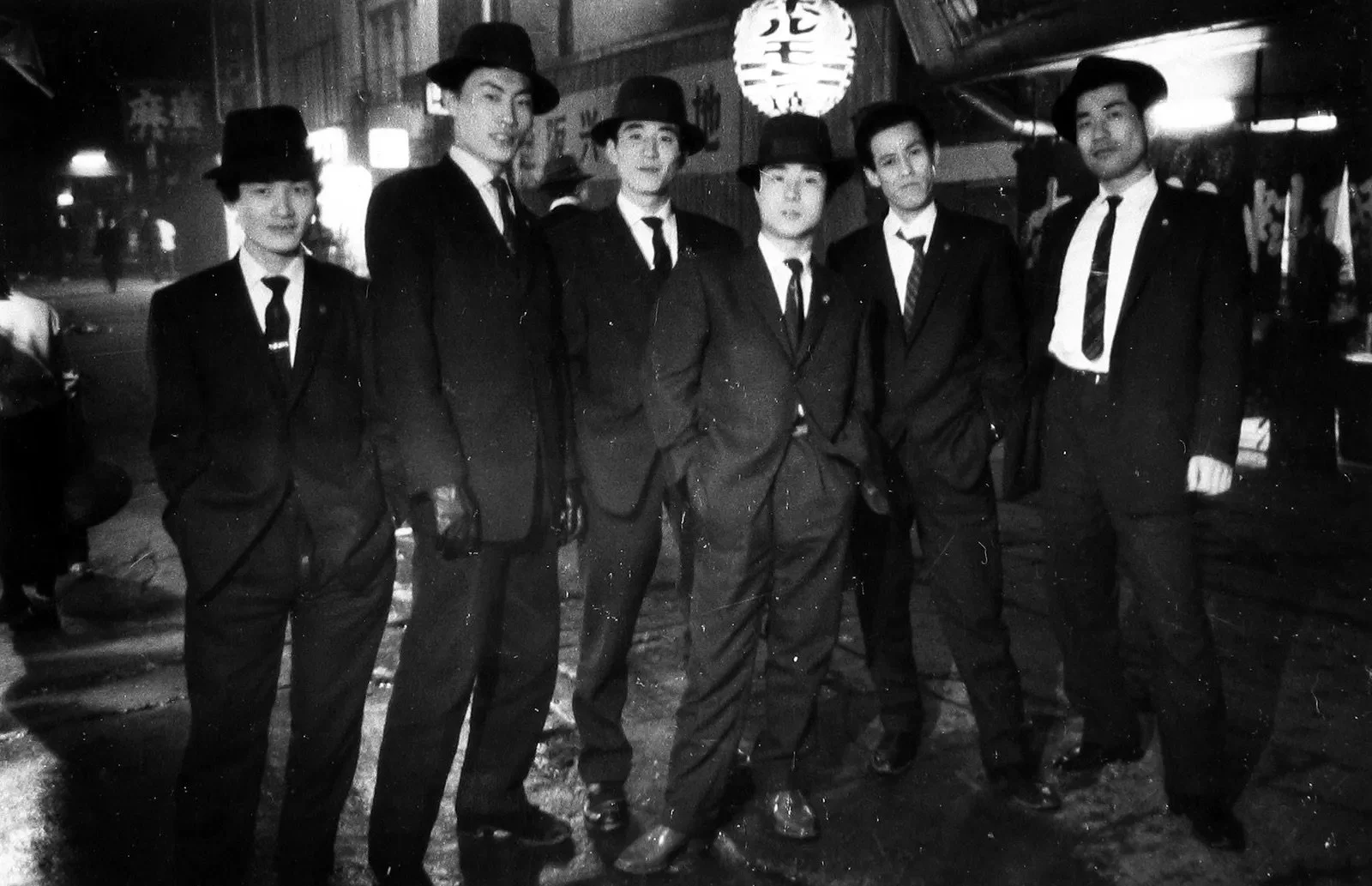
ED VAN DER ELSKEN "Gangsters, OSAka, Japan" 1960.
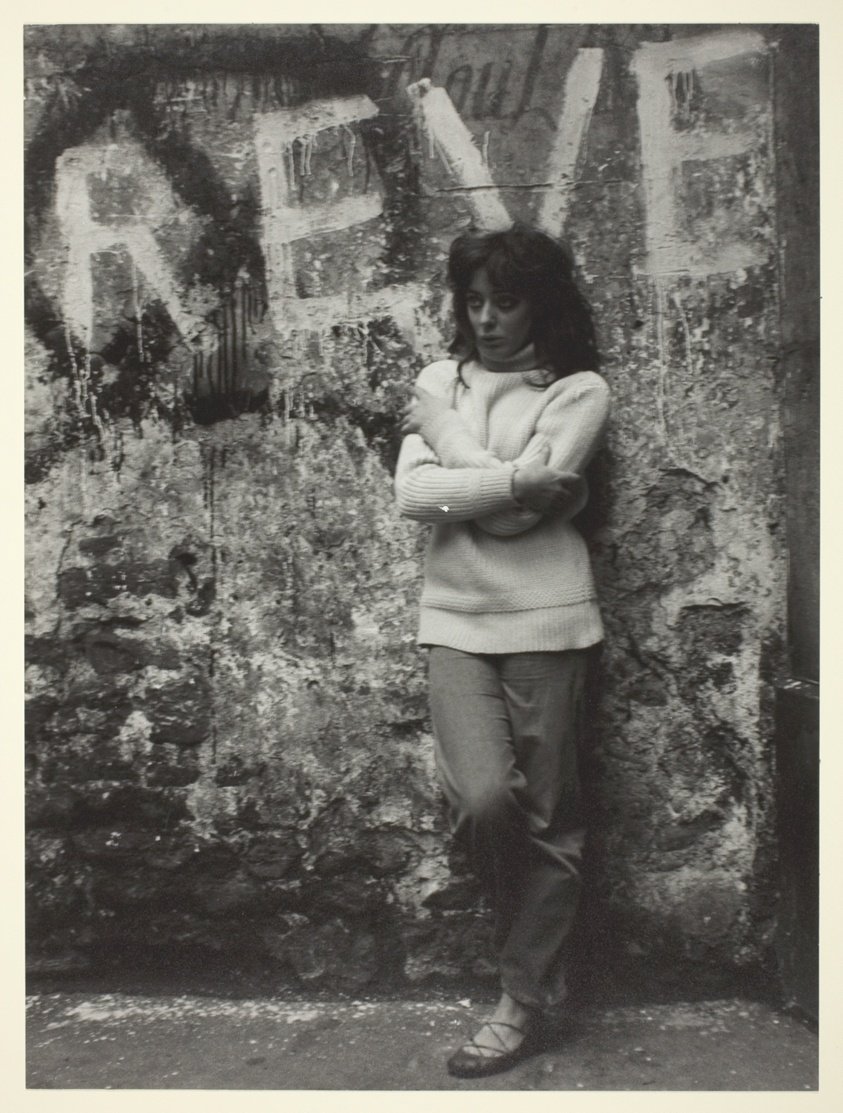
ED VAN DER ELSKEN "Reve" 1950-1955.

ED VAN DER ELSKEN, "Self-portrait with Ata Kandó in the mirror of their apartment, Sèvres" 1952. Rijksmuseum, Amsterdam. Acquisition with the support of Jan and Trish de Bont and the Paul HufF Fonds/Rijksmuseum Fonds, 2017. © Ed van der Elsken estate/Nederlands Fotomuseum
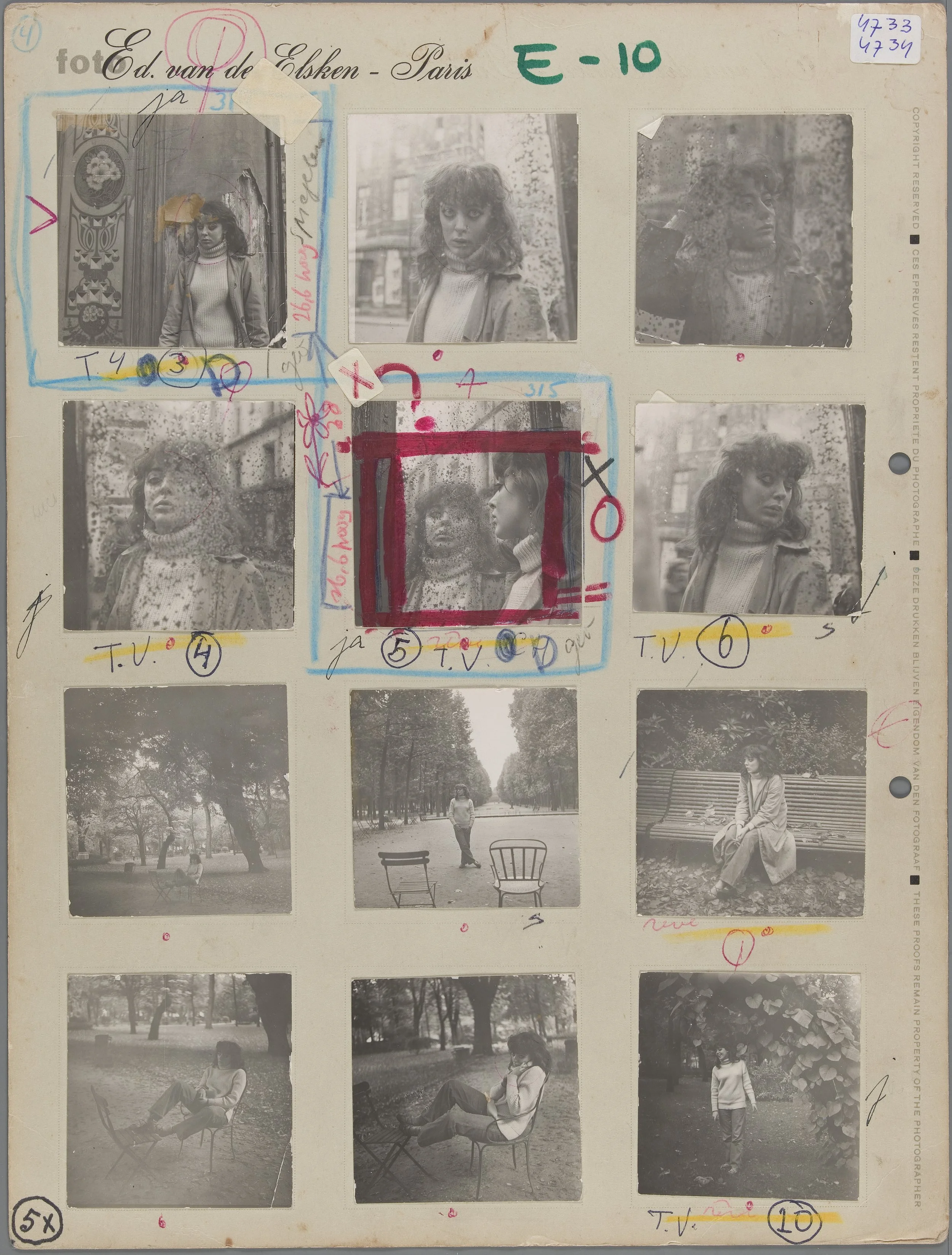
Ed van der Elsken, “Contact sheet with Vali Myers, Paris” 1950–1953. Nederlands Fotomuseum, Rotterdam. © Ed van der Elsken estate/Nederlands Fotomuseum