
By Lyle Rexer September 10, 2026
The most charming rooms can conceal trapdoors. And what you think is a familiar place can suddenly feel like you’ve never been there before.
In this lovely exhibition of vintage black and white prints by a handful of well-known Mexican and Mexican-adjacent photographers, even iconic images and established ideas get a rethink. What, for example, is “abstraction”? What is “Mexico”? And what do these terms have to do with each other?
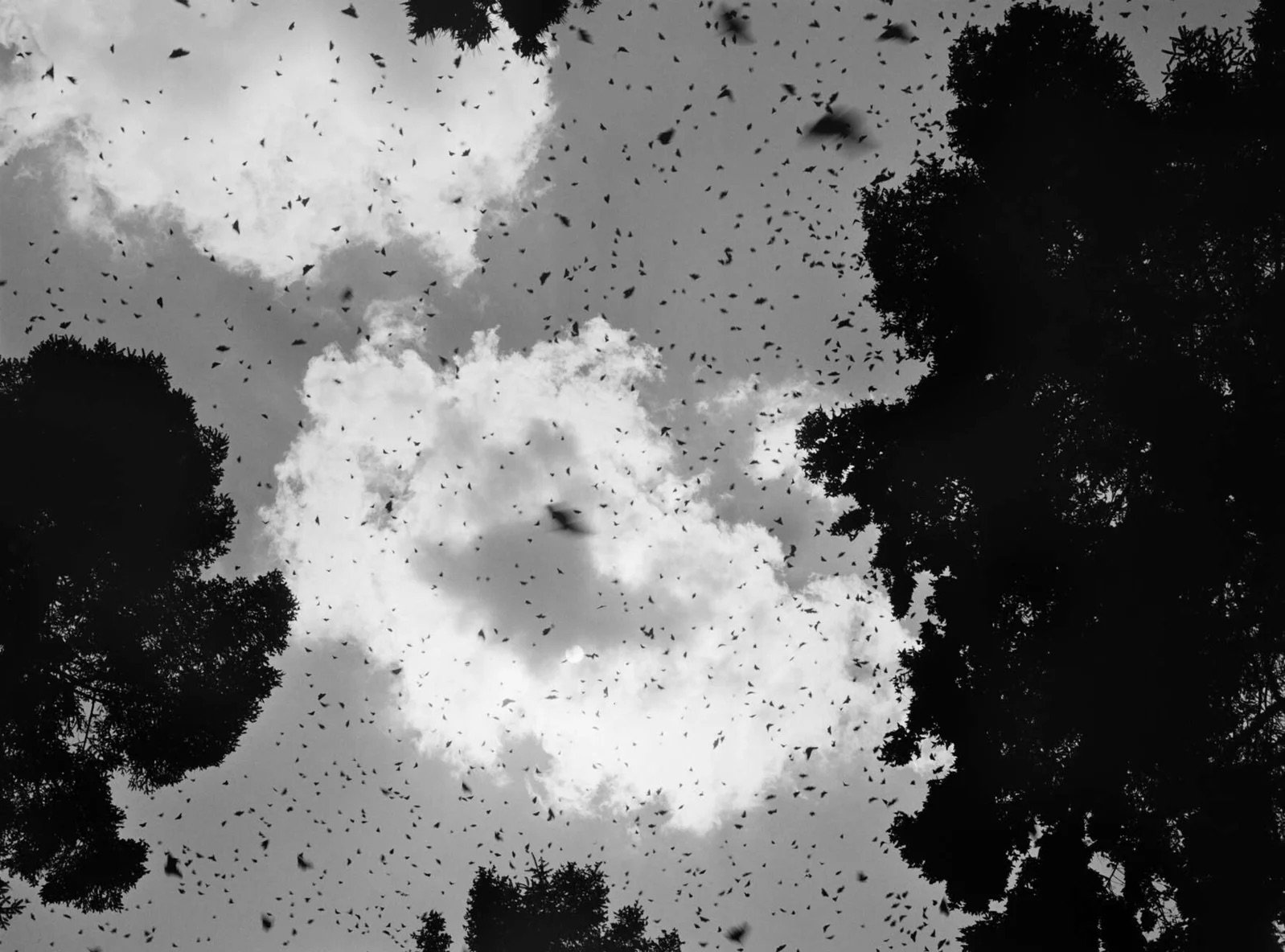
Let’s take the second question first: Mexico. What the exhibition is not is what viewers most often associate with familiar photographers such as Manuel Álvarez Bravo and Tina Modotti – which are people: workers, peasants, indigenous people and women especially, either in groups or in individual portraits. Instead, here Mexico is organ cacti and agave (Álvarez Bravo); corn, sugar cane, nopal cactus, and calla lilies (Modotti); palma de semana, artichokes, and the rocks at Point Lobos (Edward Weston – alright, California is almost Mexico); an explosion of birds in Guanajuato (Graciela Iturbide); and an explosion of butterflies (Flor Garduño). The latter two are among Mexico’s most distinguished contemporary photographers, which suggests the durability of natural imagery as a national preoccupation.
The flipside to this is an understated curatorial preoccupation with what makes a nation called Mexico modern. Not timeless, like nature or the country’s ancient monuments (Modotti’s “Convent of Tepoztlán”1924) but the idea of modernity. In the 1920s, when most of these photographs were taken, Mexico was in the early stages of industrialization. Modotti presents two variants of “Telegraph Wires” (1925-28), spraying upward like limbs of a delicate and symmetrical tree. Álvarez Bravo makes the contrast explicit in a 1940 image of a thin antenna seeming to rise like a delicate stalk from a foreground cactus. I can’t help but see Iturbide’s leaning tower like structure, photographed in the manufacturing center of Puebla, as an ironic commentary on whatever technological confidence might have been left when the picture was made in 2011.
What all these photographs have in common has nothing to do with Mexico, per se, or with the contrast between nature and culture. The link is a fascination with visual forms. This is what the curators seem to mean by the word abstraction, and it is bound to be puzzling to viewers. Isn’t abstract art supposed to be, well, abstract? That is, not having any obvious subject at all? These are not that. Their subjects are obvious and often unforgettably presented. It is the way they are portrayed: a formalist attention to distinctive shapes, patterns and repetitions, to contrasts of light and dark, order and chaos. Of course, classic photography is, by its nature, an abstracting process--- framing a narrow view of time and space and separating it from the flux of reality for contemplation and appreciation. Black and white film exaggerates this abstraction by offering gradations of only two tonal possibilities and photographers can select what they emphasize or leave out of an image .Among all the cacti, Modotti provides one image of workers, “Workers Parade” (1926), but shot from above it is not a narrative of life and struggle but a parade of sombreros.
By the 1960s, critical impatience with such “abstract” approaches to photography was mounting. Formalism sacrificed – or papered over – too much of reality, and a younger generation of photographers simply did not believe that formal relations, in whatever guise, meant anything. At best, they were a kind of game. Beyond a well-worn analogy to female genitalia, what, for example, does the form of a calla lily mean? Or a closeup of a toadstool by Weston? In this exhibition, there is a pleasure in the attention paid to the peculiar shapes and intricacies of objects and in the surprise of seeing what even simple things look like photographed. Not to relitigate old arguments but beyond this modest visual pleasure was a belief that formal awareness was the foundation of perception, and form, pattern, and relation were universal principles of organization. That the leaves of an agave plant near a house might resemble fingers reaching toward a distant window was not a coincidence, an artifact of perspective, or a far-fetched metaphor but a recognition of how the world is organized and how our inner world and nature’s outer world might be connected. So-called camera vision expanded consciousness.
This shift of emphasis toward us and our perception, rather than as receivers of “objective” information is everywhere in the exhibition and hints at the connection of formalism to the psychological and poetic currents of Surrealism, with its taste for incongruity and surprise and the belief that, in the end, all meaning is in the eye of the beholder.
The exhibition is bracketed by two images referencing sight. Flor Garduño’s “Eyes to See With” (2013) shows a billboard (in India, not Mexico) in the shape of eyeglasses, overlooking the landscape. Álvarez Bravo’s “Optical Parable” (1931) presents the façade of an optician’s shop festooned with eyes. It is printed in reverse, so everything is backward. No visitor should say that they haven’t been warned.
Lyle Rexer is a writer, critic and educator who lives in Brooklyn. His novel, ‘The Book of Crow’, has been recently published by Spuyten Duyvil.
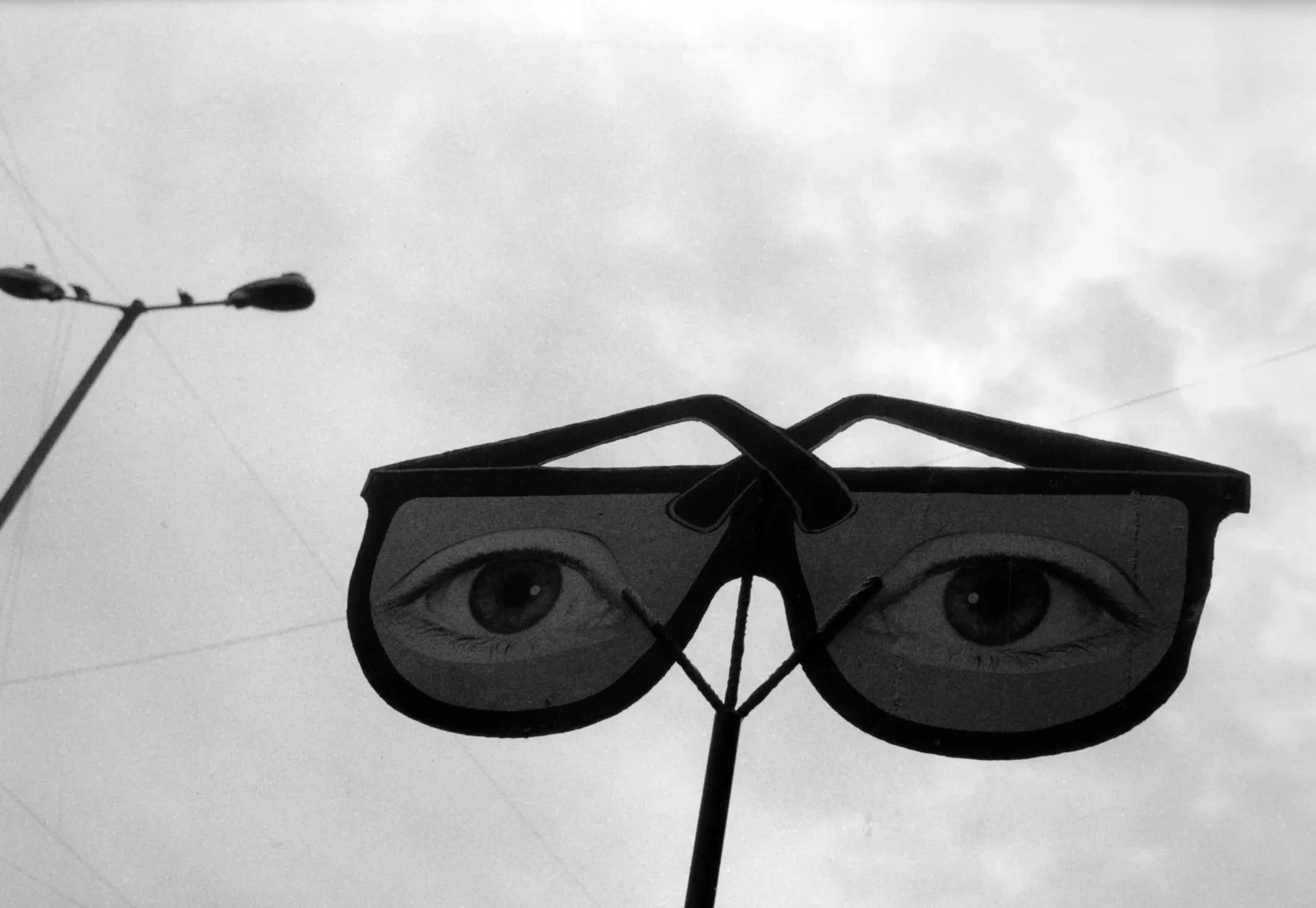
FLOR GARDUÑO "Eyes to See With" 2013.
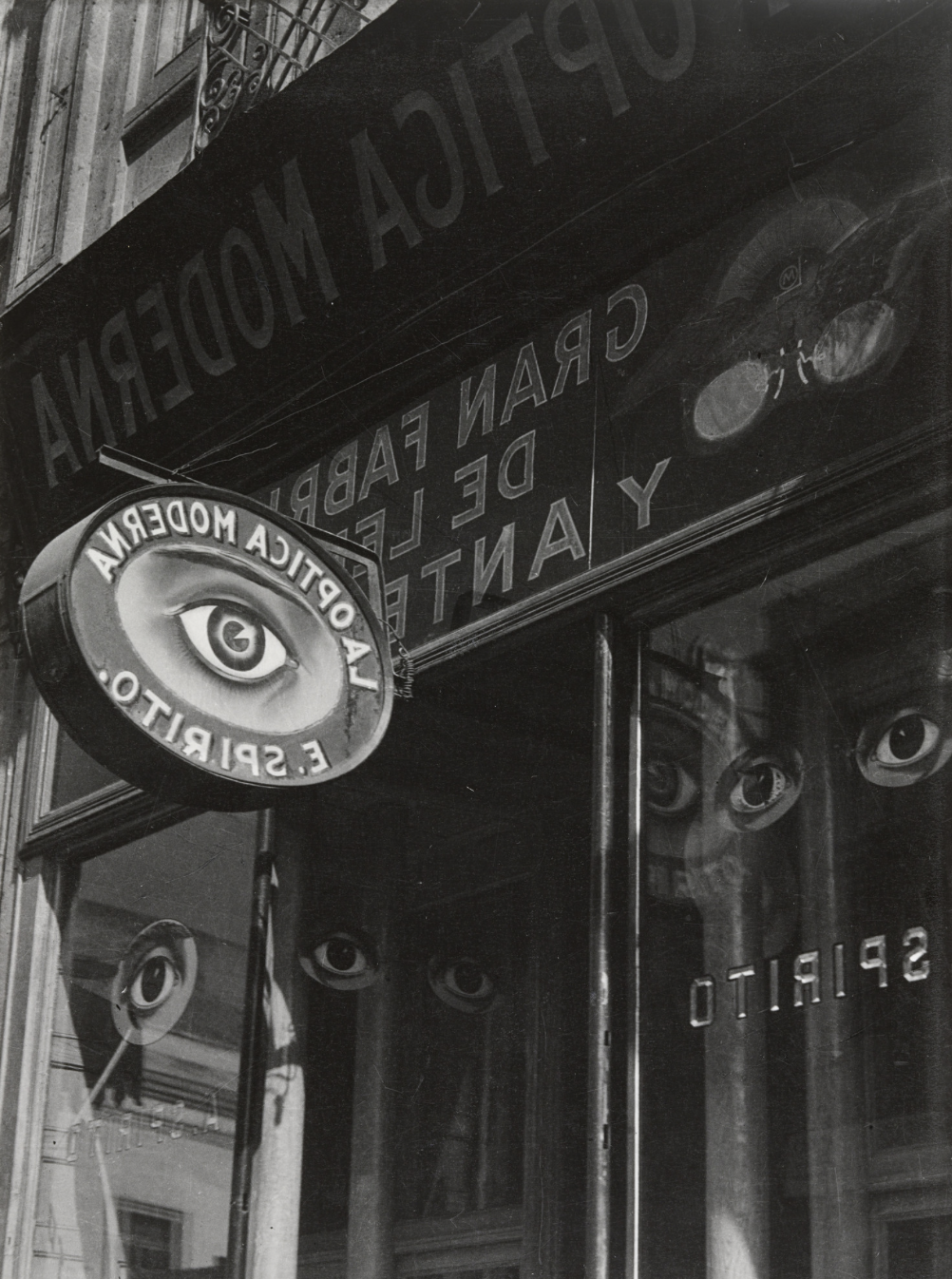
MANUEL ÁLVAREZ BRAVO "Optical Parable" 1931.
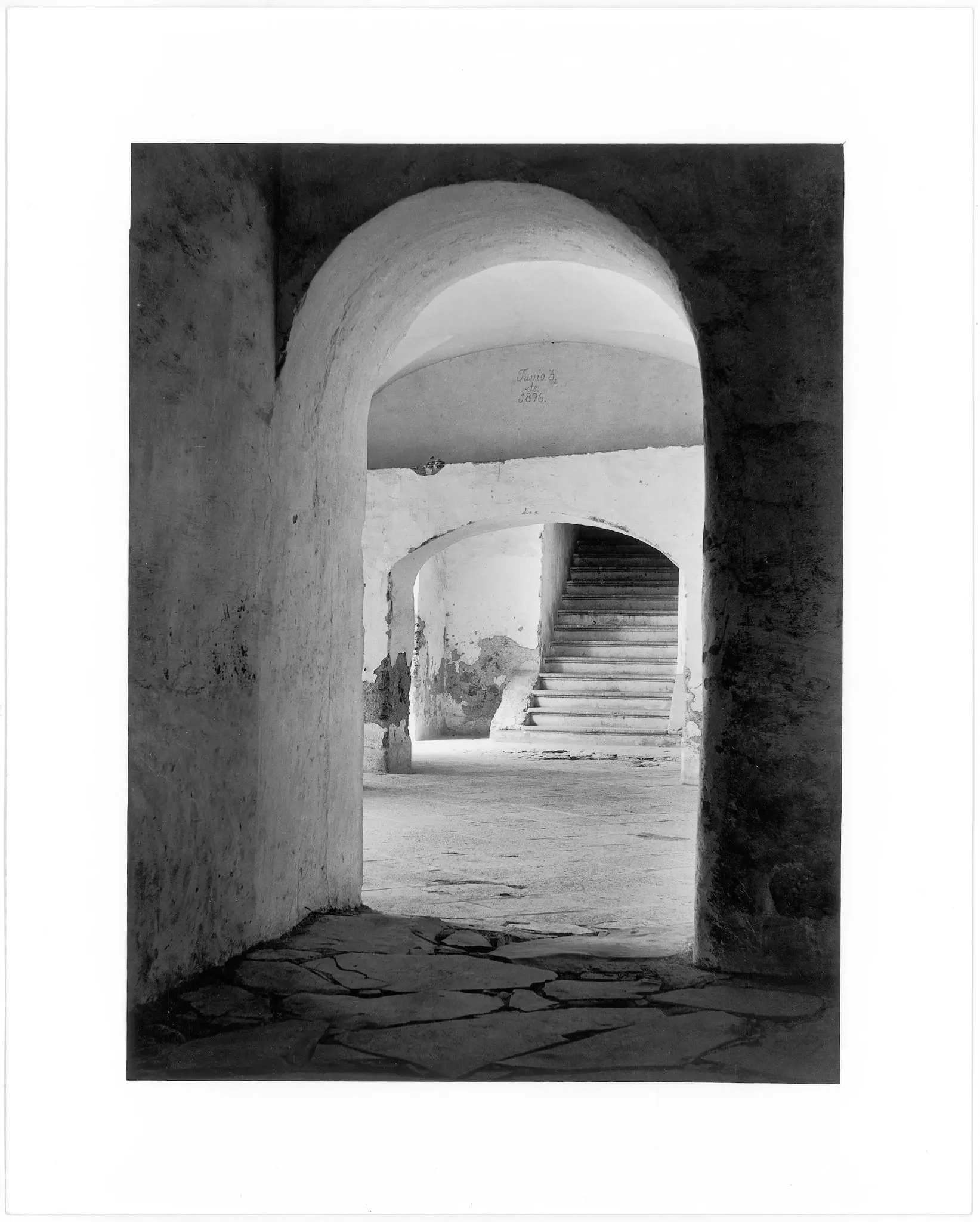
TINA MODOTTI "Covenant of Tepoztlàn" 1924.
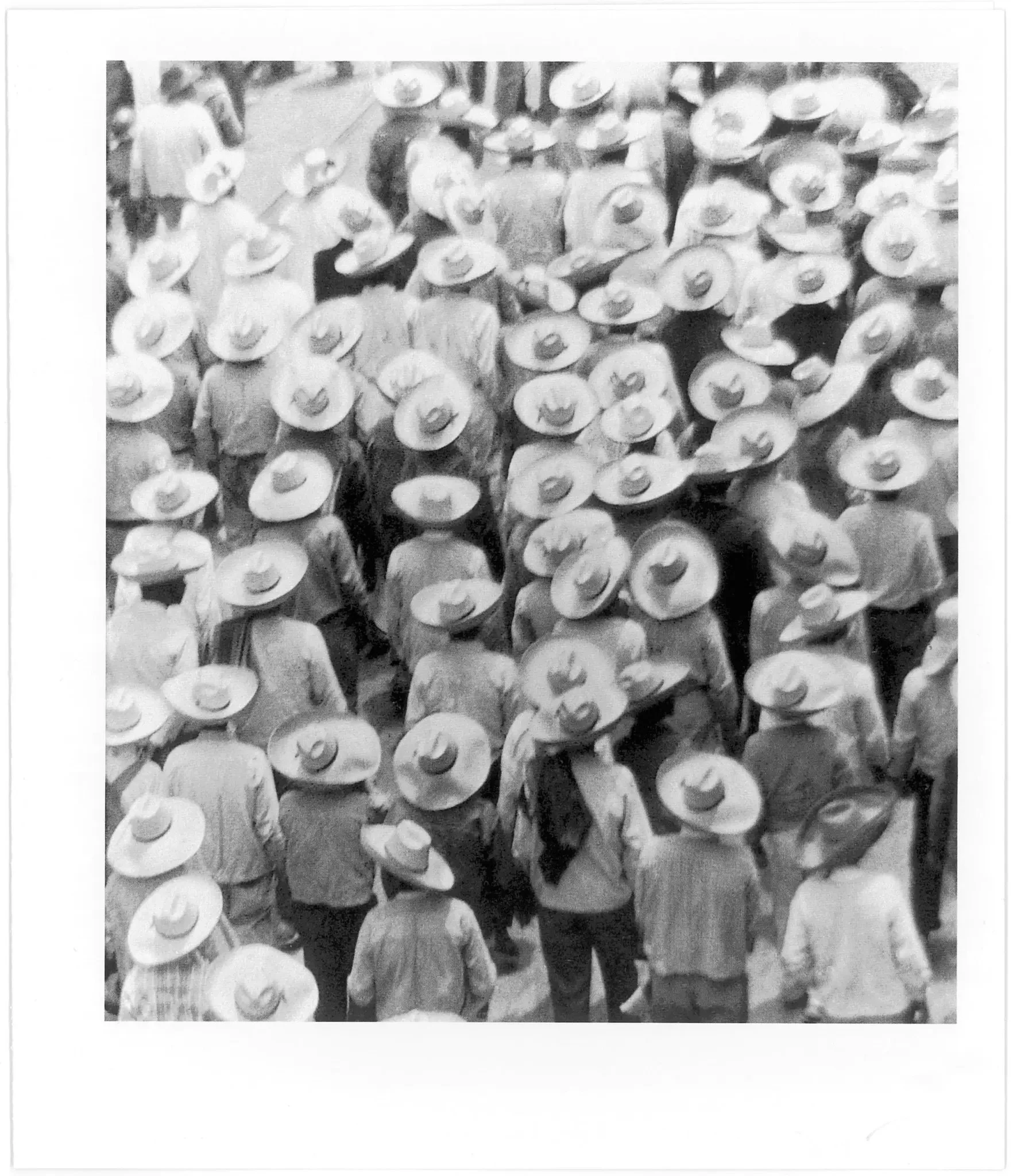
TINA MODOTTI "Worker's Parade", 1926.